






















How Crowd Forecasting Models Are Used to Plan Simhastha 2028 Footfall
Discover how advanced crowd forecasting models will manage Simhastha 2028 footfall, ensuring safety, flow control, and seamless pilgrim experience.


Understanding Crowd Forecasting in Simhastha 2028
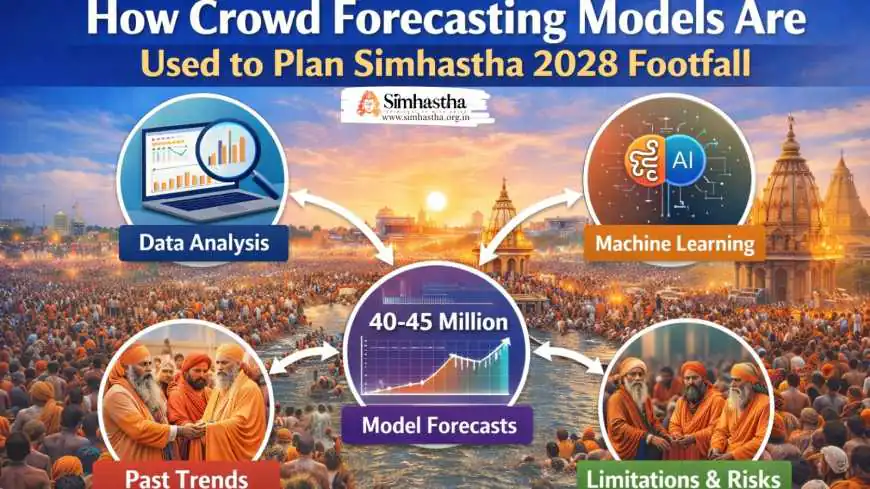
Simhastha 2028 is not just a religious gathering; it is one of the largest human congregations on Earth, where millions of pilgrims converge within limited time windows. Managing this scale is not possible through intuition or manual planning. Instead, authorities rely on advanced crowd forecasting models that combine historical data, AI-based simulations, real-time analytics, and predictive algorithms to estimate how many people will arrive, where they will move, and how they will behave. These models transform uncertainty into measurable patterns, allowing planners to design safe, efficient, and scalable systems before the first pilgrim even arrives.
For Every pilgrims, understanding Simhastha 2028 dates and the official Shahi Snan timeline is essential before booking flights or accommodation, as these sacred dates are completely non-negotiable
Why Crowd Forecasting Is Critical for Simhastha
Without accurate forecasting, Simhastha could quickly descend into chaos. The goal is not just to handle crowds but to anticipate them before they form.
Crowd forecasting models help authorities:
Trending Guides Now

Why Ujjain Is One of the Four Kumbh Cities in India

Simhastha Kumbh Mela Explained for First-Time Visitors

What to Wear Carry Avoid at Ujjain Simhastha
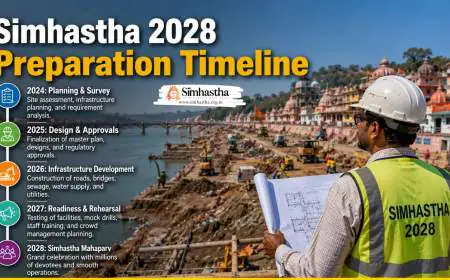
Simhastha 2028 Preparation Timeline: What Happens Each Year

Ujjain Railway Station to Mahakaleshwar Temple Distance (2026 Guide)

Ujjain Simhastha 2028 Dates Announced: Full Shahi Snan & Event Timeline

Benefits of Becoming a Simhastha Volunteer
Ujjain Travel During Shravan Month: What Changes for Visitors
- Predict peak bathing day footfall
- Estimate hour-by-hour crowd density
- Identify high-risk congestion zones
- Plan traffic diversion and pedestrian flow
- Allocate security and emergency resources
This predictive layer ensures that Simhastha remains spiritually immersive yet structurally controlled, preventing overcrowding disasters seen in unmanaged mass gatherings.
Core Data Sources Behind Crowd Forecasting Models
At the heart of Simhastha 2028 planning lies data. Massive volumes of structured and unstructured data are processed to generate accurate predictions.
Historical Simhastha Data
Previous events, especially Simhastha 2016, provide a baseline dataset including:
- Daily and hourly footfall trends
- Crowd behavior patterns on Shahi Snan days
- Movement flow between ghats, temples, and transit points
A first time Simhastha guide is essential because without contextual understanding, pilgrims arrive prepared for devotion but unprepared for logistics, stamina, patience, and adaptability.
Real-Time Data Inputs
Modern systems integrate live data streams such as:
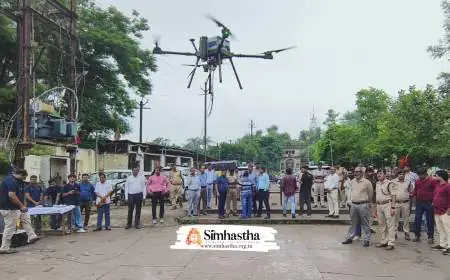
- CCTV and drone surveillance
- Mobile network density signals
- GPS-based vehicle tracking
- Social media activity spikes
This allows dynamic updating of crowd forecasts, not just static predictions.

Environmental and External Factors
Forecasting models also consider:
- Weather conditions
- Public holidays and weekends
- Train and bus arrival schedules
- Government announcements
These variables influence sudden surges in pilgrim movement, making forecasting more adaptive.
Couples arriving during Ujjain Simhastha should spend their first few hours adjusting to the rhythm of the pilgrimage. Walking slowly through the city allows visitors to absorb the powerful spiritual atmosphere created by the gathering of saints and devotees attending the Ujjain Kumbh Mela.To deepen your understanding of the spiritual customs and sacred rituals practiced during Ujjain Simhastha, read our complete Simhastha rituals and sacred practices guide that explains their meaning, timing, and significance.
How AI and Machine Learning Power Crowd Predictions
Artificial Intelligence acts as the brain behind Simhastha crowd forecasting models. Instead of relying on fixed assumptions, AI continuously learns and improves predictions.
Predictive Modeling
Machine learning algorithms analyze past and present data to predict:
- Expected footfall for each zone
- Peak congestion timings
- Likely crowd movement routes
Behavioral Pattern Recognition
AI identifies recurring human behaviors such as:
- Pilgrims clustering near major ghats
- Sudden surges during auspicious timings
- Slowdowns at bottlenecks
This helps planners design better movement pathways.
Also Read | Best Time to Visit Ujjain Simhastha 2028
Scenario Simulation
Authorities run multiple simulations like:
- What happens if footfall exceeds expectations by 30 percent
- How crowd behaves during rain or heatwave
- Impact of traffic delays on pedestrian density
These simulations ensure preparedness for worst-case scenarios.
Zonal Planning Based on Footfall Forecasting
Simhastha is divided into multiple zones, each planned according to predicted crowd density levels.
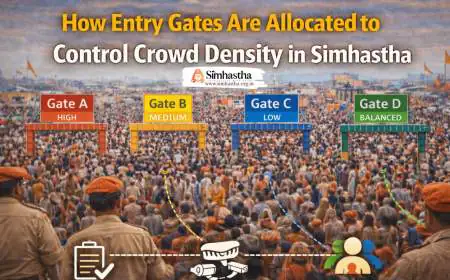
High-Density Zones
Areas near Ram Ghat, Mahakaleshwar Temple, and major bathing points are expected to witness maximum footfall.
Planning includes:
- Wider entry and exit routes
- Multiple diversion corridors
- Increased surveillance and police deployment
Also Read | Step-by-Step Guide to Shipra Snan at Ujjain Kumbh Mela
Medium-Density Zones
These include secondary ghats and transit routes where flow is steady but manageable.
Planning focuses on:
- Crowd distribution
- Smooth pedestrian movement
- Controlled access points
Low-Density Zones
Peripheral areas are designed to absorb overflow crowds, preventing pressure on core zones.
These zones act like pressure-release valves in the overall system.
Real-Time Crowd Monitoring and Adjustment
Forecasting is not a one-time process. During Simhastha, it evolves every minute.
Live Density Tracking
Sensors and cameras provide real-time updates on:
- Crowd density per square meter
- Movement speed of pilgrims
- Entry and exit flow rates
Dynamic Decision Making
Based on live data, authorities can:
- Redirect crowds instantly
- Close or open routes
- Adjust security deployment
This ensures that forecasting models remain responsive, not static.
Traffic and Transportation Planning Using Forecasting
Footfall forecasting directly influences transport and traffic management systems.
Public Transport Optimization
Authorities plan:
- Train frequency increases
- Shuttle bus routes
- Parking zone distribution
Based on predicted arrival patterns, transport systems are synchronized with crowd flow.
Route Diversion Strategies
Traffic models ensure:
- Separation of pedestrian and vehicle routes
- Emergency vehicle access lanes
- Controlled entry points to the city
This prevents traffic congestion from turning into crowd congestion.
Safety and Disaster Prevention Through Forecasting
One of the most critical applications of crowd forecasting models is ensuring safety.
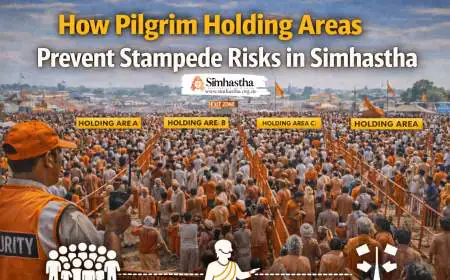
Stampede Prevention
By predicting high-density zones, authorities can:
- Limit entry before overcrowding occurs
- Create buffer zones
- Introduce staggered access timing
Emergency Response Planning
Forecasting helps in:
- Positioning medical teams strategically
- Planning evacuation routes
- Ensuring rapid response in case of incidents
This transforms Simhastha into a controlled environment despite massive scale.
Integration with Smart City Technologies
Simhastha 2028 is expected to leverage smart city infrastructure to enhance forecasting accuracy.
IoT and Sensor Networks
Connected devices provide continuous data on:
- Crowd movement
- Environmental conditions
- Infrastructure usage
Central Command Centers
All data flows into a centralized system where:
- AI dashboards visualize crowd density
- Authorities monitor real-time scenarios
- Decisions are made instantly
This creates a digital twin of Simhastha, where planners can see and respond to every movement.
Challenges in Crowd Forecasting
Despite advanced technology, forecasting remains complex due to:
- Unpredictable human behavior
- Sudden surge during auspicious timings
- Data inconsistencies in real-time systems
To overcome this, models are designed with flexibility and redundancy, ensuring they adapt to changing conditions.
Future of Crowd Forecasting in Religious Events
Simhastha 2028 represents a shift toward data-driven pilgrimage management. In the future, we can expect:
- More accurate AI predictions
- Integration with mobile apps for pilgrims
- Personalized crowd navigation guidance
- Fully automated crowd control systems
This evolution will redefine how mass spiritual gatherings are managed globally.
When Faith Meets Algorithms: The Invisible Architecture of Order
What appears as a spontaneous ocean of humanity at Simhastha is, in reality, guided by an invisible architecture of data, prediction, and planning. Crowd forecasting models quietly orchestrate the movement of millions, ensuring that every pilgrim can focus on their spiritual journey without facing chaos.
Simhastha 2028 will not just be remembered for its scale, but for how technology and tradition merge seamlessly, proving that even the largest gatherings can be managed with precision when guided by intelligence and foresight.
Frequently Asked Questions