


























Ujjain’s Smart City Upgrades for Simhastha 2028: What’s Changing After Land-Pooling Cancelled?
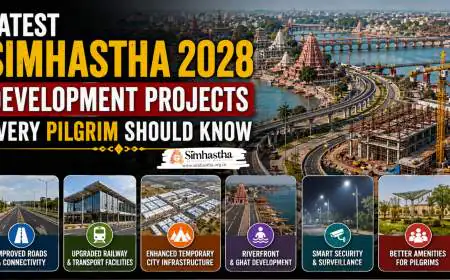
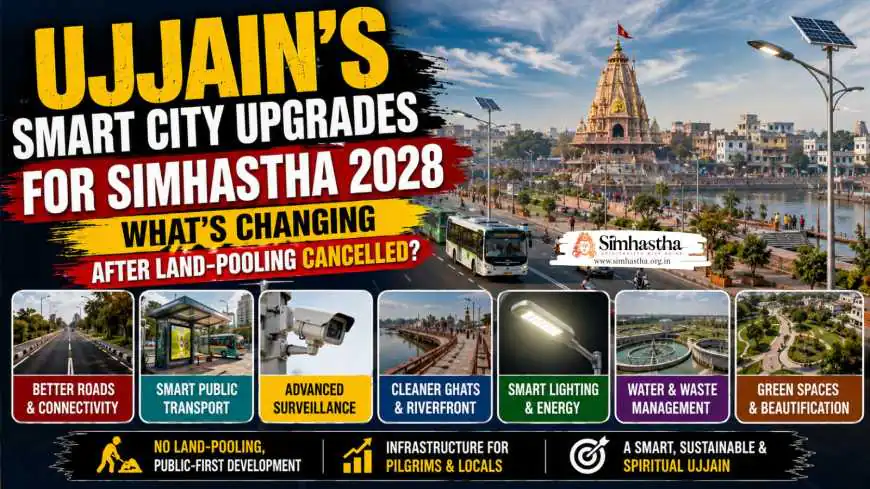
With land-pooling cancelled, Ujjain is preparing Simhastha 2028 with smart temporary infrastructure — road widening, river transport, digital crowd control, upgraded ghats, sanitation and medical safety.


Ujjain’s Smart City Upgrades for Simhastha 2028: What’s Changing After Land-Pooling Cancelled?
Simhastha 2028 will be one of the largest spiritual gatherings in the world, and Ujjain is undergoing massive upgrades to welcome millions of pilgrims. However, one of the most important changes in planning has reshaped the entire development model: the government has cancelled the land-pooling scheme, meaning the city will no longer build a permanent township for pilgrims. Instead, the preparations have shifted into a smart temporary mega-city model for Simhastha 2028 focused on mobility, safety, sanitation and river connectivity. Contrary to rumors, development work has not slowed down — it has simply been redirected toward comfort, safety and orderly movement during the festival without permanent land takeover.
For Every pilgrims, understanding Simhastha 2028 dates and the official Shahi Snan timeline is essential before booking flights or accommodation, as these sacred dates are completely non-negotiable.
The New Plan: Smart Temporary Infrastructure Instead of Permanent Township
The earlier plan for a permanent township based on land-pooling received strong resistance from farmers. As a result, the government withdrew the plan and announced that no land would be permanently acquired. This is an important turning point because it ensures both farmer land protection and modern festival infrastructure for Simhastha 2028. Under the revised model:
- Land will be used temporarily only during the event
- Temporary housing blocks and support structures will be dismantled afterwards
- Core development focuses on safety, mobility and sanitation rather than permanent buildings
Authorities have clarified that Simhastha 2028 will be managed through well-planned temporary festival facilities instead of permanent settlement layouts. This approach ensures sustainability, fairness and minimal disruption for local communities.
Trending Guides Now
Simhastha 2028 Latest Update: Disaster Mitra Training Begins in Ujjain
Government Doubles Powers of Ujjain Mayor and Commissioner Ahead of Simhastha 2028
Ujjain Simhastha 2028: ₹700 Crore Bypass Road Plan to Manage 30 Crore Pilgrims
Simhastha 2028 Ujjain Development Plan: What’s Changing Before the Kumbh

Ujjain Railway Station to Mahakaleshwar Temple Distance (2026 Guide)

Ujjain Simhastha 2028 Dates Announced: Full Shahi Snan & Event Timeline

Benefits of Becoming a Simhastha Volunteer
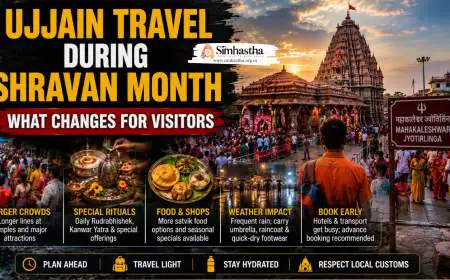
Ujjain Travel During Shravan Month: What Changes for Visitors
Road Widening and Smart Traffic Movement — The Foundation of Crowd Comfort
Mobility remains the backbone of this transformation. To avoid the long traffic chaos experienced during earlier melas, Ujjain is carrying out road widening for Simhastha 2028 and smart mobility corridor development. More than 50 major routes connecting the city to the ghats and festival zones are being expanded.
Key improvements include:
- Six-lane and four-lane widening on major arterial roads
- New railway overbridges and link roads for alternate access
- Dedicated shuttle bus lanes for pilgrims during festival rush hours
- Smart parking zones outside the high-density city core
- Vehicle-free pedestrian corridors near major ghats
The traffic plan aims to offer a low-congestion experience for Simhastha pilgrims by distributing travel evenly across vehicle, shuttle and river routes. During peak days, vehicles will be restricted near ghats while pedestrians will move through barricaded corridors to eliminate crowd pressure.
For readers seeking complete and authoritative coverage of Ujjain Simhastha, including its history, mythological significance, Shahi Snan rituals, dates, temples, Akharas, travel planning, and first-time pilgrim guidance, refer to our ultimate Simhastha guide for Ujjain. This detailed resource consolidates every essential aspect in one place and serves as the primary reference for understanding Simhastha holistically.
Kshipra River Transport — The Biggest Game Changer
The most innovative part of the makeover is the implementation of Kshipra river boat transport for Simhastha 2028. Boats will operate between festival zones, ghats and parking areas, giving pilgrims a scenic alternative to road travel. Floating jetties, temporary river terminals and safety infrastructure are being developed.
Why river mobility matters
- It reduces walking distance for lakhs of pilgrims
- Ideal for senior citizens, children and differently-abled visitors
- Significantly eases road traffic congestion
- A safe and spiritual travel experience along the sacred river
Instead of long walks in crowded lanes, devotees can now move comfortably and efficiently — making the festival more inclusive and accessible.
AI-Based Digital Crowd Management — Simhastha 2028’s Safety Revolution
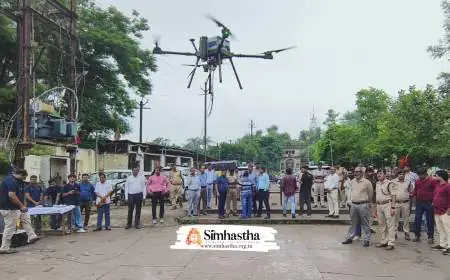
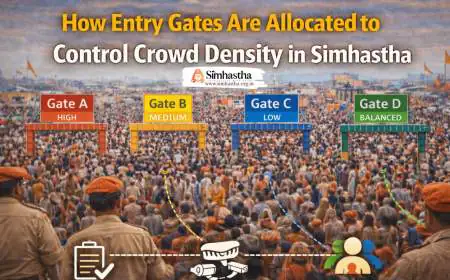
Ujjain is integrating cutting-edge security systems to manage large gatherings smoothly. The city is deploying AI-enabled crowd monitoring systems, CCTV surveillance across the city, heat-map crowd density alerts and drone monitoring during peak snan hours.

Smart safety systems will manage:
- Early detection of crowd concentration
- Real-time route reversals to prevent bottlenecks
- Emergency rescue in case of fatigue or panic
- Lost-person support at every major ghat
The aim is to make Simhastha 2028 a zero-stampede and zero-chaos festival — where spiritual devotion and personal safety coexist harmoniously.
Upgraded Ghats for Safe Snan, Rituals and Pilgrim Flow
Millions will take the ritual bath during Simhastha, so the ghats are receiving special attention. Ujjain is carrying out ghat reinforcement and safety enhancement work on all major bathing zones.
Upgrades include:
- Multiple entry and exit paths for smooth flow
- Strengthened staircases with handrails and barricades
- LED illumination for night-time safety
- Dedicated changing cubicles for women
- Emergency ramps for medical teams
Rather than increasing the number of ghats, the priority is improving their structural integrity and circulation pattern — ensuring a secure and crowd-controlled snan experience.
Sanitation, Water Supply and Waste Management — Most Extensive to Date
To maintain hygiene at a festival of this scale, Ujjain has introduced a festival sanitation and water supply master plan, including:
- Portable toilet clusters across the city
- Round-the-clock waste collection and disposal
- Filtered drinking water kiosks
- Dedicated wastewater treatment to protect the river
These measures guarantee both public hygiene and environmental protection, ensuring that the spiritual significance of Simhastha resonates with ecological responsibility.
Emergency Services and Medical Network Preparedness
A strong emergency response system is essential for large gatherings. Ujjain is deploying an integrated medical safety network for Simhastha 2028.
- Ambulance emergency corridors
- Mobile medical treatment vans
- First-aid camps near every major ghats
- Lost-and-found and senior citizen help desks
The medical system is trained to provide immediate care for dehydration, injury, fatigue and crowd-related risk — ensuring a highly responsive festival safety system.
The New Reality: No Permanent City — But a Smarter Festival
The cancellation of land-pooling does not reduce development — it changes direction. Simhastha 2028 will now focus on temporary smart festival infrastructure designed for the comfort of crores of devotees without permanently altering ownership of agricultural land.
- Festival infrastructure will be temporary
- Smart upgrades like roads, ghats and bridges will remain useful afterward
- Farmers retain full rights over their land
- Pilgrims receive safer and more organized facilities
This model creates harmony between **faith, administration, safety and social responsibility** — a model future religious events may adopt nationwide.
Conclusion
Simhastha 2028 will not be defined by a permanent township — but by intelligent and humane planning. With road widening and traffic management, Kshipra river transport, AI crowd monitoring, ghat reinforcement, sanitation upgrades and emergency medical systems, Ujjain is preparing to give devotees an experience that is spiritually fulfilling and physically comfortable. The cancellation of land-pooling has opened the path for a more balanced, sustainable and people-focused approach — one that respects both pilgrims and farmers.
Frequently Asked Questions