

































Is Ujjain Simhastha the Same as Kumbh Mela?
Understand the difference between Ujjain Simhastha and Kumbh Mela, their astrological basis, ritual traditions, and why Simhastha holds a distinct identity.



Is Ujjain Simhastha the Same as Kumbh Mela?
Ujjain Simhastha is one of the most sacred and historically continuous Hindu congregations, deeply rooted in India’s spiritual, astronomical, and civilizational framework. While it is commonly referred to as a form of the Kumbh Mela, Ujjain Simhastha is not a generic or interchangeable event. It represents a distinct, location-specific manifestation of the Kumbh tradition, governed by precise astronomical conditions and preserved through uninterrupted religious practice.
To understand whether Ujjain Simhastha is the same as Kumbh Mela, it is essential to move beyond modern event-based interpretations and examine the issue through Sanatan Dharma’s traditional lenses of Jyotish, sacred geography, and scriptural authority. Only then does the true relationship between Simhastha and Kumbh Mela become clear.
For first-time visitors, knowing the confirmed schedule is essential before planning travel and accommodation. The official dates announced for Ujjain Simhastha 2028 clearly define the start, peak bathing period, and closing timeline of the event, helping pilgrims align their visit with important ritual days.
Understanding the Meaning of Simhastha
The word Simhastha originates from Sanskrit, combining “Simha” meaning Leo and “Stha” meaning to be stationed or established. In Hindu astronomy, Simhastha denotes the sacred period when Jupiter (Guru) enters Simha Rashi (Leo zodiac sign). This planetary transition is considered highly auspicious and is central to the timing of the Simhastha congregation.
Trending Guides Now

Why Ujjain Kumbh 2028 Is Called Simhastha Mahakumbh ?

Is Ujjain Kumbh 2028 a Mahakumbh or Simhastha? Official Explanation

Why Ujjain Kumbh Is a Civilizational Event, Not a Festival

How Often Is Ujjain Kumbh Held? Understanding the 12-Year Simhastha Cycle

Ujjain Railway Station to Mahakaleshwar Temple Distance (2026 Guide)

Ujjain Simhastha 2028 Dates Announced: Full Shahi Snan & Event Timeline

Mahakaleshwar Sandhya Aarti Online Booking 2026: Fee, Timings, Entry Gate and Step-by-Step Process

Mangalnath Temple Trip Budget: Puja, Local Transport, Food and Stay Planning
Unlike many religious observances that follow lunar calendars or seasonal cycles, Simhastha is governed by Jupiter’s long-term orbital movement, which takes approximately twelve years to complete one zodiac cycle. Because of this, Simhastha occurs only once in about twelve years and is inseparably tied to Ujjain.
This astronomical condition is not symbolic. It is the foundational reason why Simhastha exists as a separate identity within the broader Kumbh tradition.
Why Ujjain Simhastha Is Called the Simhastha Kumbh Mela
Ujjain Simhastha is itself traditionally called the Simhastha Kumbh Mela because it represents the Ujjain-based manifestation of the Kumbh tradition, governed by the specific astronomical condition of Jupiter entering Leo (Simha Rashi). In classical Hindu usage, the term Kumbh Mela refers to a group of four sacred congregations held at fixed locations, each determined by different planetary alignments. When the Kumbh is observed in Ujjain under the Simha Jupiter alignment, it is specifically identified as Simhastha, giving rise to the name Simhastha Kumbh Mela. This designation does not indicate a separate or secondary festival, but rather clarifies that the Kumbh held in Ujjain follows its own distinct astronomical rule, ritual structure, and spiritual identity rooted in Ujjain’s Shaiva and Jyotish tradition.
Also Read | Simhastha Kumbh Mela Explained for First-Time Visitors
What Is Kumbh Mela in the Traditional Sense?
The Kumbh Mela is a collective term used to describe four major Hindu congregations held at Prayagraj, Haridwar, Nashik, and Ujjain. Each of these locations hosts a Kumbh based on different planetary combinations, rivers, and scriptural injunctions.
While modern usage often treats Kumbh Mela as a single rotating event, traditional Hindu understanding recognizes each Kumbh as astronomically distinct. The Kumbh at Prayagraj, Haridwar, Nashik, and Ujjain does not occur under the same celestial conditions, nor do they share identical ritual frameworks.

Ujjain’s Kumbh is known specifically as Simhastha because of the decisive role played by Jupiter’s transit into Leo. This differentiates it from other Kumbh gatherings at a fundamental level.
Why Ujjain Simhastha Is Not Interchangeable with Other Kumbh Melas
Ujjain Simhastha is often described as the Ujjain Kumbh, but this description must be understood carefully. Simhastha is not simply a Kumbh that happens to take place in Ujjain. It is a unique spiritual institution anchored permanently to Ujjain by cosmic and scriptural design.
The determining factor is not administrative rotation or historical convenience but fixed astronomical law. The planetary alignment required for Simhastha does not repeat at other Kumbh locations in the same way. As a result, Simhastha cannot be shifted, replicated, or substituted elsewhere.
This is why questions such as “Can Simhastha be held in another city?” are answered unequivocally in the negative within traditional Hindu frameworks.
The Role of Ujjain in Hindu Astronomy and Sacred Geography
Ujjain occupies a singular position in Hindu civilization. Historically, it has been regarded as a principal center of timekeeping, astronomical calculation, and longitudinal reference. Ancient Indian astronomers used Ujjain as a base for measuring planetary motion and calendar systems.
Ujjain is also one of the seven Moksha-puris, cities believed to grant liberation, and it hosts the Mahakaleshwar Jyotirlinga, the only south-facing Jyotirlinga of Lord Shiva. This Shaiva centrality reinforces Ujjain’s spiritual authority within Sanatan Dharma.
The occurrence of Simhastha in Ujjain is therefore not accidental. It reflects the city’s long-standing role as a convergence point of cosmic time, spiritual discipline, and ritual practice.
The Shipra River and Its Significance in Simhastha
Simhastha is celebrated on the banks of the Shipra River, a river revered not for its size but for its sanctity. Scriptural and traditional sources associate the Shipra with ritual purification during specific planetary alignments.
During Simhastha, the Shipra becomes the focal point for sacred bathing rituals that are believed to cleanse spiritual impurities and renew dharmic commitment. This association between the Shipra River and Simhastha further anchors the event to Ujjain and reinforces its non-transferable nature.
Astronomical Rules Governing Ujjain Simhastha
The timing of Ujjain Simhastha is determined through traditional Jyotish calculations, not through administrative scheduling or modern calendars. The primary condition is Jupiter’s entry into Leo, supported by specific configurations of the Sun and Moon.
Because these alignments are complex and infrequent, Simhastha dates are established only after careful scriptural verification. This is why queries such as Ujjain Simhastha dates or when is Simhastha held in Ujjain are treated with exceptional seriousness within Hindu religious authorities.
The rigidity of these astronomical rules is one of the strongest indicators that Simhastha is not a flexible or generalized festival.
Shahi Snan and the Akhara System in Ujjain Simhastha
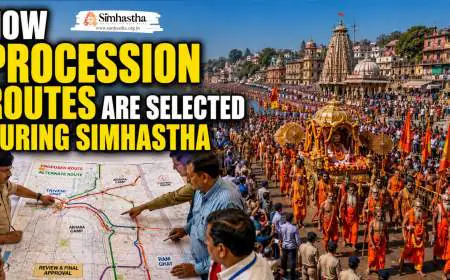
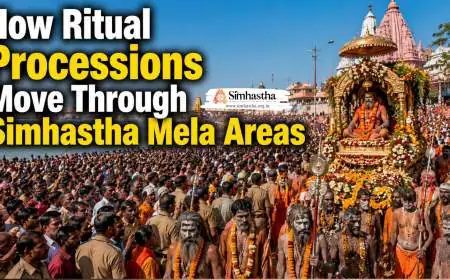
One of the defining elements of Ujjain Simhastha is the Shahi Snan, or royal bathing ritual. During Simhastha, various Akharas, representing monastic orders across Shaiva, Vaishnava, and ascetic traditions, participate in ceremonial processions and ritual bathing.
The order of Shahi Snan, the sequence of Akharas, and the associated rituals are governed by long-established tradition. These practices are not symbolic reenactments but active expressions of institutional continuity within Sanatan Dharma.
The presence of Akharas and their disciplined participation further distinguishes Simhastha as a living religious institution rather than a cultural festival.
Historical Continuity of Ujjain Simhastha
References to large sacred congregations in Ujjain under specific planetary conditions appear in Puranic literature, temple chronicles, and regional traditions. While historical records may vary in form, the underlying continuity of Simhastha as a recurring religious observance remains consistent.
Unlike events introduced or reshaped in later historical periods, Simhastha reflects a civilizational rhythm tied to cosmic cycles rather than human calendars. This continuity explains why Simhastha is regarded as an enduring institution rather than a periodically reinvented event.
Ujjain Simhastha 2028 in the Traditional Framework
Ujjain Simhastha 2028 represents the next occurrence of this sacred congregation, determined strictly through astronomical principles. The Simhastha 2028 dates correspond to Jupiter’s transit into Leo and are validated through established Jyotish methodology.
Preparations for Ujjain Simhastha 2028 include infrastructure development, permanent ghats, improved transport connectivity, and urban planning initiatives designed to accommodate millions of pilgrims. These measures are intended to support the event without altering its religious core.
Modern arrangements facilitate participation but do not redefine the spiritual essence of Simhastha.
Clarifying the Question: Is Ujjain Simhastha the Same as Kumbh Mela?
From a traditional Hindu perspective, Ujjain Simhastha is a Kumbh Mela, but it is not identical to other Kumbh gatherings. It is the Ujjain-specific Kumbh, governed by a unique astronomical trigger and rooted in Ujjain’s sacred geography.
The term Kumbh Mela functions as an umbrella, while Simhastha identifies the precise form that the Kumbh takes in Ujjain. Treating all Kumbh events as interchangeable overlooks the nuanced astronomical and scriptural distinctions that define each one.
Conclusion
Ujjain Simhastha is neither separate from nor identical to the Kumbh Mela in a simplistic sense. It is a distinct, location-bound expression of the Kumbh tradition, shaped by precise celestial laws, sacred geography, and uninterrupted religious practice.
Understanding this distinction is essential for pilgrims, researchers, and observers seeking to appreciate the depth of Hindu civilizational continuity. Ujjain Simhastha stands as a testament to how Sanatan Dharma integrates astronomy, ritual, and sacred space into a coherent and enduring spiritual system.
Related Simhastha 2028 Guides:
- What Are the Official Dates and Major Events of Simhastha 2028?
- Why Simhastha Happens Only When Jupiter Enters Leo ?
- Why Ujjain Was Chosen for Simhastha: Ancient Scriptures & Astral Logic
- Does Taking a Holy Bath in the Shipra River During Simhastha Remove Karmic Sins?
- Why is Ujjain Kumbh Called Simhastha?
- Simhastha 2028 Ujjain: Next Dates, Shahi Snan Schedule & Complete Spiritual Guide
- Was Ujjain the First Scindia Headquarters? Did Ranoji Start Simhastha? Full Spiritual Truth Revealed
- Top 10 Routes to Enter Ujjain During Simhastha 2028 Without Traffic Hassles
- The Cosmic Importance of Jupiter in Leo: Why It Creates Simhastha in Ujjain
- How Akhara Sector Allocation Works in Simhastha 2028: Complete Breakdown for Pilgrims
Frequently Asked Questions