



















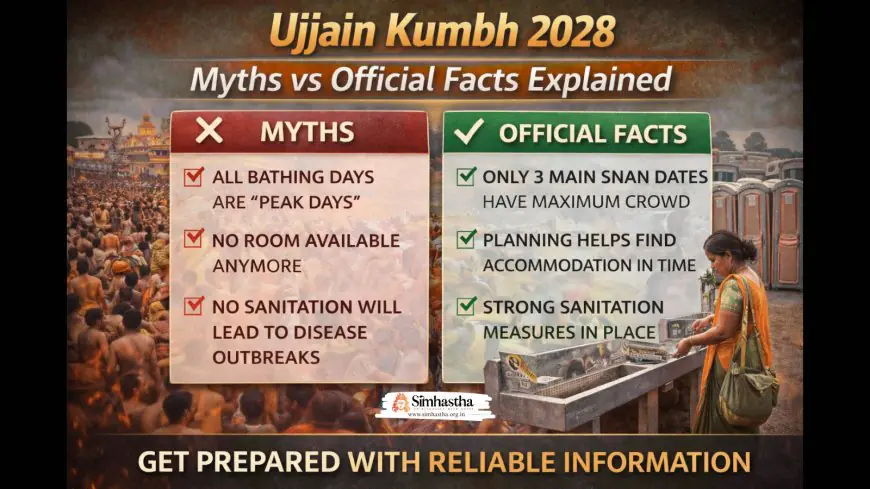
Ujjain Kumbh 2028: Myths vs Official Facts Explained
Confused about Ujjain Kumbh 2028? This detailed guide separates common myths from official facts about Simhastha dates, rituals, crowd planning, travel, and safety.


Ujjain Kumbh 2028: Myths vs Official Facts Explained
As preparations for Ujjain Kumbh 2028 gain visibility, misinformation spreads just as quickly as official announcements. Social media forwards, half-understood astrology posts, and speculative videos have created confusion among pilgrims. Separating Simhastha 2028 myths from official facts is essential not only for correct planning, but also for preserving the spiritual discipline of the event. This article exists for one purpose: clarity.
Simhastha is not an event shaped by trends or convenience. It is governed by fixed astronomical cycles, ritual discipline, and long-term administrative planning. Understanding the difference between rumor and reality helps pilgrims prepare correctly and prevents unnecessary panic or unrealistic expectations. Below, we address the most common myths circulating about Ujjain Kumbh 2028 and clearly explain the verified facts.
Myth 1: Ujjain Kumbh Can Be Shifted to Any Year
One of the most widespread misconceptions is that authorities can reschedule Ujjain Kumbh based on convenience or crowd pressure. This belief is entirely incorrect.
Official fact: Simhastha follows a fixed astronomical cycle tied to Jupiter’s transit. The timing of the event is explained in detail in the 12-year Simhastha cycle explanation . Dates are calculated, not chosen. They cannot be moved forward or postponed.
Trending Guides Now

Ujjain Kumbh Mela Governance: Who Runs Simhastha 2028?

How Often Is Ujjain Kumbh Held? Understanding the 12-Year Simhastha Cycle

Is Ujjain Simhastha the Same as Kumbh Mela?

Why Ujjain Kumbh Is a Civilizational Event, Not a Festival

Ujjain Railway Station to Mahakaleshwar Temple Distance (2026 Guide)

Ujjain Simhastha 2028 Dates Announced: Full Shahi Snan & Event Timeline

Mangalnath Temple Trip Budget: Puja, Local Transport, Food and Stay Planning
Omkareshwar Trip Budget Guide: Transport, Stay, Food and Local Travel Costs
Myth 2: Simhastha 2028 Will Last Only a Few Days
Another rumor suggests that Ujjain Kumbh 2028 will be limited to just a few bathing days. This misunderstanding often arises from confusing Shahi Snan days with the full event duration.
Official fact: Simhastha spans several weeks, with multiple ritual phases, not just peak Snan days. Shahi Snan days are focal points, but the pilgrimage experience extends far beyond them.
Myth 3: Anyone Can Perform Shahi Snan at Any Time
Many pilgrims believe Shahi Snan is a free-for-all ritual open to everyone at any moment during the day. This misconception leads to unrealistic expectations and travel errors.
Official fact: Shahi Snan follows strict ritual order and timing. Akhara processions, specific bathing windows, and controlled access are integral to safety and tradition. The ritual sequence is clearly explained in Shahi Snan order, meaning, and ritual logic .
Myth 4: Crowd Numbers Are Exaggerated for Media Attention
Some claim that Ujjain Kumbh crowd numbers are inflated for publicity. This belief ignores the complexity of crowd estimation at open religious gatherings.
Official fact: Crowd figures are estimates based on movement patterns, transport data, and density analysis. The methodology and limitations are explained in Simhastha 2016 crowd statistics analysis . Numbers are not random, but calculated ranges.

Myth 5: Safety Risks Are Being Ignored
Fear-based rumors often suggest that large gatherings automatically mean danger. This creates unnecessary anxiety, especially among elderly pilgrims.
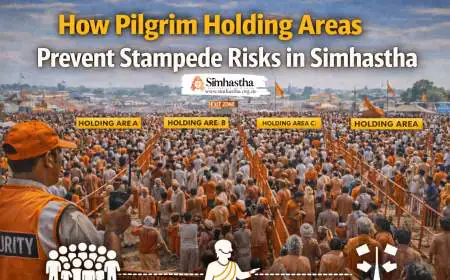
Official fact: Safety planning is central to Simhastha. Systems used successfully in 2016 continue to inform future planning. These include entry-exit segregation, monitoring, and emergency readiness described in stampede prevention measures used during Simhastha 2016 .
Myth 6: Health and Sanitation Are Secondary Concerns
Some believe that hygiene and medical care are afterthoughts at large religious events. This assumption is outdated.
Official fact: Public health is treated as core infrastructure. Sanitation, medical camps, water safety, and disease prevention were extensively deployed in 2016 and are foundational for 2028 planning. A complete breakdown is available in health, sanitation, and medical facilities during Simhastha 2016 .
Myth 7: Private Vehicles Will Reach the Ghats Easily
This myth leads to the most frustration on peak days. Pilgrims often expect to drive close to the river.
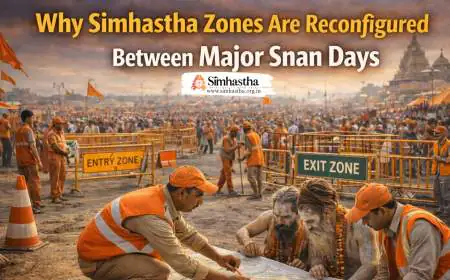
Official fact: Vehicle restrictions are deliberate safety measures. Walking corridors and shuttle systems are prioritized. Travel realities are explained clearly in travel do’s and don’ts during peak Snan days .
Myth 8: Simhastha Is Just a Festival, Not a Discipline
Reducing Simhastha to a spectacle misses its core purpose. This mindset fuels casual behavior that disrupts systems.
Official fact: Simhastha is a disciplined spiritual convergence governed by ritual order, time cycles, and collective responsibility. This discipline is why Simhastha can only happen in Ujjain , where geography, tradition, and planning align.
Why Myths Spread and Why Facts Matter
Myths spread because they simplify complexity. Facts matter because Simhastha is complex. Pilgrims who rely on verified information move calmly, plan realistically, and experience the event with dignity.
How to Stay Updated With Official Information
The safest way to avoid misinformation is to follow structured guides and official updates. Planning resources such as the Simhastha 2028 visiting and planning guide translate official frameworks into practical preparation.
Final Clarity for Ujjain Kumbh 2028
Ujjain Kumbh 2028 is not mysterious, unpredictable, or chaotic. It is structured, cyclical, and deeply disciplined. When myths are removed, what remains is clarity. And clarity is the foundation of a meaningful pilgrimage.
Frequently Asked Questions