



































Why Ujjain Kumbh 2028 Is Called Simhastha Mahakumbh ?
Ujjain Kumbh 2028 is uniquely known as Simhastha Mahakumbh. This detailed guide explains the astrological logic, ancient scriptures, historical evolution, and spiritual reasons behind the Simhastha name and why Ujjain’s Kumbh stands apart from all others.
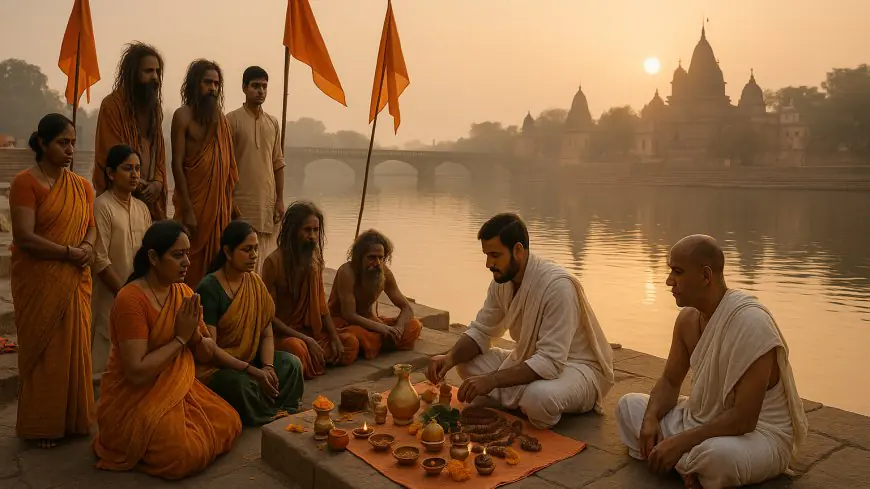


Why Ujjain Kumbh 2028 Is Called Simhastha Mahakumbh
Among the four sacred Kumbh cities of India, Ujjain holds a distinction that often puzzles first-time readers and pilgrims alike. While Prayagraj, Haridwar, and Nashik are commonly referred to simply as Kumbh or Mahakumbh, the Ujjain Kumbh carries a unique and ancient name: Simhastha Mahakumbh. This title is not ceremonial, poetic, or modern. It is precise, scriptural, astronomical, and deeply rooted in India’s understanding of cosmic time.
To understand why Ujjain Kumbh 2028 is called Simhastha Mahakumbh, one must step beyond surface-level explanations and enter the realms of astrology, Purāṇic tradition, sacred geography, and Shaivite philosophy.
For Every pilgrims, understanding Simhastha 2028 dates and the official Shahi Snan timeline is essential before booking flights or accommodation, as these sacred dates are completely non-negotiable.
Meaning of the Word “Simhastha”
The term Simhastha is derived from two Sanskrit words: Simha meaning Leo, and Stha meaning to reside or be positioned. Simhastha literally means “when the Sun resides in Leo.”
Trending Guides Now

Ujjain Kumbh Mela Governance: Who Runs Simhastha 2028?

How Often Is Ujjain Kumbh Held? Understanding the 12-Year Simhastha Cycle

Ujjain Kumbh Mela (Simhastha) 2028:: Everything First-Timers Must Know

Is Ujjain Kumbh 2028 a Mahakumbh or Simhastha? Official Explanation

Ujjain Railway Station to Mahakaleshwar Temple Distance (2026 Guide)

Ujjain Simhastha 2028 Dates Announced: Full Shahi Snan & Event Timeline

Mangalnath Temple Trip Budget: Puja, Local Transport, Food and Stay Planning

Omkareshwar Trip Budget Guide: Transport, Stay, Food and Local Travel Costs
In the context of Ujjain Kumbh, Simhastha refers to a rare and powerful planetary alignment in which:
-
The Sun enters the zodiac sign Leo (Simha Rashi)
-
Jupiter (Guru) enters Aquarius (Kumbh Rashi)
This specific celestial configuration does not occur annually. It repeats approximately once every twelve years, and only when it occurs in relation to Ujjain does the Simhastha Mahakumbh take place.
This is the first and most important reason why Ujjain Kumbh is not called by a generic name. Its very occurrence is governed by a distinct astrological rule, separate from other Kumbh locations.
Why Astrology Defines Ujjain Kumbh
In Sanatan Dharma, time is not linear but cosmic. Festivals are not scheduled by calendars alone, but by planetary movements that influence human consciousness. Ujjain, historically regarded as the astronomical heart of India, plays a central role in this system.

Ancient Indian astronomers considered Ujjain the reference meridian, similar to how Greenwich functions today. Calculations of planetary positions, eclipses, and auspicious timings were traditionally anchored to Ujjain.
Because of this status, the astrological alignment involving Leo and Jupiter gains heightened significance when observed from Ujjain. When these planets align as prescribed, the scriptures declare the period spiritually potent enough to host Simhastha Mahakumbh.
Connection Between Leo, Shiva, and Ujjain
Leo is ruled by the Sun, the symbol of cosmic authority, consciousness, and time. Ujjain is the city of Mahakaleshwar, the Lord of Time itself. This connection is not coincidental.
Mahakaleshwar is the only Jyotirlinga worshipped in its south-facing form, symbolizing mastery over death and time. During Simhastha, when the Sun enters Leo, the cosmic energy associated with authority and awakening aligns directly with Mahakal’s domain.
This convergence makes Ujjain the only Kumbh city where time, astrology, and Shiva worship intersect simultaneously, giving rise to the term Simhastha Mahakumbh rather than a generic Kumbh Mela.
Why “Mahakumbh” Is Added to Simhastha
The word Mahakumbh means the great Kumbh, not merely in size but in spiritual weight. Ujjain’s Kumbh is called Mahakumbh because:
-
It is governed by both solar and Jovian movements
-
It occurs at one of the most ancient Shaivite centers
-
It involves all major Akharas and ascetic orders
-
It includes rare rituals that are exclusive to Ujjain
Simhastha Mahakumbh is not held frequently, nor does it follow flexible timing. Its scale, spiritual intensity, and historical continuity elevate it to Mahakumbh status within the Ujjain tradition.
Scriptural References to Simhastha
Several ancient texts reference the Simhastha period explicitly. The Skanda Purana and Matsya Purana describe Ujjain as a site where divine beings gather during specific planetary yogas. These texts emphasize that bathing in the Shipra during Simhastha grants merit equal to years of penance.
Unlike other Kumbh locations, Ujjain’s scriptures link the festival directly to Shiva-centric liberation, rather than solely Vishnu or nectar legends. This further explains why the terminology differs.
Difference Between Ujjain Simhastha and Other Kumbhs
A common misconception is that all Kumbhs are identical in name and nature. In reality, each location has its own governing rule.
-
Prayagraj Kumbh is based on Jupiter’s position in Taurus and the Sun in Capricorn.
-
Haridwar Kumbh depends on Jupiter in Aquarius and the Sun in Aries.
-
Nashik Kumbh is tied to Jupiter in Leo with the Sun in Cancer.
-
Ujjain Kumbh, however, is governed by Sun in Leo and Jupiter in Aquarius, and uniquely named Simhastha.
Thus, the name Simhastha is not symbolic branding. It is an astronomical identifier.
Role of Shipra River in Simhastha
During Simhastha Mahakumbh, the Shipra River is believed to receive divine energy due to planetary alignment. Bathing in the Shipra at this time is said to cleanse accumulated karmas across lifetimes.
This belief is not rooted in mythology alone but in the idea that water bodies respond to cosmic rhythms. The Shipra, flowing through a city aligned with cosmic time, becomes spiritually activated only during Simhastha, reinforcing the festival’s unique identity.
Why Ujjain Kumbh 2028 Matters More Than Ever
Simhastha Mahakumbh 2028 arrives at a time when tradition meets transformation. With modern infrastructure, digital crowd management, and global spiritual attention, the essence of Simhastha remains unchanged while its reach expands.
Calling it Simhastha Mahakumbh preserves the integrity of its identity, ensuring it is not diluted or confused with other Kumbh events.
For first-time readers, understanding this name is the first step toward understanding why Ujjain’s Kumbh is not just another gathering, but a cosmic event tied to time itself.
You May Like:
Frequently Asked Questions