




























How Sanitation and Water Supply Are Managed Inside Simhastha Tent Cities
Explore how sanitation and water supply are efficiently managed in Simhastha tent cities to support millions with hygiene, safety, and smart infrastructure.


How Sanitation and Water Supply Are Managed Inside Simhastha Tent Cities
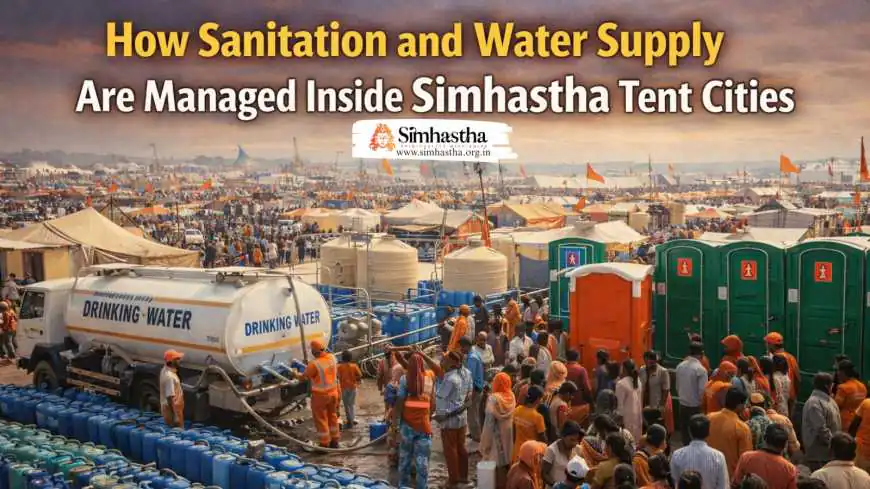
Simhastha tent cities are not just temporary settlements but fully functional urban ecosystems designed to support millions of pilgrims for weeks. At the heart of this massive operation lies a highly coordinated sanitation and water supply system that ensures hygiene, safety, and uninterrupted access to essential resources. These systems are not improvised solutions but carefully engineered networks that combine temporary infrastructure, real-time monitoring, and large-scale logistics to maintain public health in one of the most densely populated environments on Earth.
For Every pilgrims, understanding Simhastha 2028 dates and the official Shahi Snan timeline is essential before booking flights or accommodation, as these sacred dates are completely non-negotiable
The Foundation of Sanitation Planning in Simhastha
Sanitation in Simhastha begins long before the first tent is erected.
The Simhastha sanitation system is designed as a core infrastructure layer, not an afterthought. Authorities map population density, movement patterns, and usage zones to determine sanitation requirements.
Trending Guides Now

How to Choose the Right Hotel in Ujjain Near Mahakal

Where Pilgrims Stay During Ujjain Simhastha Event

Family Friendly Hotels Near Mahakal Corridor

Best Hotels in Freeganj Ujjain Near City Center

Ujjain Railway Station to Mahakaleshwar Temple Distance (2026 Guide)

Ujjain Simhastha 2028 Dates Announced: Full Shahi Snan & Event Timeline

Benefits of Becoming a Simhastha Volunteer

Ujjain Travel During Shravan Month: What Changes for Visitors
This planning ensures:
- Even distribution of facilities
- Accessibility within walking distance
- Capacity to handle peak usage
Sanitation is treated as a dynamic system that must function continuously under extreme pressure.
Designing a Temporary Yet Scalable Sanitation Network
Simhastha tent cities expand and contract based on crowd density.
The temporary sanitation infrastructure is built to scale accordingly.
This includes:
- Modular toilet units
- Mobile waste collection systems
- Expandable drainage networks
Each component can be increased or reduced depending on demand, ensuring efficiency without overbuilding.

A first time Simhastha guide is essential because without contextual understanding, pilgrims arrive prepared for devotion but unprepared for logistics, stamina, patience, and adaptability.
Deployment of Portable Toilets at Massive Scale
One of the most visible aspects of sanitation is the installation of toilets.
The portable toilets Simhastha strategy involves deploying thousands of units across the tent city.
These are strategically placed:
- Near camps and residential zones
- Along major pathways
- Close to high-density gathering areas
Regular maintenance cycles ensure that these facilities remain clean and functional throughout the event.
Waste Collection and Disposal Systems
Managing waste for millions requires precision.
The Kumbh waste management system operates through:
- Scheduled waste collection routes
- Segregation of biodegradable and non-biodegradable waste
- Centralized disposal and processing units
This system prevents accumulation, reduces health risks, and maintains environmental balance.
Couples arriving during Ujjain Simhastha should spend their first few hours adjusting to the rhythm of the pilgrimage. Walking slowly through the city allows visitors to absorb the powerful spiritual atmosphere created by the gathering of saints and devotees attending the Ujjain Kumbh Mela.To deepen your understanding of the spiritual customs and sacred rituals practiced during Ujjain Simhastha, read our complete Simhastha rituals and sacred practices guide that explains their meaning, timing, and significance.
Water Supply Network in Tent Cities
Water is the lifeline of Simhastha.
The water supply Simhastha tent city system ensures continuous access to clean water for drinking, cooking, and sanitation.
This network includes:
- Temporary pipelines connected to main sources
- Storage tanks distributed across zones
- Pumping stations to maintain pressure
Water distribution is designed to reach every corner of the tent city without interruption.
Ensuring Safe Drinking Water for Millions
Providing safe drinking water is a critical priority.
The water distribution Kumbh Mela system incorporates:
- Filtration units
- Chlorination processes
- Regular quality testing
Water points are placed strategically to reduce crowding and ensure easy access.
This reduces dependency on bottled water and supports sustainability.
Also Read | Best Time to Visit Ujjain Simhastha 2028
Drainage and Wastewater Management
Sanitation is incomplete without proper drainage.
The Simhastha sanitation system includes temporary drainage channels that:
- Prevent waterlogging
- Direct wastewater away from living areas
- Maintain dry and hygienic conditions
Wastewater is treated or safely disposed of to avoid contamination.
Role of Technology in Monitoring Sanitation
Modern Simhastha planning integrates technology into sanitation systems.
Sanitation logistics India events now include:
- Real-time monitoring of toilet usage
- GPS tracking of waste collection vehicles
- Data-driven deployment of cleaning staff
This ensures that issues are identified and resolved quickly.
Also Read | Step-by-Step Guide to Shipra Snan at Ujjain Kumbh Mela
Workforce Behind the Sanitation System
A massive workforce operates behind the scenes.
The Kumbh sanitation management system depends on:
- सफाई कर्मी (Sanitation workers)
- Supervisory teams
- Rapid response units
These teams work in shifts to maintain cleanliness around the clock.
Their role is critical in sustaining hygiene across the tent city.
Hygiene Awareness and Public Participation
Sanitation is not only about infrastructure but also behavior.
Authorities promote tent city hygiene planning through:
- Public announcements
- Signage
- Awareness campaigns
Pilgrims are encouraged to use designated facilities and maintain cleanliness.
This shared responsibility enhances overall system effectiveness.
Integration with Public Health Systems
Sanitation and health are deeply connected.
The public health Simhastha framework integrates:
- Medical camps
- Disease monitoring systems
- Rapid response healthcare units
Clean water and proper sanitation reduce the risk of outbreaks and ensure a safe environment for pilgrims.
Managing Peak Load During High-Density Days
Peak days like Shahi Snan create extreme pressure on sanitation systems.
The Simhastha sanitation system is designed to handle these surges through:
- Additional temporary units
- Increased cleaning frequency
- Backup water supply systems
This ensures continuity even under maximum load.
Environmental Sustainability in Sanitation Planning
Modern Simhastha planning emphasizes sustainability.
The Kumbh waste management system includes:
- Waste recycling initiatives
- Eco-friendly sanitation solutions
- Controlled disposal methods
These measures reduce environmental impact while maintaining efficiency.
Learning from Past Events to Improve Systems
Each Simhastha builds on previous experience.
Earlier challenges in sanitation have led to improvements in:
- Facility placement
- Waste management processes
- Water distribution efficiency
The current Simhastha sanitation system reflects years of refinement and innovation.
Coordination Between Departments for Seamless Execution
Sanitation and water supply involve multiple agencies working together.
The system integrates:
- नगर निगम (Municipal Corporation)
- जल विभाग (Water Department)
- स्वास्थ्य विभाग (Health Department)
This coordination ensures that all aspects of sanitation and water management function as a unified system.
Where Cleanliness Sustains the Spirit of the Gathering
Simhastha is a spiritual journey, but its success depends on physical conditions that support millions of people.
Sanitation and water supply systems quietly sustain this journey, ensuring that devotion flows without disruption.
Behind every clean pathway and every accessible water point lies a complex network working continuously, making the temporary city not just livable, but efficient, safe, and dignified for all who arrive.
Frequently Asked Questions