






















How Medical Camps Function Inside Simhastha Tent Cities
Discover how medical camps operate inside Simhastha tent cities with real-time healthcare, emergency response, and public health systems for millions.


How Medical Camps Function Inside Simhastha Tent Cities
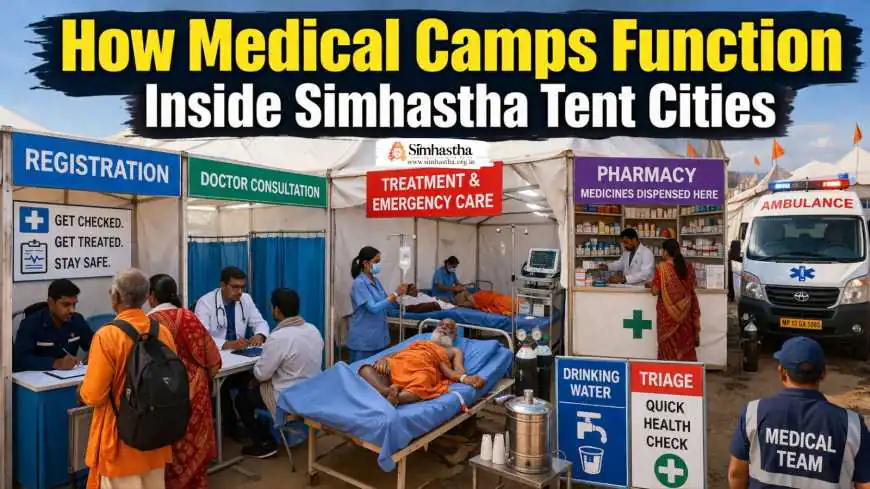
Simhastha tent cities are not just temporary settlements but highly engineered urban systems designed to sustain millions of pilgrims over several weeks. Within this complex environment, medical camps function as the lifeline of public health, operating continuously to manage everything from minor ailments to critical emergencies. These camps are strategically positioned, technologically integrated, and operationally synchronized with larger healthcare networks to ensure that medical assistance is never out of reach. By combining preventive healthcare, rapid response mechanisms, and real-time monitoring, the system ensures that even in one of the world’s largest human gatherings, health risks are minimized and care remains immediate, structured, and reliable.
For Every pilgrims, understanding Simhastha 2028 dates and the official Shahi Snan timeline is essential before booking flights or accommodation, as these sacred dates are completely non-negotiable
The Foundation of the Simhastha Healthcare System
The Simhastha medical camps system is built as a primary layer of infrastructure rather than a secondary support service.
Unlike conventional events, healthcare here must operate under extreme variability, where patient volume can fluctuate dramatically within hours.
Trending Guides Now
Affordable Hotels Near Ujjain Railway Station

Ultimate Hotel Booking Guide for Ujjain Visitors

15 Budget Hotels Near Mahakal Temple Ujjain Under ₹1500

Luxury Hotels Near Mahakaleshwar Temple Ujjain: Big Hospitality Boom Underway

Ujjain Railway Station to Mahakaleshwar Temple Distance (2026 Guide)

Ujjain Simhastha 2028 Dates Announced: Full Shahi Snan & Event Timeline

Benefits of Becoming a Simhastha Volunteer

Ujjain Travel During Shravan Month: What Changes for Visitors
This system is designed to:
- Provide universal access to care
- Maintain continuous medical readiness
- Integrate prevention with treatment
Healthcare is not reactive. It is proactive, predictive, and continuously monitored.
Strategic Distribution of Medical Camps Across Zones
Medical camps are carefully distributed across the entire tent city.
The tent city medical facilities are placed based on:
- Population density clusters
- Movement corridors
- Proximity to high-risk zones such as ghats
This ensures that no pilgrim is too far from medical assistance.
Accessibility is a key design factor, reducing response time and improving outcomes.

A first time Simhastha guide is essential because without contextual understanding, pilgrims arrive prepared for devotion but unprepared for logistics, stamina, patience, and adaptability.
Modular Structure of Medical Camps
Each camp is designed using a modular layout.
The temporary healthcare infrastructure India model includes:
- Triage areas for initial assessment
- Treatment units for immediate care
- Observation wards for monitoring
- Pharmacy sections for medication distribution
This structure allows camps to function as mini-hospitals within the tent city.
Types of Medical Services Provided
Medical camps offer a wide range of services under the Kumbh healthcare system.
These include:
- General outpatient consultations
- Emergency care for injuries
- Treatment for dehydration and fatigue
- Management of infectious conditions
The goal is to address most medical needs on-site without overwhelming external hospitals.
Couples arriving during Ujjain Simhastha should spend their first few hours adjusting to the rhythm of the pilgrimage. Walking slowly through the city allows visitors to absorb the powerful spiritual atmosphere created by the gathering of saints and devotees attending the Ujjain Kumbh Mela.To deepen your understanding of the spiritual customs and sacred rituals practiced during Ujjain Simhastha, read our complete Simhastha rituals and sacred practices guide that explains their meaning, timing, and significance.
Emergency Medical Response Framework
Emergencies require rapid and coordinated action.
The emergency medical response Kumbh system includes:
- Ambulance networks positioned across zones
- Quick response medical teams
- On-site stabilization units
These components work together to ensure immediate intervention in critical situations.
Integration with Advanced Healthcare Facilities
Medical camps are connected to a broader healthcare network.
The Simhastha medical logistics system ensures seamless referral to:
- District hospitals
- Specialized treatment centers
- Intensive care units
This layered system ensures continuity of care for severe cases.
Also Read | Best Time to Visit Ujjain Simhastha 2028
Mobile Medical Units and Their Role
Mobile healthcare units enhance coverage.
The mobile hospitals Simhastha system includes:
- Ambulances equipped with advanced life support
- Mobile diagnostic units
- Rapid deployment teams
These units can reach areas where fixed camps may not be immediately accessible.
Public Health Monitoring and Disease Prevention
Preventive care is a major focus.
The public health Simhastha planning system includes:
- Continuous disease surveillance
- Monitoring of water and food safety
- Early detection of infection clusters
This reduces the likelihood of outbreaks in dense populations.
Also Read | Step-by-Step Guide to Shipra Snan at Ujjain Kumbh Mela
Managing Patient Load During Peak Days
Peak days like major Snan events create intense pressure.
The crowd health management Kumbh system responds by:
- Increasing staff deployment
- Expanding treatment capacity
- Ensuring additional medical supplies
This scalability is critical for maintaining efficiency.
Workforce and Human Resource Management
A large workforce operates the medical system.
The Simhastha medical camps system includes:
- Doctors from multiple specialties
- Nurses and paramedics
- Support and sanitation staff
Shift-based operations ensure continuous service without interruption.
Technology Integration in Medical Operations
Technology enhances coordination and efficiency.
The Kumbh healthcare system uses:
- Digital patient records
- Real-time reporting dashboards
- Communication systems linking all camps
This ensures accurate tracking and quick decision-making.
Coordination Between Health and Administrative Departments
Medical operations require multi-agency coordination.
The Simhastha medical logistics system integrates:
- Health departments
- Local administration
- Emergency services
This unified approach ensures smooth functioning.
Sanitation and Hygiene Link to Healthcare
Healthcare is closely tied to sanitation.
The public health Simhastha planning system ensures:
- Clean surroundings near camps
- Proper waste disposal
- Safe drinking water availability
This reduces disease risk significantly.
Specialized Care and Referral Systems
Some cases require advanced treatment.
Medical camps coordinate with hospitals for:
- Cardiac emergencies
- Trauma cases
- Infectious diseases
This ensures that patients receive appropriate care without delay.
Awareness Campaigns for Pilgrim Health
Education plays a key role in prevention.
The Kumbh disease prevention system promotes:
- Hygiene practices
- Safe food and water usage
- Early medical consultation
This reduces pressure on healthcare facilities.
Real-Time Data Monitoring and Decision Making
Continuous monitoring ensures system efficiency.
Authorities track:
- Patient inflow
- Disease patterns
- Resource utilization
This data-driven approach improves response and planning.
Learning from Past Simhastha Healthcare Systems
Each Simhastha improves healthcare systems.
The Simhastha medical camps model evolves based on:
- Previous challenges
- Patient trends
- Operational insights
This continuous improvement enhances reliability.
Infrastructure Designed for Rapid Setup and Removal
Medical camps must be quickly deployable.
The temporary healthcare infrastructure India system allows:
- Fast installation
- Flexible expansion
- Efficient dismantling
This suits the temporary nature of the event.
Ensuring Inclusive and Accessible Healthcare
Healthcare services are designed for all.
The system ensures:
- Easy access for elderly pilgrims
- Support for disabled individuals
- Clear directions to medical camps
Inclusivity is a key component of planning.
Managing Environmental and Health Risks Together
Environmental conditions affect health outcomes.
The system monitors:
- Temperature
- Water quality
- Waste management
This integrated approach supports overall well-being.
Where Healthcare Becomes a Continuous System of Care
Simhastha medical camps are not isolated facilities. They are part of a living healthcare network that adapts, responds, and evolves with the movement of millions.
From preventive care to emergency response, from data monitoring to human coordination, every element works together to maintain stability in a highly dynamic environment.
In this temporary city built on faith and movement, medical camps ensure that care is constant, accessible, and efficient, allowing pilgrims to focus on their spiritual journey while remaining protected by a system designed to serve at scale.
Frequently Asked Questions