





























Kashi Vishwanath Temple: The Eternal Abode of Lord Shiva in Varanasi
Discover the divine glory of Kashi Vishwanath Temple in Varanasi — the sacred Jyotirlinga of Shiva, its history, rituals, Ganga traditions, corridor project, travel guide, and spiritual significance.


Kashi Vishwanath Temple: The Eternal Abode of Lord Shiva in Varanasi
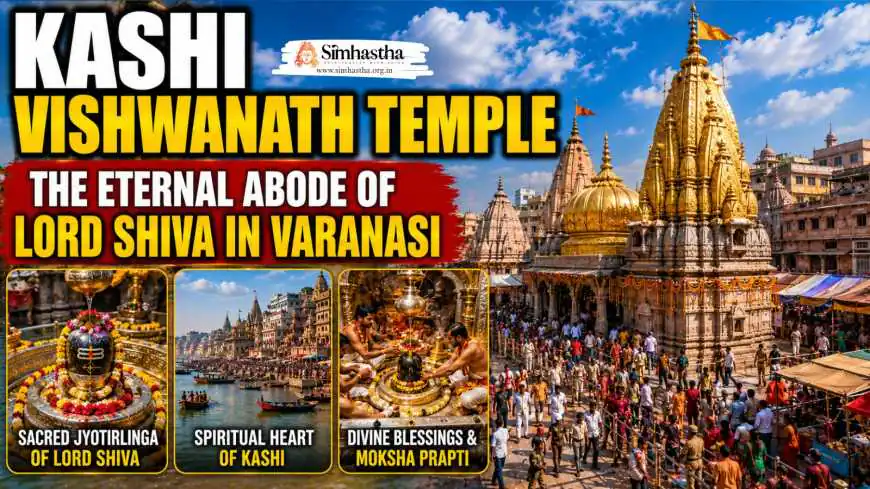
Among the countless temples of India, there stands one that is not merely a place of worship but the beating heart of Hindu spirituality — Kashi Vishwanath Temple, the luminous Jyotirlinga of Varanasi. Situated on the sacred banks of the Ganga, this temple is believed to be the cosmic center of the universe, where the divine presence of Lord Shiva as Vishwanath — the Ruler of the Universe — radiates eternally.
Kashi, the “City of Light,” is older than history, older than legend, and older than civilization itself. It is said that even when the physical world dissolves, Varanasi will survive by the will of Lord Shiva. To step into Kashi Vishwanath Temple is to step into a portal between the mortal and the eternal.
For Every pilgrims, understanding Simhastha 2028 dates and the official Shahi Snan timeline is essential before booking flights or accommodation, as these sacred dates are completely non-negotiable.
The Divine Legend of Kashi Vishwanath
According to ancient scriptures, Lord Shiva proclaimed:
“Kashi is my own city. Whoever dies here attains liberation.”
Trending Guides Now

Omkareshwar Jyotirlinga: Complete Guide, History, Importance & Darshan Tips (2026)

Rameshwaram Temple Guide: History, Darshan Timings, Rituals & Spiritual Significance (2026)
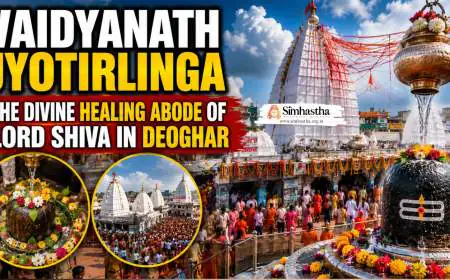
Vaidyanath Jyotirlinga: The Divine Healing Abode of Lord Shiva in Deoghar

Bhimashankar Jyotirlinga 2026: The Ultimate Guide to History, Trekking & Darshan

Ujjain Railway Station to Mahakaleshwar Temple Distance (2026 Guide)

Ujjain Simhastha 2028 Dates Announced: Full Shahi Snan & Event Timeline

Benefits of Becoming a Simhastha Volunteer

Ujjain Travel During Shravan Month: What Changes for Visitors
This belief stems from the legend that Shiva himself whispers the Taraka Mantra into the ears of those who breathe their last in Kashi, granting them moksha (liberation). The Jyotirlinga of Kashi Vishwanath is believed to be the point where the cosmic energy of Shiva descended to bless the Earth.
Another revered legend narrates that Brahma and Vishnu once debated supremacy. To test them, Shiva appeared as an infinite column of light — the first Jyotirlinga. The Kashi Vishwanath Linga is considered the eternal manifestation of that divine radiance.
A Temple Reborn: The Grand Kashi Vishwanath Corridor
In 2021, the ancient temple entered a new era with the inauguration of the Kashi Vishwanath Corridor, a magnificent project connecting the temple directly to the Ganga ghats. This transformed narrow lanes into open pathways, enabling millions of devotees to experience:
-
Spacious pilgrimage routes
-
Beautiful sandstone architecture
-
Sculptures depicting Kashi’s divine heritage

-
A majestic entrance with panoramic river views

This project restored the grandeur that Kashi had for millennia, blending history with modern devotion.
A Journey Through Sacred History
The original Kashi temple is believed to date back thousands of years. Over centuries, it faced repeated invasions and destruction. Yet, each time, it rose again — rebuilt by kings, saints, and devotees who refused to let Kashi’s flame die.
The current temple was rebuilt in 1780 by Queen Ahilyabai Holkar, a legendary patron of Indian temples. Her devotion transformed the site into one of the most sacred pilgrimage destinations on Earth.
Architectural Grace & Divine Aura
Kashi Vishwanath Temple is a stunning example of:
-
Brilliant gold-plated domes
-
Intricate stone carvings
-
A powerful Shivalinga in a silver sanctum
-
Courtyards with ancient shrines
-
Devotees chanting Har Har Mahadev continuously
The golden spire, donated by Maharaja Ranjit Singh, glistens under the sun, symbolizing divine illumination spreading across the holy city.
Daily Rituals & Spiritual Vibrations
The temple resonates with rituals from dawn to night:
Mangala Aarti (Morning Aarti)
A moment of divine energy when Shiva is awakened with chants, bells, and Vedic hymns.
Mid-day & Evening Puja
Devotees offer milk, honey, water, and Bilva leaves to the Jyotirlinga.
Shringar Aarti
The Linga is adorned with flowers, sandalwood, and sacred ash.
Shayan Aarti
The final ceremony where Lord Vishwanath is offered rest for the night.
These rituals create a continuous spiritual pulse that flows through the temple and into the heart of every devotee.
Ganga Aarti: A Divine Symphony on the Ghats
Every evening, the ghats outside Kashi Vishwanath come alive with the breathtaking Ganga Aarti — priests in saffron robes, holding fire lamps, chanting mantras, and offering prayers to the River Goddess.
The synchronized movement of flames, bells, incense, and mantras creates an experience so powerful that devotees often describe it as “the moment the soul awakens.”
Festivals that Transform Kashi into Heaven
Mahashivaratri
The grandest celebration — night-long worship, Rudrabhisheka, devotional music, and lakhs of pilgrims.
Shravan Month
A month entirely dedicated to Shiva, with continuous pujas and offerings.
Dev Deepawali
The ghats light up with millions of diyas, symbolizing the victory of divine light.
Makar Sankranti & Kartik Poornima
Highly auspicious days for Ganga Snan and Shiva worship.
How to Reach Kashi Vishwanath Temple
Nearest Airport
Lal Bahadur Shastri International Airport (26 km)
Nearest Railway Stations
-
Varanasi Junction
-
Kashi Station
By Road
Well-connected from Prayagraj, Ayodhya, Lucknow, Patna, and Gorakhpur.
Best Time to Visit
-
October to March – Pleasant weather
-
Shravan Month – Extremely auspicious
-
Mahashivaratri – Peak devotion
-
Evening Ganga Aarti is a must-experience
Travel Tips for Devotees
-
Online darshan booking recommended
-
Visit early morning for comfortable darshan
-
Wear traditional or modest clothing
-
Follow temple security protocols
-
Avoid carrying valuables
-
Explore nearby temples like Annapurna Devi and Kal Bhairav
Frequently Asked Questions