

















Vaidyanath Jyotirlinga: The Divine Healing Abode of Lord Shiva in Deoghar
Discover Vaidyanath Jyotirlinga, the divine healing abode of Lord Shiva in Deoghar. Explore the Ravana legend, Shravani Mela, temple timings, and healing significance.
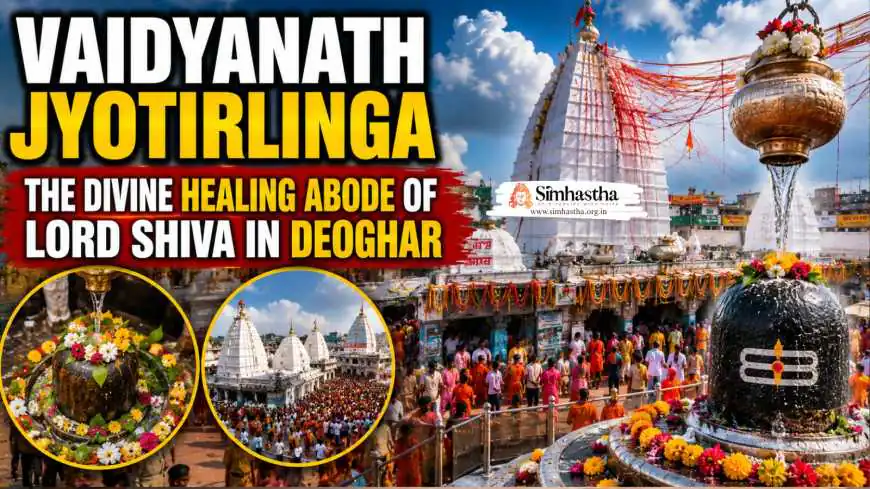


Welcome to the Healing Abode of Lord Shiva 🕉️💚
Let me tell you about a place where faith meets healing. A place where the Lord himself is worshipped as the divine physician—the one who cures not just the body, but the soul. 🌿
Welcome to Vaidyanath Jyotirlinga in Deoghar, Jharkhand—one of the 12 Jyotirlingas and a shrine that holds a special place in the hearts of millions. 🏛️
This temple is not just another Shiva temple. It is the only temple in India that is both a Jyotirlinga and a Shakti Peetha—a rare confluence of Shiva and Shakti . The name "Vaidyanath" itself means "Lord of Physicians" [3†L6-L8]. It is believed that worshipping here can heal illnesses and bring overall well-being [3†L7-L8]. Devotees believe that the rituals and offerings made here, especially on Mondays, have the power to heal and bring relief from suffering [3†L31-L34].
But what makes this Jyotirlinga truly special is its story—a tale of devotion, sacrifice, and divine intervention that involves none other than the demon king Ravana himself. 📖
Trending Guides Now

Rameshwaram Temple Guide: History, Darshan Timings, Rituals & Spiritual Significance (2026)

Trimbakeshwar Jyotirlinga: The Sacred Abode of Lord Shiva in Nashik
Sri Bhramaramba Mallikarjuna Swamy Varla Devasthanam: A Sacred Journey to the Srisailam Jyotirlinga
Grishneshwar Jyotirlinga Temple: History, Devotion & Pilgrimage Guide

Ujjain Railway Station to Mahakaleshwar Temple Distance (2026 Guide)

Ujjain Simhastha 2028 Dates Announced: Full Shahi Snan & Event Timeline

Ujjain Simhastha Update: CM Mohan Yadav Reviews 2028 Works

Ujjain Railway Station to Kal Bhairav Temple: Distance, Auto Fare and Best Route
In this guide, we'll explore everything you need to know about Vaidyanath Jyotirlinga—its legendary history, the healing significance, the grand Shravani Mela, temple timings, and practical travel tips. Let's dive in! 🚀
The Legend of Vaidyanath: When Shiva Became the Divine Physician 🩺🕉️
Ravana's Penance and the Gift of Healing
According to the Shiva Purana, the story of Vaidyanath Jyotirlinga is deeply connected to Ravana, the demon king of Lanka [4†L20-L23]. Ravana, a great devotee of Lord Shiva, performed intense penance in the Himalayan region to appease Shiva [4†L17-L18]. He offered nine of his heads as a sacrifice to Shiva—one by one [4†L18-L19].
As the legend goes, Ravana was a powerful devotee who sought to attain immortality and invincibility. When he was about to cut off his tenth head, Lord Shiva appeared before him as a Jyotir-linga (a radiant pillar of light) [4†L25-L26]. Impressed by Ravana's devotion, Shiva restored his heads like a vaidya (physician) and granted him the boons he desired [4†L27-L28].
This act of healing—Shiva acting as a doctor—gave the Jyotirlinga its name: Vaidyanath, the "Lord of Physicians" [9†L11-L13].
The Jyotirlinga That Was Meant for Lanka
But the story doesn't end there. According to another version of the legend, Ravana, wanting to take Shiva to Lanka, prayed to the Lord [9†L13-L15]. Impressed by his devotion, Lord Shiva gave Ravana a Shiva Lingam and told him to carry it to Lanka without putting it down anywhere [9†L16-L18]. If he did, the lingam would become permanently fixed at that spot [9†L18-L19].
Ravana was overjoyed, as the lingam would protect his capital and make him invincible [9†L19-L20]. However, the other gods objected, fearing that Ravana would wreak havoc on the world if the lingam reached Lanka [9†L20-L21].

On his way back from Mount Kailash, Ravana needed to perform his sandya-vandana (evening prayers) but couldn't do so with the lingam in his hands [9†L22-L23]. He searched for someone to hold the lingam. Lord Ganesha appeared, disguised as a shepherd, and offered to hold it [9†L25]. Ganesha warned Ravana that if he took too long, he would put the lingam down and leave [9†L26-L27].
When Ravana didn't return quickly enough, Ganesha placed the lingam on the ground at Deoghar [9†L30-L31]. When Ravana returned, he tried everything to move the lingam but couldn't [9†L31-L32]. The lingam had become permanently fixed—and that is the Vaidyanath Jyotirlinga we see today [5†L23-L25].
A Unique Dussehra: Ravana Revered, Not Burned
In a fascinating twist, Deoghar celebrates Dussehra differently. While the rest of India burns Ravana's effigy, Deoghar reveres Ravana as a respected king and scholar [0†L27-L29]. Locals never burn his effigy, crediting him with establishing the Jyotirlinga [0†L28-L29]. This unique tradition reflects the deep connection between Ravana and the temple.
The Healing Powers of Vaidyanath: More Than a Temple 🩺💊
The Divine Physician
The name "Vaidyanath" means "Lord of Physicians" [3†L6-L8]. According to the Matsya Purana, this sacred land was called "Arogya Baidyanathitee"—a place where Shakti resides and aids Shiva in healing the afflicted [5†L6-L7][8†L37-L38].
Devotees believe that worshipping at Vaidyanath can:
-
🌿 Cure physical ailments and chronic illnesses [3†L31-L34]
-
🧠 Heal mental illnesses and provide emotional relief [3†L31-L32]
-
🙏 Bring overall well-being and spiritual upliftment [3†L7-L8]
The temple is especially known for curing mental illnesses and other chronic ailments [3†L31-L32]. Devotees from across India visit with the hope of healing and relief from suffering.
The Vaidyanath Tradition at Parli Vaijnath
It's worth noting that there is another Vaidyanath Jyotirlinga in Parli Vaijnath, Maharashtra [1†L8-L10]. The lingam there is also known as Dhanavantari or Amriteshwari and is considered especially powerful for healing and health [1†L7-L8]. Both temples share the common theme of Lord Shiva as the divine healer.
The Temple: Architecture, History, and Sacred Features 🏛️
A 72-Foot Marvel
The main temple of Baba Baidyanath stands approximately 72 feet tall, an imposing structure that dominates the skyline of Deoghar [5†L25]. The temple complex comprises the central shrine of Baba Baidyanath along with 21 additional temples [7†L13-L14][9†L5-L6].
The architecture is a mix of various styles due to its long history of construction and renovation [5†L31-L32]. The main shrine follows the Nagara style of architecture, a distinctive North Indian temple style characterized by its towering shikhara (spire) [7†L33-L34].
Historical Significance
Baidyanath Dham has been famous since the rule of the last Gupta emperor, Adityasena Gupta, in the 8th century AD [5†L11][10†L15-L16]. The temple has maintained its importance even during Muslim rule in India [10†L17-L18].
Mughal emperor Akbar's brother-in-law built a pond at Deoghar known as Mansarovar [5†L12-L13][10†L16-L17]. Over the centuries, the temple received patronage from various rulers. The current structure was commissioned around 1650 CE by Raja Puran Mal of Gidhaur [5†L44-L45][7†L34-L35]. The Maharaja of Giddhaur also gifted three gold vessels set compactly on the pyramidal tower [10†L24-L25].
Sacred Features of the Temple
| Feature | Significance |
|---|---|
| Jyotirlinga + Shakti Peetha | Only temple in India to be both—representing Shiva and Shakti together [4†L32-L33][6†L20-L23] |
| 21 Additional Temples | Shrines for Parvati, Ganesha, Brahma, Kalabhairav, Hanuman, Saraswati, Surya, Ganga, Kali, and others [10†L20-L22] |
| Gathbandhan (Red Threads) | The Maa Parvati temple is tied to the main Shiva temple with huge red sacred threads, symbolizing the nuptial knot of Shiva and Shakti [8†L33-L36] |
| Nandi Statue | A huge Nandi, Lord Shiva's mount, stands in front of the Lord [10†L27-L28] |
| Punchsula (Five Knives) | Five knives in a trident shape at the temple [10†L25-L26] |
| Chandrakanta Mani | A lotus jewel with eight petals [10†L26-L27] |
The Divine Couple Together
The temple is unique in that it houses a Shiva Linga along with a Shakti Peetha [10†L10-L12]. This is the only temple in the country to be both a Jyotirlinga and a Shaktipeetha [6†L20-L23]. It is believed that the heart of Sati, wife of Lord Shiva, fell here, which is why Shiva and Shakti are said to reside together [8†L29-L31]. This represents the unity and divine matrimony of Shiva and Shakti [8†L34-L36].
Temple Timings and Rituals ⏰🕉️
Darshan Timings
| Time | Activity |
|---|---|
| 4:00 AM | Mangala Aarti (Morning Aarti) [1†L12] |
| 4:30 AM – 3:30 PM | Morning Darshan (Sarkari Pooja) [1†L16-L17] |
| 3:30 PM – 6:00 PM | Temple Closed [1†L35] |
| 6:00 PM – 9:00 PM | Evening Darshan (Shringar Puja) [1†L34] |
| 9:00 PM | Shayan Aarti (Night Aarti) [1†L13] |
During Shravan, the temple operates effectively continuously [1†L14][12†L17-L18].
Rituals at the Temple
-
🪔 Mangala Aarti: The first prayer to wake the deity at 4:00 AM
-
🪔 Rudrabhishek: A powerful ritual of bathing the Shiva Lingam with sacred offerings
-
🪔 Jalabhishek: Offering water to the Shiva Lingam
-
🪔 Shringar Pooja: Decorating the deity in the evening
-
🪔 Shayan Aarti: The final prayer before the deity goes to rest at 9:00 PM
The Shravani Mela: The World's Largest Walking Pilgrimage 🚶♂️🌊
The Shravani Mela is one of the most significant events at Vaidyanath Jyotirlinga. Centered around the revered Baba Baidyanath Temple, this month-long pilgrimage attracts millions of Kanwariyas—devotees who carry holy Ganga water from Sultanganj in Bihar to Deoghar [6†L9-L12].
The Scale:
-
📏 Distance: 108 kilometers from Sultanganj to Deoghar
-
👥 Participants: Millions of Kanwariyas walking barefoot
-
🌧️ Season: During the monsoon month of Shravan (July-August)
-
🙏 Significance: This is the world's largest walking pilgrimage [12†L5-L6]
The Kanwar Tradition:
-
Kanwariyas walk the entire 105 km route without wearing footwear [12†L35-L36]
-
They avoid placing the kanwar (the sacred pole carrying the Ganga water) on the ground [12†L36]
-
During Shravan, saffron attire is mandatory for kanwariyas [12†L34-L35]
A Spectacle of Devotion: Imagine a line of faithful stretching 108 kilometers, all carrying holy water from the river Ganga to offer at the temple—a spectacle that showcases the unwavering devotion of Shiva's followers [8†L23-L26].
How to Reach Vaidyanath Jyotirlinga 🗺️
By Air ✈️
-
🛫 Deoghar Airport (DGH) : Opened in 2022, located about 10 km from the temple, about 25 minutes by road. Direct flights from Delhi and Kolkata are available [12†L11-L12][8†L10-L11]
-
🛫 Patna Airport (PAT) : About 285 km away [8†L11]
-
🛫 Ranchi Airport : About 250 km away [2†L40]
By Train 🚆
Deoghar has three main railway stations [11†L8]:
| Station | Distance from Temple |
|---|---|
| Baidyanathdham Junction | 2 km [11†L8] |
| Deoghar Junction | 3 km [11†L8] |
| Jasidih Junction | 7 km [11†L8] |
Jasidih Junction is a major junction on the Delhi-Howrah line, well-connected to major cities across India [12†L13].
By Road 🚌
-
🚌 Baghmara Inter State bus stand is about 10 km from the temple [11†L9-L10]
-
🚗 From Bhagalpur: 75 km / 2 hours [12†L14]
-
🚗 From Patna: 285 km / 6 hours [12†L14]
-
🚗 From Kolkata: 380 km / 7 hours [12†L14]
Practical Tips for Pilgrims 📝
What to Wear
-
👕 Modest traditional attire is expected [12†L34-L35]
-
🧡 Saffron is mandatory for kanwariyas during Shravan [12†L34-L35]
-
👣 No footwear for kanwariyas walking the kanwar route [12†L35-L36]
What Not to Do
-
📵 No electronics are allowed inside the temple [12†L19]
-
🚫 Do not place the kanwar on the ground during the Shravani Mela [12†L36]
When to Visit
| Season | Experience |
|---|---|
| Shravan (July-August) | Intense devotion, largest crowds, physically demanding [12†L38-L42] |
| October-March | Pleasant weather, comfortable darshan |
| Maha Shivaratri | Grand celebrations, special rituals |
Crowd Warning: Crowds during Shravani Mela are extraordinary [12†L38]. Visitors uncomfortable in dense crowds should avoid the month entirely [12†L39-L40]. The kanwar walk in monsoon weather is physically demanding—heatstroke, blisters, and foot injuries are common among participants [12†L41-L42].
Places to Visit Near Vaidyanath Temple 🗺️
| Place | Significance |
|---|---|
| Maa Parvati Temple (Shakti Peetha) | Tied to the main temple with red sacred threads [8†L32-L36] |
| Mansarovar Pond | Built by Akbar's brother-in-law [5†L12-L13][10†L16-L17] |
| Nandan Pahar | A scenic hill near Deoghar |
| Trikut Parvat | A sacred hill associated with the temple |
| Sultanganj | Starting point of the Shravani Mela kanwar walk [12†L15] |
The Bottom Line: A Pilgrimage of Healing and Faith 🎯
The Vaidyanath Jyotirlinga is not just one of the 12 Jyotirlingas—it is a place where faith, healing, and devotion come together in a unique confluence. 🌟
What Makes Vaidyanath Special:
-
The Healing Abode: Lord Shiva worshipped as the divine physician—the healer of both body and soul [3†L6-L8]
-
The Ravana Connection: A story of devotion, sacrifice, and divine intervention involving the legendary king of Lanka [4†L20-L23]
-
The Jyotirlinga + Shakti Peetha: The only temple in India to be both—representing the union of Shiva and Shakti [6†L20-L23]
-
The Shravani Mela: The world's largest walking pilgrimage, a spectacle of devotion stretching 108 kilometers [6†L9-L12]
-
The Unique Dussehra: Ravana is revered, not burned, in Deoghar [0†L27-L29]
-
The Divine Couple Together: Shiva and Shakti united in the sacred Gathbandhan [8†L34-L36]
-
The Healing Powers: Devotees believe that offerings here can cure mental and physical ailments [3†L31-L34]
For the Pilgrim: Whether you seek healing, spiritual upliftment, or a deeper connection with Lord Shiva, Vaidyanath Jyotirlinga offers an experience that is both profound and transformative. 🙏
Har Har Mahadev! 🕉️
Frequently Asked Questions