



















Somnath Temple: History, Architecture, Myths and Divine Legacy of India’s First Jyotirlinga
Explore Somnath Temple–India’s first Jyotirlinga. Discover its history, legends, architecture, invasions, reconstruction, and spiritual significance.
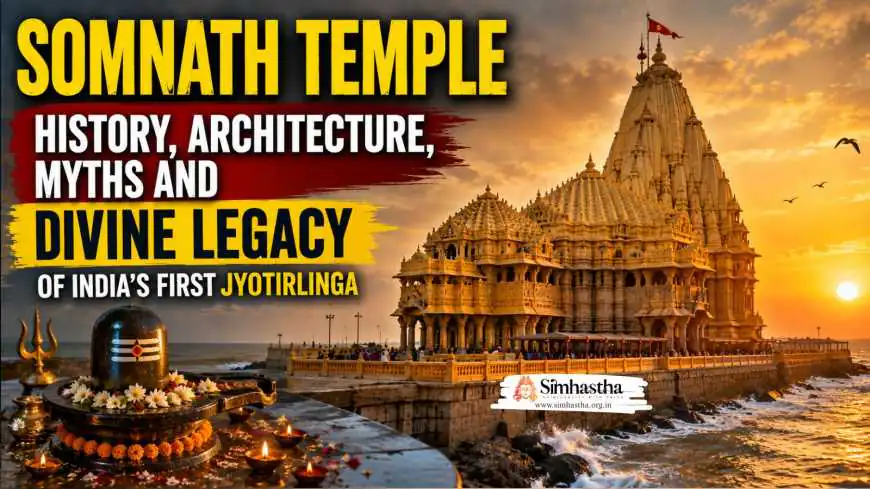


Somnath Temple – The Eternal Shrine of Shiva and India’s First Jyotirlinga
Standing on the shores where land meets the Arabian Sea, the Somnath Temple rises like a divine beacon of resilience, faith, and cosmic power. Revered as the first of the twelve Jyotirlingas, this sacred temple in Prabhas Patan, Gujarat, is not just a monument of devotion—it is the living proof of India’s spiritual continuity despite centuries of invasions and destruction.
Somnath is the temple that refuses to fall. History calls it “the shrine that resurrected itself twelve times,” while devotees call it “The Eternal Lord Shiva’s Home on Earth.”
Today, Somnath is both an architectural marvel and a spiritual universe—where every sunrise over the Arabian Sea whispers the ancient stories of gods, kings, saints, and civilizations.
For Every pilgrims, understanding Simhastha 2028 dates and the official Shahi Snan timeline is essential before booking flights or accommodation, as these sacred dates are completely non-negotiable.
The Mythical Origin: Why Somnath Is the First Jyotirlinga
The legend of Somnath goes back to cosmic time, narrated in the Shiva Purana and Skanda Purana.
Trending Guides Now

Rameshwaram Temple Guide: History, Darshan Timings, Rituals & Spiritual Significance (2026)

Vaidyanath Jyotirlinga: The Divine Healing Abode of Lord Shiva in Deoghar

Bhimashankar Jyotirlinga 2026: The Ultimate Guide to History, Trekking & Darshan

Kashi Vishwanath Temple: The Eternal Abode of Lord Shiva in Varanasi

Ujjain Railway Station to Mahakaleshwar Temple Distance (2026 Guide)

Ujjain Simhastha 2028 Dates Announced: Full Shahi Snan & Event Timeline

Ujjain Simhastha Update: CM Mohan Yadav Reviews 2028 Works

Omkareshwar Trip Budget Guide: Transport, Stay, Food and Local Travel Costs
According to the scriptures:
-
Chandra Dev (Moon God) was cursed for diminishing in radiance.
-
Seeking liberation, he performed severe penance at Prabhas Patan.
-
Lord Shiva appeared as a Jyotirlinga—an infinite pillar of light.
-
Chandra regained his brilliance, and the place was named Somnath — “The Lord of the Moon.”
This is why Somnath is considered the Adi Jyotirlinga, the first and the most radiant manifestation of Shiva on Earth.

A Temple That Has Been Destroyed and Rebuilt 17 Times
Few temples in human history have faced destruction—and resurrection—like Somnath.
Major invasions include:
-
Mahmud of Ghazni, 1026 CE
-
Alauddin Khilji’s army, 1299 CE
-
Muzaffar Shah, 1395 CE
-
Aurangzeb, 1706 CE
Yet, each time it fell, Somnath rose again.
Notable reconstructions:
-
Yadava Kings of Vallabhi
-
Solanki Kings
-
Sardar Vallabhbhai Patel, who initiated its modern reconstruction in 1950
-
Completed under K.M. Munshi and reinstalled by President Dr. Rajendra Prasad
Today’s temple stands as a symbol of India’s cultural survival, built in the majestic Chaulukya style, echoing the architecture of the Western Indian dynasties.
Architectural Grandeur of Somnath Temple
Somnath Temple is built in the Māru-Gurjara style, known for its intricate carvings, tall shikharas, and powerful symbolism.
Key Architectural Features
-
155-feet-high Shikhar facing the Arabian Sea
-
8-foot-tall Shiva Lingam at the sanctum
-
Intricate carvings of deities, apsaras, and sacred motifs
-
The Bālidān Stambh, symbolizing ancient sacrifice and valour
-
Somnath Light & Sound Show narrating the temple’s journey through ages
-
Sea-view courtyard, where ocean waves crash against the platform
A special inscription on the temple wall notes that there is no land between Somnath and Antarctica in a straight line—showing its ancient symbolism as the western “gateway to India.”
The Spiritual Experience: What Devotees Feel at Somnath
Somnath is not just visited; it is experienced with every sense.
-
The sound of waves merges with the temple bells.
-
The fragrance of incense blends with ocean winds.
-
Priests chant Vedic mantras echoing through the stone walls.
-
The aura of the Jyotirlinga feels strikingly peaceful and powerful.
Devotees often describe a profound sense of cleansing—as if the ocean and Shiva together wash away heaviness from the soul.
Daily Rituals and Timings
Somnath Temple performs centuries-old rituals throughout the day.
Main Rituals
-
Mangala Aarti – Early Morning
-
Madhyan Aarti – Noon
-
Sandhya Aarti – Evening
-
Shivabhishek – Throughout the day
Special Attraction
The evening laser & sound show narrates the entire history of the Somnath Temple in a mesmerizing blend of music and storytelling.
Somnath in Scriptures
Somnath has been mentioned in:
-
Rigveda – as “Deva-Bhumi”
-
Mahabharata – where Krishna visited before leaving his mortal body
-
Skanda Purana – detailing its Jyotirlinga significance
This makes Somnath one of the oldest continuously revered shrines in the world.
Nearby Spiritual and Historical Places
1. Triveni Sangam
Confluence of Hiran, Kapila, and Saraswati rivers.
2. Bhalka Tirth
Where Lord Krishna was struck by the hunter Jara.
3. Prabhas Patan Museum
Houses ancient temple ruins and artifacts.
4. Gita Mandir & Lakshmi-Narayan Temple
Beautiful modern temples near the seashore.
5. Old Somnath Temple (Ahilyabai Temple)
Built by Queen Ahilyabai Holkar.
How to Reach Somnath
By Air
-
Nearest airport: Diu Airport (82 km)
-
Alternatively: Rajkot Airport (200 km)
By Train
-
Somnath Railway Station – directly connected to major cities
By Road
-
Excellent connectivity via state highways
-
Buses from Ahmedabad, Rajkot, Dwarka, and Junagadh
Best Time to Visit
-
October to March: Pleasant weather
-
Mahashivratri: Grand celebrations
-
Shravan Month: Peak pilgrimage season
-
Kartika Purnima: Traditional sea rituals
Travel Tips for Pilgrims
-
Phones/cameras are not allowed inside the garbhagriha.
-
Reach early for darshan during peak seasons.
-
Respect temple dress codes.
-
Attend the evening aarti and sea-facing prayers.
Frequently Asked Questions