


















How Tent Cities Manage Security for Thousands of Guests
Learn how tent cities manage security for thousands of guests with AI surveillance, seven-tier systems, 60,000 police, and advanced fire safety measures.
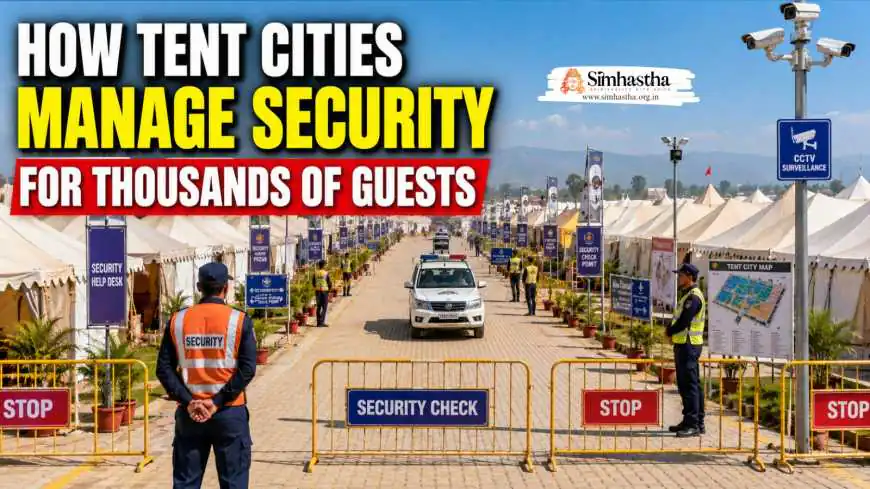

The Invisible Shield Protecting Millions 🛡️👀
Let me ask you something that might be on your mind. 😟
You've booked your tent at Simhastha 2028. You're excited. But somewhere in the back of your mind, a question lingers: how safe will I really be? 🤔
With 40 Crore Devotees expected, staying in a tent city—a temporary city made of fabric and faith—can feel intimidating. The thought of crowded spaces, fire hazards, or security breaches is enough to make anyone nervous. 😰
But here's the truth that will put your mind at ease: the security planning for Simhastha 2028 is unprecedented. It's not just guards with flashlights. It's a multi-layered fortress of technology, personnel, and protocols that rivals the security of any major global event. 🌐
Trending Guides Now
How to Choose the Right Hotel in Ujjain Near Mahakal

Where Pilgrims Stay During Ujjain Simhastha Event

Family Friendly Hotels Near Mahakal Corridor

Best Hotels in Freeganj Ujjain Near City Center

Ujjain Railway Station to Mahakaleshwar Temple: Distance, Fare & Route

Ujjain Simhastha 2028 Dates Announced: Full Shahi Snan & Event Timeline
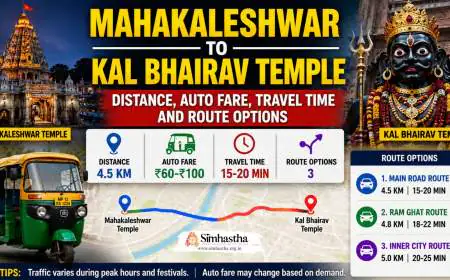
Mahakaleshwar to Kal Bhairav Temple: Distance, Auto Fare, Travel Time and Route Options
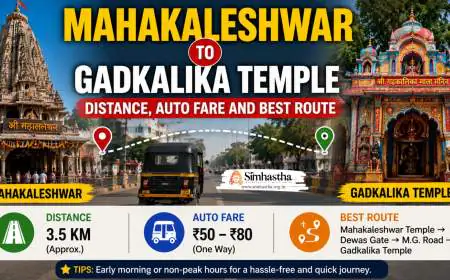
Mahakaleshwar to Gadkalika Temple: Distance, Auto Fare and Best Route
So, how do tent cities manage security for thousands of guests? The answer involves a seven-tier security system, AI-powered surveillance, underwater drones, articulating water towers, and 60,000 police personnel. This isn't a festival—it's a military-grade operation designed to keep you safe. 🏗️
In this article, we'll pull back the curtain on every layer of security protecting Simhastha 2028's tent cities. Let's go! 🚀
The Seven-Tier Security System: A Fortress in Layers 🏰🛡️
Understanding the Seven Layers
The security architecture of Simhastha 2028 is built on a seven-tier system—each layer designed to catch threats before they reach you. 🎯
Tier 1: Outer Cordon (The Perimeter)
-
🚧 Function: The outermost security ring
-
📍 Location: Far outskirts of the mela area
-
👮 Personnel: Multi-agency checkpoints
-
🔍 Purpose: Initial screening of vehicles and pilgrims
Tier 2: Inner Cordon (The Approach)
-
🚧 Function: Tighter security closer to tent cities
-
📍 Location: Entry points to the main pilgrimage zone
-
👮 Personnel: Armed police, quick response teams
-
🔍 Purpose: Secondary screening, threat assessment
Tier 3: Isolation Cordon (The Buffer)
-
🚧 Function: Emergency isolation of threat zones

-
📍 Location: Between inner cordon and tent cities
-
👮 Personnel: Specialized rapid response units
-
🔍 Purpose: Contain and neutralize threats

Tier 4: District Checking (Local Security)
-
🚧 Function: Security at district level
-
📍 Location: Across all 10+ districts
-
👮 Personnel: Local police and trained volunteers
-
🔍 Purpose: Manage pilgrim movement from origin
Tier 5: Neighbouring District Security
-
🚧 Function: Buffer district security
-
📍 Location: Districts adjacent to Ujjain
-
👮 Personnel: Coordinated inter-district forces
-
🔍 Purpose: Prevent overflow of security threats

Tier 6: Interstate Checking
-
🚧 Function: Security at state borders
-
📍 Location: Madhya Pradesh border checkpoints
-
👮 Personnel: State police, intelligence agencies
-
🔍 Purpose: Screen incoming pilgrims from other states
Tier 7: City and Temple Security
-
🚧 Function: Final layer at public spaces
-
📍 Location: Temples, ghats, and tent city sectors
-
👮 Personnel: On-ground security teams
-
🔍 Purpose: Direct protection of pilgrims
The Numbers Behind the Security 🚓📊
60,000 Police Personnel
The sheer scale of security deployment is staggering:
-
👮 Total Police: 60,000+ personnel
-
🚓 Additional Support: Forces from other states
-
🏫 Master Trainers: 117 officers specially trained
-
📚 Training: 21-day specialized program
-
🚨 Quick Response: Dedicated QRF teams
What This Means for You: There's a police officer within sight at all times. The ratio of security personnel to pilgrims is higher than at most international events.
The Training That Saves Lives
Every officer deployed undergoes rigorous training:
-
🚑 CPR and First Aid: Medical emergency response
-
🔥 Fire Safety: Firefighting and evacuation
-
🌊 Disaster Management: Flood, stampede, and crowd surge response
-
🗣️ Communication: Multi-lingual assistance for pilgrims
-
🤖 Technology: AI and surveillance system operation
The Master Trainer Program: 117 officers are being developed as "master trainers" to cascade training to all 60,000 personnel.
The Digital Fortress: AI and Surveillance 🤖📹
The Integrated Command and Control Centre
The Integrated Command and Control Centre (ICCC) is the brain of the entire security operation. 🧠
What the ICCC Does:
-
📹 Real-Time Surveillance: Thousands of CCTV cameras
-
🤖 AI Analytics: Predictive crowd-mapping software
-
🚨 Emergency Response: Instant alerts to ground teams
-
📊 Data Integration: Combined feeds from all security agencies
-
🔄 24/7 Operation: Continuous monitoring
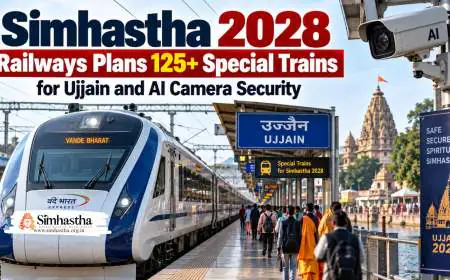
The AI Advantage: The AI platform can predict potential stampedes, identify suspicious behaviour, and alert authorities before incidents occur.
Drone Surveillance
The sky above the tent cities will be constantly monitored:
-
🚁 Tethered Drones: 24/7 aerial surveillance
-
📹 Thermal Imaging: Detect fires and medical emergencies
-
🔍 High-Resolution Cameras: Identify individuals in crowds
-
🚫 Anti-Drone Systems: Prevent unauthorized drones
Underwater Surveillance: For the first time, underwater drones will monitor the Shipra River during bathing rituals, ensuring safety in the water.
Fire Safety: The Articulating Water Towers 🔥🚒
₹131.48 Crore Fire Safety Investment
Fire is one of the biggest risks in a tent city. Simhastha 2028 has dedicated more than ₹131 crore to fire safety. 💰
The Numbers:
-
🔥 Firefighting Vehicles: 351
-
🚒 Fire Stations: 50+
-
👨🚒 Trained Personnel: 2,000+
-
🧯 Fire Equipment: Fitted in every tent
-
🚨 Fire Posts: 20 across the mela area
The Articulating Water Towers
The most innovative fire safety technology is the Articulating Water Towers (AWT) :
-
📏 Height: Operate up to 35 meters
-
📐 Distance: 30 meters horizontal reach
-
📹 Thermal Imaging: Detects fires in smoke
-
🎯 Precision: Can target specific fire points
-
🚁 Access: Reach fires in multi-stored tents
What This Means for You: If a fire breaks out, specialized equipment can reach it within minutes—even if it's in the center of a crowded tent city.
Medical Emergency Response 🏥🚑
The 550-Bed Medicity
The healthcare backbone of the security system is the 550-bed Medicity:
-
🏥 Capacity: 550 beds for emergencies
-
🚑 Ambulances: Water, road, and air ambulances
-
🚁 Helipads: Air evacuation for critical patients
-
🩺 Specialists: Full medical team
Rapid Medical Response Teams
-
🚑 RMRT: Teams stationed at key locations
-
⏱️ Response Time: Less than 5 minutes
-
🩹 Triage: Immediate patient assessment
-
🚐 Evacuation: Quick transport to Medicity
Water Ambulances: For the first time, water ambulances will operate on the Shipra River at 3-4 locations, bypassing crowded roads.
Crowd Management: Preventing Stampedes 🚶♂️🚶♀️
Predictive Crowd Mapping
The AI system doesn't just monitor crowds—it predicts them:
-
📊 Density Analysis: Identifies overcrowded areas
-
⏰ Peak Prediction: Forecasts rush hours
-
🔄 Flow Management: Directs crowds to less congested areas
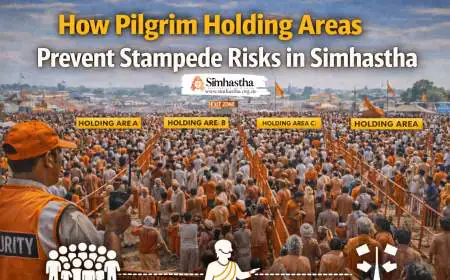
The Three-Tier Holding System
Instead of everyone pouring into the tent city at once:
-
📍 Tier 1: Holding hubs in 10+ districts
-
📍 Tier 2: Satellite parking and checkpoints
-
📍 Tier 3: Phased entry into Ujjain
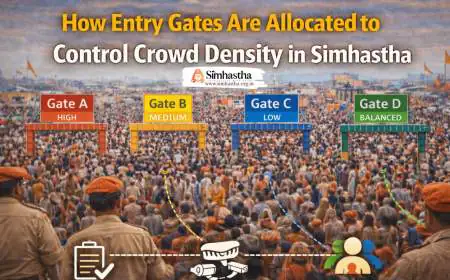
Why This Matters: The three-tier system prevents the tent city from being overwhelmed, making it safer for everyone.
Kalpvasis and Akharas: Special Security Considerations 🧘🚩
Kalpvasi Security
Kalpvasis—devotees staying for the entire month—have specific security needs:
-
🏕️ Designated Zones: Separate secure areas
-
🔒 24/7 Patrol: Constant vigilance
-
🧘 Privacy: Respect for meditative practices
-
🍛 Food Security: Safe meal distribution
Akhara Security
The 13 Akharas with thousands of Naga Sadhus require specialized security:
-
🚩 Akhara Camps: Designated, secured areas
-
👮 Dedicated Officers: Police stationed at each Akhara
-
🔱 Ritual Security: Protection during Shahi Snan
-
🛡️ Historical Context: Learning from past clashes
Cybersecurity: Protecting Your Digital Pilgrimage 🔒💻
The Cyber Warriors Portal
Your digital data is also protected:
-
🔐 Secure Networks: Encrypted connections
-
🛡️ Cyber Warriors: Dedicated cybersecurity team
-
🚨 Threat Monitoring: 24/7 for cyber threats
Data Protection
-
📱 App Security: Encrypted pilgrim data
-
💳 Payment Security: Secure digital transactions
-
📊 Privacy: Personal information protected
The Holding Areas: Security Before You Arrive 📍🛡️
Regional Security Network
The 10+ districts serving as holding hubs have their own security protocols:
-
🚧 Checkpoints: Screening at district entry
-
📋 Documentation: ID verification
-
🚗 Vehicle Checks: Searches of all vehicles
-
📱 Digital Registration: Entry tracking
The Bottom Line: You're Safer Than You Think 🎯
So, how do tent cities manage security for thousands of guests? Through a remarkable combination of:
-
Seven-Tier Security System: Layers of protection 🏰
-
60,000 Police Personnel: Unprecedented deployment 🚓
-
AI Surveillance: Predictive, real-time monitoring 🤖
-
Advanced Fire Safety: Articulating water towers 🔥
-
Medical Response: 550-bed Medicity, water ambulances 🏥
-
Crowd Management: Predictive mapping, three-tier system 🚶♂️
-
Specialized Units: RMRT, QRF, STF 🛡️
-
Cybersecurity: Digital protection 🔒
-
Holding Areas: Security before you arrive 📍
The Message Is Clear: You are not entering a chaotic tent city. You are entering a secured, monitored, and protected environment designed with your safety as the number one priority. 🕉️
Frequently Asked Questions