


















How Tent City Check-In and Check-Out May Work During Simhastha
Learn how tent city check-in and check-out may work during Simhastha 2028. Explore the phased entry system, mobile app integration, and essential pilgrim procedures.

The 30 Crore Question: Where Will Everyone Stay?
Imagine this: You've made the pilgrimage of a lifetime. You've finally reached Ujjain for Simhastha 2028. The air is thick with devotion, the Shipra River glitters under the sun, and the sounds of conch shells and chants surround you. The only problem? With an expected 30 crore devotees arriving from across India and the world, where in the world will you sleep? 😱
This is the single biggest question on every pilgrim's mind. And here's the answer that the Madhya Pradesh government is working feverishly to deliver: tent cities—massive, well-organized temporary townships built specifically to house the millions who will descend upon Ujjain . 🏕️
But here's where it gets interesting. How will tent city check-in and check-out work during Simhastha? This isn't like checking into a regular hotel. With 30 crore pilgrims, a three-tier holding system across 10 districts, and a digital infrastructure that includes AI-powered apps, the procedures are going to be unlike anything you've experienced before . 📱
In this article, I'll walk you through exactly how the tent city check-in and check-out may work—from the booking process that starts months in advance to the phased entry system on the ground. We'll cover what documents you'll need, the technology that will guide you, the facilities waiting for you, and what happens when it's time to leave. Let's dive in! 🚀
Trending Guides Now

Ultimate Hotel Booking Guide for Ujjain Visitors

Cheap Hotels Near Mahakaleshwar Temple Ujjain

Best Hotels Near Mahakal Mandir 2026 Guide

Budget vs Luxury Hotels in Ujjain Full Comparison

Ujjain Railway Station to Mahakaleshwar Temple Distance (2026 Guide)

Ujjain Simhastha 2028 Dates Announced: Full Shahi Snan & Event Timeline
Ujjain Railway Station to Gadkalika Temple: Distance, Auto Fare and Route
Ujjain Railway Station to Mangalnath Temple: Distance, Auto Fare and Best Route
Before You Arrive: The Booking Process That Matters Most
The Golden Rule: Book Early, Book Often
Let me start with the most important advice you'll receive: you cannot just show up to Simhastha and expect a tent. These are not first-come-first-served facilities. The tent cities will be completely pre-booked, and here's why:
-
The Simhastha is expected to attract 30 crore pilgrims—that's more than the population of many countries
-
The government is building a three-tier holding system across nearly 10 districts including Indore, Khandwa, Sehore, Bhopal, Narmadapuram, Jhabua, Ratlam, Agar Malwa, Shajapur, Neemuch, and Mandsaur
-
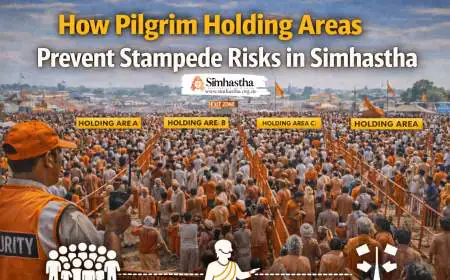
These holding areas will serve as transit townships with parking, food courts, rest zones, medical units, and sanitation
-
The goal is to regulate pilgrim flow based on crowd levels and traffic conditions
The earliest you should book: 12–18 months before the Mela for premium tents and luxury stays. Even economy tents should be booked 6–12 months in advance as availability dwindles quickly.
Types of Tent Accommodation Available
Tent cities are classified into several categories depending on the level of amenities and proximity to the holy ghats. At Kumbh Melas, you typically find:
-
Luxury Tents: AC/air cooler, en-suite toilet, upgraded service, often closer to the ghats
-
Deluxe Tents: Soft beds, semi-attached baths, dining halls
-
Economy Tents: Budget option with common facilities
-
Dormitories: Suitable for groups or budget travelers
When booking, pay close attention to:
-
Bedding capacity
-
Toilet type (shared vs attached)
-
Food arrangements

-
Proximity to the Shipra River bathing ghats
-
Parking and security facilities

The Digital Booking Process: Mobile App and Websites
The Madhya Pradesh government is developing a mobile application powered by artificial intelligence to digitise operations and facilitate seamless coordination among agencies.
How the app will work:
-
Download the app once available
-
Use the voice-enabled search function in your preferred language (Tamil, French, Hindi, English, and many others)
-
View real-time updates on facility availability, accommodation options, and parking slots
-
Complete seamless bookings for darshan, ashrams, and tent stays
-
Get detailed directions to your allocated tent
-
Receive real-time updates on crowd conditions and alternative routes
A dedicated team of approximately 30 engineers is currently working on the project, with plans to expand to over 100 as development progresses. The government is also considering involving IITs and IIMs in managing this gathering.

What You'll Need for Booking
When you book your tent online, you'll need to provide:
-
Valid government ID proofs (Aadhaar, PAN, driver's license, passport for foreign nationals)
-
Guest count and contact details
-
Payment via credit/debit cards, UPI, or net banking
-
After confirmation, save both electronic and hard copies of your booking receipt
Early Bird Offers and Pricing
-
Early bird bookings (10–12 months before) offer the widest choice and best rates
-
Standard bookings (6–9 months before) are recommended for most pilgrims
-
Last-minute bookings (3–4 months before) come with limited availability and higher prices
Pro tip: Book as early as possible, especially for Shahi Snan dates—these days see the highest footfall and prices hike significantly closer to the event.
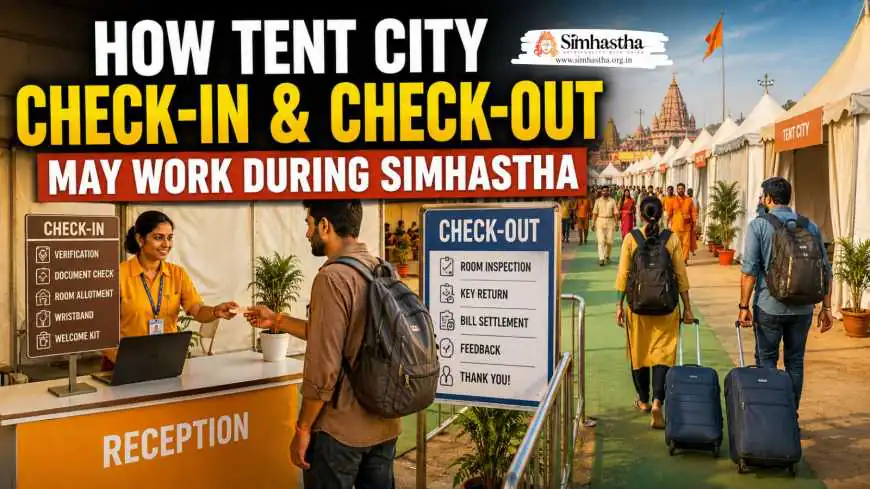
Arriving at the Tent City: The Check-In Process
Step 1: Entering the Holding Area System
You won't be driving straight into the tent city. Here's how the check-in process may work:
-
Phased Entry: All pilgrims and vehicles will pass through a three-tier holding system. Based on the AI-driven crowd data in the command center, you will be allowed to proceed toward the tent city only when capacity permits.
-
Verification Checkpoint: At the holding hub, officials will verify your booking confirmation. This is why you need to carry hard copies of your booking receipt.
-
Parking and Shuttle Transfer: Most private vehicles will be directed to satellite parking areas, which are part of the 3,000-hectare parking infrastructure. From there, shuttles or designated walkways will take you to your tent city sector.
Step 2: Walking to Your Tent
-
Inside the tent city, the layout will be clearly marked with signages—the government is spending ₹25.04 crore on signages and navigation aids to help with crowd management.
-
Use the mobile app to get directions to your specific tent. It will show the shortest route and highlight crowded areas to avoid.
-
With 1.19 lakh temporary toilets, 23,200 bathing units, 31,900 urinals, and 12,200 LED lights already being installed, the entire tent city is being transformed into a highly organized temporary metropolis.
Step 3: The Check-In Desk
-
You'll approach the camp check-in desk.
-
The staff will verify your booking details and issue physical or digital tent keys/access cards.
-
They will assign your tent number and brief you about the facilities.
-
It's likely that check-in timing will be standardized, similar to tent city models in other parts of India, which typically allow check-in from 12:00 PM to 2:00 PM.
What You'll Find Inside Your Tent
While specific layouts are still being finalized, based on established tent city models, you can expect:
-
Basic bedding (mattresses, pillows, blankets)
-
Power supply and lighting
-
Nearby shared or attached toilet facilities
-
Access to food courts or meal services
-
Basic toiletries in higher-end categories
-
Dedicated security personnel and 24/7 support
The Facilities That Make Tent Cities Livable
Accommodations for All Types of Pilgrims
The government is drawing inspiration from successful models like Gujarat's Rann Utsav to make the Simhastha tent city a world-class experience. The goal is to provide modern temporary housing that ensures:
-
Medical services
-
Food courts
-
Security systems
-
Basic infrastructure aligned with international standards
The ambition is to transform Simhastha into a world-class religious and tourism event, boosting Madhya Pradesh's religious tourism profile while benefiting local artisans, farmers, and small businesses.
Holding Hubs: Before You Even Reach the Tent
The regional holding network will be your first experience of Simhastha's accommodation system. These hubs feature:
-
Parking facilities
-
Food courts and cafeterias
-
Rest zones
-
Medical units
-
Sanitation infrastructure
-
Drinking-water stations
-
Bathing facilities
-
Fuel stations
-
Bio-toilets and mobile toilets
-
Helpdesks and public address systems
Technology for a Smooth Stay
-
Mobile app: Get real-time updates on facility availability, parking slots, and toilet availability.
-
Digital command center: The ₹139 crore AI-powered facility monitors crowd dynamics and emergency response.
-
LED screens and public address systems: Keep you informed about any changes or emergencies.
During Your Stay: Daily Procedures and Rules
Daily Life in the Tent City
During the Simhastha, the tent city will operate on a 24/7 cycle. Pilgrims will move to the ghats for Shahi Snan, attend spiritual discourses, and return to their tents for rest. Here's what to expect:
-
Meals: Food courts and meal services operate on fixed schedules. Some tent packages include all meals.
-
Security: Security personnel and police will patrol the tent cities. Be prepared for identity checks.
-
Sanitation: Staff will maintain cleanliness.
-
Quiet hours: Respect the sanctity of the pilgrimage—noise, especially toward midnight, may be prohibited.
Emergency Procedures
-
In case of a medical emergency, the tent city staff will coordinate with the rapid response teams and the 550-bed Medicity being built in Ujjain.
-
Use the mobile app to report issues or request help.
-
Follow public address announcements during any emergency situation.
The Departure: How Check-Out May Work
Preparing to Leave
When the sacred journey comes to an end, the check-out process will be just as organized as check-in.
-
Check-out Timing: Standard check-out times tend to follow models from other tent cities, which often require check-out by 9:00 AM to 12:00 PM.
-
Departure Coordination: To avoid traffic bottlenecks, authorities will likely implement a staggered departure schedule based on your sector and destination. This will be coordinated via the app and public address systems.
Packing Up and Leaving
-
Clear Your Tent: Remove all personal belongings.
-
Report Damages: Inform the staff of any accidental damages to the tent or fixtures.
-
Return Keys/Access Cards: Surrender any physical or digital keys/cards at the camp office.
-
Transportation: Shuttles will take you from the tent city back to the satellite parking areas. Use the app to check the status of the shuttle and traffic on the route to the main road.
Special Considerations: Families, Elderly, and Differently-Abled
Families
-
Family Tents: Designated tents for families offer privacy and appropriate capacity.
-
Child Safety: With 42,000 police personnel and extensive training in emergency response, families should feel secure.
-
Facilities: The sanitation plan includes 23,200 bathing units and separate changing rooms.
Elderly and Differently-Abled Pilgrims
-
The government is working to ensure barrier-free access.
-
The Medicity and the AI-powered command center are designed to cater to all pilgrims, with quick emergency response and evacuation capabilities.
-
There will likely be priority check-in counters and assistance for those in need.
Women
-
Separate sanitation and bathing units are planned.
-
Women-only changing rooms at ghats will ensure safety and privacy.
How the Holding Areas and Three-Tier System Work
The Network Beyond Ujjain
The tent city is just one piece of the puzzle. The regional holding network is the first layer of the accommodation and crowd management system.
Key holding districts:
-
Indore, Khandwa, Sehore, Bhopal, Narmadapuram, Jhabua, Ratlam, Agar Malwa, Shajapur, Neemuch, and Mandsaur.
The Three-Tier Logic:
-
First Tier (Outer Ring): Holding hubs in neighboring districts. Pilgrims arriving from Delhi, Mumbai, or other states will be parked here first.
-
Second Tier (Inner Ring): Parking and holding hubs closer to Ujjain.
-
Third Tier (Ujjain): The tent cities and accommodation within Ujjain municipal limits.
Integrated Traffic Corridors
The holding hubs will be integrated with satellite parking facilities, dedicated traffic corridors, and real-time monitoring systems, creating an extensive pilgrim-management network across central and western Madhya Pradesh.
The Bottom Line: Be Prepared, Stay Flexible
The tent city check-in and check-out during Simhastha 2028 will be one of the largest temporary accommodation operations ever attempted. But the system being built is designed to handle the unprecedented scale:
-
Book Early: 12–18 months ahead is your best bet for premium tents; 6–12 months ahead for economy.
-
Use the App: The official Simhastha app will be your best friend for real-time updates, booking, and navigation.
-
Carry Your ID: You will need valid ID proof at multiple checkpoints.
-
Follow the Holding System: Trust the three-tier system to prevent chaos in Ujjain.
-
Respect the Rules: The tent cities are sacred spaces, so maintain discipline.
For the millions who are planning this pilgrimage of a lifetime, the tent city system will be the difference between a chaotic experience and a deeply fulfilling spiritual journey. 🕉️
Frequently Asked Questions