































Why Students Visit Gadkalika Temple Before Exams
Discover why students visit Gadkalika Temple before exams. Learn about the Kalidasa legend, rituals for academic success, and how the Goddess of Wisdom blesses learners in Ujjain.
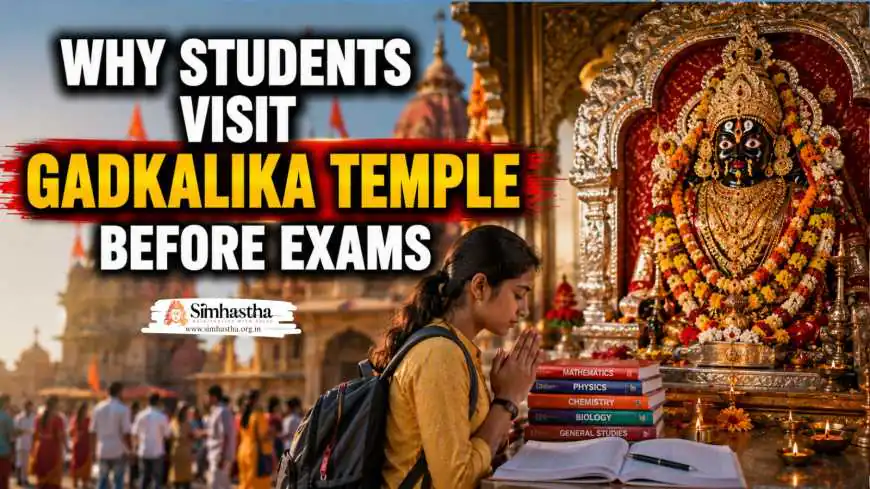


The Goddess of Learning and the Shadow of Kalidasa
The Gadkalika Temple is not an imposing structure by Ujjain's grand standards. It sits slightly off the main pilgrimage circuit, in a quiet neighbourhood near the Bhartrihari Caves, and its modest spire and simple courtyard might not arrest the eye of the casual visitor. But what it lacks in architectural spectacle, it possesses in sheer mythological and cultural weight. The presiding deity, Maa Gadkalika, is a form of Kali, the dark goddess of time and transformation. Yet the goddess worshipped here is understood not in her terrifying aspect but in her role as the dispenser of medha—intelligence, memory, and creative brilliance.
The association of this shrine with learning rests almost entirely on the luminous figure of Kalidasa, the poet-dramatist whose works like Abhijnana Shakuntalam, Meghaduta, and Kumarasambhava represent the absolute pinnacle of Sanskrit literature. According to a tradition deeply embedded in Ujjain's collective memory, Kalidasa was not always the brilliant poet history remembers. He was, by many accounts, a simple, unlettered man who, through a twist of fate involving a princess and a ruse, found himself humiliated and desperate. Seeking a miracle, he came to this temple of the goddess and performed intense penance. Pleased with his devotion, the goddess appeared and, with her divine touch or a whispered mantra, transformed him. The man who could barely string a sentence together emerged from the temple as the greatest poet the subcontinent has ever produced, his tongue now flowing with the purest Sanskrit, his mind a vessel of cosmic imagination. 🛕
The Living Memory of a Poet's Penance
The Kalidasa legend is not treated as a mere folktale in Ujjain; it is the foundational narrative that gives Gadkalika Temple its specific identity. When a student walks through the temple gate, they are not entering a generic shrine of the goddess; they are entering the sacred space where, tradition insists, the very principle of human intellect was divinely amplified. The connection between the goddess and the word—Vak Devi, the goddess of speech—is ancient, but here it has a local habitation and a name. The small chamber where Kalidasa is believed to have sat in meditation is shown to visitors, a stone alcove heavy with the imagined silence of a mind preparing to receive the universe. For centuries, parents have brought their children here for Vidya Arambha, the ceremonial initiation into learning. Teachers come to pray for the clarity to guide their students. And, most visibly, every year in the weeks leading up to the board examinations, the university semester finals, the competitive entrance tests that shape careers, the temple fills with students who carry within them the same desperate hope that once burned in the heart of Kalidasa: that the goddess would touch them too, would unlock what is blocked, would let their hard work and their intelligence flow unimpeded onto the page. 🔱
What Students Do Here and the Simple Rituals of Academic Faith
The rituals performed by students at Gadkalika Temple are not prescribed in any official puja manual. They have evolved organically, passed down from one generation of Ujjain's scholars and students to the next, and they are marked by a touching, almost childlike simplicity that reflects the genuine anxiety and hope of the young people who practice them.
Trending Guides Now

Kal Bhairav Temple Visitor Etiquette and Temple Customs

What Makes Bhartrihari Caves Different From Other Cave Shrines

Why the Harsiddhi Deep Stambh Attracts Thousands

Why Mangalnath Temple Attracts Devotees From Across India

Ujjain Railway Station to Mahakaleshwar Temple Distance (2026 Guide)

Ujjain Simhastha 2028 Dates Announced: Full Shahi Snan & Event Timeline

Benefits of Becoming a Simhastha Volunteer

Ujjain Travel During Shravan Month: What Changes for Visitors
A student arriving at the temple before an important exam will typically purchase a small puja thali from one of the stalls outside: a coconut, some red flowers, a packet of kumkum and rice, incense sticks, and a garland. More specifically, they will bring with them an object related to their studies. Most commonly, this is the pen they intend to use during the examination. The pen is placed at the feet of the goddess, or handed to the priest, who touches it to the deity's image and returns it as a blessed instrument. Some students bring a copy of their syllabus, a textbook, or a printed admit card, offering the very document that is the source of their anxiety and receiving it back with the assurance that the goddess has seen their struggle and blessed their efforts.
Another common practice is the tying of a sacred red thread or mouli to the bars of the temple window or to the branches of a particular tree in the courtyard. The student ties the thread while making a silent prayer—a specific mark, a specific rank, a specific institution—and the thread remains there as a physical, fluttering testament to their petition. The courtyard, during exam season, is festooned with thousands of these threads, a moving, multicoloured constellation of young hopes and quiet desperation. 🧵✅
The Pen, the Book, and the Blessing
Beyond the physical acts, there is an inner ritual that the temple's atmosphere seems to demand. Students often spend a few minutes sitting in the courtyard, their backs against the cool stone walls, their textbooks open on their laps for a last-minute revision that feels qualitatively different from the frantic cramming of a hostel room. The quiet of the temple, the scent of incense, the distant sound of a temple bell, and the sight of the goddess's dark, steady gaze combine to create a state of calm focus that is, in itself, a form of blessing. The anxiety that constricts the mind loosens its grip. The jumbled facts and formulas settle into a clearer order. The student who entered the temple in a state of near-panic often leaves with a quiet, steady confidence that is not merely psychological but feels, to them, like a direct transmission of grace. This inner transformation, as much as any external miracle, is the true gift of Gadkalika Mata to the students who seek her shelter. 📖
The Exam Season Surge and the Temple's Changing Rhythm
If you visit Gadkalika Temple in the off-season—a non-exam month, say July or August—you will find a tranquil, unhurried shrine where the priest has time to chat, the courtyard is half-empty, and the only sounds are the cooing of pigeons and the distant hum of the city. But come in February or March, when the Class 10 and 12 board examinations loom, or in April and May, when university exams and the gruelling competitive tests like JEE and NEET approach, and the temple transforms. The narrow lane leading to the temple entrance becomes a procession of students, some in school uniforms, some in casual clothes, many accompanied by anxious parents carrying puja offerings.
The temple authorities are accustomed to this seasonal wave and often extend the darshan hours during peak exam periods. The priests work with a quiet, practiced efficiency, blessing pens, tying threads, and offering the short, specific prayers that students request. Queues form, but the atmosphere remains remarkably calm. There is a shared, unspoken solidarity among the students waiting for darshan—a mutual recognition of the stress they are all carrying, a silent camaraderie that transcends the competitive spirit of the examination hall. The temple, during these months, becomes a sanctuary not just from the world but from the isolating pressure of academic competition, a place where every student, regardless of their school or their past marks, stands equal before the mother who judges only the sincerity of the heart. ⏰
The Kalidasa Connection and the Broader Cultural Context
The story of Kalidasa and Gadkalika is not an isolated miracle tale. It belongs to a broader Indian cultural understanding in which knowledge is never merely an acquisition but a blessing. The tradition of Saraswati Puja across India, the ritual of Vidya Arambha on Basant Panchami, the worship of the tools of one's trade on Ayudha Puja in the south—all of these express the same fundamental belief that the capacity to learn, to think, and to create is a divine gift that must be reverently received and continuously renewed.

Gadkalika Temple is Ujjain's specific, local embodiment of this pan-Indian wisdom. What makes it uniquely powerful is the specific story. Kalidasa is not a distant mythological figure; his works are living literature, studied in universities, performed on stages, and quoted in conversation. His journey from ignorance to genius is documented in his own writing, where he frequently praises the goddess as the source of his gift. When a student reads in the invocation of the Raghuvamsa that Kalidasa bows to the parents of the universe, Parvati and Parameshwara, they are reading the words of a man who believed, with absolute conviction, that his unparalleled literary skill was not his own accomplishment but a divine endowment. To visit the temple where that endowment was received, to stand in that very spot, is to connect one's own academic struggle to a story of transformation that has been inspiring seekers for over a millennium and a half.
Practical Tips for Students Planning a Visit
For the student planning to visit Gadkalika Temple before an exam, a few practical considerations can make the experience smoother and more meaningful.
Timing: The temple opens early, around 6:00 AM, and the first hour after opening is the quietest and most conducive to a calm, unhurried darshan. If possible, plan your visit for a weekday morning rather than a weekend, as weekends see larger family crowds. Exam-season queues move steadily but can lengthen in the late afternoon and evening.
What to bring: You do not need an elaborate puja kit. A coconut, a few red flowers, a garland, and the item you wish to have blessed—a pen, a book, an admit card—are sufficient. The stalls outside the temple sell all the necessary items at modest prices. Keep some small currency for a dakshina for the priest and for the donation box.
Dress: Standard temple modesty applies. Wear comfortable, clean clothing. Students often come directly from coaching classes or libraries, and the temple is welcoming of all, but avoid shorts, sleeveless tops, or overly casual clothing.
Mindset: This is the most important preparation. Arrive not with a desperate demand but with a sincere, focused prayer. Spend a few moments before entering the temple clarifying your intention. What specific help do you need? Is it clarity on a particular subject, calmness during the exam, or the ability to recall what you have studied? Frame that prayer. After darshan, sit in the courtyard for ten or fifteen minutes. Do not rush away. Let the quiet of the temple settle into your mind. You may find that the most valuable gift you receive is not a supernatural guarantee of success but a calmer, clearer, more confident state with which to face the challenge ahead. ✅
Beyond Exams and the Lifelong Relationship With the Goddess of Wisdom
While the dramatic pre-exam surge is the most visible manifestation of student devotion at Gadkalika, the relationship often extends far beyond a single examination. Many of Ujjain's professionals—lawyers, doctors, academics, and civil servants—maintain a lifelong connection with the temple. They return after their results, often to offer a thanksgiving puja, to untie the thread they had tied months or years earlier, and to sit, once again, in the quiet of the courtyard, older now, calmer, but still carrying the memory of the anxious student they once were. The temple serves, for these lifelong devotees, as a touchstone of their own intellectual and professional journeys, a place that marks the beginning of their careers and continues to nourish them through the challenges of their working lives. The goddess who blessed Kalidasa with poetic genius is understood to bless all forms of human creativity and intellectual effort, from the schoolchild's spelling test to the surgeon's steady hand to the engineer's precise calculation. Gadkalika Mata is, in the most profound sense, the patron deity of the life of the mind. 📚🔱
The Quiet, Eternal Promise of the Goddess
In the end, what draws students to Gadkalika Temple, generation after generation, is something that no amount of modern educational psychology or exam preparation technique can replicate. It is the promise, whispered through the centuries from the legend of Kalidasa to the present moment, that effort offered with humility and devotion is seen, is honoured, and is blessed. It is the reassurance that the vast, impersonal machinery of examinations and results and percentages is not the final arbiter of a young person's worth, and that there exists, in a quiet temple in Ujjain, a mother who looks not at mark sheets but at hearts. When a student places their pen at the feet of Gadkalika Mata, they are performing an act of profound trust. They are saying: I have done what I can. The rest I place in your hands. And the goddess, in her dark, eternal silence, receives that trust, and in receiving it, transforms it into something that feels remarkably, inexplicably, and wondrously like peace. That peace, carried into the examination hall, is the true blessing. And it is why, long after the marks are forgotten and the textbooks are discarded, the memory of that morning in the temple, the scent of incense, the red thread fluttering in the breeze, and the quiet, steady gaze of the goddess, remains. 🛕🔱
Frequently Asked Questions