




















Why Prices Surge During Ujjain Simhastha 2028
Why hotel and travel prices surge 500-1000% during Simhastha 2028 Ujjain. Learn economic forces, demand-supply gap, and how to save money.
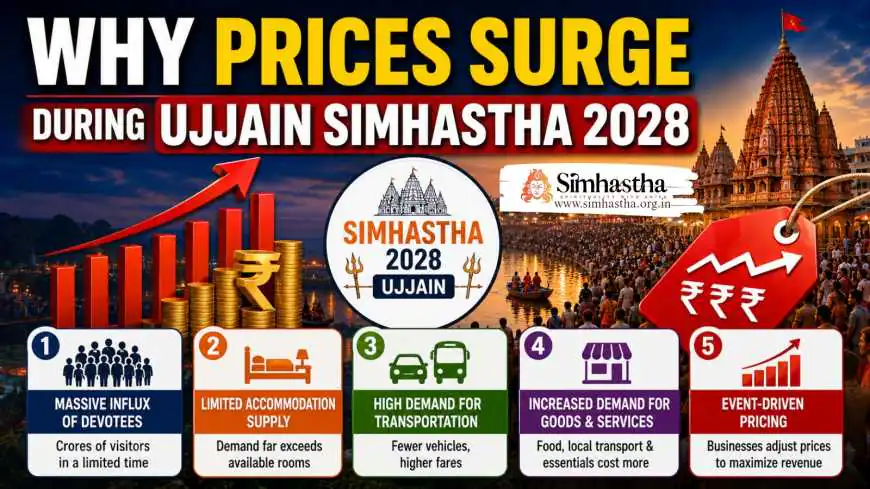


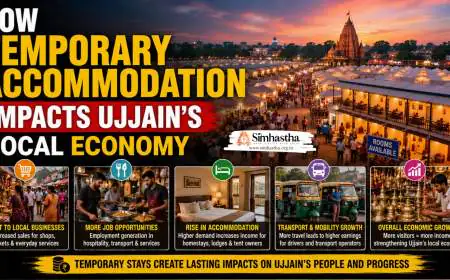
The Simple Math: When 100 Million People Want 20,000 Rooms
Let me start with the most obvious reason – the one that explains 80% of the price surge. Numbers do not lie.
| Statistic | Normal Ujjain | Simhastha 2028 |
|---|---|---|
| Permanent population | 600,000 | 600,000 |
| Daily visitors (non-event) | 5,000 to 10,000 | N/A |
| Peak day pilgrims | 0 | 10 to 15 million |
| Total hotels and guesthouses | 300 to 400 | 300 to 400 |
| Total permanent rooms | 15,000 to 20,000 | 15,000 to 20,000 |
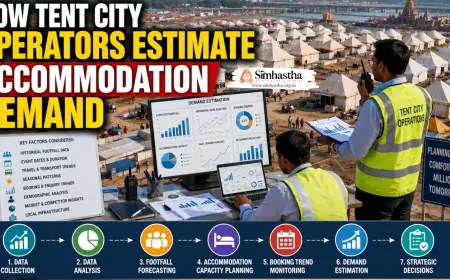
| Temporary beds from tent cities | 0 | 20,000 to 35,000 |
| Total beds available | 50,000 to 80,000 | 70,000 to 115,000 |
| Peak day demand for beds | 5,000 to 10,000 | 5 to 10 million |
Do you see the gap? On a normal day in Ujjain, there are roughly 5,000 to 10,000 visitors looking for rooms. The city has 50,000 to 80,000 beds. Plenty of supply. Prices stay low because hotels compete for customers.
On Shahi Snan day during Simhastha 2028, there will be 10 to 15 million pilgrims in the city. Even if you assume only 25% need a paid room (the rest sleep in tent cities, government shelters, or on the street), that is still 2.5 to 4 million people looking for 70,000 to 115,000 beds. That is 35 to 50 people fighting for every single bed.
When 35 to 50 people want the same ₹1,000 room, the person who wins the bidding war pays ₹10,000. That is not a bug in the system. That is the system working exactly how economics says it will. Low supply + high demand = higher prices. Period.
Trending Guides Now

Ujjain Simhastha 7 Day Itinerary for Families

Is Phone Allowed in Mahakaleshwar Temple Ujjain?
How Many Days Are Enough for Ujjain? Complete Trip Planner
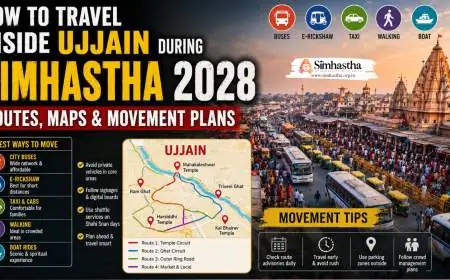
How to Travel Inside Ujjain During Simhastha 2028: Routes, Maps and Movement Plans

Ujjain Railway Station to Mahakaleshwar Temple Distance (2026 Guide)

Ujjain Simhastha 2028 Dates Announced: Full Shahi Snan & Event Timeline

Benefits of Becoming a Simhastha Volunteer
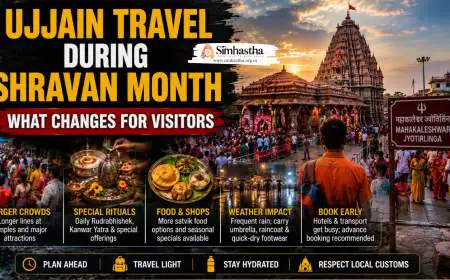
Ujjain Travel During Shravan Month: What Changes for Visitors
The Fixed Supply Problem: Why Ujjain Cannot Just Build More Hotels
You might be thinking – why does not Ujjain just build more hotels before Simhastha 2028? Fair question. Here is why it does not happen.
Reason 1: Land is limited
The area around the Mahakal Temple and Kshipra River – where pilgrims want to stay – is already packed. There is no empty land to build large hotels. Any new construction would require demolishing existing buildings, which is expensive and politically difficult.
Reason 2: The economics do not work
A hotel owner knows that Simhastha happens once every twelve years. If they build a 50-room hotel at a cost of ₹5 crore, they cannot recover that investment in 45 days of high prices. They would need normal business for years. But there is already enough hotel supply for normal years. Building more would mean empty rooms for eleven years. No business can survive that.
Reason 3: Temporary accommodation is the answer
Instead of building permanent hotels, the government and private operators set up tent cities – temporary structures that can be removed after the event. But even tents have limits. They need open land near the river, which is scarce. They need water, electricity, toilets, and security. Scaling up beyond 20,000 to 35,000 tents is very difficult.
Reason 4: Construction takes time
Even if someone decided to build a hotel today, getting approvals, buying land, and finishing construction takes 3 to 5 years. Simhastha 2028 is not that far away. New hotels coming up now might be ready, but they will be expensive properties – not the budget rooms that most pilgrims need.
The bottom line? Supply is fixed. It will not increase meaningfully before Simhastha 2028. So prices will surge. Accept it now.

The Advance Booking Panic: Why Early Birds Do Not Always Get the Worm
Here is something that surprises many pilgrims. Even if you try to book 6 months in advance, you still pay high prices. Why? Because the hotels know you are coming.
How advance booking dynamics work:
Let us say a hotel in Ujjain has 50 rooms. They open bookings 12 months before Simhastha 2028. Within the first week, they receive 500 booking requests for those 50 rooms on the peak dates. They pick the 50 highest offers. If someone offers ₹8,000 and someone else offers ₹10,000, guess who gets the room? The higher offer.
Hotels do not release all rooms at once. They release a few rooms at a certain price. If those sell quickly, they release the next batch at a higher price. This is called dynamic pricing or yield management. Airlines do it. OTT platforms do it. Hotels during Simhastha do it aggressively.
Result: Even if you book early, you are still competing with thousands of other pilgrims. The price you pay is not determined by how early you book. It is determined by how much you are willing to pay compared to everyone else.
The Scarcity Mindset: Why Pilgrims Pay Without Questioning
Let me talk about human psychology for a minute. When a pilgrim travels from Patna, Chennai, Mumbai, or Delhi to Ujjain for Simhastha, they have already spent money on train or flight tickets. They have taken time off work. They have told their family and friends that they are going to take a holy dip during the most auspicious Kumbh Mela.
Now imagine they arrive in Ujjain after a 24-hour train journey. They are tired. They are carrying luggage. They see a hotel charging ₹10,000 for a room that should cost ₹1,000. Are they going to turn around and go home? No. They are going to open their wallet and pay.
The hotel owners know this. They know that the pilgrim has no good alternatives. The pilgrim cannot sleep on the street – not with elderly parents or young children. The pilgrim cannot search for hours – not after a long journey. So the hotel asks for a high price, and the pilgrim pays.
This is not a normal market where you can say "too expensive" and walk away to the next shop. During Simhastha, the next hotel is also charging high prices. And the one after that. And the one after that. There is no competitive pressure to lower prices because everyone is full.
The Secondary Effects: Food, Transport, and Everything Else
The price surge is not limited to hotels. When millions of people gather in one small city, everything becomes more expensive. Let me break it down.
Food prices:
A normal plate of Ujjaini poha costs ₹20 to ₹30 outside of Simhastha. During the Kumbh Mela, the same plate costs ₹80 to ₹150. Why? Because the demand for food is enormous, and the temporary food stalls have to bring supplies from outside the city. Transportation costs go up. Vendor rents go up. Wages for workers go up. All of that gets passed to you.
Water and beverages:
A 1-liter bottle of Bisleri that costs ₹20 at your local store will cost ₹50 to ₹100 near the Kshipra ghats during Simhastha. Cold drinks, chai, lassi – everything gets a festival markup.
Auto-rickshaw and taxi fares:
An auto ride that normally costs ₹30 will cost ₹200 to ₹500. Drivers know you have no other option. Taxis from Indore airport to Ujjain normally cost ₹1,500 to ₹2,000. During Simhastha, drivers ask for ₹5,000 to ₹8,000. And people pay because what else are you going to do? Walk 55 kilometers?
Puja items and offerings:
Coconuts, flowers, incense, prasad – all the things you need for temple offerings – become significantly more expensive. Vendors near the temple know that you will not skip buying a coconut because the price is too high. You came all the way for Mahakal darshan – you are not leaving without an offering.
Medical supplies and pharmacies:
Even basic medicines like paracetamol or antacids see price hikes. Pharmacies run out of stock, and the ones with leftover inventory charge premium prices.
The Inflation Factor: Why 2028 Will Be Worse Than 2016
Let me give you some honest math. Between Simhastha 2016 and Simhastha 2028, there will be a gap of 12 years. In those 12 years, Indian inflation will have increased the cost of everything by roughly 60% to 80% (assuming average 5-6% annual inflation).
| Item | Normal Price 2016 | Normal Price 2027 (estimated) |
|---|---|---|
| Budget hotel room | ₹800 | ₹1,400 to ₹1,600 |
| Mid-range hotel room | ₹2,000 | ₹3,500 to ₹4,000 |
| Plate of poha | ₹15 | ₹25 to ₹30 |
| Auto rickshaw (short ride) | ₹20 | ₹35 to ₹40 |
Now apply the Simhastha multiplier (5x to 10x) to these already higher base prices.
| Item | Simhastha 2016 Price | Simhastha 2028 Projected Price |
|---|---|---|
| Budget hotel room | ₹5,000 to ₹8,000 | ₹8,000 to ₹15,000 |
| Mid-range hotel room | ₹10,000 to ₹15,000 | ₹18,000 to ₹30,000 |
| Plate of poha | ₹50 to ₹80 | ₹80 to ₹150 |
| Auto rickshaw (short ride) | ₹100 to ₹200 | ₹200 to ₹500 |
This is not speculation. This is simple math based on inflation and the supply-demand gap that will be even wider in 2028 because more pilgrims are expected than in 2016.
The Role of Middlemen, Touts, and Online Travel Agents
Let me talk about a part of the price surge that nobody likes to admit. When you book a hotel through an online travel agent like MakeMyTrip, Goibibo, or Agoda, the hotel pays a commission of 15% to 30%. During Simhastha, hotels increase their prices to cover this commission. So you pay more.
Touts at the Ujjain railway station and bus stand make the problem worse. They approach tired pilgrims and offer to "find" them a room. They take you to a hotel, negotiate a price that includes their commission (usually ₹500 to ₹2,000), and the hotel increases the price to accommodate the tout's fee. One study of Kumbh Mela 2013 in Allahabad found that pilgrims who used touts paid 40% more than those who booked directly.
Middlemen who book blocks of rooms months in advance also drive up prices. They reserve 50 or 100 rooms at a negotiated rate (say ₹5,000 per room). Then they resell those rooms to pilgrims at ₹10,000 to ₹15,000 – keeping the difference. This is completely legal, but it means the original hotel price is not the price you pay.
Government Price Controls: Why They Do Not Work
Every Kumbh Mela, the local government tries to impose price caps. And every time, the caps are ignored. Here is why.
In 2016, the Ujjain administration set maximum room rates: Budget rooms were capped at ₹3,000. Mid-range at ₹5,000. Premium at ₹10,000. In theory, that should have protected pilgrims. In practice, here is what happened.
Hotels shifted to "mandatory meal plans." The room was ₹3,000, but you had to buy breakfast, lunch, and dinner at ₹1,500 per person. A family of four paid ₹3,000 (room) + ₹6,000 (meals) = ₹9,000. The effective room rate became ₹9,000 – well above the cap.
Hotels required minimum stays of 5 to 7 nights. Even if you only needed 2 nights, you paid for 7.
Hotels added "service charges" of 10% to 20% on top of the room rate. "Convenience fees" of ₹500 to ₹1,000. "Festival surcharges." All of these are technically legal because they are not "room rates."
Hotels simply did not list rooms on online portals where the government could monitor them. They rented only to walk-in customers at whatever price they wanted.
The government does not have the manpower to inspect every hotel room during Simhastha. They cannot prove that you paid ₹10,000 instead of ₹3,000 if the hotel gives you a receipt for ₹3,000 and you paid the rest in cash. It happens. It will happen again in 2028.
Do not rely on government price controls to save you money. They will not.
The "Once in 12 Years" Premium
Here is the final reason prices surge – and it is the most frustrating one for pilgrims. Hotel owners know that Simhastha happens once every 12 years. They know that most pilgrims will not wait another 12 years to visit Ujjain if they miss this one. So they charge a premium for the occasion.
Think about it from their perspective. If they charge ₹10,000 for a room that normally costs ₹1,000, and they sell 50 rooms for 30 nights, that is ₹1.5 crore in revenue. That might be more than they earn in three to four normal years. For many small hotel owners, Simhastha is the difference between staying in business and closing down.
I am not saying this is fair to pilgrims. I am saying this is the reality. The price surge is not just greed (though there is plenty of that). It is also survival for small businesses that see only one big payday every twelve years.
How to Protect Yourself from the Price Surge
I have given you a lot of bad news. Now let me give you some practical suggestions – things that actually work.
Book directly with hotels. Skip the OTAs and touts. Call the hotel by phone. Ask for their Simhastha 2028 rates in writing (WhatsApp message or email). Negotiate. If you are booking for a group of 10 or 20 people, you have leverage.
Stay in Indore for most nights. Indore has 3x to 4x more hotel rooms than Ujjain. Prices will still surge, but not as badly. On Shahi Snan days, try to find any bed in Ujjain – even a dharamshala or tent – just so you do not have to commute 3 to 5 hours each way.
Consider homestays and小型住宿. Local families rent out rooms during Simhastha. These are harder to find online, but once you are in Ujjain, ask around. Prices are negotiable. Conditions are basic, but you get a bed.
Bring your own food and water. If you stock up on snacks, biscuits, and bottled water in Indore before heading to Ujjain, you avoid paying the festival markup on everything you eat.
Travel light. If you only have one small bag, you can walk farther to find cheaper accommodation. Families with huge suitcases are forced to take the first room they find – and pay whatever price is asked.
Go with a group and share rooms. A room that costs ₹12,000 for two people is ₹6,000 each. The same room with four people is ₹3,000 each. More people = lower per person cost.
Be flexible with your dates. The highest prices are on the 4 to 6 Shahi Snan days. If you can arrive a week before or stay a week after, you will pay significantly less.
The Honest Truth About Simhastha Prices
Look, I have traveled to Kumbh Melas in Ujjain, Haridwar, and Allahabad. I have paid ₹8,000 for a room that should have cost ₹800. I have eaten ₹100 poha. I have argued with auto drivers who wanted ₹500 for a 2-kilometer ride. And after all of that, I still went back for the next Kumbh Mela.
Why? Because the spiritual experience of bathing in the Kshipra River during Simhastha – surrounded by sadhus, temple bells, and millions of voices chanting together – is worth the price surge. It is worth the overpriced room. It is worth the expensive chai. It is worth the overcharged auto ride.
The prices surge because Simhastha 2028 is a once in twelve years event. The demand is enormous. The supply is fixed. The inflation is real. And yes, some people take unfair advantage.
But here is what I have learned. If you plan ahead, if you manage your expectations, if you stay flexible, you can still have a meaningful pilgrimage without going bankrupt. Book directly with hotels. Stay in Indore for most nights. Share rooms with other pilgrims. Bring your own snacks. And most importantly – remember why you came.
You did not come to Ujjain for a luxury hotel. You came for Mahakal. And Mahakal does not check your hotel receipt before blessing you.
Start saving now. Start planning now. And when you are standing in the Kshipra River during Simhastha 2028, the price you paid will be the last thing on your mind. Trust me on that.
Jai Mahakal.
Frequently Asked Questions