



































Why Prashanti Ghat Appeals to Quiet Spiritual Seekers
Discover why Prashanti Ghat appeals to quiet spiritual seekers in Ujjain. Explore this serene Shipra riverbank sanctuary, far from crowds, where silence becomes prayer and the soul finds its deepest peace.



The Architecture of Absence and the Design of Silence
The first thing a pilgrim notices upon arriving at Prashanti Ghat is what is not there. There is no towering, architecturally magnificent temple to draw the camera's eye. There is no ceremonial gateway, no row of vibrant puja shops, and no designated area for a thunderous, choreographed aarti. The ghat's architecture is one of deliberate, profound simplicity. A series of wide, gently sloping stone steps, worn smooth by time and the quiet tread of the few who seek it out, descend into the calm, green waters of the Shipra. A few ancient, sprawling trees—banyan and peepal—provide a generous, dappled shade, their aerial roots hanging like natural, living curtains that separate this sacred space from the distant noise of the city.
This architecture of absence is the ghat's primary spiritual gift. The very lack of a formal, ritualistic structure liberates the pilgrim from the expectation of a prescribed action. You are not guided through a queue, you are not instructed on what to offer, and there is no priest mediating your experience. The space is a blank, sacred canvas upon which the quiet seeker can project their own form of devotion. For one, that might be an hour of silent, seated meditation, facing the river's flow. For another, it might be the quiet, rhythmic chanting of a personal mantra on a tulsi mala. For a third, it might simply be sitting with a journal, allowing the peace of the river to untangle a knotted mind. Prashanti Ghat does not demand a specific ritual; it simply provides the silent, supportive container for the one you bring with you. 🧘
The Soundscape of the Soul and the Symphony of the Unheard
In the great, crowded ghats of Ujjain, the dominant soundscape is a powerful, collective human roar: the clanging of aarti bells, the amplified chanting of priests, the excited chatter of families, and the constant, insistent honking of traffic from the nearby streets. At Prashanti Ghat, a completely different symphony unfolds, one that is tuned to the frequency of inner stillness. The primary instrument is the water itself—the soft, ceaseless, hypnotic lap of the Shipra against the ancient stone steps. It is a sound that has not changed in a thousand years, a liquid, rhythmic mantra that gently washes away the mental clutter of the modern world. Above this, the wind rustles through the leaves of the old banyan trees, creating a gentle, whispering descant. Birdsong punctuates the silence with a clear, occasional note. The distant, softened sound of a temple bell may drift across the water, but it arrives not as an intrusion but as a beautiful, melancholic reminder of the sacred city that lies just beyond the veil of green.
For the quiet spiritual seeker, this natural, unobtrusive soundscape is not an emptiness; it is a profound form of nourishment. In a world that weaponizes noise—the constant ping of notifications, the blare of advertising, the relentless hum of engines—a place of genuine, organic quiet is a radical, healing medicine. It is in this silence that the inner voice, the one we so often drown out, can finally be heard. The ghat becomes a listening post for the soul, a place where the pilgrim can sit and, for the first time in a long time, hear the quiet, steady, guiding rhythm of their own heart. 🎵
Trending Guides Now
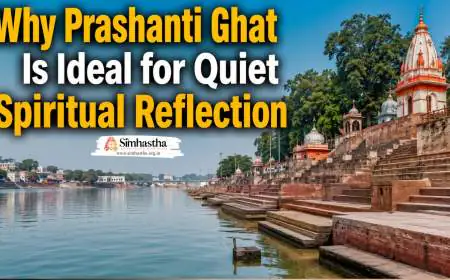
Why Prashanti Ghat Is Ideal for Quiet Spiritual Reflection

Ujjain Railway Station to Mahakaleshwar Temple Distance (2026 Guide)

Ujjain Simhastha 2028 Dates Announced: Full Shahi Snan & Event Timeline

Mangalnath Temple Trip Budget: Puja, Local Transport, Food and Stay Planning

Omkareshwar Trip Budget Guide: Transport, Stay, Food and Local Travel Costs

Mahakaleshwar Temple Entry Rules 2026: Dress Code, Mobile & Bag Policy

Bhasma Aarti at Mahakaleshwar Temple – Complete Pilgrim Guide

Why Ujjain Is One of the Four Kumbh Cities in India
The Introvert Pilgrim's Sanctuary and the Antidote to Collective Ecstasy
A significant portion of the spiritual community is made up of introverts—those sensitive souls for whom the crushing, collective ecstasy of a major temple queue, while powerful, is also deeply draining. For these pilgrims, the Shakti of the divine is accessed not through a roaring crowd but through solitude, silence, and a deep, personal connection. Prashanti Ghat is their spiritual home. It is the introvert's sanctuary, a place that honours the quiet, introspective path to the divine as being equally valid as the path of the chanting, dancing, ecstatic crowd. Here, a pilgrim can spend an entire morning without speaking a single word to another human being. They can sit at the edge of the river, their feet dipped in the cool, sacred water, and simply be present—to their breath, to the sun on their skin, to the unforced, gentle awareness of the divine that permeates the tranquil atmosphere.
This is not a rejection of the community but a necessary, complementary pole. The great ecstasy of the Shahi Snan and the intimate silence of Prashanti Ghat are the two lungs of a complete spiritual life. The introvert pilgrim breathes deeply in the silence of this ghat, recharging the spiritual batteries that were depleted by the beautiful, necessary, but exhausting theatre of the main temples. The ghat validates the quiet seeker's natural inclination, whispering a silent, profound truth: you do not need to be loud to be heard by the divine. You do not need a crowd to be in the presence of the sacred. The Shipra flows for the one, just as it flows for the million. 🤫
The River's Edge and the Moving Meditation of the Shipra
The presence of the Shipra River at Prashanti Ghat is fundamentally different from its presence at the bustling Ram Ghat. Here, the river is not a stage for a grand spectacle; it is a silent, moving teacher of the deepest spiritual truths. The flow of the water is a continuous, visible sermon on the nature of existence: the constant arrival and departure of every thought, every emotion, every moment of a human life. To sit on the steps of Prashanti Ghat and simply watch the river is to engage in a profound, effortless meditation. The gentle, swirling currents become a mirror for the mind's own stream of consciousness, and in watching the water flow without resistance, the pilgrim unconsciously learns to let their own mental formations arise and pass away without grasping or clinging. This is the core practice of vipassana, of mindful awareness, taught not by a guru in a hall, but by the river herself.
At dawn, the experience is transcendent. The first golden light of the sun catches the surface of the Shipra, turning it into a flowing ribbon of liquid gold. The air is cool and carries the scent of dew-wet earth and the faint, distant fragrance of temple incense. A mist often rises from the water, creating a soft, ethereal, dream-like landscape. The entire ghat, often completely empty at this hour, becomes a private sanctuary for the pilgrim who has made the effort to rise early. This is the moment when the veil between the material and the spiritual feels thinnest, when the presence of the divine is not a concept to be debated but a palpable, enveloping reality. The quiet seeker who sits here at dawn carries the peace of this moment within them for the rest of the day, a silent, inner sanctuary that no crowd can ever breach. 🌅
Practical Solitude and How to Experience Prashanti Ghat
Reaching Prashanti Ghat requires a small, intentional journey, a pilgrimage within a pilgrimage. It is located a short auto-rickshaw ride from the main city centre, and its relative obscurity means that many drivers may not know it by name. It is wise to ask for directions from your guesthouse or to use an offline map to guide your driver. The journey itself is a transition, moving from the congested, vibrant lanes of the temple zone into quieter, leafier residential outskirts. The ghat is best visited in the early morning, from 6:00 AM to 8:00 AM, when the light is soft, the air is cool, and the probability of solitude is at its highest. The late afternoon, an hour or so before sunset, is another magical window. Avoid the midday hours when the sun is harsh, as the ghat has limited permanent shade structures. There are no entry fees, no formal gates, and no restrictive timings. The ghat is open to the sky and to all who seek its quiet grace.
There are no facilities here—no chai stalls, no toilets, no vendors selling puja items. This lack of amenities is not a flaw; it is a defining feature of the ghat's character. It is a place of raw, unfiltered, uncommodified spirituality. The quiet seeker should come prepared: carry a water bottle, a small mat or cloth to sit on the stone steps, and perhaps a journal or a spiritual book. A simple offering of a few flower petals to the river can be a beautiful, silent ritual. But the most important thing to bring is an open, receptive heart, a willingness to sit in silence, and a deep, quiet trust that the river and the trees will do the rest. The ghat itself is the teacher, and its only lesson is peace. ✅

The Unseen Transformation and the Gift of the Quiet Ghat
The pilgrim who leaves Prashanti Ghat does not carry a tilak on their forehead or a tangible prasad in their hand. The blessing of this place is far more subtle and far more enduring. It is a quietening of the internal noise, a gentle settling of the restless, agitated mind. It is a renewed sense of perspective, a feeling that the problems and anxieties that seemed so large and intractable have been gently dissolved in the flowing water of the Shipra. The transformation is invisible, an inner shift that may not even be consciously noticed until hours later, when the pilgrim realizes that the tense knot in their stomach has unclenched, that their breathing is deeper, and that they are navigating the chaos of the city's streets with a new, quiet, unshakeable centre of calm. This is the true gift of Prashanti Ghat. It is not a destination; it is an immersion. It is not a place to be seen; it is a place to disappear, to dissolve the ego's noisy demands into the silent, eternal flow of the sacred river. For the quiet spiritual seeker, Prashanti Ghat is not just an appealing option; it is a necessary, profound, and deeply healing homecoming to the very heart of what they seek. 🕊️
Frequently Asked Questions