




















Why Pilgrims Overspend During Ujjain Simhastha 2028
Discover why pilgrims overspend during Ujjain Simhastha 2028. From last-minute travel to hidden costs like Bhasma Aarti booking, learn every reason and how to avoid them.
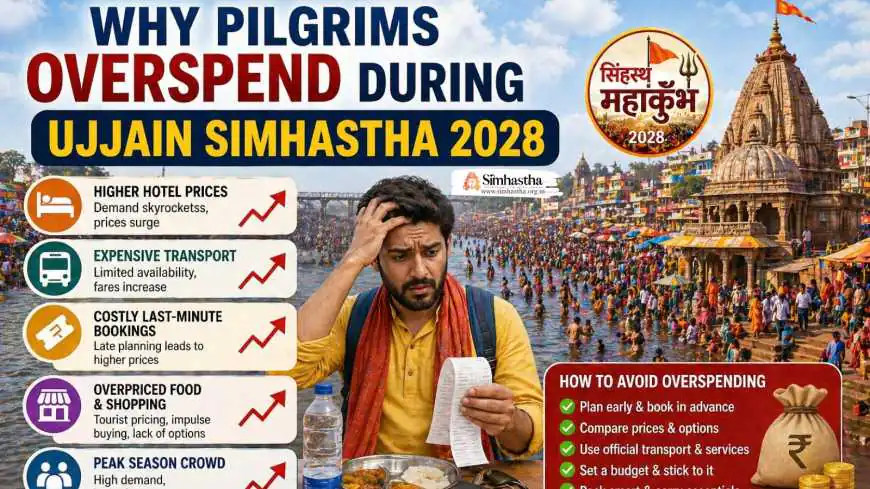


The Uncomfortable Truth About the Rising Cost of Faith
Here is a conversation happening in millions of homes right now. A family sits together, excitedly planning their once-in-a-lifetime pilgrimage to Ujjain Simhastha 2028. They have saved for years to take a holy dip in the sacred Shipra River and seek the divine blessings of Lord Mahakal. But when they start adding up the costs – flights, trains, hotels, food, pujas, donations, transport, prasad – the number is terrifying. It is not just high. It is astronomically, inexplicably, heartbreakingly high. And the most painful part? A significant portion of this money is not necessary or unavoidable. It is overspending – money leaving their pocket because of simple mistakes, clever exploitation, and a lack of inside knowledge.
This is not a story of greed, though greed certainly plays a part. This is a story of supply and demand, of psychological triggers, of information asymmetry, and of the unique pressures of a mega pilgrimage. The Maha Kumbh Mela 2025 in Prayagraj saw 3-star hotels charging ₹35,000 a night against a normal rate of ₹3,000, flights surging by 300%, and boatmen demanding ₹3,000 against the ₹150 official rate. With Simhastha 2028 projected to draw even larger crowds, the potential for overspending is terrifying. This article is your complete guide to understanding why pilgrims empty their wallets at Simhastha, and more importantly, how to keep your own wallet safely in your pocket.
The Treacherous Trap of Last-Minute Booking
The single biggest reason why pilgrims overspend during Simhastha is also the simplest to understand and the hardest to overcome: they simply leave everything for the last minute. The Simhastha Mela Officer has officially confirmed a 60-day event from March 27 to May 27, 2028. Within this window, the three Amrit Snan (holy baths) and seven major bathing festivals are concentrated between April 9 and May 8, 2028.
The Railway Board itself expects a staggering one crore (10 million) devotees to travel by train, a fivefold increase from the 20 lakh who used trains in the last Simhastha in 2016. To manage this, the railways will run 100 special trains.
Trending Guides Now

2 Days Ujjain Itinerary for Senior Citizens Easy Travel

Ujjain Simhastha 5 Day Itinerary for Couples

Safety Guidelines Every Ujjain Simhastha Pilgrim Must Follow
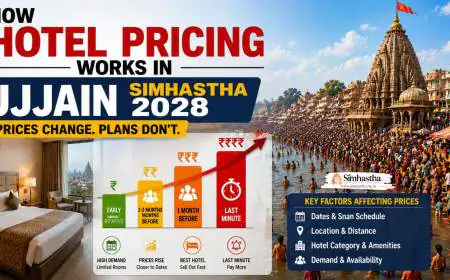
How Hotel Pricing Works in Ujjain Simhastha 2028

Ujjain Railway Station to Mahakaleshwar Temple Distance (2026 Guide)

Ujjain Simhastha 2028 Dates Announced: Full Shahi Snan & Event Timeline

Benefits of Becoming a Simhastha Volunteer
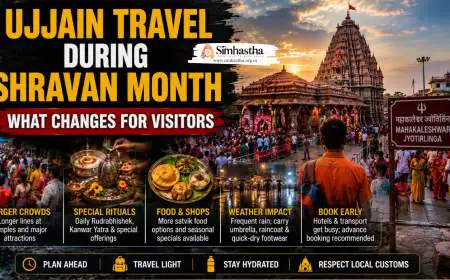
Ujjain Travel During Shravan Month: What Changes for Visitors
This math speaks for itself. Millions of pilgrims, all wanting to book the same finite number of flights into Devi Ahilyabai Holkar Airport in Indore, the same finite number of train berths to Ujjain Junction, and the same finite number of hotel rooms near the majestic Mahakaleshwar Temple. A LocalCircles survey of the Maha Kumbh 2025 found that a mind-boggling 87% of air travellers paid 50-300% more than the regular fare, and 67% of those seeking accommodation paid the same premium.
Delaying your booking is not a matter of "hunting for a deal." In the context of Simhastha, it is a direct financial penalty. Locking in flights, train tickets, and accommodation as early as possible is the single most effective weapon against overspending. The early pilgrim does not just get the worm; the early pilgrim saves thousands of rupees.
Accommodation: From Blessed Sanctuary to Financial Burden
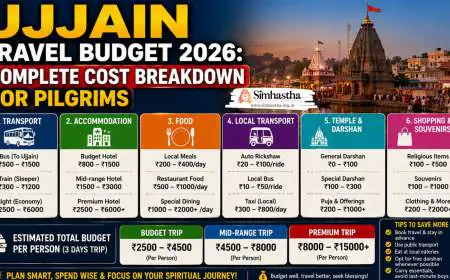
The holy city of Ujjain has a finite number of places to stay. On a normal day, you can find a decent hotel near the temple for around ₹1,500 to ₹3,000 and budget guesthouses for as little as ₹800 to ₹1,500. Dharamshalas, the traditional pilgrim rest houses, offer beds for an even more humble ₹300 to ₹800.
All these prices become a distant, beautiful memory as Simhastha 2028 approaches. During the Maha Kumbh 2025, hotels that usually charged ₹3,000 per night skyrocketed to ₹35,000 and ₹38,000. On the most sacred bathing day, Mauni Amavasya, even basic rooms that cost ₹2,500 surged to a staggering ₹22,000.
This will happen again in Ujjain for one simple reason: everyone wants to be close to the ghats. The thousands of pilgrims who arrive without a confirmed booking will face a desperate hunt, paying whatever a hotel owner demands for the last available room. This is the most common and painful form of overspending, where a pilgrim’s spiritual goal is weaponized by a landlord’s profit motive.
Pujas, Priests, and Prasad: The Hidden Costs of Spiritual Transactions
This is where overspending becomes incredibly personal and, for many, unavoidable. The primary purpose of visiting Ujjain is to connect with the divine, and for most pilgrims, that connection requires the services of a temple priest (pandit). The sheer pressure and chaos of the Simhastha environment make pilgrims vulnerable to clever exploitation disguised as religious service.

For the average pilgrim, walking up to the Mahakaleshwar Temple can be an intimidating experience. They are greeted by a swarm of self-appointed "guides" and "priests" who claim they can arrange a faster darshan or perform a more potent puja. A ritual that should cost a few hundred rupees in donations can be inflated to thousands, with the pilgrim being told that a larger offering will bring greater blessings. This is not a judgment on the genuine priests who work hard to serve pilgrims. It is a warning about the informal middlemen and touts who see the Kumbh as a massive financial opportunity.
The same applies to prasad. The humble offering of sweets, flowers, or coconuts, which should cost ₹50 or ₹100, can be sold to unprepared pilgrims for ₹500 or more by vendors who mark up prices tenfold on sacred days. This overspending is born from a lack of awareness, not a lack of devotion. Knowing the standard rates for simple pujas and prasad before you go, and politely but firmly refusing to pay inflated prices, is your best defense.
The Exploitation of Local Transport: From Boat to Bus
Getting from the Ujjain railway station or Indore airport to your hotel, and from your hotel to the Shipra River ghats, is an essential journey. This necessary mobility becomes a catalyst for massive overspending. The Maha Kumbh 2025 witnessed the worst of this. Boatmen who were supposed to charge a government-mandated rate of ₹150 per person for a crossing were brazenly demanding ₹3,000. Auto-rickshaw drivers who should charge ₹50 for a short ride demanded ₹500 or more.
This happens because the demand for transport is inelastic – pilgrims must get from point A to point B, and they are often carrying heavy luggage (like tent material) or traveling with elderly family members who cannot walk miles. The auto driver knows you will eventually pay, and so they can name their price. This is a classic example of price gouging, and it is one of the biggest and most frustrating categories of overspending at Simhastha. The solution is to pre-book as much of your local transport as possible through your hotel or a reputable tour operator.
The "Saving for a Lifetime" Over-Preparedness Trap
The last category of overspending is perhaps the most ironic: it stems from a pilgrim’s own careful, well-intentioned planning. For many, a trip to Simhastha is a once-in-12-years event. They have been saving for this pilgrimage for years. They have a budget, yes, but they also have a strong psychological desire for this trip to be perfect. The fear of missing out (FOMO) on a special ritual, or the anxiety of not having enough food or water, or the pressure to buy the "authentic" prasad drives them to over-prepare and over-pay.
They will book the most expensive "VIP" puja package offered by a tout. They will buy prasad from the first vendor they see, without comparing prices. They will take a private taxi from the airport instead of a cheaper bus. All of these are small, individual decisions that collectively inflate the total trip cost by 30-50%. This is not exploitation; this is a behavioral finance mistake. The pilgrim, driven by the sacred nature of the journey, abandons their normal spending discipline and becomes a "soft target." The most effective shield against this is to recognize it. It's fine to spend money, but spend it consciously, not impulsively. Ask yourself, "Is this puja priced fairly? Do I really need an air-conditioned tent?" A little skepticism can save a lot of rupees.
The Rising Tide: How Inflation and Demand Create a Perfect Storm
Beyond these specific, behavioral traps, there is a powerful economic trend that makes all of the above even worse. Inflation is real and persistent. A report shows that hotel tariffs in India have increased by at least 20% year-on-year. Another analysis predicts a further 7-15% rise across hotel segments due to strong domestic demand and limited supply.
Now, take this underlying inflation and multiply it by the extraordinary, spike-driven demand of Simhastha. The MP government has approved a staggering ₹5,882 crore for infrastructure projects for the event, including building 29 km of ghats for ₹779 crore and a massive river diversion project for ₹1,025 crore. Another ₹760 crore has been allocated for 15 development projects.
While this investment will create a much better experience for pilgrims, it also reflects the intense demand and the high cost of doing business at the Simhastha. The government is spending huge sums to manage the crowds, but this has a limited effect on controlling the prices set by private players. In fact, the anticipation of the Simhastha itself is a signal to businesses to raise their rates. The perfect storm of inflation, massive demand, and finite supply means that even a smart, well-planned pilgrim will pay more in 2028 than in 2016. The key is to avoid paying unnecessarily more.
A Final Word of Sacred Advice for the Wise Pilgrim
Overspending at the Ujjain Simhastha 2028 is not destiny. It is a sum of many small, avoidable factors. You can choose to be a victim of last-minute price surges, or you can be a disciplined planner who books everything early. You can be an anxious pilgrim who overpays a pandit, or you can be a knowledgeable one who knows the standard rates. You can be a desperate traveler who pays ₹3,000 for a ₹50 boat ride, or you can be a savvy traveler who pre-books transport. The difference between a spiritually fulfilling pilgrimage and a financially ruinous one is not luck; it is information and preparation.
The Madhya Pradesh government is preparing for you. The railways are preparing for you. Now, you must prepare for yourself. Book your accommodation today. Compare puja packages. Use official transport. Keep your wits about you. The divine energy of Lord Mahakal is free and infinite. Do not let the profiteers of the material world distract you from that simple, sacred truth. Go, take your holy dip in the Shipra, offer your prayers, and come back with your wallet safely intact, filled only with memories, not regrets.
Frequently Asked Questions