




























Why Kal Bhairav Temple Continues to Fascinate Researchers
Discover why Kal Bhairav Temple continues to fascinate researchers—from the mysterious liquor-drinking idol to 6000-year-old history, Kapalika traditions, and unsolved scientific puzzles.


Why Kal Bhairav Temple Continues to Fascinate Researchers
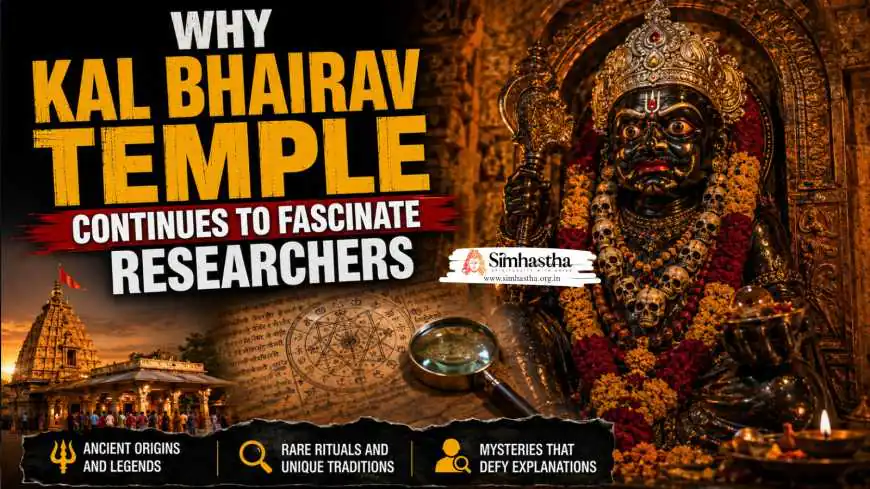
Imagine walking into a temple where thousands of liters of liquor disappear into an idol's mouth every single day—and no one—not archaeologists, not scientists, not engineers—can explain where it goes. 🥃🔍
Welcome to the Kal Bhairav Temple in Ujjain, one of the most intriguing and mysterious shrines in all of India. Located about 7 kilometers from the city center on the banks of the sacred Shipra River in the Bhairavgarh area, this temple is not just a place of worship—it's a living laboratory for researchers across disciplines.
Kal Bhairav Temple continues to fascinate researchers for reasons that go far beyond the obvious. Yes, the liquor offering is the headline-grabber. But beneath that surface lies a layered mystery encompassing 6000-year-old history, Kapalika and Aghora tantric traditions, Maratha-era architecture, Paramara-period sculptures, and a scientific puzzle that has baffled the Archaeological Department for decades.
Let me take you deep into the heart of this enigmatic temple and show you exactly why researchers can't seem to look away. 🕵️♂️📚
Trending Guides Now
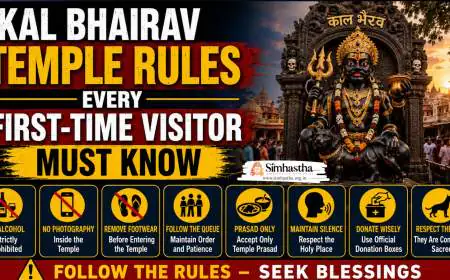
Kal Bhairav Temple Rules Every First-Time Visitor Must Know
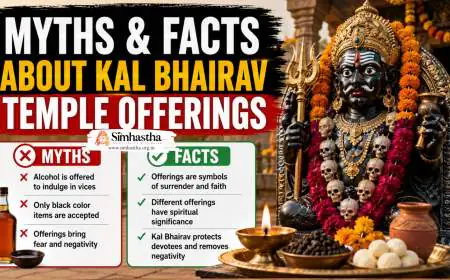
Myths and Facts About Kal Bhairav Temple Offerings
Why Kal Bhairav Temple Attracts International Visitors
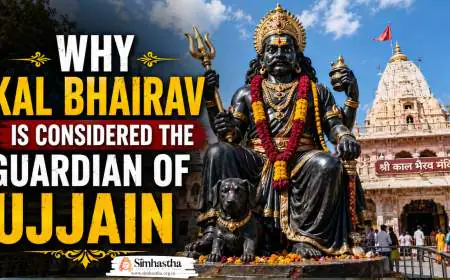
Why Kal Bhairav Is Considered the Guardian of Ujjain

Ujjain Railway Station to Mahakaleshwar Temple Distance (2026 Guide)

Ujjain Simhastha 2028 Dates Announced: Full Shahi Snan & Event Timeline
How ISKCON Ujjain Engages Young Devotees Through Programs

Benefits of Becoming a Simhastha Volunteer
📜 The Historical Depths: A Temple That Predates Memory
The 6000-Year-Old Question
The first thing that fascinates researchers is the temple's staggering antiquity. The Kal Bhairav Temple is believed to be about 6000 years old, making it one of the oldest continuously active shrines in India.
The original temple is attributed to King Bhadrasen, an obscure ruler whose legacy survives only through this sacred structure. The temple finds mention in the Avanti Khanda of the Skanda Purana—one of the most important ancient Hindu scriptures—confirming its existence in the deep past.
The Paramara Layer: 9th to 13th Century Discoveries
Archaeological excavations at the site have revealed images of Lord Shiva, Goddess Parvati, Lord Vishnu, and Lord Ganesha belonging to the Paramara period (9th to 13th century CE). These discoveries confirm that the temple site was a significant center of worship for centuries, with different dynasties contributing to its evolution.
The Maratha Restoration: Mahadaji Shinde's Promise
The present-day temple structure shows clear Maratha influence. According to local tradition, after the Maratha defeat in the Third Battle of Panipat (1761 CE) , the Maratha general Mahadaji Shinde offered his pagri (turban) to the deity, praying for victory in his campaign to restore Maratha rule in North India.
After successfully resurrecting Maratha power, Shinde fulfilled his vow by carrying out the restoration of the temple. The deity's silver head is still adorned with a Maratha-style pagri, a tradition that dates back to those days.
The 6000-Year-Old Idol
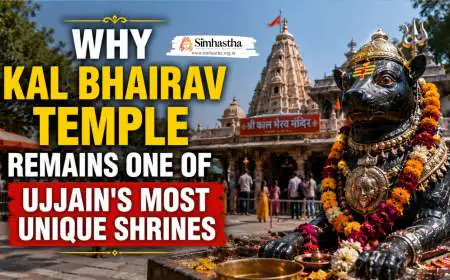
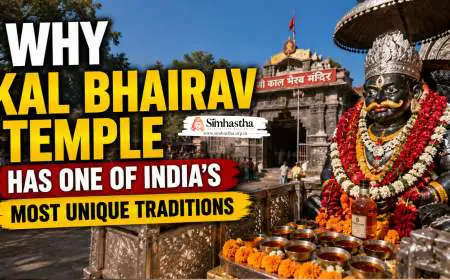
At the heart of the temple sits the 6000-year-old idol of Lord Kal Bhairav, believed to be the fifth incarnation of Lord Shiva. The deity's image is a face in the form of a rock, layered with kumkuma and vermilion. The silver head of the deity, adorned with the Maratha-style pagri, creates a striking visual that has captivated researchers for generations.

🥃 The Liquor Offering: A Mystery That Defies Explanation
The Daily Ritual That Baffles Science
Every single day, devotees line up at the steps of the Kal Bhairav Temple with liquor bottles in hand. The ritual is both simple and astonishing:
-
Devotees purchase bottles of alcohol—often desi daru (local liquor)—from government-run counters outside the temple
-
They present the bottles to the priest
-
The priest pours the liquor through a small slit in the idol's mouth
-
The liquid disappears
The liquor doesn't drip down. It doesn't pool at the base. It simply vanishes.
The Numbers: How Much Does Bhairav "Drink"?
While there's no official figure, it's estimated that visitors bring several hundred liters of liquor every single day. Some reports suggest that around 2,000 bottles of liquor are offered daily following mantra recitals.
The temple has become so renowned for this practice that both government-sponsored and unlicensed vendors sell foreign brands and local liquor outside the temple premises.
The Spiritual Significance: Why Liquor?
The offering of liquor to Kal Bhairav is not a random or irreverent act. It is deeply rooted in tantric tradition.
Liquor is one of the five tantric ritual offerings known as Panchamakara: madya (alcohol), maansa (meat), meena or matsya (fish), mudra (gesture or parched grain), and maithuna (sexual intercourse).
In older times, all five offerings were made to the deity. Now, only alcohol is offered; the other four offerings are in the form of symbolic rituals.
Temple priest Om Prakash Chaturvedi explains the deeper meaning: "Liquor offered to Lord Kaal Bhairav is with an intention of renouncing one's bad qualities in front of him." He adds: "Kaal Bhairav is considered to be a deity of sacrifice, so there is provision to offer alcohol with one's feeling of giving up its vices and ending its animalistic nature."
The Government's Role: A Unique Arrangement
The Madhya Pradesh government operates liquor counters outside the temple to ensure devotees are not swindled. When the state announced a liquor ban in religious cities, Chief Minister Mohan Yadav was asked about the Kal Bhairav Temple. His response was clear: "You may take the prasad to temple."
Temple priest Om Prakash Chaturvedi confirmed: "Traditions have never been broken at the temple. Even during Simhastha festival in 2016, alcohol was offered to the deity despite a ban."
🔬 The Scientific Puzzle: Why Researchers Are Baffled
The Archaeological Department's Failed Attempts
Despite research, the Archaeological Department remains baffled by this phenomenon.
When the temple's mystery first gained widespread attention, the Archaeological Department conducted a 12-foot-deep excavation around the idol to trace where the liquor was going.
The result? Nothing. The liquor's disappearance remains a mystery to this day.
Scientists Acknowledge the Miracle
Reports indicate that archaeologists and scientists also consider this a divine miracle. The phenomenon has been described as "a great and unsolved mystery" that has gained worldwide fame.
Theories That Don't Hold Up
Various theories have been proposed over the years:
-
Capillary action: The stone might absorb the liquid—but the idol shows no signs of saturation
-
Hidden drainage: There might be a secret channel—but excavations have found nothing
-
Evaporation: The liquor might evaporate—but the quantity is too large and the disappearance too rapid
None of these theories hold up under scrutiny.
The 12-Foot Excavation: What They Found
The most thorough investigation involved digging 12 feet deep around the idol's base. If there was a drainage system, a hidden chamber, or any physical mechanism, it would have been found.
Nothing was discovered. The mystery remains completely intact.
The Psychological Fascination
Beyond the physical mystery, researchers are fascinated by the psychological and sociological dimensions:
-
How has this tradition survived for thousands of years?
-
What sustains the faith of devotees in the face of skepticism?
-
How does the temple navigate modern regulations while preserving ancient traditions?
-
What does the ritual tell us about human psychology and the need for mystery?
🏛️ The Tantric Connection: Kapalika and Aghora Traditions
The Esoteric Roots
The worship of Kal Bhairav was traditionally popular among the Kapalika and Aghora sects, and Ujjain was a prominent center of these sects.
These are among the most esoteric and misunderstood traditions in Hinduism. The Kapalikas were known for their skull-bowl rituals and extreme asceticism. The Aghoris are known for their transgressive practices aimed at overcoming all dualities.
The Kal Bhairav Temple represents one of the last remaining public expressions of these traditions.
Ashta Bhairava: The Eight Guardians
The temple is believed to be a vital site for performing the Ashta Bhairava ritual, which honors eight forms of Bhairav with Kal Bhairav as their chief.
The Ashta Bhairavas are the fierce forms of Lord Shiva tasked with guarding different directions of the universe. Kal Bhairav is considered the most significant among them.
This ritual attracts followers of Shaivism from across the country who come to seek spiritual protection.
The Tantric "Panchamakara" Connection
The liquor offering is part of the broader Panchamakara tradition—the five tantric offerings. This connects the temple to a rich and complex ritual tradition that researchers continue to study.
The offering of alcohol to Kal Bhairav is described as "a complex and symbolic ritual that reflects the multifaceted nature of Hindu traditions. It involves the acknowledgment of human desires, the pursuit of spiritual growth, and the surrender of ego."
🎨 The Architectural and Artistic Heritage
Maratha Architectural Style
The temple is an excellent example of Maratha architectural style, showcasing intricate carvings and a peaceful ambiance. The structure features a blend of Maratha and traditional Hindu styles, characterized by intricate stone carving and sculptures depicting various forms of Lord Bhairav.
The Malwa Paintings
One of the most tragic losses for researchers is the fading of the Malwa-style paintings that once decorated the temple walls.
Only traces of these paintings are visible now, but they once told vibrant stories of culture, history, and devotion. Researchers continue to study these fragments, hoping to reconstruct the visual narratives that adorned the temple.
The Silver-Faced Idol
The deity's image is a face in the form of a rock layered with kumkuma and vermilion. The silver head of the deity, adorned with a Maratha-style pagri, is a striking feature that has drawn the attention of art historians.
The idol of Kaal Bhairav, carved in black stone, is adorned with ornaments and garlands, emanating an aura of power and devotion.
The Iconography: Damaru, Trishula, and Kapala
The silver-faced idol of the deity is seated with a damaru (drum), trishula (trident), and kapala (skull)—the classic iconography of Bhairav that researchers have studied for centuries.
🐕 The Guardian Deity: Ujjain's "Kotwal"
The Commander-in-Chief
Kal Bhairav is not just another deity in the Hindu pantheon. He is the guardian deity of Ujjain—the city's "Kotwal" or chief police officer.
He is considered the Senapati (Commander-in-Chief or Chief General) of the town.
This unique role—a deity serving as the divine protector of an entire city—is a subject of significant research interest. How did this tradition develop? What does it tell us about the relationship between religion and governance in ancient India?
The Dog Companion
The temple's main deity is a stone idol of Lord Kaal Bhairav, with a dog by his side that symbolizes loyalty and vigilance. The dog is Bhairav's vahana (vehicle), and its presence adds another layer of symbolism for researchers to unpack.
Adjacent features include provisions for feeding gray langurs, considered sacred manifestations—another fascinating element for anthropologists studying human-animal relationships in religious contexts.
🏛️ The Archaeological Significance: What Lies Beneath
The Paramara-Era Discoveries
The recovery of Paramara-period (9th-13th century CE) images of Shiva, Parvati, Vishnu, and Ganesha from the site confirms the temple's long history as a multi-deity worship center.
These discoveries are of significant archaeological interest, providing insights into:
-
The religious practices of the Paramara dynasty
-
The artistic traditions of the period
-
The evolution of temple architecture in central India
The Pratihara-Era Fragment
A sculpture fragment from the Pratihara period, probably ninth century, has also been documented at the site. This suggests that the temple site was active even before the Paramara period, adding another layer to its historical depth.
The ASI's C-14 Dating
The Archaeological Survey of India carried out C-14 determination at the site, with calibrated dates ranging between 900 AD and 1030 AD. While this dates a specific structure, it confirms the site's medieval antiquity.
🕯️ The Festivals: A Living Laboratory
Bhairav Ashtami
The temple comes alive during Bhairav Ashtami, a festival that draws thousands of devotees. This is when the deepmalika tower of lamps is lit, creating a spectacular visual display that researchers document year after year.
Mahashivratri
During Mahashivratri, a Shivalinga inside the temple becomes a focal point of devotion, drawing thousands of devotees to seek blessings.
Daily Offerings: A Continuous Ritual
Beyond the festivals, the daily rhythm of the temple—the liquor offerings, the prayers, the feeding of the langurs—provides researchers with a continuous stream of data on ritual practice.
📚 The Scholarly Interest: What Researchers Are Studying
Religious Studies Scholars
Religious studies scholars are fascinated by:
-
The survival of tantric traditions in a mainstream temple
-
The symbolism of the liquor offering
-
The temple's role in the Ashta Bhairava tradition
-
The syncretism of Shaiva, Shakta, and tantric elements
Anthropologists
Anthropologists study:
-
The social dynamics of the temple community
-
The devotee experience and the psychology of faith
-
The economic ecosystem surrounding the temple
-
The gender dynamics of worship
Archaeologists
Archaeologists continue to study:
-
The stratigraphy of the site
-
The Paramara-era sculptures and their significance
-
The architectural evolution of the temple
-
The fading Malwa paintings and attempts at preservation
Scientists
Scientists from various disciplines are drawn to:
-
The physical mystery of the liquor disappearance
-
The material properties of the idol's stone
-
The chemical composition of the offerings
-
The environmental impact of the ritual
🌍 The Global Fascination: Why the World Is Watching
The Kal Bhairav Temple has gained international attention through features in publications like Atlas Obscura, which describes it as one of the world's most unusual religious sites.
Researchers from around the world visit the temple to study its unique combination of:
-
Extreme antiquity (6000 years)
-
Unique ritual practice (liquor offering)
-
Unsolved mystery (the disappearing liquid)
-
Architectural heritage (Maratha style with Malwa paintings)
-
Tantric connections (Kapalika and Aghora traditions)
💫 The Unanswered Questions: What Researchers Still Don't Know
Despite decades of study, many questions remain unanswered:
-
Where does the liquor actually go? The 12-foot excavation found nothing.
-
How old is the original temple structure? While the Skanda Purana mentions it, the exact date remains unclear.
-
What did the Malwa paintings depict? Only traces remain.
-
How did the Kapalika and Aghora traditions influence the temple's rituals? The historical record is incomplete.
-
What is the full significance of the Ashta Bhairava ritual? Scholars continue to debate.
-
How will the temple navigate modern regulations? The liquor ban question remains unresolved.
🙏 Final Thoughts: The Enduring Mystery
Kal Bhairav Temple continues to fascinate researchers because it refuses to give up its secrets. Every excavation raises more questions. Every study reveals new layers of complexity. Every attempt to explain the mystery only deepens it.
The temple is a living bridge between the ancient and the modern, between faith and science, between the known and the unknown. It challenges our assumptions about what is possible. It reminds us that some mysteries are not meant to be solved—they are meant to be experienced.
Whether you approach it as a devotee, a scientist, a historian, or a curious traveler, the Kal Bhairav Temple offers something profound: the experience of standing before the unexplained and feeling the presence of the divine.
And that, perhaps, is the greatest mystery of all. 🕉️🥃🔱
Frequently Asked Questions