


















Why Kal Bhairav Temple Attracts International Visitors
Discover why Kal Bhairav Temple in Ujjain attracts international visitors. From the raw tantric liquor ritual to the ash-smeared guardian deity, explore the fierce, unforgettable spiritual magnet that draws global seekers to the Kotwal of Mahakal's city.



The Liquor Offering: A Ritual That Challenges and Captivates the Western Mind
The single, magnetic act that draws the international visitor, the ritual that is both the most photographed and the most profoundly misunderstood, is the offering of liquor to the deity. In a global spiritual culture that often equates purity with abstinence, the image of a priest calmly opening a sealed bottle of country liquor and pouring it against the stone lips of a god is nothing short of a cultural and theological earthquake. The Western visitor, raised in the stark, clear categories of a dualistic morality, is forced to abandon their entire framework of what is sacred and what is profane. The offering, as they slowly learn, is not a profane, drunken party. It is a sophisticated, ancient tantric ritual of total surrender. The alcohol, a substance that intoxicates, clouds the mind, and can lead to the dissolution of control, is offered to the fierce guardian as a symbolic representation of the devotee's own inner demons—their anger, their lust, their deeply buried addictions, and their most secret, shameful attachments. The act of offering the sealed bottle is a prayer that says, "Lord, I cannot conquer these forces on my own. I place them, in their entirety, at your fierce feet. Consume them. Burn them. Transform them." The returned bottle, now sanctified prasad, is a tangible, physical proof of an alchemical spiritual transaction. For the foreign visitor who is able to move beyond the initial shock, this ritual becomes a masterclass in the profound, non-dualistic heart of tantric Hinduism, a direct, visceral, and unforgettable lesson that the divine can be approached not only through our purity but also, and perhaps most powerfully, through the honest, vulnerable, and unadorned offering of our deepest, darkest shadows. 🍾
The Unapologetic Rawness of Tantra and the Allure of the Esoteric
The international visitor, often arriving from a highly sanitized and culturally self-conscious society, is drawn, with an almost gravitational pull, to the raw, unapologetic, and deeply esoteric atmosphere of the Kal Bhairav Temple. This is not a temple that has been polished for tourist consumption. The stone is dark with centuries of lamp soot and offerings. The air is thick with a complex, intense smell of country liquor, incense, and marigold flowers. The queue is democratic and unmanaged, and the priest performs the ritual with a swift, practiced, and unsmiling efficiency that is refreshingly devoid of the performative, transactional piety found in more commercialized shrines. The temple is a living, breathing, and fiercely authentic tantric space, and the foreign visitor, who may have read about the esoteric left-hand path of Tantra in a university course or a dusty second-hand bookshop, is suddenly standing inside it. The energy is not malevolent, but it is unmistakably fierce, direct, and utterly unapologetic. There is no effort to explain, to justify, or to soften the raw, spiritual power that is being dispensed. This complete, unapologetic authenticity is a rare and priceless commodity for the global spiritual seeker, and it is the reason why many describe their visit to Kal Bhairav not as a casual temple stop but as one of the most authentic and transformative spiritual experiences of their entire journey through India. 🔥
The Temple Dogs: Silent, Ancient Witnesses That Melt the Heart
One of the most unexpected and emotionally powerful bridges between the foreign visitor and this fierce, intimidating temple is the presence of the sacred dogs. In the temple courtyard, lounging in the sun or padding quietly between the devotees, are the vahanas, the divine vehicles, of Lord Bhairava. For the Western traveler, who often comes from a culture where dogs are beloved, pampered members of the family, the sight of these calm, ancient-eyed animals being fed, revered, and treated as living embodiments of the deity is an immediate, heart-opening revelation. The simple, gentle act of buying a packet of biscuits from a stall outside the temple and quietly feeding one of these silent, dignified creatures becomes a deeply personal, emotional, and accessible ritual. It is a moment of pure, unmediated connection with the sacred, a gentle, welcoming doorway into the temple's fierce energy. The dogs, in their quiet, non-judgmental acceptance of a biscuit and a gentle pat on the head, become a silent, furry ambassador of Bhairava's protective grace, a powerful, living symbol that even the most fierce guardian has a soft, approachable, and deeply loving side. For the international photographer, the dogs, lounging in the foreground of the dark, ancient temple, also provide a deeply compelling and evocative visual narrative of sacred coexistence. 🐕
A Place Beyond Judgment: The Radical Inclusivity of Kal Bhairav's Courtyard
The foreign visitor often arrives at an Indian temple with a subtle, unspoken anxiety: "Am I doing this right? Am I dressed properly? Will I be judged as an outsider who does not belong?" The profound spiritual power of the Kal Bhairav Temple lies in its radical, unapologetic, and deeply comforting disregard for such anxieties. The Kotwal of Ujjain is a fierce, protective guardian, but he is not a petty, rule-obsessed judge. The courtyard is a space of astonishing spiritual democracy. The wealthy industrialist offering a bottle of expensive Scotch, the humble farmer offering a small quarter of country liquor, the foreign traveler offering nothing but a bewildered, curious silence, and the local woman offering a garland of marigolds and a prayer for her son's protection—all are received with the same swift, efficient, and utterly non-judgmental ritual precision by the priest. The guardian's fierce gaze, once you understand it, is not one of personal condemnation but of impersonal, all-seeing vigilance. He sees you, he sees your offering, and he sees the truth in your heart. Everything else—your nationality, your language, your social status, and your deep, nagging fear of doing the wrong thing—is profoundly irrelevant. This radical, lived theology of inclusion is an immense, unexpected, and deeply healing balm for the international visitor, a spiritual sanctuary where they are not a tourist but simply another soul standing, with an honest heart, before the fierce, protective, and ultimately loving guardian of the sacred city. 🤲
Trending Guides Now

Myths and Facts About Kal Bhairav Temple Offerings

Ujjain Railway Station to Kal Bhairav Temple: Distance, Auto Fare and Best Route
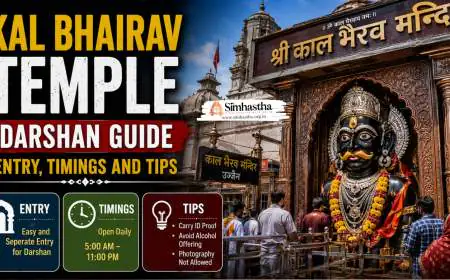
Kal Bhairav Temple Darshan Guide: Entry, Timings and Tips
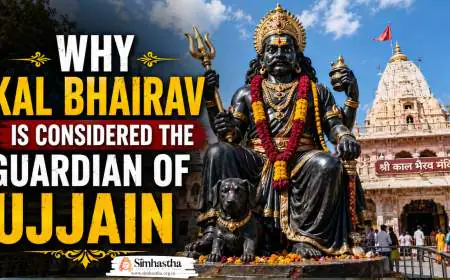
Why Kal Bhairav Is Considered the Guardian of Ujjain

Ujjain Railway Station to Mahakaleshwar Temple Distance (2026 Guide)

Ujjain Simhastha 2028 Dates Announced: Full Shahi Snan & Event Timeline

Ujjain Simhastha Update: CM Mohan Yadav Reviews 2028 Works

Kashi Vishwanath Trip Budget Guide: Hotel, Local Transport, Food and Darshan Planning
The Visual Spectacle: Ash, Vermillion, and the Dark Lingam
A significant, and perfectly legitimate, reason why Kal Bhairav Temple attracts international visitors is the sheer, unadulterated, and unforgettable visual spectacle. For the documentary filmmaker, the travel photographer, and the visually hungry Instagram storyteller, the temple is a living, breathing museum of raw, sacred aesthetics. The dark, oil-anointed stone of the deity. The bright, shocking orange of the marigold garlands. The grey-white ash (vibhuti) smeared on the foreheads of the devotees. The vivid, blood-red sindoor that marks the forehead of the goddess. The black sesame seeds scattered on the offering plate. The glint of a sealed liquor bottle. The ragged, noble, and deeply photogenic faces of the sadhus and the pilgrims. The calm, golden-brown eyes of a temple dog. Every single frame is a powerful, evocative, and distinctly Indian image that tells a story far beyond the reach of a simple caption. The temple does not stage these visuals; they are the organic, uncurated, and continuous fabric of its daily life. For the international visitor who wields a camera, this authentic, unposed, and spiritually charged visual landscape is an inexhaustible treasure. The images they take home are not just memories; they are profound, wordless ambassadors that then draw their own friends, followers, and fellow seekers to embark on the same, life-altering journey to the fierce lord of Ujjain. 📸
The Kotwal of Ujjain: A Spiritual Bodyguard for the Perplexed Traveler
India, for the foreign traveler, can often feel like a beautiful, overwhelming, and deeply chaotic sensory assault. The noise, the crowds, the unfamiliar customs, and the constant, low-grade anxiety of navigating an entirely different civilization can leave even the most seasoned traveler feeling vulnerable and psychologically exposed. It is in this context that the archetype of Kal Bhairav as the divine bodyguard, the Kotwal, becomes a profoundly attractive and personally resonant concept. The international visitor, feeling adrift in a sea of beautiful, bewildering chaos, steps into the courtyard of the divine policeman and feels, often for the first time on their journey, a deep, visceral, and completely non-rational sense of being protected. The guardian who watches over the entire sacred city of Mahakal is now, by a simple, heartfelt act of darshan, also watching over them. The fierce, unblinking eyes of the deity are no longer frightening; they are a source of immense, quiet comfort. The visitor, who may have been cheated by a tout or lost in a labyrinthine lane earlier in the day, now feels, in a very real and personal sense, that they have a powerful, unseen, and completely incorruptible ally. This is the secret, deeply personal reason why many international visitors return to the Kal Bhairav Temple again and again. It has become, for them, a spiritual home base, a place of fierce, protective, and unconditional safety in the heart of a magnificent, overwhelming, and endlessly surprising land. 🛡️
Practical Guide for the International Visitor: Approaching the Fierce Lord
For the international visitor who is planning to experience this powerful temple, a few practical pieces of guidance will ensure a respectful, safe, and profoundly transformative visit. The most important rule is to dress with complete modesty. Legs and shoulders must be fully covered. A simple, loose kurta-pajama for men and a salwar kameez or long skirt for women is ideal. Leather items of any kind—belts, wallets, jackets—are strictly prohibited inside the sanctum area; remove them before you enter the temple queue. The liquor offering must be a sealed, unopened bottle, which you can purchase from the authorized shops directly outside the temple. You will hand the sealed bottle to the priest, who will perform the ritual. Do not open the bottle yourself, do not attempt to pour it onto the deity, and do not drink it inside the temple premises. The bottle will be returned to you as blessed prasad, which you should treat with respect. Photography is strictly prohibited inside the main sanctum, but you may photograph the outer courtyard and the temple dogs. Approach the dogs calmly and respectfully; do not tease or startle them. The feeding of a biscuit is a beautiful, gentle act of connection. The most important preparation, however, is an inner one. Leave your expectations and your judgments outside the temple gate. Arrive with an open, humble, and curious heart. Do not try to intellectually understand the ritual; simply witness it, feel it, and allow the fierce, ancient, and deeply protective grace of the guardian to wash over you. 🙏
The Eternal Return: Why the Fierce Guardian Calls Them Back
The international visitors who have once stood in the dark, pulsating courtyard of Kal Bhairav, who have felt the ancient, non-judgmental gaze of the guardian, and who have tasted the strange, transformative grace of the liquor offering, often speak of a mysterious, persistent, and deeply personal call that draws them back to Ujjain. They return not as tourists checking off a bucket-list item but as pilgrims, making their way back to a spiritual home. The fierce lord, who strips away all pretense and all illusion, has become, for them, a profound, lifelong, and deeply trusted spiritual ally. The temple has taught them that the divine is not only found in the peaceful, the beautiful, and the easily acceptable, but also, and perhaps most powerfully, in the dark, the fierce, the raw, and the fiercely honest. The memory of that dark, oil-anointed stone, the sound of the swift, practiced ritual, and the quiet, dignified presence of the sacred dogs becomes a silent, inner sanctuary that they carry with them across the oceans, back into their ordinary lives, a fierce, protective, and deeply loving presence that whispers a quiet, eternal truth: you are seen, you are protected, and you are, in this very moment, in the unshakeable embrace of the guardian of the sacred city. 🔱
Frequently Asked Questions