














Why Kal Bhairav Temple Remains One of Ujjain's Most Unique Shrines
Discover why Kal Bhairav Temple remains one of Ujjain's most unique shrines. Explore the liquor offering ritual, history, and spiritual significance of this mysterious temple.

The Temple That Defies Convention: Welcome to Kal Bhairav
Let me ask you something. 🤔 When you picture a Hindu temple, what comes to mind? The gentle fragrance of incense, the sound of bells, priests offering flowers and sweets to the deity... right?
Now imagine walking into a temple where devotees carry bottles of liquor instead of coconuts. Where the priest pours alcohol into the mouth of the idol, and it simply disappears. Where the deity is worshipped not as a gentle god but as the fierce guardian of an entire city. 🥃
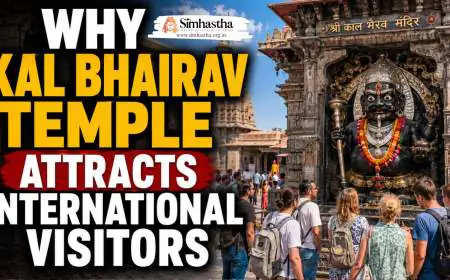
Welcome to the Kal Bhairav Temple in Ujjain – a shrine so unique that it leaves every visitor speechless. Located about 7 kilometers from Ujjain Junction on the banks of the sacred Shipra River, this temple has been drawing devotees and curious travelers for centuries .
Why does Kal Bhairav Temple remain one of Ujjain's most unique shrines? The answer lies in its 6,000-year-old history, its mind-boggling liquor offering ritual, its role as the city's divine guardian, and its connection to ancient Tantric traditions that most people have never heard of .
Trending Guides Now
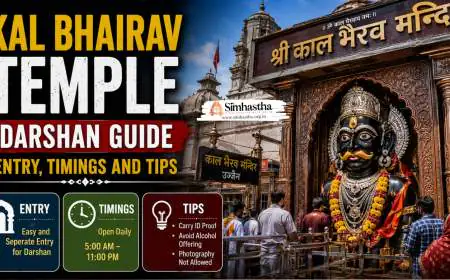
Kal Bhairav Temple Darshan Guide: Entry, Timings and Tips
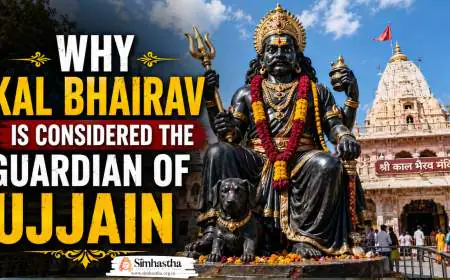
Why Kal Bhairav Is Considered the Guardian of Ujjain
Why Kal Bhairav Temple Continues to Fascinate Researchers
Kal Bhairav Temple Local Transport Guide: Auto Fare, E-Rickshaw and Taxi Tips
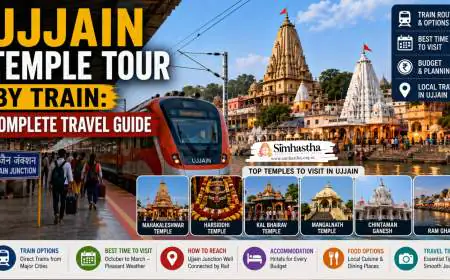
Ujjain Railway Station to Mahakaleshwar Temple Distance (2026 Guide)

Ujjain Simhastha 2028 Dates Announced: Full Shahi Snan & Event Timeline
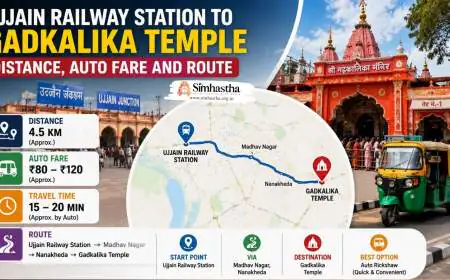
Ujjain Railway Station to Gadkalika Temple: Distance, Auto Fare and Route
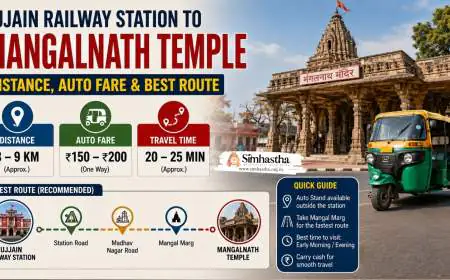
Ujjain Railway Station to Mangalnath Temple: Distance, Auto Fare and Best Route
In this article, we'll uncover every layer of this mysterious temple. From the legendary Skanda Purana references to the Maratha-era architecture, from the daily disappearance of hundreds of liters of alcohol to the temple's special status during Ujjain's liquor ban – get ready for a journey into one of India's most fascinating spiritual destinations. 🙏
The Guardian of Ujjain: Who Is Kal Bhairav?
Kal Bhairav: The Fierce Face of Lord Shiva
To understand this temple, we first need to understand who Kal Bhairav is. In Hindu mythology, Kal Bhairav is a fierce manifestation of Lord Shiva – the destroyer and transformer among the Hindu trinity .
The word "Kal" means both "death" and "time," so Kal Bhairav represents the one who conquers time and death itself. With a fiery expression, a coiled snake around his neck, and a garland of skulls, he is the embodiment of destruction – but destruction that clears the path for creation .
Unlike the meditative, peaceful form of Shiva worshipped at the nearby Mahakaleshwar Temple, Kal Bhairav is Shiva in his most intense and protective form. He's the deity you call upon when you need fierce protection, when you need to overcome fear, and when you need to break free from limitations .
The Kotwal of Ujjain: Divine Protector of the City
Here's something that will make you smile. In Ujjain, Kal Bhairav isn't just worshipped – he's considered the "Kotwal" or the chief police officer of the city! 🚔
Yes, you read that right. The deity is revered as the appointed guardian from Lord Shiva himself, tasked with protecting Ujjain from all negativity and harm . The belief is passed down through generations – Kal Bhairav is the Senapati (Commander-in-Chief) of the town, ensuring that devotees and the city remain safe .
This role as protector adds a fascinating layer to the temple's significance. When you visit, you're not just entering a place of worship – you're entering the headquarters of Ujjain's divine security system! 🛡️
Ashta Bhairava: The Eight Forms of Bhairav
The worship of Ashta Bhairava (the eight Bhairavas) is an integral part of the Shaivite tradition, with Kal Bhairav considered their chief .
Each of the eight Bhairavas represents a different aspect of destruction and protection. While other temples in Ujjain honor these forms, the Kal Bhairav Temple is the primary site for performing Ashta Bhairava rituals, attracting followers of Shaivism from across the country who come to seek spiritual protection .
The temple's connection to the Kapalika and Aghora sects (ascetic groups known for their unconventional practices) explains why its rituals differ so dramatically from mainstream Hindu worship . These ancient sects were prominent in Ujjain, and their influence still lingers in the temple's unique traditions.
The 6,000-Year-Old History: From Skanda Purana to Maratha Glory
An Ancient Temple with Royal Roots
The original Kal Bhairav Temple is believed to have been built by King Bhadrasen of Mahismati (now Maheshwar), and references to the temple can be found in the Avanti Khanda of the Skanda Purana – one of Hinduism's most important ancient texts .
This places the temple's origins at approximately 6,000 years ago, making it one of the most ancient shrines in India . The deep mythological ties mark it as a site of profound spiritual significance, rooted in the common spiritual lore of the region .
The Maratha Connection: Mahadaji Shinde's Pagri
While the original temple was ancient, the present-day structure reflects Maratha architectural style, and here's the fascinating story behind it .
According to local tradition, after the devastating Maratha defeat in the Third Battle of Panipat (1761 CE), the great Maratha general Mahadaji Shinde offered his pagri (turban) to the deity, praying for victory in his campaign to restore Maratha rule in North India .
When he successfully resurrected Maratha power, he carried out restoration of the temple as an act of gratitude . This is why the deity's silver head is adorned with a Maratha-style pagri – a tradition dating back to Mahadaji Shinde's days and maintained by the Scindia royal family of Gwalior .

Traces of Malwa Paintings
The temple walls were once decorated with Malwa paintings – a distinctive art form of the region. While many of these murals have faded over time, traces of the vibrant art still grace the walls, telling stories of culture, history, and devotion .
Images of Lord Shiva, Goddess Parvati, Lord Vishnu, and Lord Ganesha belonging to the Paramara period (9th-13th century CE) have also been recovered from the site, reflecting Ujjain's deep connection to Shaivism and its historical importance as a center of the Kapalika and Aghora sects .
The Ritual That Shocks and Awes: Offering Liquor to the Deity
The Mystery of the Disappearing Liquor
Now, let's talk about the ritual that puts the Kal Bhairav Temple on the map – the daily offering of liquor. 🥃
Every day, hundreds of devotees line up at the temple steps with liquor bottles in hand . Vendors outside the temple sell baskets containing flowers, coconuts, and a bottle of liquor – usually desi daru (country liquor) .
Here's how the ritual works:
-
Devotees hand over the liquor to the temple priest.
-
The priest pours the liquor into a silver saucer or shallow cup.
-
He offers prayers and takes the saucer near the deity's mouth, which has a slit.
-
He tilts the plate slightly – and the liquor starts disappearing .
According to witnesses, about one-third of the bottle is returned to the devotee as prasad (blessed offering) .
What makes this truly mind-blowing? The temple priest claims that the slit in the idol doesn't have any cavity – that the deity miraculously swallows the liquor offered . The priest also asserts that only he can perform this miracle, and that others who have tried to make the statue swallow the liquor have failed .

Visitors are not allowed to examine the statue closely, adding to the mystery . Whether viewed as a miracle or a clever illusion, witnessing the deity "accept" the offering is a powerful moment that leaves thousands of visitors awestruck every day .
How Much Liquor Does the Deity "Drink"?
While no official figures are available, the estimated amount of liquor offered at the temple daily is several hundred liters .
During the 2016 Ujjain Simhastha, the state government banned liquor sales in Ujjain for a month but allowed the shops in front of the temple to continue selling alcohol for offerings . Two government liquor shops near the temple reportedly sold liquor worth more than 5 lakh rupees daily .
The Meaning Behind the Madness: Why Liquor Is Offered
Now, for the million-dollar question: why is liquor offered to a Hindu deity?
The offering of liquor is part of the Panchamakara – the five tantric ritual offerings:
| Offering | Meaning |
|---|---|
| Madya | Alcohol |
| Maansa | Meat |
| Meena / Matsya | Fish |
| Mudra | Gesture or parched grain |
| Maithuna | Sexual intercourse |
In older times, all five offerings were made to the deity. Now, only alcohol is offered; the other four are represented through symbolic rituals .
The Spiritual Significance:
-
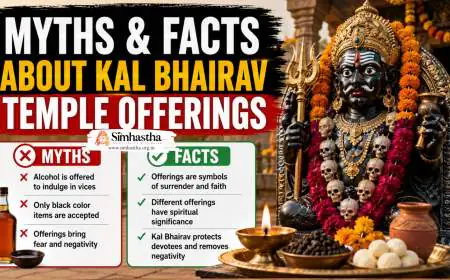
Subjugation of Desires: Liquor symbolizes the indulgence of human desires. By offering it, devotees acknowledge the transitory nature of material pleasures and seek to transcend them .
-
Destruction of Ego: The intoxicating nature of liquor is believed to assist in achieving an altered state of consciousness, breaking down the barriers of ego and connecting with the divine .
-
Liberation from Limitations: Kal Bhairav is known as the liberator who grants moksha. By offering liquor, devotees seek freedom from the constraints of mundane existence .
-
Purification: The liquor symbolically represents the impurities and negativities within human beings. By offering it, devotees seek purification and spiritual cleansing .
-
Testing Devotion: Offering liquor can be seen as a test of devotion and willingness to overcome societal norms for spiritual growth .
Important Clarification from the Temple Priest:
According to Om Prakash Chaturvedi, the temple priest, the offering is not about pleasing God with alcohol. He explained:
"Liquor offered to Lord Kaal Bhairav with an intention of renouncing one's bad qualities in front of him. No worship of a person who consumes alcohol is fulfilled. Also, it is not like that if one offers alcohol to God, he will be happy and if not, then become angry. It is not so at all. God is pleased by giving up your vices and observing fasts."
The Temple Dogs: Special Companions of the Deity
Why Dogs Are Revered at Kal Bhairav Temple
One of the most heartwarming aspects of this temple is the presence of dogs – and they're not just stray animals wandering in. In Hindu mythology, the dog is the vahana (divine vehicle) of Lord Bhairava .
You'll notice dogs resting peacefully near the sanctum, undisturbed by the crowds. Feeding and respecting these dogs is considered a way to earn the deity's blessings . They're treated with exceptional care, and devotees often feed them as part of their worship.
If you're an animal lover, this aspect of the temple will warm your heart. 🐕❤️
Kal Bhairav and the Liquor Ban: A Modern Dilemma
The 2025 Liquor Ban in Religious Cities
In January 2025, the Madhya Pradesh government, led by Chief Minister Mohan Yadav, announced a significant decision – a liquor ban in 17 religious cities, including Ujjain .
The ban came into effect on April 1, 2025, and all liquor shops within Ujjain municipal limits were shut down permanently . This included the two liquor counters near Kal Bhairav Temple .
But here's the twist: The temple's unique ritual couldn't be ignored. Temple authorities were allowed to maintain a two-day stock of liquor for daily puja offerings .
How Devotees Now Get Liquor for Offerings
Under the new regulations :
-
Sale of liquor in Ujjain is prohibited – you can no longer buy it within the municipal limits.
-
Devotees can still offer liquor – but they must carry it from shops outside Ujjain.
-
Transport rules apply – up to four legally purchased bottles can be transported without documents.
The Temple Priest's Response:
Om Prakash Chaturvedi applauded the government's decision, saying:
"The decision of the government to ban liquor in religious cities is a very good decision and cannot be praised enough. The government does not interfere in any religious matter, nor has it ever done so. We are with the government."
Saints Weigh In
The Ujjain Akhara Parishad President Rameshwar Das Ji Maharaj suggested a middle path – the government should create a new policy with special attention to the Kal Bhairav Temple so devotees can buy liquor only for the purpose of offering, in limited quantities .
This unique situation shows how ancient traditions and modern governance can coexist – a delicate balance that's being carefully managed.
Architecture and Art: A Visual Feast
Maratha Style with Paramara Echoes
The temple presents a blend of Maratha-style architecture and remnants of Malwa paintings . While many murals have faded over time, the traces of vibrant art still grace the walls and tell stories of culture, history, and devotion .
The deepmalika (tower of lamps) outside the temple is another visual highlight, lit during special occasions and festivals .
The Deity's Unique Appearance
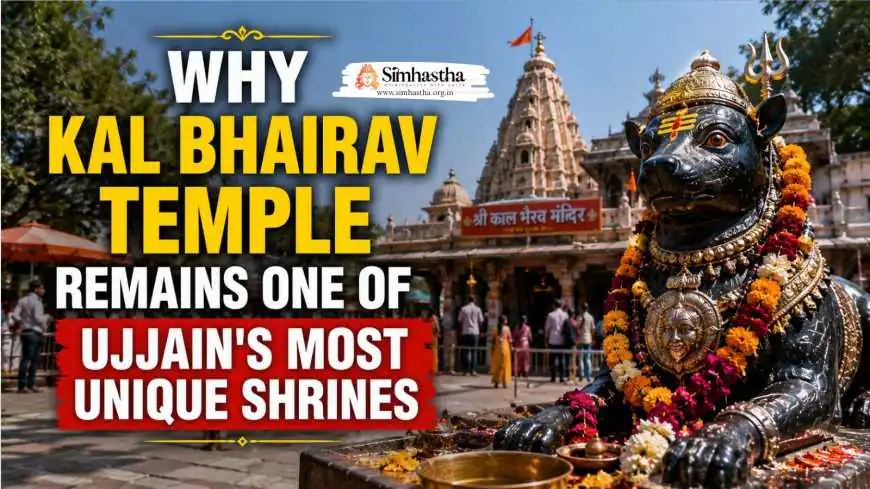
The deity's image is a face in the form of a rock layered with kumkuma (vermilion). The silver head is adorned with a beautiful Maratha-style pagri (turban) – a tradition dating back to Mahadaji Shinde's days and maintained by the Scindia royal family .
The deity's red face with a prominent silver crown and vibrant flower garlands makes for an unforgettable visual sight. The slit in the mouth – where the liquor disappears – is clearly visible, adding to the mystique .
Divine Sculptures from the Paramara Era
Numerous sculptures from the Paramara era, including those of Vishnu, Shiva, Parvati, and Ganesha, were discovered at the site. These ancient idols reflect Ujjain's deep connection to Shaivism and its historical importance .
Kal Bhairav Jayanti: The Temple's Grand Festival
When and How It's Celebrated
The most significant annual event at the Kal Bhairav Temple is Kal Bhairav Jayanti – the birth anniversary of the deity .
When is it celebrated?
On the eighth day of the waning moon (Krishna Paksha Ashtami) during the month of Margashirsha, which corresponds to November or December .
What happens during the festival?
-
The temple is decorated elaborately, often with garlands made of dry fruits.
-
Special rituals and Abhishek are performed.
-
The air resonates with chants of devotees seeking the Guardian's protection.
-
A grand bhog of various offerings is prepared.
-
Hundreds of devotees gather for special prayers.
Bhairav Ashtami
The temple also observes Bhairav Ashtami every month, with special celebrations and a fair where thousands of devotees, including Tantric practitioners, gather .
The Tantric Connection: Kapalikas and Aghoris
A Hub for Esoteric Practices
The Kal Bhairav Temple is closely associated with Tantra – an esoteric and ritualistic branch of Hinduism .
Why Tantra?
Tantric practices often involve breaking social norms and conventions to transcend the ordinary world and attain spiritual realization. Offering liquor is considered a form of Vamachara (left-hand path), where unconventional means are used for spiritual growth .
Who visits?
-
Aghoris and Kapalikas – ascetic sects known for extreme and unconventional practices.
-
Tantric practitioners from across India and the world come here to practice Tantra Kriya and attain spiritual power .
-
People from every corner of the world come to attain tantric knowledge and power .
The Chhappan Bhairav Connection:
According to local historians, the temple also houses 56 idols of Bhairav Baba depicting different forms. For this reason, the temple is sometimes called "Chamtkari 56 Bhairav" . On Bhairav Ashtami, 56 different types of intoxicants (including cigarettes, beedi, ganja, opium, and tobacco) are offered as a grand "Mahabhog" .
How to Plan Your Visit to Kal Bhairav Temple
Practical Information
| Detail | Information |
|---|---|
| Location | Bhairavgarh, Ujjain, Madhya Pradesh 456003 |
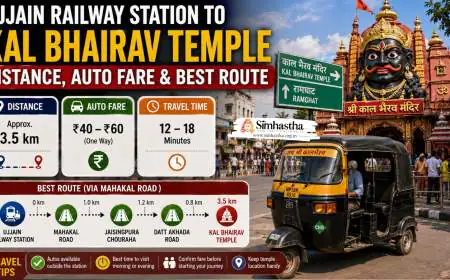
| Distance from Ujjain Junction | Approximately 7 km |
| Timings | 5:00 AM to 9:00 PM (daily) |
| Best Time to Visit | Kal Bhairav Jayanti (Nov-Dec), Bhairav Ashtami, morning hours for peaceful darshan |
How to Reach
-
By Train: Ujjain Junction is the nearest railway station. Auto-rickshaws are readily available from the city center to the temple (about 20 minutes) .
-
By Road: Ujjain Bus Stand is less than 20 minutes away from the temple .
-
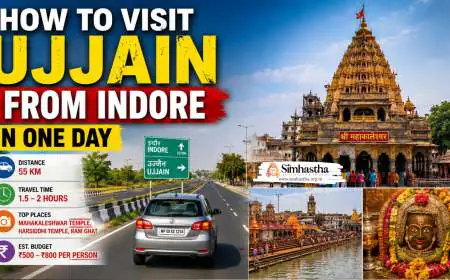
By Air: The nearest airport is Devi Ahilyabai Holkar Airport in Indore (about 55 km away).
What to Expect
-
Offerings: You can purchase offerings (flowers, coconut, incense, and liquor) from shops outside the temple .
-
The Ritual: Hand the offerings to the priest, who will perform the ritual. You'll receive some liquor back as prasad .
-
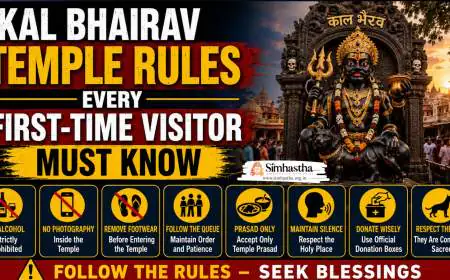
Dress Code: Modest, respectful clothing is advised.
Important Visitor Tips
-
While liquor is offered here, it depends entirely on the visitor's wish. You are welcome to simply offer prayers, flowers, or light a lamp at the Deep Stambh (pillar of lights) outside to seek blessings .
-
Respect the tradition – the offering of liquor is a deeply spiritual act, not mere drinking.
-
Dogs are sacred here – treat them with respect.
-
If you want to offer liquor and are visiting after the 2025 ban, remember that you'll need to buy it outside Ujjain municipal limits .
Nearby Attractions
The Kal Bhairav Temple is conveniently located near several other Ujjain attractions:
-
Mahakaleshwar Temple – One of the 12 Jyotirlingas.
-
Shipra River Ghats – Ram Ghat for holy bathing.
-
Harsiddhi Temple – A Shakti Peeth with deepastambhas.
-
Mahakal Lok Corridor – The newly developed spiritual pathway.
-
Sandipani Ashram – Where Lord Krishna studied.
The Bottom Line: A Temple Unlike Any Other
So, why does Kal Bhairav Temple remain one of Ujjain's most unique shrines?
Because it challenges everything you think you know about Hindu temples. It's ancient (6,000 years old) yet vibrantly alive. It offers liquor to a deity who "drinks" it. It's where fierce protectors and gentle dogs coexist peacefully. It's rooted in the Skanda Purana yet connected to modern governance debates. And it draws everyone – from devout pilgrims to curious travelers to Tantric practitioners seeking mystical powers.
In a city known for the famous Mahakaleshwar Temple and the stunning Mahakal Lok Corridor, the Kal Bhairav Temple stands apart as a testament to the diversity and depth of Hindu spirituality. It reminds us that faith isn't always about flowers and sweets – sometimes, it's about breaking boundaries, confronting the unconventional, and surrendering our fears and ego to the fierce, protective grace of the divine.
When you visit Ujjain, don't just go to the Mahakal Temple. Cross the bridge over the Shipra River, walk into Bhairavgarh, and experience the mystery of Kal Bhairav for yourself. You'll leave with a story that will stay with you forever. 🙏
Frequently Asked Questions