














How Simhastha Transforms Ujjain Spiritually and Economically
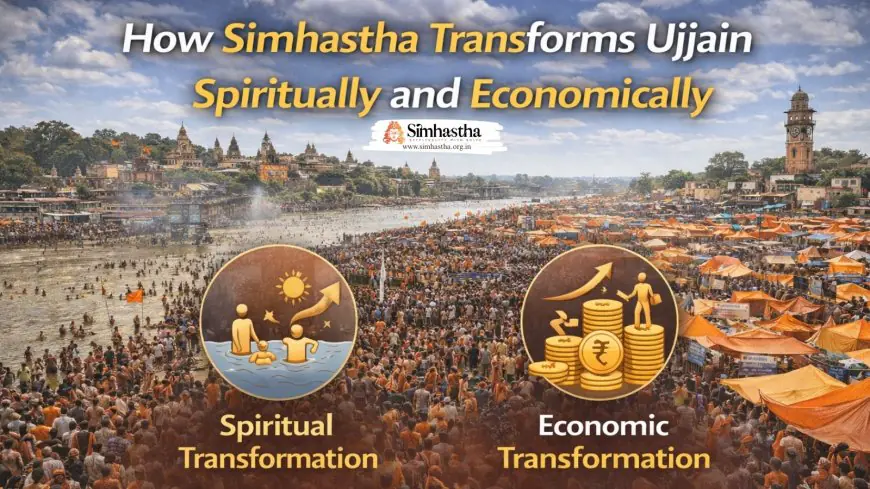
Simhastha is not just a religious gathering. It transforms Ujjain spiritually and economically. This in-depth guide explains how Simhastha reshapes faith, livelihoods, infrastructure, and the city’s future.


When a City Changes at Every Level
Every major pilgrimage affects a city. Simhastha transforms Ujjain.
Not symbolically. Not temporarily. But structurally, spiritually, and economically.
To understand how Simhastha transforms Ujjain spiritually and economically, one must look beyond crowd numbers and infrastructure headlines. Simhastha is a civilizational mechanism that reshapes the city’s inner rhythm and outer systems at the same time.
For a few weeks, Ujjain becomes the spiritual axis of Bharat. For decades afterward, its economy, identity, and urban trajectory continue to carry that imprint.
Trending Guides Now
Why Simhastha Happens Only When Jupiter Enters Leo ?

Simhastha Kumbh Mela Explained for First-Time Visitors
How Simhastha 2028 Traffic Control Relies on Ring Roads and Bypass Corridors

Why Simhastha 2028 Planning Focuses on Movement Flow Over Monument Building

Ujjain Railway Station to Mahakaleshwar Temple Distance (2026 Guide)

Ujjain Simhastha 2028 Dates Announced: Full Shahi Snan & Event Timeline

Ujjain Simhastha Update: CM Mohan Yadav Reviews 2028 Works

Karkateshwar Mahadev: 22/84 Mahadev of Ujjain
Also Read | What Is Simhastha? Complete Explanation of Ujjain’s Sacred Kumbh
Ujjain Before and After Simhastha: A Visible Shift
Ujjain is not a seasonal pilgrimage town. It is a living spiritual city whose pace, priorities, and economy are permanently altered by each Simhastha cycle.
Before Simhastha, Ujjain functions as a religious-cultural center.
After Simhastha, it emerges as a recalibrated spiritual capital.
This shift is visible in:
-
Urban planning
-
Pilgrim services

-
Employment patterns
-
Spiritual participation
-
Cultural confidence

The simhastha city transformation is not a slogan. It is measurable reality.
Also Read | How Ujjain Will Transform Forever
Spiritual Transformation: How Simhastha Changes the Inner Life of Ujjain
The City Becomes a Living Ashram
During Simhastha, Ujjain does not behave like a normal city. Daily life reorganizes itself around ritual time.
This is the core of simhastha spiritual transformation.
-
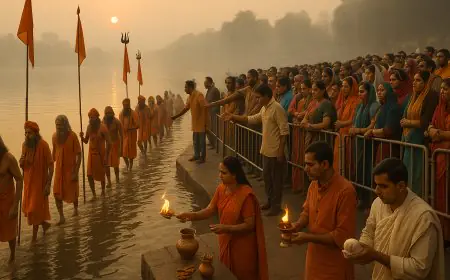
Dawn begins with mass Simhastha snan
-
Streets move according to akhara schedules
-
Commerce pauses during sacred hours
-
Silence replaces urgency at ritual moments
For residents, Simhastha is not tourism. It is collective sadhana.
This is why simhastha religious importance is experienced, not explained.
Mahakal and the Intensification of Faith
Simhastha amplifies the presence of Mahakaleshwar in daily life.
Temple visits increase exponentially. Night vigils, fasting, and disciplined worship become routine even for casual devotees. The city collectively turns inward.
This is why searches related to simhastha mahakal influence spike during every Simhastha cycle.
Faith becomes participatory, not passive.
Also Read | Mahakaleshwar and Simhastha: The Jyotirlinga That Anchors the Mela
Shipra River: Spiritual Revival Through Ritual
One of the deepest spiritual shifts is the renewed relationship with the Shipra River.
During Simhastha:
-
Ritual respect replaces neglect
-
Pollution awareness rises
-
Collective responsibility increases
The simhastha shipra river revival is not limited to cleaning drives. It is a spiritual reconnection between the city and its sacred river.
Long after Simhastha ends, this renewed reverence continues.
Also Read | The Magic of the Shipra River – Ujjain’s Sacred Lifeline of Faith and Flow
Transmission of Knowledge and Tradition
Simhastha is also a time of learning.
Discourses, debates, initiations, and oral teachings flourish. Ujjain becomes a temporary university of Sanatan Dharma.
This knowledge transmission strengthens the city’s spiritual self-image and reinforces its authority across India.
Economic Transformation: How Simhastha Reshapes Ujjain’s Economy
Simhastha Creates a Pilgrimage Economy
Simhastha activates what scholars call a spiritual economy.
This includes:
-
Accommodation
-
Food services
-
Transport
-
Ritual materials
-
Local crafts
-
Temporary employment
The simhastha pilgrimage economy supports tens of thousands of families, many of whom depend on it for years.
This is why simhastha economic impact is not short-term income. It is livelihood continuity.
Also Read | Before Simhastha 2028: How ₹20,000 Crore Will Turn Ujjain into the World’s Spiritual Capital
Employment Generation at Every Level
From skilled planners to informal workers, Simhastha generates massive employment.
Examples include:
-
Construction workers
-
Boatmen and ghat assistants
-
Vendors and suppliers
-
Transport operators
-
Sanitation and safety staff
This simhastha employment generation reshapes household incomes and skill distribution across the city.
Also Read | Simhastha 2028 Security Upgrade
Infrastructure Development With Long-Term Use
One of the most visible outcomes of Simhastha is infrastructure.
Roads, bridges, lighting, water systems, and public spaces are upgraded not just for pilgrims, but for residents.
This is why simhastha infrastructure development continues to benefit Ujjain long after the event concludes.
Simhastha acts as an accelerator, bringing decades of development into a few years.
Boost to Tourism Beyond Simhastha
After Simhastha, Ujjain experiences sustained tourism growth.
Pilgrims who first visit during Simhastha return later with families. International attention increases. Cultural tourism expands.
This extended effect defines simhastha tourism impact as a long-term economic multiplier.
Strengthening Local Businesses and Traditions
Local food, crafts, religious items, and services gain national visibility during Simhastha.
This strengthens regional identity and preserves traditional livelihoods that might otherwise decline.
The ujjain economy simhastha relationship is deeply rooted in cultural continuity.
The Combined Effect: Spiritual Capital Meets Economic Momentum
What makes Simhastha unique is that its spiritual and economic impacts do not conflict.
Spiritual discipline creates trust.
Trust attracts pilgrims.
Pilgrims generate demand.
Demand fuels economic growth.
This cycle explains the simhastha long term benefits for Ujjain.
Unlike commercial events, Simhastha’s economy is anchored in meaning, not consumption.
Why Simhastha Leaves a Permanent Mark on Ujjain
Cities host events.
Ujjain absorbs Simhastha.
Every Simhastha:
-
Deepens spiritual identity
-
Expands economic capacity
-
Strengthens civic confidence
-
Reinforces global recognition
This is why Simhastha is not remembered as an event that “happened”, but as a force that reshaped the city.
Simhastha as Ujjain’s Renewal Cycle
Simhastha does not come to Ujjain to entertain or impress. It comes to renew.
It renews faith.
It renews livelihoods.
It renews infrastructure.
It renews purpose.
To ask how Simhastha transforms Ujjain spiritually and economically is to understand how a civilization renews itself without losing its soul.
Related Simhastha Reads :
- Why Simhastha 2028 Is Expected to Be the Largest Ever?
- How Ujjain Manages Crowd Control During Simhastha 2028?
- How Ujjain Managed Millions During Simhastha 2016 ?
- Ujjain’s New Smart City Plan for Simhastha 2028 Revealed: How 15 Crore Pilgrims Will Be Managed ?
- Simhastha 2028 Dates Officially Announced: Full Event & Shahi Snan Timeline
Frequently Asked Questions