











Why Simhastha 2028 Is Being Planned as a City That Exists Only for Pilgrims
Simhastha 2028 is being designed as a temporary city created only for pilgrims. This in-depth guide explains the spiritual, administrative, infrastructural, and crowd-management logic behind it.
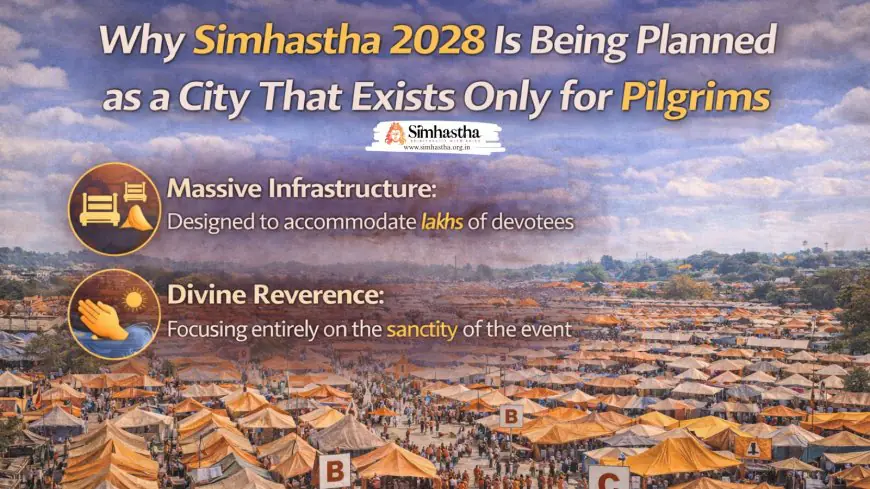


Why Simhastha 2028 Is Being Planned as a City That Exists Only for Pilgrims
Simhastha 2028 is being planned as a pilgrim-only city because the scale, ritual discipline, and movement patterns of Simhastha cannot function inside a normal urban system.
A temporary city allows spiritual order, safety, and infrastructure to align exclusively around pilgrims without disrupting Ujjain’s permanent life.
Also Read | What Is Simhastha? Complete Explanation of Ujjain’s Sacred Kumbh
Simhastha 2028 Requires a City, Not an Event Venue
Simhastha is not an event that visitors attend for a few hours. It is a continuous civilizational movement lasting weeks, involving crores of pilgrims, thousands of saints, and tightly regulated rituals.
This is why Simhastha 2028 planning has shifted from “event management” to city creation.
Trending Guides Now
Why Simhastha Happens Only When Jupiter Enters Leo ?

Simhastha Kumbh Mela Explained for First-Time Visitors

When Is the Next Simhastha in Ujjain?

How Simhastha 2028 Transport Planning Integrates Rail, Road and Air in One Grid

Ujjain Railway Station to Mahakaleshwar Temple Distance (2026 Guide)

Ujjain Simhastha 2028 Dates Announced: Full Shahi Snan & Event Timeline
Ujjain Simhastha Update: CM Mohan Yadav Reviews 2028 Works
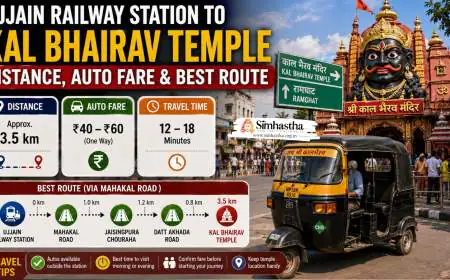
Ujjain Railway Station to Kal Bhairav Temple: Distance, Auto Fare and Best Route
A normal city is designed for:
-
Residents
-
Daily commuting
-
Permanent services
Simhastha requires:
-
Mass spiritual movement

-
Sector-wise pilgrim control
-
Ritual zoning
-
Temporary but high-capacity infrastructure

Trying to force Simhastha into an existing city grid would collapse both the event and the city.
Also Read | How Simhastha Transforms Ujjain Spiritually and Economically
Why a Normal Urban Model Cannot Handle Simhastha
Modern cities are not built for crore-level pedestrian faith movement.
During Simhastha:
-
Movement is cyclical, not linear
-
Peak crowds follow ritual calendars, not clock hours
-
Large areas must go silent during Shahi Snan
-
Entire zones must be cleared and reset repeatedly
This is why simhastha city planning for 2028 deliberately avoids adapting permanent neighborhoods and instead builds a parallel pilgrim city.
The Concept of a Pilgrim-Only City
A simhastha pilgrim city is not a tourist facility. It is a temporary spiritual ecosystem.
This city exists only for:
-
Pilgrims
-
Akharas
-
Ritual authorities
-
Essential service providers
There are no offices, no residential colonies, no commercial distractions unrelated to pilgrimage.
This purity of purpose is why simhastha temporary city planning is essential.
Also Read | Simhastha 2028 Tent Clusters Explained: Which Zone Is Best for Families, Seniors & Groups?
Sector-Based Design: The Backbone of Simhastha 2028
The pilgrim city is divided into clearly defined sectors, each functioning like a self-contained micro-city.
Each sector includes:
-
Accommodation zones
-
Food distribution areas
-
Medical facilities
-
Sanitation blocks
-
Security checkpoints
This simhastha sector planning ensures:
-
Crowd pressure never concentrates in one location
-
Emergency access remains open
-
Pilgrims move predictably and safely
A normal city cannot be restructured this way without years of disruption.
Also Read | Expected Zones & Sectors of Simhastha 2028: A First Look at Ujjain’s Massive Layout
Tent Cities Are Not Temporary Slums
A major misunderstanding around simhastha tent city planning is that tents imply poor infrastructure.
In reality, Simhastha tent cities include:
-
Structured layouts
-
Power and water grids
-
Drainage systems
-
Fire safety corridors
-
Command and control centers
These are temporary in duration, not in quality.
This is why simhastha infrastructure planning focuses on modular systems that can be assembled, dismantled, and reused.
Crowd Management Demands a Separate City
Simhastha crowd movement is ritual-driven, not spontaneous.
Shahi Snan days, akhara processions, and astrological windows create surge patterns that ordinary cities cannot absorb.
The pilgrim city allows:
-
Directional pedestrian flow
-
Time-based access control
-
Zone-wise crowd isolation
This is the core of simhastha crowd management for 2028.
Also Read | How Sector-Based Crowd Flow Works in Simhastha: A Simple Guide for First-Time Visitors
Protecting Ujjain’s Permanent Residents
One critical reason for creating a pilgrim-only city is protecting everyday life in Ujjain.
Without a separate pilgrim city:
-
Hospitals would be overwhelmed
-
Local transport would collapse
-
Residential access would be blocked
-
Civic services would fail
By isolating pilgrimage infrastructure, ujjain simhastha 2028 planning ensures residents remain functional while pilgrims experience a seamless spiritual journey.
Ritual Discipline Requires Physical Separation
Simhastha rituals are not flexible activities. They require:
-
Silence zones
-
Controlled entry
-
Clean ritual corridors
-
Strict access timing
The pilgrim city allows ritual geography to be enforced physically.
This is impossible inside mixed-use urban neighborhoods.
Emergency Preparedness at a Mega Scale
Simhastha planning assumes worst-case scenarios, not ideal conditions.
The pilgrim city includes:
-
Dedicated emergency corridors
-
Fire isolation zones
-
Medical triage sectors
-
Disaster response staging areas
This level of readiness is only possible through simhastha 2028 master plan execution, not ad-hoc arrangements.
Also Read | How Emergency Corridors Are Built Inside Simhastha Zones
Why the City Is Designed to Disappear
Perhaps the most unique aspect of Simhastha planning is that the city is designed to vanish.
After Simhastha:
-
Tents are dismantled
-
Temporary roads removed
-
Land restored
-
Permanent damage avoided
This ensures Simhastha leaves spiritual impact, not urban scars.
This philosophy defines simhastha pilgrimage city planning.
Long-Term Benefits of a Temporary City
Although temporary, the pilgrim city creates lasting benefits:
-
Tested infrastructure models
-
Improved disaster management capability
-
Better crowd science
-
Faster future execution
This is why simhastha 2028 preparation is viewed as a national learning model.
Why This Model Is Unique to Simhastha
Many events host large crowds.
Only Simhastha builds a city exclusively for faith.
That distinction exists because:
-
Simhastha is time-bound
-
Ritual discipline is non-negotiable
-
Scale is unmatched
-
Spiritual order must be preserved
This makes simhastha mega event planning fundamentally different from expos, festivals, or sports events.
Why This Understanding Matters for Every Simhastha Pilgrim
Understanding why Simhastha 2028 is being planned as a city that exists only for pilgrims changes how Simhastha is perceived and experienced.
Simhastha is not accommodated by a city.
A city is created to serve Simhastha.
Every tent, sector, corridor, and boundary exists to protect spiritual discipline, pilgrim safety, and ritual continuity. Recognizing this helps pilgrims move with patience, respect restrictions, and understand why Simhastha functions differently from any other gathering.
This article is part of a larger Simhastha knowledge framework. Explore our detailed guides on:
-
Simhastha 2028 dates and rituals
-
Shahi Snan authority
-
Ghat-wise zoning
-
Crowd movement systems
Return here whenever you want clarity on how Simhastha truly works, beyond headlines and assumptions.
Related Simhastha 2028 Guides :
- Why Simhastha 2028 Is Being Planned as a City That Exists Only for Pilgrims
- Why Snan Dates Shift According to Planetary Positions in Simhastha
- Simhastha 2028 Dates Officially Announced: Full Event & Shahi Snan Timeline
- Top 10 Routes to Enter Ujjain During Simhastha 2028 Without Traffic Hassles
- How to Travel Inside Ujjain During Simhastha 2028: Routes, Maps and Movement Plans
- How to Travel in Ujjain During Peak Snan Days: Do’s & Don’ts for Simhastha 2028
- Solo Travel Guide for Simhastha 2028: Safety, Budget, Stay & Movement Tips
- Mumbai to Ujjain for Simhastha 2028: Fastest Routes & Budget Tips
- Bengaluru to Ujjain for Simhastha 2028: Night Travel vs Day Travel Comparison
- Delhi to Ujjain for Simhastha 2028: Fastest Same-Day Travel Plan for Pilgrims
Frequently Asked Questions