
















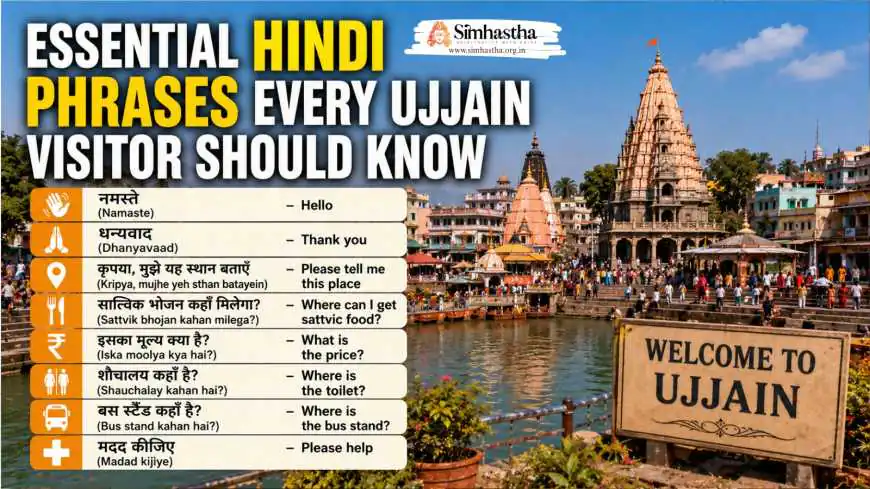
Essential Hindi Phrases Every Ujjain Visitor Should Know
Learn essential Hindi phrases every Ujjain visitor should know for a smoother spiritual journey. Master greetings, temple etiquette, and local communication in Ujjain.

Why Speaking a Little Hindi Can Transform Your Ujjain Experience
Imagine this: You're standing at the gate of the magnificent Mahakaleshwar Temple in Ujjain, the energy of thousands of devotees buzzing around you, and you want to ask a local priest about the Bhasma Aarti timings. You open your mouth, but only English comes out. The priest smiles but shakes his head – he doesn't understand. 😅
Now imagine the same scene, but this time you fold your hands, say "Jai Mahakal" with a warm smile, and ask in simple Hindi: "Bhasma Aarti kab hoti hai?" (When is the Bhasma Aarti?). Instantly, the priest's face lights up. He gives you detailed instructions, a blessing, and maybe even a tip about the best spot to stand. 🙏
That's the magic of knowing just a few essential Hindi phrases when visiting Ujjain. This ancient city, one of India's seven Mokshadayini cities, is steeped in spirituality and tradition. The local language here isn't just a means of communication – it's a bridge to the culture, a sign of respect, and a way to deepen your spiritual experience.
In this guide, we'll cover the most essential Hindi phrases every Ujjain visitor should know – from greeting locals with the right salutation to navigating temples, markets, and transportation. Whether you're a first-time pilgrim or a seasoned traveler, these phrases will make your Ujjain journey smoother, richer, and more memorable. 🌟
Trending Guides Now
Ujjain Simhastha 7 Day Itinerary for Families
Is Phone Allowed in Mahakaleshwar Temple Ujjain?
How Many Days Are Enough for Ujjain? Complete Trip Planner
How to Travel Inside Ujjain During Simhastha 2028: Routes, Maps and Movement Plans

Ujjain Railway Station to Mahakaleshwar Temple Distance (2026 Guide)

Ujjain Simhastha 2028 Dates Announced: Full Shahi Snan & Event Timeline
Ujjain Railway Station to Gadkalika Temple: Distance, Auto Fare and Route
Ujjain Railway Station to Mangalnath Temple: Distance, Auto Fare and Best Route
The Golden Rule: Greet Like a Local
"Jai Mahakal" – The Heartbeat of Ujjain
If you learn just one phrase for your Ujjain trip, make it this: "Jai Mahakal" (जय महाकाल).
This isn't just a greeting – it's the city's spiritual signature. In Ujjain, you'll hear it everywhere: from temple priests and shopkeepers to auto-rickshaw drivers and fellow pilgrims. It means "Victory to Mahakal" (Lord Shiva as the lord of time), and it's the most respectful and effective way to connect with locals.
When you enter the Mahakaleshwar Temple or greet a priest, fold your hands and say "Jai Mahakal" – the response will almost always be a warm smile and a blessing. It's a simple gesture that shows you respect the city's spiritual heart.
"Namaste" – The Universal Greeting
While Jai Mahakal is Ujjain's specialty, "Namaste" (नमस्ते) remains the standard and most widely understood greeting across India. You'll use it everywhere – at your hotel, in shops, and when meeting locals in any setting.
Cultural Tip: When saying Namaste, press your palms together at chest level and bow slightly. It's not just a word – it's a gesture that signals "I bow to the divine in you."
In more formal settings, you can use "Namaskar" (नमस्कार) – a slightly more respectful version of the same greeting.
Pronunciation: Nuh-muh-stay (with a soft 't') or Nuh-muh-skaar.
Temple Etiquette: Communicating with Respect
Essential Temple-Related Phrases
Ujjain is a city of temples, and knowing how to communicate in and around these sacred spaces is crucial. Here are the essential Hindi phrases you'll need:
| English Phrase | Hindi Phrase | Pronunciation Guide |
|---|---|---|
| Where is the temple? | Mandir kahan hai? | Mun-deer kuh-han hay? |
| When is the Aarti? | Aarti kab hoti hai? | Aar-tee kub ho-tee hay? |
| How much is the ticket? | Ticket kitne ka hai? | Ti-ket kit-nay ka hay? |
| Can I take a photo? | Photo le sakta hoon? (male) / Photo le sakti hoon? (female) | Pho-to lay suk-taa hoon? / Pho-to lay suk-tee hoon? |
| Is this the way? | Kya yeh rasta hai? | Kyah yay rus-taa hay? |
| Where are the shoes? | Joote kahan rakhe? | Joo-tay kuh-han ruk-hay? |
| Please show me | Mujhe dikhao | Mu-jhay di-khao |
When Visiting Mahakaleshwar Temple
The Mahakaleshwar Temple has specific customs you should be aware of. Here are phrases that will come in handy:
-
"Bhasma Aarti ka token kahan milega?" – Where can I get the Bhasma Aarti token?
-
"Darwaza kab khulta hai?" – When does the gate open?
-
"Darshan ka time kya hai?" – What is the darshan timing?
Pro Tip: The Bhasma Aarti requires advance booking. Use the phrase "Bhasma Aarti online booking kahan hoti hai?" (Where is the Bhasma Aarti online booking done?) to ask for guidance.
When Visiting Kal Bhairav Temple
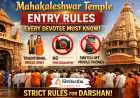
One of Ujjain's most unique temples is the Kal Bhairav Temple, where devotees offer liquor to the deity. If you plan to visit, knowing these phrases helps:
-
"Baba ko kya chadhana chahiye?" – What should I offer to the deity?

-
"Prasad kahan milega?" – Where will I get the prasad?

At the Ghats: Connecting with the Sacred River
Shipra River Ghat Phrases
The Shipra River ghats – especially Ram Ghat – are where pilgrims gather for holy dips and rituals. These phrases will help you navigate:
| English Phrase | Hindi Phrase | When to Use |
|---|---|---|
| Where is the bathing ghat? | Snan ghat kahan hai? | When looking for the main bathing area |
| Is the water deep here? | Yahan pani gehra hai? | Before entering the water |
| Can I bathe here? | Kya yahan snan kar sakte hain? | To confirm if bathing is allowed |
| Where is the puja pandal? | Puja pandal kahan hai? | When looking for ritual spaces |
| How do I perform tarpan? | Tarpan kaise karein? | When seeking guidance for ancestral rituals |
Basic Questions for Priests and Guides
-
"Mujhe puja karni hai" – I want to perform a puja.
-
"Samaan kahan milega?" – Where will I get the offerings?
-
"Aapko puja guide chahiye?" – Do you need a puja guide?
Navigating the City: Transport and Directions
Getting to and Around Ujjain
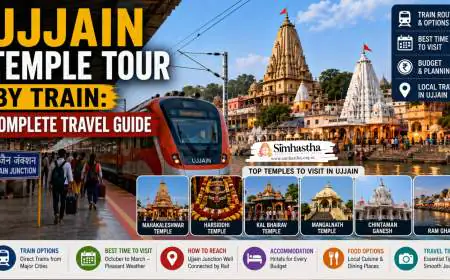
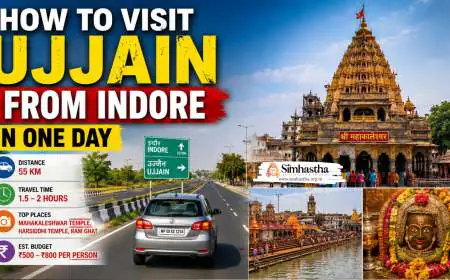
Ujjain is well-connected by train, bus, and air. The nearest airport is in Indore, about 55 kilometers away. Here's how to ask for directions:
| English Phrase | Hindi Phrase | Pronunciation |
|---|---|---|
| How to reach Ujjain? | Ujjain kaise pahuchein? | Uj-jain kay-say puh-hoo-chain? |
| Where is the railway station? | Railway station kahan hai? | Rail-way sta-shun kuh-han hay? |
| Take me to Mahakal Temple | Mahakal Temple le chalo | Mu-ha-kal tem-pul lay chu-lo |
| How much fare? | Kitna kharcha hoga? | Kit-naa kur-chaa ho-gaa? |
| Is this the right road? | Kya yeh sahi rasta hai? | Kyah yeh su-hee rus-taa hay? |
| Where is the bus stand? | Bus stand kahan hai? | Bus stand kuh-han hay? |
With Auto-Rickshaw Drivers
Auto-rickshaws are the most common mode of local transport. Here are phrases for negotiating and communicating:
-
"Meter se chaloge?" – Will you go by meter?
-
"Kitna lagega Mahakal Temple tak?" – How much will it cost to Mahakal Temple?
-
"Thoda kam karo" – Reduce it a bit (negotiating politely).
-
"Ghat par chhod do" – Drop me at the ghat.

Cultural Tip: Always agree on the fare before starting your journey. A smile and a polite "Kripaya" (please) go a long way.
Shopping in Ujjain's Lively Bazaars
Essential Phrases for Shopping
Ujjain's local bazaars are famous for spiritual items, jewelry, textiles, and more. Bargaining is common but should always be done politely.
| English Phrase | Hindi Phrase | What It Means |
|---|---|---|
| How much is this? | Yeh kitne ka hai? | Asking the price |
| Give me a discount | Thoda discount do | Polite request for a discount |
| It's too expensive | Bahut mehnga hai | When you think the price is high |
| What is the best quality? | Sabse achhi quality kya hai? | Asking for the best quality |
| I want a small one | Mujhe chota chahiye | For sizing your purchase |
| Anything cheaper? | Koi sasta bhi hai? | Looking for budget options |
Cultural Tip: When buying puja items like flowers, milk, bel patra, or sweets, always accept them with your right hand – it's considered more respectful.
Specific Shopping Phrases
-
"Puja ki thali kahan milegi?" – Where will I get the puja thali?
-
"Mala kitne ki hai?" – How much is the mala (garland)?
-
"Kapde ke liye dukan kahan hai?" – Where is the shop for clothes?
Dining and Food: Ordering Like a Local
Restaurant and Street Food Phrases
Ujjain's food scene is delightful – from the famous Ujjaini Poha (flattened rice) to delicious street snacks. Here's how to order:
| English Phrase | Hindi Phrase | When to Use |
|---|---|---|
| What do you have? | Kya kya milta hai? | To check the menu |
| Give me one plate | Ek plate do | For simple food orders |
| Is it vegetarian? | Yeh shakahari hai? | To confirm vegetarian food |
| Less spicy please | Kamm mirch dalo | If you prefer milder food |
| The bill, please | Bill de do | To ask for the check |
| Where is the water? | Pani kahan hai? | When looking for drinking water |
Pro Tip: Many shops near temples sell ready-made puja thalis. Ask: "Puja thali kahan milti hai?"
Special Local Phrases
-
"Poha kahan milega?" – Where will I get poha?
-
"Chai chahiye" – I need tea.
-
"Thoda garam pani de do" – Give me some hot water.
Emergencies and Health Matters
When You Need Help
Essential Hindi phrases for unexpected situations:
| English Phrase | Hindi Phrase | When to Use |
|---|---|---|
| Help! | Madad! | In any emergency |
| I need a doctor | Mujhe doctor chahiye | When feeling unwell |
| Where is the hospital? | Hospital kahan hai? | To locate a medical facility |
| I'm lost | Main kho gaya/gayi hoon | When you lose your way |
| Call the police | Police ko bulao | If you need law enforcement |
| My phone is dead | Mera phone dead ho gaya | To explain you have no phone |
Basic Medical Phrases
-
"Mujhe dard ho raha hai" – I'm in pain.
-
"Pet mein dard hai" – I have a stomach ache.
-
"Chakkar aa rahe hain" – I'm feeling dizzy.
-
"Pani pila do" – Give me some water.
Money and Transactions
Handling Payments
-
"Kitne paise lagenge?" – How much money will it cost?
-
"UPI payment hai?" – Do you have UPI payment?
-
"Cash hai?" – Do you have cash?
-
"Aadhaar card chahiye?" – Do you need Aadhaar card? (common for temple bookings)
ATM and Banking
-
"ATM kahan hai?" – Where is the ATM?
-
"Bank kab khulta hai?" – When does the bank open?
Accommodation: Booking and Checking In
Hotel Phrases
-
"Mujhe ek room chahiye" – I need a room.
-
"Ek raat ka kitna hai?" – How much for one night?
-
"Room mein bathroom hai?" – Is there a bathroom in the room?
-
"WiFi hai?" – Is there WiFi?
-
"Check-out time kya hai?" – What is the check-out time?
For budget travelers: "Koi sasta room hai?" – Do you have any cheap room?
At the Mahakal Lok Corridor
Visiting the New Attraction
The Mahakal Lok Corridor is Ujjain's stunning new attraction. Here are phrases for your visit:
-
"Mahakal Lok ka gate kahan hai?" – Where is the Mahakal Lok gate?
-
"Light show kab hota hai?" – When is the light show?
-
"Ticket counter kahan hai?" – Where is the ticket counter?
Cultural Etiquette: The Hidden Language
What Not to Say
Ujjain is a deeply traditional city. Here are some things to keep in mind:
-
Avoid loud or aggressive speech – it's considered disrespectful.
-
Never point with your index finger – in Ujjain, people generally use their chin or thumb to gesture.
-
Don't wear shoes inside temples – always ask: "Joote kahan utarein?" (Where do we remove shoes?)
Showing Respect
-
"Aapka ashirwad chahiye" – I need your blessings (said to elders and priests).
-
"Dhanyavaad" – Thank you.
-
"Kripya" – Please.
Putting It All Together: Sample Conversations
At the Temple
You: Jai Mahakal! Aarti kab hoti hai?
Priest: Subah 4 baje Bhasma Aarti, aur sham 7 baje.
You: Token kahan milega?
Priest: Counter number 2 pe.
At the Ghat
You: Snan ghat kahan hai?
Local: Seedhe chalo, 100 meter aage.
You: Pani gehra hai?
Local: Nahi, utna gehra nahi hai.
At a Shop
You: Yeh kitne ka hai?
Shopkeeper: 200 rupaye.
You: Thoda kam karo.
Shopkeeper: 180 rupaye le lo.
You: Theek hai, dhanyavaad!
The Bottom Line: A Little Hindi Goes a Long Way
Learning essential Hindi phrases every Ujjain visitor should know isn't just about convenience – it's about connection. When you greet a local with "Jai Mahakal," when you ask a priest about the Bhasma Aarti with respect, when you negotiate in the bazaar with a smile – you're not just a tourist anymore. You're a participant in the living, breathing culture of this ancient city. 🌟
Ujjain welcomes millions of pilgrims each year, but those who come with a few words of Hindi leave with a much richer experience. The blessings you receive, the friendships you make, and the memories you create will be all the sweeter because you made the effort to speak the local language.
So pack your bags, bring your curiosity, and don't forget to practice these phrases. Remember: Dheere dheere seekhenge – we'll learn slowly. And with each new word, you'll feel more at home in this magical city. ✨
Frequently Asked Questions