


























Walking Meditation: Mindful Steps to Awareness for Inner Peace & Clarity
Discover how walking meditation can transform your mental clarity, emotional balance, and spiritual awareness through mindful steps, breath, and conscious movement — a powerful journey into peace and self-connection.
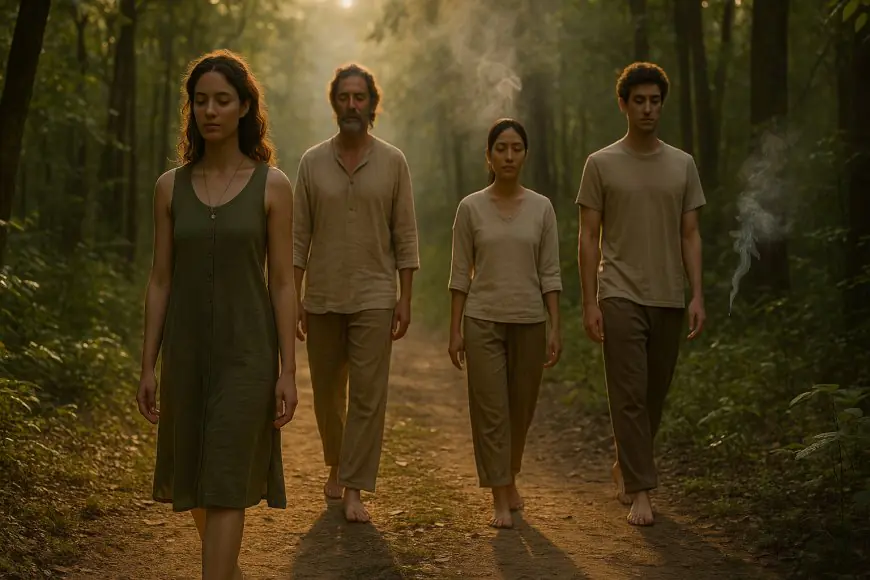


Walking Meditation: Mindful Steps to Awareness
Most people associate meditation with seated stillness — eyes closed, crossed legs, and complete silence. But meditation is not limited to stillness. In fact, one of the most powerful forms of meditation happens while we move. Walking meditation, also known as mindful walking, bridges the gap between the body and mind through slow, intentional steps. It turns every movement into awareness, every breath into prayer, and every step into grounding in the present moment.
Where seated meditation can feel difficult for beginners, walking meditation introduces the same depth of awareness through a more dynamic and accessible practice. Whether practiced in a peaceful forest path, a temple courtyard, a city garden, or even inside a home terrace, walking meditation teaches one universal truth: peace is not somewhere far away — it begins exactly where our feet touch the ground.
Why Walking Meditation Matters in Today’s World
Human life has become fast. Our minds run ahead of the moment — worrying about the future or replaying the past. Most of us don’t even notice how we reached the place we are standing. Walking meditation breaks this unconscious autopilot and restores the forgotten connection between movement, breath, and awareness.
The benefits are more than spiritual — they are emotional and physiological:
Trending Guides Now
Using Mala Beads in Meditation Practice: A Complete Beginner’s Guide
Trataka Meditation in Indian Yogic System: Candle Gazing for Concentration and Inner Clarity
Common Mistakes in Breathing Meditation and How to Fix Them
Candle Gazing Meditation (Trataka): A Complete Beginner’s Guide to Method and Benefits

Ujjain Railway Station to Mahakaleshwar Temple Distance (2026 Guide)

Ujjain Simhastha 2028 Dates Announced: Full Shahi Snan & Event Timeline

Benefits of Becoming a Simhastha Volunteer

Ujjain Travel During Shravan Month: What Changes for Visitors
-
Reduces anxiety, overthinking, and stress
-
Enhances concentration and inner clarity
-
Boosts emotional stability and resilience
-
Strengthens mind-body coordination
-
Helps release negative energy through grounding
-
Supports physical health through gentle movement


Walking mediation doesn’t require special clothes, a teacher, or a quiet room — just a willingness to be present with each step.
The Philosophy Behind Walking Meditation
In spiritual traditions across the world — including Buddhism, Zen, yoga, and Advaita — walking meditation has been used as a doorway to awareness of the Self. The idea is simple: when the feet move consciously, the mind becomes still.
Each step becomes:
-
A reminder of the present moment
-
A symbol of moving forward in life
-
A practice of releasing what no longer serves us
Walking meditation teaches us that the body walks, but the awareness watches. That watching becomes meditation.
How to Practice Walking Meditation Step by Step
You can do walking meditation anywhere. The practice is simple, but its depth unfolds gradually.
1. Choose Your Path
A peaceful route is ideal — a garden, terrace, riverbank, forest pathway, temple courtyard, or open room. Even 10–15 meters is enough to start.
2. Stand Still and Arrive
Before walking, take a moment:
-
Feel the earth under your feet
-
Take 2–3 deep breaths
-
Drop your awareness from the head to the body
This shift prepares the mind for mindfulness.
3. Begin Slow and Conscious Walking
Walk slowly — as if each step is sacred.
-
Feel the heel touching the ground
-
Then the arch
-
Then the toes
Follow every micro sensation.
4. Synchronize Breath and Steps
You can try:
-
Inhale for two steps
-
Exhale for two steps
Or walk with normal breathing and full awareness.
5. Anchor Your Awareness
Focus on any one element:
-
Sensation in feet
-
Sound of each step
-
Movement of legs
-
Breath movement
-
Your surroundings without labeling them
If the mind wanders (which is normal), gently bring it back to the step without judgment.
Advanced Walking Meditation Techniques
Once you’re comfortable with the basics, try these deeper techniques:
▸ Counting Steps
Count silently with each step — 1, 2, 3, 4 — then return to 1 again.
▸ Mantra-Based Walking
Synchronize steps with mantras like:
-
So – Ham
-
Om Namah Shivaya
-
Om Shanti
▸ Gratitude Walking
With every step, silently offer gratitude — for the body, breath, Earth, life.
▸ Mindful Nature Connection
Observe sound, wind, light, birds, leaves, and sky — without naming or analyzing them.
When and How Long to Practice
There is no fixed rule. Even 10 minutes a day can create transformation.
Best times:
-
Sunrise – energizing and grounding
-
Sunset – calming after the day
-
After seated meditation – amplifies results
-
During stress – immediate emotional relief
Many practitioners also use walking meditation between long periods of sitting to refresh awareness.
Emotional & Spiritual Transformation Through Walking Meditation
With regular practice, subtle changes begin to emerge:
-
Thoughts lose their grip
-
The mind becomes quieter
-
Emotions settle naturally
-
Self-judgment decreases
-
Gratitude deepens
-
Awareness becomes continuous
Walking meditation teaches the art of moving through life with presence, instead of rushing through it unconsciously. It develops spiritual maturity — the ability to stay centered regardless of external noise.
A Simple 15-Minute Walking Meditation Routine
| Time | Focus |
|---|---|
| 0–2 min | Stand still, breathe, arrive |
| 2–7 min | Slow walking — awareness on feet |
| 7–10 min | Breath–step synchronization |
| 10–13 min | Mantra walking or inner silence |
| 13–15 min | Stand still, close eyes, feel the experience |
End with a gentle smile — you have just returned to yourself.
Final Thought
Walking meditation is not an escape from the world. It is a return to reality — a reality where the present moment is enough, the breath is sacred, and the earth beneath your feet is your greatest teacher.
When you walk consciously, you don’t just travel distance — you travel inward.
Frequently Asked Questions