



























Port of Spain to Ujjain Travel Guide 2028: Your Complete Route Map for Simhastha Mahakumbh
Complete travel guide from Trinidad and Tobago to Ujjain for Simhastha 2028. Flight routes, visa requirements, ground transport, and essential tips for a smooth pilgrimage.



The Spiritual Calling From The Twin Islands To The City Of Mahakal
There is a moment in every pilgrim's life when the soul simply decides it is time to go home. For devout Hindus across Trinidad and Tobago, that homecoming is to the ancient city of Ujjain—where Lord Mahakal himself resides and where the sacred Shipra River flows with the blessings of eternity.
The distance from Port of Spain to Ujjain is roughly 14,000 kilometers. It is not a weekend getaway. It requires patience, planning, and a deep sense of purpose. But for the thousands of devotees of Trinidadian origin who trace their ancestral roots to the holy land of Bharat, the journey to Simhastha 2028 is not merely travel. It is a sacred pilgrimage that connects generations of faith.
This guide is written specifically for the Trinidad and Tobago passport holder. Whether you are traveling alone, with family, or as part of a temple group from San Fernando, Chaguanas, or Arima, this step-by-step roadmap will help you navigate every leg of your spiritual voyage to Ujjain for the Simhastha Mahakumbh 2028—a once-in-12-years gathering of faith that draws millions from across the globe.
The Hard Truth: No Direct Flights, But A Manageable Journey
Let me be completely honest with you from the start. There are no direct flights from Port of Spain to any city in India. Not to Delhi. Not to Mumbai. Not to Indore. Nothing. Zero. Zilch.
Trending Guides Now

Ujjain Simhastha 7 Day Itinerary for Families

Best Time to Visit Ujjain Simhastha 2028 Crowd Levels & Pilgrim Guide

Is Phone Allowed in Mahakaleshwar Temple Ujjain?

How Many Days Are Enough for Ujjain? Complete Trip Planner

Ujjain Railway Station to Mahakaleshwar Temple Distance (2026 Guide)

Ujjain Simhastha 2028 Dates Announced: Full Shahi Snan & Event Timeline

Benefits of Becoming a Simhastha Volunteer
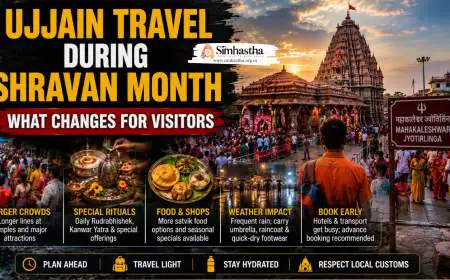
Ujjain Travel During Shravan Month: What Changes for Visitors
But do not let that discourage you. Thousands of Trinidadian pilgrims travel to India every year for religious and personal reasons. The route is well established, the connections are reliable, and the airlines flying these routes know exactly what they are doing.
Your journey from Piarco International Airport (POS) to Ujjain will involve at least one connecting flight—and in most cases, two connecting flights. The total travel time, including layovers, will range from 18 hours on the fastest possible route to 30 hours or more if you choose a budget-friendly itinerary with longer stopovers.
The key is to accept this reality early, plan accordingly, and choose the route that best balances your budget, your time constraints, and your comfort level. Let us explore your best options.
Gateway Options: Which Indian City Should You Fly Into?
Your first major decision is which Indian gateway city to target. You have two main options: Delhi Indira Gandhi International Airport (DEL) or Mumbai Chhatrapati Shivaji Maharaj International Airport (BOM). A third possibility is landing at Bhopal or Indore via connections, but that involves additional complexity.
Let us break down the pros and cons of each.
Delhi is the most common choice for Trinidadian pilgrims because it offers the highest frequency of connecting flights from Port of Spain via major European or Middle Eastern hubs like Amsterdam, London, Frankfurt, Paris, or Istanbul. From Delhi, you can catch a connecting flight to Indore (2 hours) or a direct train to Ujjain (10–12 hours).

Mumbai is slightly closer to Ujjain geographically—about 655 kilometers versus 774 kilometers from Delhi. The total flight time from Port of Spain to Mumbai is often slightly shorter than to Delhi, saving you an hour or two. However, flight options from POS to BOM are somewhat more limited.
For most Trinidadian pilgrims, Delhi remains the more reliable and flexible option. But do your own research based on your travel dates.
Airlines That Fly From Port Of Spain To India
So which airlines actually operate flights from Port of Spain to India? The answer is none directly. But several major international carriers offer connecting flights with one or two stops.
According to flight route data, the airlines that can get you from Port of Spain to Delhi or Mumbai include KLM, British Airways, Air France, Lufthansa, Turkish Airlines, Air India, JetBlue Airways, American Airlines, Caribbean Airlines, and Air Canada. Among these, Caribbean Airlines and KLM are particularly popular with Trinidadian travelers.
Caribbean Airlines flies from Port of Spain (POS) to New York (JFK) and Miami (MIA). From there, you can connect to Air India or other carriers for the onward journey to Delhi or Mumbai. This two-stop option is often the most affordable, though it adds significant travel time.
KLM offers flights from POS to Amsterdam Schiphol (AMS) , followed by a connection to Delhi (DEL) or Mumbai (BOM) . The AMS to DEL leg takes approximately 8 hours, and the layover in Amsterdam is usually comfortable, with plenty of facilities for weary travelers.
British Airways flies from POS to London Heathrow (LHR) , followed by a connection to DEL or BOM. The LHR to DEL leg takes about 8 hours 30 minutes.
Turkish Airlines offers routes from POS to Istanbul (IST) , followed by a connection to DEL or BOM. Many travelers praise Turkish Airlines for excellent in-flight service and generous baggage allowances.
For the fastest possible journey, look for a route that involves only one layover. For example, Port of Spain → Amsterdam → Delhi takes approximately 20 to 23 hours total travel time. Port of Spain → London → Mumbai takes roughly 21 to 24 hours.
If you choose a two-stop route—such as POS → New York → London → Delhi—your travel time can balloon to 30 hours or more. Unless you find a significantly cheaper fare, one-stop itineraries are strongly preferred.
Flight Costs And The Best Time To Book
Let us talk money. Because this journey is not cheap, and the last thing you want is to overpay by thousands of dollars because you waited too long to book.
Flight tickets from Port of Spain to India typically range from USD 1,100 to USD 2,500 (approximately TTD 7,500 to TTD 17,000), depending on the airline, the number of stops, and the time of booking.
According to flight booking data, March is currently the cheapest month to book flights from Port of Spain to India, with average prices around USD 1,500 round trip. The most expensive months are August and April, where prices can climb to USD 2,500 or more.
For Simhastha 2028, which will take place in March to May 2028, you will be traveling during peak season. That means higher fares and lower availability. Here is what you need to do.
Start monitoring flight prices at least 10 to 12 months before your intended departure. The cheapest window to book is typically September to November 2027 for travel in April 2028. Do not wait until 2028 to book your tickets. You will either find no seats or pay prices that will make your eyes water.
Use flight comparison websites like Kayak, Skyscanner, Google Flights, and Momondo to track prices and set up price alerts. These tools will notify you when fares drop, allowing you to book at the optimal moment.
Consider flying on weekdays—Tuesday, Wednesday, or Thursday—rather than weekends. Midweek flights are consistently cheaper than Friday through Monday departures.
If you are traveling as a group, look into group booking discounts. Some airlines offer reduced fares for parties of 10 or more. Contact the airline directly or consult a travel agent who specializes in India group travel from Trinidad.
The Visa Question: What Every Trinidadian Must Know
Now let us address the most critical document you will need—your India visa. As a holder of a Trinidad and Tobago passport, you cannot enter India without a valid visa. There is no visa on arrival for Trinidadian citizens.
Fortunately, Trinidad and Tobago passport holders are eligible for the Indian e-Tourist Visa (eTV) . This is an online visa that you apply for before your trip, and it eliminates the need to visit an Indian embassy in person.
Here is everything you need to know.
The e-Tourist Visa is valid for 30 days from the date of arrival in India. It allows double entry into the country, which is sufficient for most Simhastha pilgrims who plan to stay for a week or two and then return home.
The e-Visa fee is approximately USD 25 for the standard 30-day visa, though the fee may vary slightly based on exchange rates and service charges.
You must apply online through the official Indian government e-Visa portal. Be extremely careful—there are many third-party websites that charge inflated fees for the same service. Use only the official government website.
Your Trinidad and Tobago passport must meet two critical conditions. First, it must be valid for at least six months from your intended date of arrival in India. Second, it must have at least one blank page for immigration officers to affix entry and exit stamps.
You should apply for your e-Visa at least 4 days before your departure, but you can apply up to 120 days in advance. For Simhastha 2028, apply at least 3 to 4 weeks before your departure to account for any processing delays or technical issues.
When you complete the online application, you will need to upload:
-
A recent passport-style photograph (white background, 2×2 inches)
-
A scanned copy of your passport's biographical page
-
Your flight itinerary (you can upload a tentative one if final tickets are pending)
The e-Tourist Visa allows entry through 16 designated Indian airports, including Delhi, Mumbai, Chennai, Kolkata, and Bengaluru. You can also exit from any authorized immigration checkpoint.
Once your e-Visa is approved, you will receive a PDF document via email. Print two copies—one for your carry-on luggage and one stored separately in your checked bag. You will need to present this printout at immigration upon arrival in India.
One more thing. The e-TV is valid for only two visits in a calendar year. If you have already traveled to India earlier in 2028 on an e-Visa, you may need to apply for a regular tourist visa through the High Commission of India in Port of Spain. Plan accordingly.
The High Commission Of India In Port Of Spain
For emergencies, visa questions, or situations where an e-Visa is not appropriate, the High Commission of India is located in Port of Spain. Here is their contact information:
High Commission of India
5, Victoria Avenue
Port of Spain
Republic of Trinidad and Tobago
Phone: 1-868-627-7800 / 1-868-627-6305
Email: [email protected]
If you require a regular paper visa rather than an e-Visa—for longer stays, multiple entries, or because you have already used your two e-Visa entries—contact the High Commission for application procedures. Processing times for paper visas can take 2 to 4 weeks, so start early.
Your Route From The Indian Airport To Ujjain
You have landed. You have cleared immigration. You have collected your luggage. Now you need to get from whichever Indian gateway airport you chose to Ujjain.
Let us break down each scenario.
Scenario 1: You Land At Delhi Indira Gandhi International Airport (DEL)
From Delhi, you have three options to reach Ujjain.
The fastest option is to take a connecting flight to Indore Devi Ahilyabai Holkar Airport (IDR) . Airlines like IndiGo, Air India, Akasa Air, and SpiceJet operate multiple daily flights from Delhi to Indore. The flight time is approximately 1 hour 40 minutes. Once you land at Indore Airport, you take a taxi to Ujjain (more on taxis in a moment).
The second option is to take a train directly from Delhi to Ujjain Junction (UJN) . Several trains connect the two cities, including the Swarna Jayanti Rajdhani Express and other long-distance services. The train journey takes approximately 10 to 12 hours. For overnight travel, book Sleeper Class (₹330–₹500) or AC 3 Tier (₹865–₹1,200) for a comfortable rest.
The third option is to combine a flight to Bhopal with a taxi or train to Ujjain. Bhopal is about 183 kilometers from Ujjain, and a taxi takes approximately 3.5 hours. This adds an extra layer of complexity but may appeal if you find a cheap flight to Bhopal.
For most Trinidadian pilgrims, the Delhi → Indore flight → Taxi to Ujjain route is strongly recommended. It is faster, more comfortable, and eliminates the need to navigate overnight train stations after a long international flight.
Scenario 2: You Land At Mumbai Chhatrapati Shivaji Maharaj International Airport (BOM)
From Mumbai, your best bet is to take a connecting flight to Indore. The flight time from Mumbai to Indore is approximately 1 hour 15 minutes, with frequent daily services.
Once you land at Indore Airport, follow the same taxi route to Ujjain.
Alternatively, you can take a train from Mumbai to Ujjain. Several trains, including the Avantika Express and the Shipra Express, connect Mumbai to Ujjain. The journey takes approximately 11 to 13 hours.
For most pilgrims, the Mumbai → Indore flight → Taxi route is the smoothest.
The Final Leg: From Indore Airport To Ujjain By Taxi
The distance between Devi Ahilyabai Holkar Airport (IDR) in Indore and the holy city of Ujjain is approximately 55 to 58 kilometers. The drive takes about 1 hour to 1 hour 15 minutes under normal traffic conditions.
A private taxi from Indore Airport to Ujjain is the most convenient option for Trinidadian pilgrims, especially if you are carrying heavy luggage or traveling with family. Here are the typical fares:
-
Sedan (1 to 3 passengers) : ₹1,200 to ₹1,800 (approximately USD 14 to USD 21)
-
SUV / Innova (4 to 6 passengers) : ₹1,800 to ₹2,500 (approximately USD 21 to USD 29)
-
Tempo Traveller (7 to 12 passengers) : ₹2,500 to ₹3,500 (approximately USD 29 to USD 41)
Prepaid taxi booths are available just outside the arrival terminal at Indore Airport. You can pay by cash or card. Most drivers speak basic English and Hindi.
During Simhastha 2028, heavy pilgrimage traffic on the Indore-Ujjain highway may add 30 to 60 extra minutes to your journey, especially on Shahi Snan days. Build this buffer into your schedule.
If you prefer to book online in advance, apps like Uber and Ola operate in Indore, and you can pre-book a taxi through their platforms. Local operators like Travel Aaj Kal and Fly To Ujjain also offer advance booking services.
For budget-conscious travelers, shared cabs are available at the airport for ₹200 to ₹300 per person. You will travel with other pilgrims heading to Ujjain, and the vehicle will depart once it is full. This is a great way to save money and meet fellow travelers.
Government buses are the cheapest option but also the most inconvenient. You would need to travel from Indore Airport to the city bus stand first, adding time and complexity.
Finding A Place To Stay In Ujjain For Simhastha 2028
Accommodation in Ujjain during the Kumbh Mela is a significant challenge. Hotels, guesthouses, and dharamshalas near the Mahakaleshwar Temple and the Shipra River ghats are booked months or even years in advance. For Trinidadian pilgrims, early planning is essential.
Hotels near Mahakaleshwar Temple are the most desirable but also the most expensive and hardest to secure. If you want to be within walking distance of the main temple and the bathing ghats, you need to book 8 to 10 months ahead at minimum. Prices during Simhastha will be significantly higher than normal.
Dharamshalas (pilgrim guesthouses) are a more budget-friendly option. Many are run by religious trusts and offer basic but clean rooms at very affordable rates—often ₹500 to ₹1,500 per night. The waitlists for dharamshalas during Simhastha are long, so contact them directly as early as possible. Some popular dharamshalas include Sethi Dharamshala, Khandelwal Dharamshala, and Shri Digambar Jain Dharamshala.
Tented accommodations near the Shipra River are specifically designed for Kumbh Mela crowds. These temporary camps range from budget dormitory-style tents (₹500–₹1,000 per night) to luxury glamping setups with attached bathrooms, 24-hour room service, and guided temple tours (₹3,000–₹8,000 per night). Several tour operators offer Simhastha tent packages that include meals, transfers, and sometimes even guided rituals.
Homestays in Ujjain and surrounding villages offer a more intimate and authentic experience. Websites like Airbnb and GoStayy list verified homestays that may be available during the festival. Expect to pay ₹1,500 to ₹3,500 per night.
Government guest houses run by Madhya Pradesh Tourism are another reliable option. They are clean, affordable, and centrally located. The MPT Hotel Shipra and MPT Hotel Tansen are popular choices. Again, book early.
If you cannot find accommodation in Ujjain itself—which is a very real possibility—consider staying in Indore and commuting daily for the Shahi Snan days. The improved road connectivity and the new Vande Bharat Metro train will make this feasible. However, be prepared for early morning departures and late returns.
For Trinidadian pilgrims traveling as part of a temple group from Carapichaima, Bamboo Settlement, or Cedros, you may want to contact your temple leaders in advance. Many temples organize group Simhastha pilgrimage packages that include accommodation, meals, and transportation from India.
The Ideal Time To Travel And The Weather Reality
Simhastha 2028 in Ujjain is scheduled to take place between March 27 and May 27, 2028, as confirmed by Simhastha Mela Officer Ashish Singh. The main Shahi Snan days are expected to fall in late April and early May, though official dates will be confirmed closer to the event.
Here is the reality check. April and May are the hottest months in Ujjain. Daytime temperatures regularly exceed 40 degrees Celsius (104 degrees Fahrenheit) . The sun is intense, the humidity is moderate, and the crowds are massive.
If you can adjust your schedule, consider arriving in Ujjain in early March before the peak heat sets in. The weather in March is much more pleasant—temperatures range from 20°C to 32°C (68°F to 90°F) .
If you must travel during April or May, prepare yourself mentally and physically. Drink at least 3 to 4 liters of water daily. Wear light cotton clothing in light colors. Use a wide-brimmed hat, sunglasses, and high-SPF sunscreen. Avoid being outdoors between 11:00 AM and 3:00 PM unless absolutely necessary. Take frequent breaks in shaded areas or air-conditioned spaces.
For Trinidadian pilgrims accustomed to tropical heat, you will find Ujjain's dry heat different but manageable. The key is hydration and sun protection.
Packing Essentials For The Trinidad Pilgrim
Packing for a Simhastha pilgrimage requires balancing practicality with respect for local customs. Here is a checklist tailored for the Trinidadian traveler.
-
Lightweight cotton clothing – Ujjain experiences hot and dry weather during April through June. Avoid synthetic fabrics. Pack kurtas, loose cotton pants, leggings, and short-sleeved shirts.
-
Modest attire for temple visits – When visiting the Mahakaleshwar Temple or any temple, cover your shoulders and knees. Remove your shoes before entering.
-
A dupatta or scarf is useful for both sun protection and covering your head as a sign of respect in temples.
-
Walking shoes or sandals that can handle uneven ground and large crowds. You will do a lot of walking at the Shipra River ghats and around the temple complex.
-
Sun protection – Wide-brimmed hat, sunglasses, and high-SPF sunscreen (SPF 50+ recommended).
-
Reusable water bottle – Stay hydrated. Filtered water is available at many locations, but carrying your own bottle is wise.
-
Power bank – You will use your phone for navigation, communication, and photos. Charging points may be scarce or crowded.
-
Travel documents – Keep printed copies of your passport, e-Visa, flight tickets, hotel confirmations, and travel insurance in a separate bag from the originals.
-
Cash – While card payments and digital wallets like Google Pay and PhonePe are widely accepted in Ujjain, you will need cash for small purchases, auto-rickshaws, temple offerings, and food at roadside stalls. Withdraw cash from ATMs in Indore before traveling to Ujjain, as ATMs may run out of cash during the rush.
-
Medicines – Bring prescription medications in their original bottles, plus basic over-the-counter remedies for diarrhea, headaches, allergies, and fever. India has pharmacies, but finding one in the festival chaos may be challenging.
-
Travel insurance – This is non-negotiable. Your Trinidadian health insurance will not cover you in India. Purchase a policy that covers emergency medical evacuation, trip cancellation, baggage loss, and medical expenses.
-
A small bag for the ghats – You will not want to carry your entire luggage to the Shipra River. Keep a separate bag with just the essentials: a change of clothes, a small towel, a water bottle, and your pooja items.
Health Precautions And Vaccinations For Trinidad Travelers
Consult your doctor or a travel medicine specialist at least 2 to 3 months before your trip to Trinidad. Recommended or required vaccinations for India typically include:
-
Hepatitis A (recommended for all travelers)
-
Typhoid (recommended for all travelers)
-
Hepatitis B (recommended for longer stays or if you may need medical care)
-
Tetanus (ensure you are up to date)
-
Typhoid (food and water-borne risk in India)
-
Japanese Encephalitis (recommended for long-term rural stays, but less urgent for short pilgrimages)
-
Rabies (recommended for travelers who may have contact with animals)
-
COVID-19 (check current requirements before travel)
Drink only bottled or boiled water during your stay in India. Bottled water is widely available. Check that the seal is intact before drinking. Avoid tap water, ice cubes from street vendors, and uncooked fruits and vegetables washed in tap water.
Food is generally safe at established restaurants and temple langars (community kitchens). Exercise caution with street food, especially if you have a sensitive stomach. Stick to cooked, hot foods. Ujjain is known for its khicheri, a simple lentil-rice dish that is both delicious and safe for most travelers.
Mosquito repellent is essential, especially if you are outdoors at dawn or dusk. Dengue and malaria are present in parts of Madhya Pradesh. Wear long sleeves and pants in the evening.
Heat exhaustion and dehydration are real risks. Drink water constantly, even if you do not feel thirsty. Wear a hat and loose clothing. If you feel dizzy, nauseous, or excessively fatigued, find shade and rehydrate immediately.
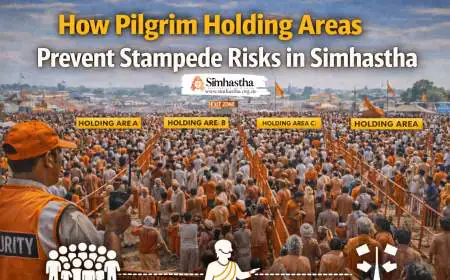
Crowd safety is perhaps the most unique challenge of Simhastha. Stay aware of your surroundings. Keep your valuables secure. Follow the instructions of police, railway officials, and volunteers. Do not push or rush. The AI-powered surveillance systems, CCTVs, and holding areas are designed to keep you safe, but your own caution is your first line of defense.
Emergency numbers in India (save these in your phone before you leave Port of Spain):
-
Police: 100
-
Fire: 101
-
Ambulance: 102 or 108
-
High Commission of India in Port of Spain: 1-868-627-7800 (for emergencies before travel)
-
US Embassy in New Delhi (for US citizens): +91-11-2419-8000
-
Your country's embassy in India (if not US/Canada/UK) – Research this before departure.
Currency, Connectivity, And Language Tips
Currency: India's currency is the Indian Rupee (INR) . You can exchange Trinidad and Tobago Dollars (TTD) for INR at currency exchange counters in Delhi or Mumbai airports, or at authorized money changers in Ujjain. ATMs are widely available, though they may run out of cash during Simhastha. Carry a mix of cash and cards.
Credit cards: Major credit cards like Visa and Mastercard are accepted at hotels, larger restaurants, and shops. American Express has limited acceptance. Inform your bank before travel to avoid your card being blocked.
Mobile connectivity: Purchase a local SIM card upon arrival at Delhi or Mumbai airport. Providers like Airtel, Jio, and Vi offer prepaid tourist SIMs with data and calling. You will need your passport and a passport photo. Alternatively, use international roaming on your Trinidadian SIM, though this is much more expensive.
Internet: Free Wi-Fi is available at airports, many hotels, and some cafes. However, during Simhastha, networks may be congested. A local SIM card with 4G data is your best bet.
Language: Hindi is the primary language spoken in Ujjain, though many people in the tourism industry speak English. Learning a few Hindi phrases will be appreciated:
-
"Namaste" – Hello / Goodbye
-
"Dhanyavaad" – Thank you
-
"Kitna hai?" – How much is it?
-
"Paani" – Water
-
"Baba Mahakal ki jai" – Victory to Lord Mahakal (common chant)
Cultural Etiquette: What Every Trinidadian Should Know
Indian culture is rich, ancient, and deeply layered. As a guest in Ujjain during a sacred festival, small gestures of respect will be warmly appreciated. Trinidadian pilgrims of Indian descent will find many cultural similarities, but there are important differences to note.
Dress modestly when visiting temples or attending rituals. Cover your shoulders and knees. Remove your shoes before entering any temple.
The right hand is traditionally used for eating, giving money, and receiving objects. The left hand is associated with hygiene tasks. While this is not strictly enforced with foreigners, making an effort shows awareness.
Touching someone's feet is a traditional gesture of respect for elders and holy figures. Conversely, do not touch anyone's head, as the head is considered sacred.
Public displays of affection between couples are frowned upon, especially in religious settings.
Tipping is customary in restaurants, for drivers, and for hotel staff. A tip of 10 to 15 percent of the bill is standard in restaurants. For taxi drivers, rounding up the fare is sufficient.
Photography is not allowed inside many temples, including the inner sanctum of the Mahakaleshwar Temple. Ask for permission before photographing sadhus (holy men) or locals, as some may expect a small donation.
Bargaining is expected at street markets and with auto-rickshaw drivers. Do not haggle with temple priests or at fixed-price shops.
Time operates differently in India. Punctuality is valued in professional settings, but social gatherings may start late. Do not get frustrated. Adjust your expectations and adopt a more relaxed pace.
Trinidadian pilgrims will find that their ancestors' homeland welcomes them with open arms. Do not be surprised if locals ask about your origins—curiosity is a sign of warmth, not intrusion.
Must-Visit Sites In Ujjain Beyond The Shipra River
While the Shipra River and the holy dip are the centerpiece of Simhastha, Ujjain has many other sacred and historic sites that should be on your itinerary. Here are the must-visits.
Mahakaleshwar Temple – One of the 12 Jyotirlingas in India, this is the most sacred temple in Ujjain. The Bhasma Aarti (ash ritual) before dawn is a once-in-a-lifetime experience. Arrive early—lines can stretch for hours.
Harsiddhi Temple – One of the 51 Shakti Peethas, this temple is dedicated to the goddess Annapurna. The deep stambh (lamp tower) is particularly impressive at night.
Kaliadeh Palace – A beautiful palace located on an island in the Shipra River, built by the Scindia rulers. The views of the sun setting over the river are breathtaking.
Sandipani Ashram – According to legend, Lord Krishna studied here. The ashram is located near the Shipra River and is a peaceful retreat from the crowds.
Jantar Mantar – Built by Maharaja Jai Singh II of Jaipur, this ancient observatory houses astronomical instruments dating back to the 18th century.
Gopal Mandir – A Maratha-style temple with silver-plated doors, located in the heart of the city. The temple is particularly beautiful at night when it is illuminated.
Vikram Kirti Mandir – A museum dedicated to King Vikramaditya, the legendary ruler of Ujjain. The museum houses interesting artifacts and sculptures.
For Trinidadian pilgrims of Indian origin, walking through these ancient sites is a deeply emotional experience. You are walking where your ancestors walked, praying where they prayed, and connecting with a faith that has sustained your family for generations across the kala pani.
Before You Leave: Final Checklist For Trinidad Pilgrims
Before you head to Piarco International Airport, run through this final checklist.
-
Passport valid for at least 6 months beyond your intended stay.
-
India e-Visa approved and printed (two copies).
-
Flight tickets confirmed, printed, and saved on your phone.
-
Accommodation booking confirmed for at least the first few nights.
-
Travel insurance purchased and policy number saved.
-
Vaccinations completed at least 2 weeks before departure.
-
Prescription medicines packed in original bottles, with enough supply for your entire stay plus a few extra days.
-
Currency – Some Indian Rupees exchanged before arrival, plus USD as backup.
-
Credit/debit cards – Inform your bank of your travel dates.
-
Local SIM card plan – Research options or plan to purchase upon arrival.
-
Packing checklist – Cotton clothes, hat, sunscreen, water bottle, power bank, small bag for ghats.
-
Emergency contacts – Save Indian emergency numbers and your country's embassy contact in your phone.
-
Copy of documents – Leave a copy of your passport, visa, flight itinerary, and insurance policy with family or friends back home in Trinidad.
Baba Mahakal Is Calling Across The Kala Pani
There is a word in the history of Trinidadian Hindus that carries the weight of generations: kala pani—the dark waters that separated the ancestors from their motherland. For over a century, that ocean was a barrier. Today, it is a bridge.
When you board your flight from Port of Spain to Delhi or Mumbai, you are not just taking a vacation. You are walking a path that your ancestors dreamed of but could not travel. Every mile you fly brings you closer to the sacred city where Mahakal himself has waited for your arrival for 12 long years.
Simhastha 2028 is more than a festival. It is a homecoming. It is a reunion of faith, family, and heritage across the kala pani that once seemed insurmountable. When you finally stand on the banks of the Shipra River, surrounded by millions of voices chanting " Har Har Mahadev ," you will understand why the journey was worth every long hour, every expensive ticket, and every moment of planning.
So book your flights. Apply for your e-Visa. Pack your bags. Say your prayers.
Baba Mahakal is calling across the kala pani. And your blessings are already written.
Frequently Asked Questions