



















Shahi Snan on Kshipra River: Sacred Order, Meaning & Ritual Science Explained
Understand the complete ritual science of Shahi Snan on the Kshipra River. Explore the sacred bathing order, akhara hierarchy, spiritual meaning, and why this ritual defines Simhastha.



Shahi Snan on the Kshipra River: Order, Meaning & Ritual Logic Explained
The Shahi Snan is not a symbolic dip.
It is not a ceremonial opening.
It is the core operating system of Simhastha.
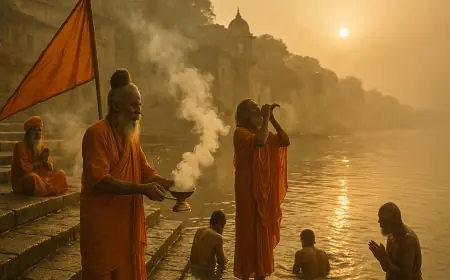
Every movement during Shahi Snan on the Kshipra River follows a ritual intelligence developed over centuries. The order is deliberate, the timing exact, and the authority absolute. Without understanding this logic, Simhastha appears crowded. With understanding, it reveals structure.
For Every pilgrims, understanding Simhastha 2028 dates and the official Shahi Snan timeline is essential before booking flights or accommodation, as these sacred dates are completely non-negotiable.
What Shahi Snan Actually Means in Sanatan Dharma
The word Shahi does not imply royalty in a political sense. It signifies spiritual sovereignty.
Trending Guides Now
The First Ever Kumbh Mela: Complete History, Rituals & Legacy That Continue Today

What Makes Ujjain Simhastha a Living Spiritual Tradition

How Ujjain Became a Center of Learning in Ancient India

How Ujjain Influenced Ancient Indian Astronomy

Ujjain Railway Station to Mahakaleshwar Temple Distance (2026 Guide)

Ujjain Simhastha 2028 Dates Announced: Full Shahi Snan & Event Timeline

Ujjain Simhastha Update: CM Mohan Yadav Reviews 2028 Works

Karkateshwar Mahadev: 22/84 Mahadev of Ujjain
In Sanatan tradition, akharas represent disciplined renunciation. When they perform Shahi Snan, they are not purifying themselves. They are consecrating the river, activating it for collective spiritual use.
This is why Shahi Snan meaning goes far beyond ritual bathing. It is a transfer of spiritual authority to the river itself.
Why the Kshipra River Is Central to Shahi Snan
The Kshipra River is not permanently sacred in the same way as the Ganga. Its sanctity intensifies during rare planetary alignments. During Simhastha, when Jupiter enters Leo, the river becomes ritually equivalent to the most powerful sacred waters in Sanatan geography.
This is why Kshipra Shahi Snan:
-
Occurs only on fixed astrological days
-
Cannot be shifted for convenience

-
Requires strict akhara discipline

The river’s role is not symbolic. It is time-activated.
Also Read | Simhastha 2028 dates and planetary alignment that activate the Kshipra River
The Sacred Order of Shahi Snan Explained Clearly
The Shahi Snan order is one of the most protected systems in Hindu tradition. It is governed by akhara seniority, lineage history, and responsibility toward dharma.
Broad Ritual Flow of Shahi Snan
-
Shaiva Akharas enter first
-
Followed by Vaishnava Akharas
-
Then Udasin Akharas
-
Sant groups bathe later
Each akhara arrives through a formal akhara procession, carrying flags, traditional weapons, and spiritual insignia. This procession is a ritual act, not a display.
Role of Naga Sadhus in Shahi Snan
The presence of Naga Sadhus is not optional. They represent the highest level of detachment.
Their Naga Sadhu snan comes first because:
-
They hold no social identity
-
They are considered ego-free
-
They symbolize total renunciation
In ritual logic, those who own nothing are entrusted with sanctifying everything.
Why Common Pilgrims Cannot Bathe First
The restriction on public bathing before Shahi Snan is rooted in Adhikar, the principle of ritual eligibility.
Before akharas bathe, the river is:
-
Ritually dormant
-
Spiritually unactivated
Only after the royal bath Simhastha does the river become accessible for public holy dip in Kshipra River.
This rule maintains:
-
Spiritual purity
-
Ritual continuity
-
Crowd discipline
Importance of Timing in Shahi Snan Rituals
Shahi Snan rituals are governed by planetary positions, not clock convenience. The bathing moment aligns with cosmic receptivity, often before sunrise.
This precise timing ensures:
-
Maximum ritual potency
-
Stability of spiritual energy
-
Continuity with ancient calendrical systems
This is why even minutes matter.
Shahi Snan vs Normal Holy Dip: Clear Difference
| Aspect | Shahi Snan | Normal Snan |
|---|---|---|
| Authority | Akharas | Individual |
| Access | Restricted | Public |
| Timing | Astrological | Flexible |
| Purpose | River activation | Personal purification |
| Procession | Mandatory | None |
Understanding this difference helps visitors experience Simhastha with awareness, not confusion.
Why Witnessing Shahi Snan Matters Spiritually
Even observing Shahi Snan on the Kshipra River carries spiritual value. Sanatan belief holds that witnessing disciplined renunciation aligns the observer with dharmic order.
This is why millions gather hours before the ritual begins. Presence itself becomes participation.
How Shahi Snan Preserves Sanatan Order
Without Shahi Snan, Simhastha would collapse into disorder. This ritual ensures:
-
Respect for lineage
-
Continuity of tradition
-
Protection of ritual authority
It is not resistant to time. It is designed to outlast it.
Also Read | How Simhastha 2028 is reshaping Ujjain as a global spiritual capital
Why Understanding Shahi Snan Changes How You Experience Simhastha Forever
Once you understand the Shahi Snan order, the akhara hierarchy, and the ritual science behind Kshipra Shahi Snan, Simhastha stops feeling overwhelming.
Every movement begins to connect.
Every delay starts to make sense.
Every restriction feels purposeful.
This understanding naturally leads seekers to explore:
-
How Simhastha dates are calculated
-
Why akharas never change their order
-
How Shahi Snan fits into the larger Kumbh cycle
And this is why readers return. Knowledge here does not conclude. It opens paths.
Also Read | Complete Simhastha 2028 visiting guide with Shahi Snan planning
Frequently Asked Questions