































The Arrival Procession of Akharas in Simhastha 2028: A Complete Explainer
A complete guide to the grand arrival procession of Akharas in Simhastha 2028 — setup, sequence, symbolism, formations, rituals and spiritual meaning for pilgrims.


The Arrival Procession of Akharas in Simhastha 2028: A Complete Explainer
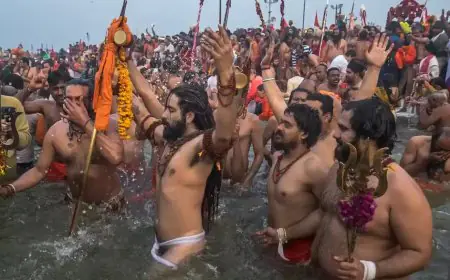
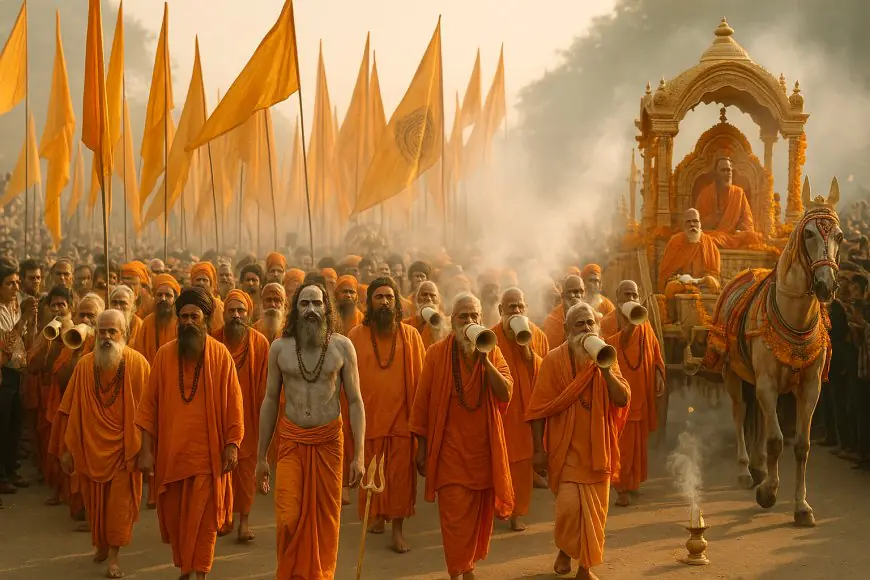
The arrival procession of the Akharas is one of the grandest and most spiritually charged events of Simhastha 2028. For pilgrims traveling from across India and around the world, witnessing this procession is not merely a visual spectacle — it is an experience of devotion, power, discipline and tradition converging on the sacred land of Ujjain. When the Akharas begin their march toward their designated locations, they are not just entering the city; they are announcing the formal beginning of Simhastha. Each sound of the drum, each movement of the flag, each step of the monks holds centuries of spiritual meaning.
For Every pilgrims, understanding Simhastha 2028 dates and the official Shahi Snan timeline is essential before booking flights or accommodation, as these sacred dates are completely non-negotiable.
What Is the Akhara Arrival Procession?
The arrival procession marks the ceremonial entry of various Akharas — ancient ascetic organizations — into Ujjain at the start of Simhastha 2028. Akharas include saints, mahants, disciples, spiritual warriors and yogis who travel together and settle in their respective camps for the duration of the festival. Their arrival signifies readiness for spiritual rituals and especially for the Shahi Snan. The procession is never chaotic — it follows deeply structured traditions passed down for centuries.
Historical and Spiritual Roots of the Tradition
To understand the modern arrival procession, one must look back through centuries of dharmic history. Akharas were originally established to protect Sanatan Dharma. Their arrival into the city was historically a symbolic declaration that dharma has reached the pilgrimage site in full strength. Over time, this transitioned from a security tradition to a highly spiritual event. Today, the procession is a statement of unity, discipline, renunciation and fierce devotion to Lord Shiva.
Trending Guides Now

Why Only Akharas Are Allowed to Lead Shahi Snan (Ujjain Rule Explained)
The Untold Reason Naga Sadhus Lead the First Shahi Snan at Simhastha 2028

Shaivite vs Vaishnav Akharas in Simhastha: Differences, Roles & Shahi Snan Order
Inside the 13 Akharas of Simhastha 2028: Hidden Rituals, Naga Sadhu Secrets & Real Traditions

Ujjain Railway Station to Mahakaleshwar Temple Distance (2026 Guide)

Ujjain Simhastha 2028 Dates Announced: Full Shahi Snan & Event Timeline

Mangalnath Temple Trip Budget: Puja, Local Transport, Food and Stay Planning

Omkareshwar Trip Budget Guide: Transport, Stay, Food and Local Travel Costs
Core Spiritual Meaning Behind the Arrival
- The presence of saints makes the city spiritually activated
- The Akhara flags signal the beginning of sacred rituals
- Each formation honors their lineage and guru parampara
- The arrival opens the doors for seekers to receive blessings
- It declares the formal readiness for Shahi Snan
Thus, the arrival procession is not just a march — it is a spiritual invocation.
How Akharas Prepare for the Procession
There is no improvisation in an Akhara procession. Weeks of internal preparation take place before the entry into Ujjain. Saints finalize camp locations, daily ritual schedules and Shahi Snan plans. Disciples rehearse movement patterns, horse formations and drumming routines. For many akhadas, the procession is a form of tapas — demonstrating discipline, synchronicity and devotion.
Elements of Pre-Procession Preparation
- Selection of lead mahants for the chariots
- Decoration of ceremonial horses and vehicles
- Preparation of banners, tridents and flags
- Ritual purification through havan and mantra chanting
- Formation plans for disciples and naga sadhus
The aim is to showcase both spiritual depth and organizational discipline.
The Structure of the Procession
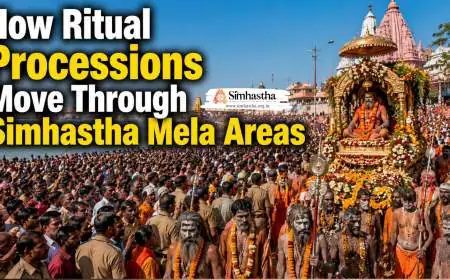
Every Akhara follows an internal hierarchical order during the procession. The march has a defined start, middle and end formation.
Typical Procession Sequence
- Devotees, drummers and conch players leading the soundscape
- Flag bearers carrying the Akhara emblems
- Warrior ascetics (symbolic) in disciplined formation
- Naga sadhus representing the highest level of renunciation (fully clothed here for safety representation)
- Senior saints and mahants on horses or ceremonial chariots
- Disciples and caretakers walking behind in protective formation
Large crowds of pilgrims gather on both sides of the route, not to “watch,” but to spiritually welcome the saints as embodiments of divine energy.
The Soundscape: Drums, Conches and Sacred Chanting
Sound plays a critical role in establishing the energy of the procession. Dhol nagadas create rhythmic intensity, conches signal spiritual presence, and chants bring focus to the mind. These sounds uplift the atmosphere and inspire deep devotion.

Meaning of the Sound Elements
- Conch (Shankh): announcement of purity and divine entry
- Drums: representation of Shiva’s damaru — energy of cosmic rhythm
- Chants: Har Har Mahadev, Jai Gange, and Akhara mantras
The sound is more than music — it is invocation.
The Procession Route and Entry Into Camps
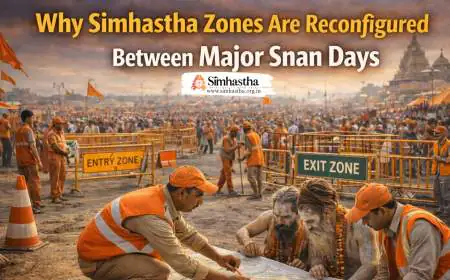
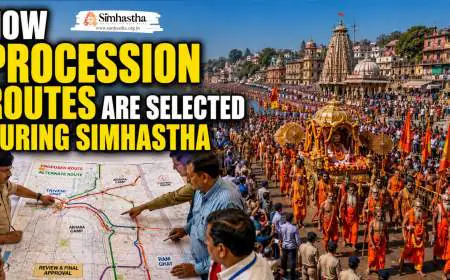
The procession route is carefully selected for safety and accessibility. The walk ends at the designated Akhara camps near ghat zones or select religious corridors. Upon arrival, saints perform a special ritual known as padarpan — bowing spiritually to the land of Ujjain and the river Kshipra.
Arrival Rituals at the Camps
- Lighting the first sacred fire (dhuni)
- Chanting of Guru lineage mantras
- Accession of the senior mahant to his ceremonial seat
- First blessings for pilgrims
With this, the Akhara officially begins its Simhastha observances.
Why Pilgrims Value the Procession Deeply
Most pilgrims say that witnessing the Akhara procession is one of the most unforgettable parts of Simhastha. It creates a sense of belonging, inspiration and surrender. The sight of lifetimes of renunciation walking before one’s eyes carries a spiritual force that cannot be described — only felt.
What Pilgrims Seek During the Procession
- Blessings for peace and protection
- Strength to overcome karmic struggles
- Inspiration for discipline and devotion
- Spiritual connection through darshan
Even a moment of humble eye contact or raised hand of blessing from a saint becomes a life-transforming memory for many.
A Unique Spiritual Atmosphere — No Stage, No Performance
The grand visuals sometimes make the procession look like a parade, but spiritually it is the opposite. There is no audience and no performers — only seekers and saints walking together in devotion. The power of the event lies in simplicity, authenticity and spiritual intensity.
The arrival is a reminder that before temples, rituals and infrastructure, the soul of Kumbh is faith.
A Pilgrim’s Guide to Witnessing the Procession
Planning helps pilgrims enjoy the event peacefully and safely.
Best Practices When Attending
- Arrive early to find a safe viewing spot
- Stand aside respectfully and avoid pushing
- Do not block routes to take photos
- Avoid shouting or crowding near saints
- Ensure elderly and children remain in safe zones
- Focus on darshan rather than filming
The more respectful the crowd, the smoother and spiritually fulfilling the event becomes for all.
The Spiritual Message of the Arrival Procession
Above everything else, the procession reminds pilgrims of one core dharmic message: human life is temporary, but devotion is eternal. The sight of saints who have surrendered everything — fear, ego, possession and identity — inspires many to rediscover purity and simplicity in their own lives.
Simhastha 2028 will welcome crores of visitors, but it is the Akhara arrival that truly initiates the journey. When the saints step into Ujjain, Simhastha awakens.
Frequently Asked Questions