














Accident Risks During Massive Pilgrimage Events
Learn about accident risks during massive pilgrimage events like Kumbh Mela and Simhastha. Stampede, heatstroke, drowning, and prevention tips.

What Are the Accident Risks During Massive Pilgrimage Events?
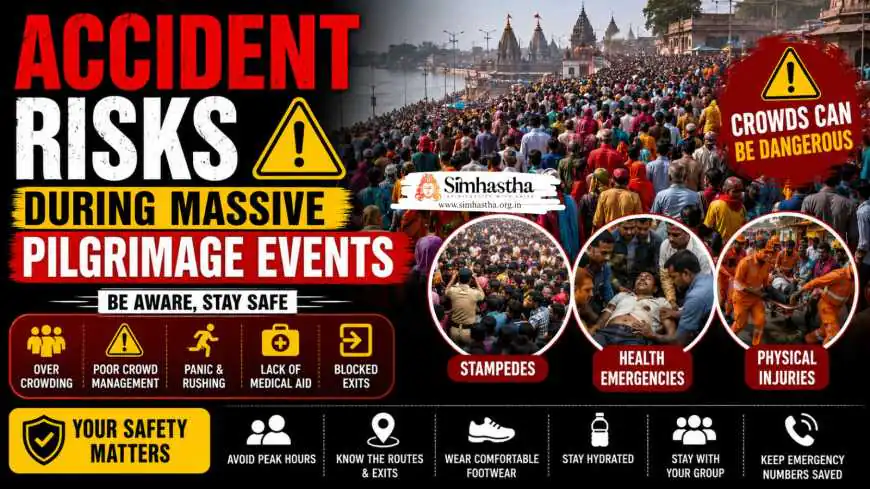
Massive pilgrimage events like Kumbh Mela, Simhastha, and Hajj carry significant accident risks due to extreme crowd density, environmental conditions, and physical demands. The five deadliest risks are: stampedes and crowd crushes (responsible for 2,400+ deaths at Hajj 2015, 42 at Kumbh 2013), heatstroke and dehydration (kills 200-500 pilgrims per large event), drowning during holy dips (30-100 deaths per Kumbh), cardiac events triggered by exertion and stress (leading cause of medical evacuation), and infectious disease outbreaks (gastroenteritis, typhoid, hepatitis A). Additional risks include tent fires, road accidents during travel, food poisoning from mass feeding, respiratory distress from dust and smoke, and separation-related trauma (lost children, elderly). Most accidents are preventable with proper planning, awareness, and insurance coverage. Pilgrims aged 60+ account for 60-70% of medical emergencies.
The Five Deadliest Accident Risks at Pilgrimage Events
1. Stampedes and Crowd Crushes – The Most Lethal Risk ⚠️
Why stampedes happen at pilgrimages: Sudden crowd surges triggered by false rumors (stone pelting, bomb threat, gate closure), narrow pathways constricting flow, slippery surfaces (wet ghats), and simultaneous movement of millions toward a single point (Shahi Snan, stoning ritual at Hajj).
Historical death toll:
-
Hajj 2015 (Mina stampede): 2,411 pilgrims killed (official Saudi figure; independent estimates up to 7,000+)
Trending Guides Now
Ujjain Simhastha 7 Day Itinerary for Families
Is Phone Allowed in Mahakaleshwar Temple Ujjain?
How Many Days Are Enough for Ujjain? Complete Trip Planner
How to Travel Inside Ujjain During Simhastha 2028: Routes, Maps and Movement Plans

Ujjain Railway Station to Mahakaleshwar Temple: Distance, Fare & Route

Ujjain Simhastha 2028 Dates Announced: Full Shahi Snan & Event Timeline
Mahakaleshwar to Kal Bhairav Temple: Distance, Auto Fare, Travel Time and Route Options
Mahakaleshwar to Gadkalika Temple: Distance, Auto Fare and Best Route
-
Kumbh Mela 2013 (Allahabad railway station): 42 killed, 45 injured
-
Maha Shivratri 2005 (Ujjain): 12 killed, 60 injured (temple queue collapse)
-
Sabarimala 2011 (Thekkady): 108 killed (jeep accident + stampede)
How stampede deaths happen: Not from being crushed under feet – from compressive asphyxia. Crowd pressure on your chest prevents lung expansion. You suffocate standing up in 2-3 minutes.
Who is most at risk: Elderly, children, women (shorter, weaker chest wall), anyone in the center of the crowd (pressure highest).
Survival techniques:
-
Keep hands up near chest (creates breathing space)
-
Move diagonally toward crowd edge, not against flow
-
Do NOT bend down to pick up anything (you will be trampled)
-
If you fall, curl into fetal position (protect head, chest)
Prevention by organizers: Barricaded queues, one-way crowd flow, real-time density monitoring, emergency exits every 50 meters, police presence at pinch points.
2. Heatstroke and Dehydration – The Silent Killer 🥵
Why pilgrimage events are heatstroke factories: Most occur in April-May (Simhastha, Hajj) or July-August (Shravan) when temperatures reach 40-48°C. Pilgrims walk 8-15 km daily in direct sun. Elderly with hypertension/diabetes are highly vulnerable.
Death statistics:
-
Hajj 2023: Over 2,000 pilgrims treated for heatstroke; 200+ deaths (unofficial figures higher)
-
Kumbh Mela 2019: 1,500+ heatstroke cases, 50+ deaths

-
Simhastha 2016: 800+ heatstroke hospitalizations, 30+ deaths

How heatstroke kills: Body temperature exceeds 40°C (104°F). Organs begin failing – kidneys, liver, heart, brain. Without rapid cooling (ice packs, cold IV fluids), death occurs in 2-6 hours.
Symptoms you cannot ignore:
-
Heat exhaustion (act fast): Heavy sweating, weakness, cold clammy skin, fast weak pulse, nausea, headache
-
Heat stroke (emergency): High body temperature (103°F+), hot dry skin (sweating stops), rapid strong pulse, confusion, unconsciousness
Prevention for pilgrims:
-
Drink 500 ml water every 20 minutes (not when thirsty)
-
ORS/electrolyte packets – carry 20-30
-
Avoid 12-4 PM sun exposure (rest in shade)
-
Wear light cotton, wide hat, sunglasses
-
Know the nearest air-conditioned first-aid tent

3. Drowning During Holy Dip – The Ritual Risk
Why drowning happens: Pilgrims enter water without knowing how to swim. Sudden drop-offs in river beds (Shipra, Ganga). Currents sweep away bathers. Crowds push people into deep zones. Alcohol or intoxicant use before dip (bhang, other substances).
Death statistics:
-
Kumbh Mela (each cycle): 30-100 drowning deaths reported; unofficial figures 2-3x higher
-
Simhastha 2016: 18 confirmed drowning deaths (12 at Ram Ghat alone)
-
Maha Kumbh 2001: 41 drowning deaths in one day (January 24, 2001)
Most dangerous times: Shahi Snan days (crowds push people into deep water). Early morning (visibility low, rescue boats not fully staffed).
Safety measures:
-
Bathe only in barricaded safe zones (roped-off areas with lifeguards)
-
Do not go beyond waist-deep water
-
Stay within sight of rescue boats
-
Elderly should bathe from the ghat steps (not enter deep water)
-
Never bathe alone – stay within arm's reach of family
What organizers provide: Lifeguards every 50-100 meters, rescue boats patrolling, underwater nets to prevent drowning in deep zones (limited – not everywhere).
4. Cardiac Events – The Exertion Trigger ❤️
Why pilgrimage triggers heart attacks: Walking 8-15 km daily in heat, carrying bags, standing in queues for 2-4 hours, emotional stress of crowds, dehydration (thickens blood, increases clot risk), and pre-existing heart disease in 40% of pilgrims over 60.
Statistics:
-
Kumbh Mela 2019: 1,200+ cardiac emergencies; 200+ heart attacks; 60+ deaths
-
Simhastha 2016: 500+ cardiac events; 80+ heart attacks; 25+ deaths
-
Hajj 2023: 1,500+ cardiac hospitalizations (leading cause of medical evacuation)
Typical scenario: Elderly pilgrim with undiagnosed coronary artery disease walks 5 km in 40°C heat. Dehydration and exertion cause plaque rupture. Heart attack occurs. Without rapid angioplasty (within 90 minutes), death or permanent heart damage.
Prevention:
-
Pre-pilgrimage medical checkup (ECG, stress test for high-risk)
-
Carry nitroglycerin spray (if prescribed) in front pocket
-
Stop and rest every 30 minutes – do not push through fatigue
-
Recognize warning signs: chest pressure, jaw/arm pain, shortness of breath, nausea
-
Know hospital locations before you need them
5. Infectious Disease Outbreaks – The Crowd Consequence 🦠
Why pilgrimages spread disease: 5-10 crore people sharing water sources (river dips), food (mass feeding), toilets (limited facilities), and close contact (2-4 people per square meter). Incubation periods align with event duration.
Common outbreaks:
-
Gastroenteritis (viral/bacterial): 10-30% of pilgrims affected; spreads through contaminated water, food, surfaces
-
Typhoid: 100-500 cases per Kumbh; fatality 5-10% without treatment
-
Hepatitis A: 50-200 cases per event; spread through fecal-oral route
-
Respiratory infections (flu, COVID): 20-40% of pilgrims develop cough/fever
-
Leptospirosis (rat fever): 10-50 cases; spread through floodwater contaminated with rat urine
Death statistics (disease):
-
Kumbh Mela 2019: 200+ disease-related deaths (gastroenteritis, typhoid, hepatitis A)
-
Hajj 2023: 500+ cases of respiratory infections; 50+ deaths (elderly with comorbidities)
Prevention for pilgrims:
-
Drink only packaged water (Bisleri, Kinley) – check seal
-
Hand sanitizer (70% alcohol) before every meal
-
Avoid cut fruits, raw salads, ice (unless from packaged water)
-
Eat at busy bhandara lines (high turnover = fresher food)
-
Vaccinate before travel: Typhoid, Hepatitis A, Tetanus, COVID-19, Flu
Secondary Accident Risks Often Overlooked
Tent Fires – The Sleeping Danger 🔥
Why tent fires happen: Substandard electrical wiring in temporary structures, gas cylinder explosions (cooking), candles or incense inside tents, short circuits from overloaded extensions.
Notable incidents:
-
Kumbh Mela 2013: 15 tents caught fire; 3 deaths, 50 injured
-
Simhastha 2016: 8 tent fires; 0 deaths (rapid response), but 40 pilgrims lost belongings
-
Hajj 2022: Tent fire near Mina; 12 injuries
Prevention:
-
Book only authorized tent cities (electricity inspected)
-
Do not use candles or incense inside tents
-
Identify nearest fire exit and extinguisher upon check-in
-
Keep valuables in locker, not near potential fire sources
Road Accidents – Travel to and From Event 🚌
Why road accidents spike: Overloaded buses, fatigued drivers (driving overnight to reach event), rush to reach on specific auspicious days, poor road conditions near event grounds, and inexperienced drivers on rural routes.
Statistics:
-
Kumbh Mela 2019 (Maharashtra to Nashik route): 25 bus accidents, 60+ deaths during the 45-day event
-
Simhastha 2016 (Indore-Ujjain highway): 15 accidents, 30+ deaths
Prevention:
-
Avoid overnight bus travel (fatigue-related accidents peak 2-5 AM)
-
Choose train travel over road (railways run special Kumbh/Simhastha trains)
-
If driving, take breaks every 2 hours, avoid driving after sunset on rural roads
Food Poisoning – Mass Feeding Risks 🍲
Why food poisoning is common: Food prepared in large quantities (50,000-500,000 meals per day) may be stored at unsafe temperatures. Reheated multiple times. Water used for washing vegetables may be contaminated.
Statistics:
-
Simhastha 2016: 3,000+ hospitalizations for gastroenteritis
-
Kumbh Mela 2019: 8,000+ cases of food poisoning
Symptoms: Vomiting, diarrhea, abdominal cramps, fever. Dehydration kills elderly within 24-48 hours without IV fluids.
Safe eating strategy:
-
Eat at bhandaras with visible high turnover (food not sitting for hours)
-
Avoid cut fruits, chaat, raw salads, unbottled juices
-
Carry oral rehydration salts – take at first sign of loose motions
-
If symptoms develop, seek medical camp immediately (IV fluids may be needed)
Respiratory Distress – Dust and Smoke
Why respiratory distress occurs: Ghat areas are dusty (dry riverbeds). Thousands of dhuni (sacred fires) produce smoke. Pilgrims with asthma, COPD, or allergies suffer.
Statistics:
-
Simhastha 2016: 400+ hospitalizations for asthma/COPD exacerbation
-
Kumbh Mela 2019: 1,000+ respiratory emergencies
Prevention:
-
N95 mask in crowded areas (not just for COVID – for dust)
-
Saline nasal spray twice daily (clears dust)
-
Carry rescue inhaler (if prescribed) in front pocket (not bag)
-
Avoid standing downwind of dhuni fires
Falls and Fractures – Slippery Ghats
Why falls happen: Stone ghats are wet from holy dips. Algae growth makes them slippery. Crowds push pilgrims, causing loss of balance. Elderly with poor balance are at highest risk.
Injuries: Hip fractures (requires surgery, 4-8 weeks recovery), wrist fractures (from breaking fall), head injuries (if hitting stone steps).
Prevention:
-
Wear shoes with good grip (not chappals/slippers)
-
Walk slowly on ghats – do not rush
-
Use railings where available
-
Elderly should bathe from steps with railing, not enter deep water
-
Stay near edge of crowd, not center where pushing occurs
Vulnerable Populations – Who Is Most at Risk?
Elderly Pilgrims (60+ Years)
Risks: Cardiac events (60% of event deaths), heatstroke (low thirst perception – they don't realize they're dehydrated), falls (poor balance), separation from family (memory issues).
Percentage of casualties: 60-70% of medical emergencies, 80% of deaths at pilgrimage events.
Protection measures:
-
Pre-travel medical checkup (ECG, stress test)
-
Travel with younger family members (buddy system)
-
Carry doctor's letter (conditions, medications)
-
Rest every 30 minutes – do not "keep up" with younger pilgrims
-
Stay within 500 meters of medical camp
Children (Under 12 Years)
Risks: Drowning (cannot swim), separation from parents, heatstroke (small body mass heats up faster), trampling (short stature – crowd pressure at chest level).
Protection measures:
-
ID wristband with parent phone numbers, tent address
-
Do not let children bathe beyond knee-deep water
-
Hold hands at all times in crowds
-
Establish meeting points (if separated, child waits there)
-
Teach child to identify police/volunteer uniform
Pilgrims with Pre-Existing Conditions
High-risk conditions: Heart disease, diabetes, hypertension, asthma/COPD, kidney disease, stroke history, epilepsy.
Why they are at risk: Heat and exertion trigger complications. Dehydration affects blood sugar and blood pressure. Crowd dust triggers asthma. Stress hormones increase heart attack risk.
Protection measures:
-
Disclose conditions when buying insurance (pre-existing coverage)
-
Carry 20-day supply of medications (plus 5-day buffer)
-
Doctor's letter (English + Hindi) explaining condition and emergency protocol
-
Know nearest hospital (not just first-aid tent)
International Pilgrims (Not Acclimatized to Indian Heat)
Risks: Heatstroke (unacclimatized to 40°C+), waterborne diseases (no immunity to local pathogens), language barrier in emergencies.
Protection measures:
-
Arrive 3-5 days early to acclimatize
-
Drink only packaged water (not tap, not filtered)
-
Vaccinate before travel (typhoid, hepatitis A, flu, COVID-19)
-
Carry translation app or phrase card (Hindi/English)
-
Register with your embassy (if available)
Historical Accident Data – Learning from the Past
Kumbh Mela Allahabad (2013)
| Accident Type | Deaths | Injuries | Cause |
|---|---|---|---|
| Stampede (railway station) | 42 | 45 | Bridge collapse rumor during Shahi Snan exit |
| Drowning | 30+ | – | Deep water zones without barricades |
| Heatstroke | 50+ | 800+ | 42°C temperature, inadequate water stations |
| Tent fire | 3 | 50 | Short circuit |
| Road accidents | 60+ | 150+ | Overloaded buses, night travel |
| Total estimated | 185+ | 1,000+ | – |
Simhastha Ujjain (2016)
| Accident Type | Deaths | Injuries | Cause |
|---|---|---|---|
| Heatstroke | 30+ | 800+ | 44°C during Shahi Snan days |
| Drowning | 18 | – | Deep zones at Ram Ghat, no lifeguards at 4 AM |
| Cardiac events | 25+ | 500+ | Exertion + dehydration in elderly |
| Food poisoning | 0 | 3,000+ (hospitalized) | Contaminated bhandara food |
| Stampede/crush | 0 | 47 | Minor crowd crushes, no deaths |
| Total estimated | 73+ | 4,300+ | – |
Hajj Mina (2015)
| Accident Type | Deaths | Injuries | Cause |
|---|---|---|---|
| Stampede | 2,411 (Saudi figure) | 2,000+ | Two large pilgrim groups converging at junction |
Hajj Heatstroke (2023)
| Accident Type | Deaths | Injuries | Cause |
|---|---|---|---|
| Heatstroke | 200+ (unofficial) | 2,000+ | 48°C temperature, elderly pilgrims walking 15+ km |
Key takeaway: Stampedes cause the highest single-incident deaths. Heatstroke and cardiac events cause the highest cumulative deaths. Food poisoning causes the highest non-fatal injuries.
What Organizers Do to Reduce Risks
Crowd Management Systems
-
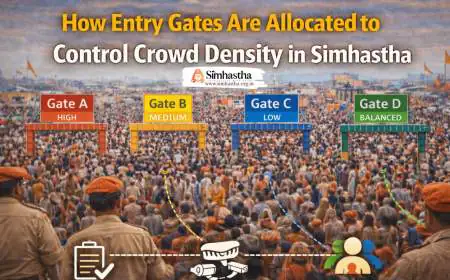
Real-time density monitoring: Drones, CCTV, sensors count crowd density. When density exceeds 3-4 persons per sq meter, organizers slow entry.
-
Barricaded queues: One-way flow prevents opposing streams from colliding.
-
Emergency exits: Every 50-100 meters, clearly marked.
-
Police and volunteers: Trained in crowd crush rescue, positioned at pinch points (bridges, narrow lanes, gate entries).
-
Phased entry: Pilgrims assigned time slots for Shahi Snan (reduces peak density).
Medical Infrastructure
-
Temporary hospitals: 50-100 bed facilities at event grounds.
-
First-aid tents: Every 500 meters, staffed with nurses, oxygen, IV fluids.
-
Ambulances: 100-500 vehicles (including e-rickshaw ambulances for pedestrian zones).
-
Air evacuation: Helicopters on standby for critical cases to city hospitals.
-
Empaneled hospitals: City hospitals (Ujjain, Indore, Allahabad) reserved for pilgrims.
Water and Sanitation
-
RO water stations: Every 200-500 meters, free drinking water.
-
Toilets: 10,000-50,000 temporary toilet units (still inadequate for 5 crore pilgrims).
-
Solid waste management: Regular garbage collection to prevent disease vectors.
Fire Safety
-
Fire extinguishers: At every tent cluster.
-
Fire breaks: Open spaces between tent sections prevent fire spread.
-
Fire tenders: 20-50 vehicles on standby.
Drowning Prevention
-
Barricaded safe zones: Roped-off areas in rivers for bathing (depth controlled).
-
Lifeguards: 100-500 trained swimmers with rescue equipment.
-
Rescue boats: Patrolling during bathing hours.
-
Underwater nets: In deep zones to prevent drowning (limited deployment).
What Pilgrims Can Do to Protect Themselves – Practical Checklist ✅
Before Travel (2-4 weeks before)
-
Medical checkup (ECG, BP, blood sugar, kidney function) – especially if over 50
-
Vaccinations: Typhoid, Hepatitis A, Tetanus, COVID-19, Flu
-
Doctor's letter: List conditions, medications, emergency protocol (English + Hindi)
-
Fill medications: 20-day supply + 5-day buffer (do NOT rely on pharmacy at event)
-
Buy event-specific insurance: With stampede, evacuation, pre-existing coverage
-
Share itinerary: With family back home (hotel name, emergency contact numbers)
Packing Essentials
-
ORS/electrolyte packets (30-50)
-
N95 masks (10-15)
-
Hand sanitizer (70% alcohol, 100ml)
-
Water bottle (reusable, 1-liter)
-
Wide hat, sunglasses, light cotton clothing
-
Walking shoes with good grip (broken in, not new)
-
ID wristbands (for family members, especially children and seniors)
-
Laminated copy: Insurance policy, ID, doctor's letter, helpline numbers
-
Power bank (20,000 mAh) – phone battery dies fast in crowds
During the Event
-
Hydration rule: 500 ml water every 20 minutes – set phone alarm
-
Rest rule: Stop and sit in shade for 10 minutes every hour
-
Buddy system: Each person watches one other person – never assume "someone else is watching"
-
Meeting points: Designate 2-3 fixed locations in case of separation
-
Identify exits: Upon entering any crowd, note nearest exit
-
Keep hands up in tight crowds (creates breathing space)
-
No bending down in crowds – if you drop something, let it go
-
Know hospital locations: Before you need them
Emergency Response Plan
If you feel unwell (chest pain, breathlessness, severe weakness):
-
Move to crowd edge (not center)
-
Sit down (do not lie down – may be trampled)
-
Call insurer's event helpline (saved in phone + laminated card)
-
Ask someone to fetch medical help (point to nearest first-aid tent)
If you see a stampede starting:
-
Move perpendicular to crowd flow (toward side, not against flow)
-
Keep hands up near chest (protect lungs)
-
Do NOT run – fast walk to nearest exit
-
Do NOT stop to take photos or call anyone – leave first
If you are separated from family:
-
Go to Primary Meeting Point immediately
-
Wait 30 minutes
-
If not found, go to nearest police chowki (file missing person report)
-
Call insurer's reunification helpline (Oriental Insurance offers this)
If someone collapses near you:
-
Shout "Medical emergency!" to alert crowd
-
Create space around patient (arms out, push gently)
-
Do NOT move patient unless immediate danger (fire)
-
Send someone to fetch help (point to nearest volunteer/police)
-
If patient not breathing and you know CPR, begin immediately
The Role of Travel Insurance in Accident Protection
Why insurance is essential: Medical evacuation from a pilgrimage event costs ₹50,000-5 lakhs. Hospitalization for heatstroke costs ₹50,000-2 lakhs. Cardiac angioplasty costs ₹1.5-3 lakhs. Drowning rescue with ICU costs ₹1-3 lakhs. Stampede injury surgery costs ₹2-5 lakhs.
What your policy must cover:
-
Mass gathering / stampede coverage (explicit wording – regular policies exclude)
-
Two-stage evacuation (from pedestrian zone to ambulance pickup)
-
Pre-existing conditions (day-one coverage for controlled diabetes, hypertension)
-
Drowning coverage (some policies exclude "water activities")
-
Baggage/theft (₹10,000-25,000 for lost items)
-
Trip cancellation (if you or family become too ill to travel)
-
Repatriation of mortal remains (₹2-5 lakhs – for families of deceased)
Cost: ₹850-3,500 depending on age, duration, coverage. Cheap insurance is not an expense – it's a financial shield.
The Emotional Toll – Beyond Physical Injuries
Accidents at pilgrimages don't just cause physical harm. They leave emotional scars that last years.
Lost family members: In 2013 Kumbh, 200+ children were separated from parents. Some were never reunited. The trauma of searching for hours or days is indescribable.
Witnessing death: Pilgrims who saw others die in stampedes, drownings, or cardiac arrests carry PTSD. Many never return to pilgrimages.
Financial ruin from medical bills: A ₹3 lakh hospital bill forces families to sell jewelry, take loans, or beg. This pain lasts long after the physical recovery.
Guilt: "If I had not pushed my father to walk faster, he wouldn't have had a heart attack." Survivors carry guilt for years.
The best protection against emotional trauma is prevention. Plan. Prepare. Insure. Stay aware. Do not assume "it won't happen to me." It happens to thousands every pilgrimage cycle.
Final Wisdom – Respect the Risk, Honor the Faith
Pilgrimage is an act of profound faith and devotion. Millions complete their journeys safely and return home spiritually fulfilled. But faith does not mean ignoring reality.
The same crowd that creates the powerful energy of a Shahi Snan can also kill. The same heat that purifies can also cook. The same water that washes away sins can also drown.
Mahakal does not want your death. He wants your devotion. Protect yourself so you can offer that devotion.
Respect the risks. Prepare for them. Buy insurance. Carry ORS. Wear your ID wristband. Hold your child's hand. Know where the exit is. Rest in the shade. Drink water before you are thirsty. Do not push. Do not run. Do not assume.
Then, with your body protected and your mind prepared, walk to the holy water. Take your dip. Offer your prayers. Receive the blessing.
And come home to tell the story.
May every pilgrimage be safe. May every devotee return home. 🙏
Frequently Asked Questions