





















Why Ujjain Was Once Considered India's Prime Meridian
Discover why Ujjain was once considered India's prime meridian—the Madhya Rekha—and how it shaped ancient astronomy, calendars, and timekeeping.

Before Greenwich, There Was Ujjain 🌍🕰️
Let me ask you something that might blow your mind. 🤯
You know Greenwich, England—the place where the world sets its clocks? The Prime Meridian, 0° longitude, the reference point for every time zone on Earth? 🌏
What if I told you that centuries before Greenwich ever existed, there was another global timekeeping center? A city so advanced in astronomy that it served as the reference point for all time calculations across the Indian subcontinent and beyond. 🕉️
That city was Ujjain. 📍
Trending Guides Now
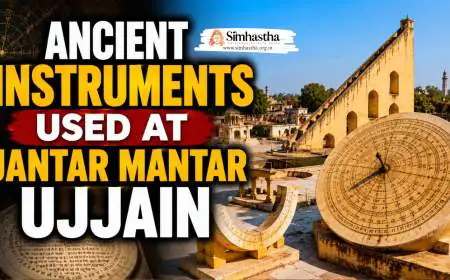
Ancient Instruments Used at Jantar Mantar Ujjain Explained
How Ancient Astronomers Used Ujjain as a Time Reference
How Ujjain Helped Shape Ancient Indian Astronomy Calculations

Ujjain Railway Station to Mahakaleshwar Temple Distance (2026 Guide)

Ujjain Simhastha 2028 Dates Announced: Full Shahi Snan & Event Timeline
Mahakaleshwar to Kal Bhairav Temple: Distance, Auto Fare, Travel Time and Route Options

Ujjain Simhastha 2028 Road Widening Brings Action Against Religious Structures Houses and Shops

Mahakaleshwar Temple Entry Rules 2026: Dress Code, Mobile & Bag Policy
Yes, the same Ujjain famous for the Mahakaleshwar Temple—dedicated to Lord Shiva as the Lord of Time—was once the prime meridian of India. 🌟
So, why was Ujjain once considered India's prime meridian? The answer is a fascinating blend of geography, ancient astronomy, and the brilliant minds who made this city the center of the Indian universe. 🌌
In this article, we'll explore the Madhya Rekha (the middle line), the astronomers who mapped the heavens from Ujjain, the celestial alignments that made this city special, and why India's answer to Greenwich is one of the most important stories you've never heard. 📜
The Madhya Rekha: India's Own Prime Meridian 📏🌏
The Concept of Zero Longitude
Before we dive into Ujjain's story, let's understand the concept of a prime meridian. 🌍
A prime meridian is an imaginary line that runs from the North Pole to the South Pole at 0° longitude. It serves as the reference point for measuring longitude and calculating time across the globe. 🕰️
Today, the world uses the Greenwich Meridian (established in 1884). But centuries before Greenwich, ancient Indian astronomers had their own prime meridian—the Madhya Rekha. 📏
What Does Madhya Rekha Mean?
Madhya means "middle" or "center," and Rekha means "line." Together, Madhya Rekha translates to the "middle line" or "central meridian." 📍
According to ancient Indian geography, this line passed through the city of Ujjayini—today's Ujjain—and served as the 0° longitude reference for all Indian astronomical texts. 🌟
The Surya Siddhanta Connection:
The Surya Siddhanta, an astronomical treatise from the 4th to 5th centuries CE, described the prime meridian passing through Avanti (Ujjain). This text served as the foundation for Indian astronomy for centuries. 📖
The Geography: Why Ujjain Was the Perfect Location 🗺️🌐
The Tropic of Cancer Alignment
One of the key reasons Ujjain was chosen as the prime meridian was its geographic location. 🌐
Ujjain sits on the Tropic of Cancer, the latitude that marks the northernmost position where the sun can be seen directly overhead at noon. ☀️
Why This Matters:
-
✅ Solar Observation: The Tropic of Cancer alignment made it ideal for observing the sun's position and creating accurate calendars
-
✅ Equinox Tracking: The location made it easy to track equinoxes and solstices
-
✅ Celestial Navigation: The clear skies and strategic position allowed for precise astronomical observations


The Temple Connection:
According to local tradition, the Tropic of Cancer passes through the spire of the Mahakaleshwar Temple as well as the Mangalnath Temple. The Mahakaleshwar Temple is believed to be situated at the point where this important latitude once intersected the ancient Indian Prime Meridian. 🏛️
The Nodal Point: Where the Lines Crossed
What made Ujjain truly special was that it was located at the intersection of the Tropic of Cancer and the ancient Prime Meridian. 🌍
This intersection made Ujjain the "navel of the earth" —the cosmic center from which all distances and directions were measured. 🕉️
The Surya Siddhanta: The Text That Changed Everything 📖🌌
What Is the Surya Siddhanta?
The Surya Siddhanta is one of the most important astronomical texts in Indian history. 📜
Key Facts:
-
📅 Date: Composed between the 4th and 5th centuries CE
-
📚 Author: Unknown (traditionally attributed to the sun god Surya)
-
📖 Content: Astronomy, mathematics, and timekeeping
-
🌐 Influence: Foundational text for Indian astronomy for over a millennium
The Ujjain Reference
The Surya Siddhanta explicitly describes the prime meridian passing through Avanti (Ujjain). 📍
What This Meant:

-
All longitude calculations were based on Ujjain
-
Time zones were calculated relative to Ujjain
-
The text established Ujjain as the center of the known world
The Text's Legacy
The Surya Siddhanta was used by scholars across Asia, including in Arabia and Southeast Asia. It influenced Islamic astronomy and was translated into several languages. 🌏
Fun Fact: The text even described the precession of the equinoxes—a phenomenon that wasn't rediscovered in the West until much later.
The Great Minds of Ujjain: Astronomers Who Changed the World 🧠🔭
Varahamihira: The Father of Indian Astrology
In the 6th century CE, Varahamihira made Ujjain his home. He was one of the first to discover many trigonometric identities and wrote extensively on astronomy and astrology. 🌟
His Contributions:
-
📖 Panch Siddhantika: Summarized five earlier astronomical treatises
-
📐 Trigonometry: Advanced knowledge of sine and cosine
-
🔮 Astrology: Wrote foundational texts on Jyotish
-
🏛️ Legacy: Established Ujjain as a global center of astronomical scholarship
The NCERT Connection: The NCERT now notes: "Varahamihira, a famous astronomer, lived and worked there some 1,500 years ago."
Brahmagupta: The Number Genius
Brahmagupta was another astronomical genius who worked in Ujjain. His book, the Brahmasphutasiddhanta, was responsible for spreading the use of zero, negative numbers, and the positional number system to Arabia and Cambodia. 🔢
His Contributions:
-
🔢 Zero: Introduced the concept of zero as a number
-
➖ Negative Numbers: First to use negative numbers in equations
-
🌌 Astronomy: Accurately calculated celestial movements
-
🌍 Global Impact: His work influenced mathematics worldwide
Bhaskaracharya: The Medieval Master
Bhaskaracharya, or Bhaskara II, also worked in Ujjain during the medieval period. His book Lilavati broke new ground in many areas of mathematics and astronomy. 📚
His Contributions:
-
📐 Calculus: Anticipated concepts of calculus centuries before Newton and Leibniz
-
🌞 Solar Calculations: Accurately calculated the solar year
-
📖 Educational Texts: Made mathematics accessible to students
The Proof: How Ancient Indian Astronomy Was Mapped 🔍🔭
The Vedh Shala Observatory
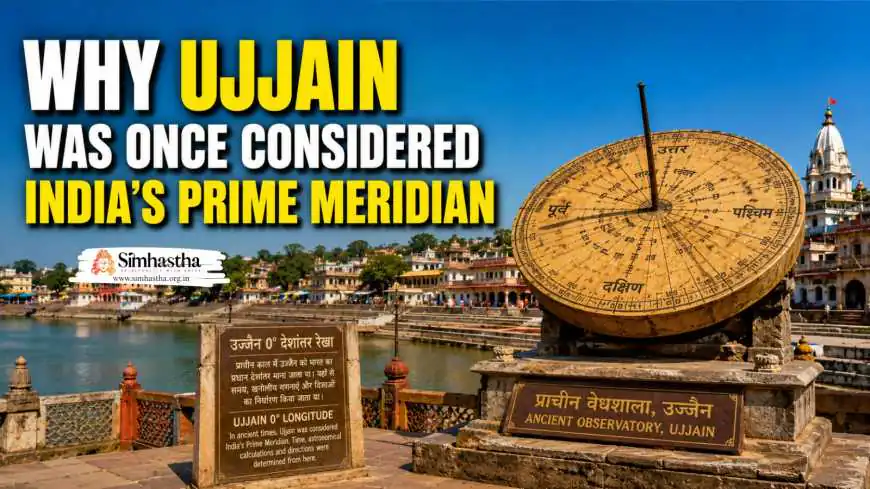
The Vedh Shala (Jantar Mantar) in Ujjain, built by Maharaja Sawai Jai Singh II in 1725, still stands as a testament to Ujjain's astronomical legacy. 🏛️
Key Instruments:
| Instrument | Function |
|---|---|
| Samrat Yantra | Tells time using shadow |
| Nadi Valay Yantra | Determines northern/southern hemisphere |
| Digansha Yantra | Measures altitude and azimuth |
| Bhitti Yantra | Unique to Ujjain—measures zenith distance |
| Shanku Yantra | Calculates length of day |
Why It Still Matters:
The Vedh Shala is the only one of Jai Singh's five observatories still used for active research today. 🔭
The Zero Shadow Day
If you visit Ujjain on June 21—the summer solstice—you can witness a phenomenon unique to locations on the Tropic of Cancer. For one brief minute, around noon, the sun is directly overhead, and "your own shadow will forsake you." ☀️
The Guide's Words:
"12:29 se 12:30 ke beech, ek minute ke liye aap ki khud ki parchhayi aapka saath chhod degi." (Between 12:29 and 12:30, for one minute, your own shadow will forsake you.)
The Dongla Shift:
Due to the gradual shift in the Earth's axial tilt, this phenomenon now occurs about 32 kilometers away at Dongla village. This entire cycle spans nearly 27,500 years—a period of time that our ancient astronomers could never have imagined measuring, and yet they built their observatories to last.
The Greenwich Comparison: India vs. The World 🌍🌐
How Ujjain and Greenwich Compare
| Feature | Ujjain (Madhya Rekha) | Greenwich (Prime Meridian) |
|---|---|---|
| Established | 4th-5th century CE | 1884 CE |
| Location | Ujjain, India | Greenwich, England |
| Latitude | Tropic of Cancer | 51.5° N |
| Purpose | Indian and Asian astronomy | Global timekeeping |
| Text | Surya Siddhanta | International Meridian Conference |
| Legacy | Still referenced in Panchangs | Standard for global time zones |
Why the World Switched
The shift to Greenwich wasn't about accuracy—it was about politics and global connectivity. 🌐
Reasons for the Shift:
-
🌏 Colonial Power: Britain was the dominant global power in the 19th century
-
🗺️ Navigation: British naval power made Greenwich the practical choice
-
📊 International Agreement: The 1884 International Meridian Conference set the standard
But Here's the Thing: Indian Panchangs (Hindu calendars) still use the Ujjain meridian to calculate auspicious timings. The Madhya Rekha never truly disappeared—it just went underground.
The Modern Revival: Ujjain as the "Time Capital" ⏰🌟
Chief Minister Mohan Yadav's Vision
The ancient astronomical glory of Ujjain is being revived in a big way. Chief Minister Mohan Yadav has announced ambitious plans to develop Ujjain as the global "Time Capital" and a modern Science City. 🏛️
Key Initiatives:
-
🌐 Time Capital: Ujjain will be promoted as the global capital of timekeeping
-
🔬 Science City: A ₹15 crore investment is being made for a modern Science City
-
🕰️ Vedic Clock: The Vikramaditya Vedic Clock displays time in traditional Indian units
The Vikramaditya Vedic Clock
Inaugurated by Prime Minister Narendra Modi in February 2024, the Vikramaditya Vedic Clock is a perfect example of how ancient wisdom is being revived. 🕰️
What Makes It Special:
-
🕉️ Traditional Units: Displays time in muhurtas and kaalas
-
📱 Digital Integration: A dedicated mobile app provides Panchang information
-
🌐 Global Reach: Available in nearly 200 languages
The Calendar Connection: Vikram Samvat 📅🌙
The Calendar That Began in Ujjain
Ujjain's connection to time is also seen in the Vikram Samvat—the Hindu calendar era that is still in use today. 📅
What Is Vikram Samvat?
-
📜 Named After: The legendary king Vikramaditya of Ujjain
-
📅 Date: Started around 58–56 BCE
-
🌙 Lunisolar: Based on both moon and sun cycles
-
🕉️ Still in Use: The official calendar in Nepal and used across India
The Connection: The calendar that still guides millions of Hindu festivals began in Ujjain—a city that has always been at the center of Indian timekeeping.
The Bottom Line: A Legacy That Lives On 🌟
So, why was Ujjain once considered India's prime meridian?
The answer is a remarkable story of ancient science, geographic precision, and enduring legacy:
-
The Madhya Rekha: Ujjain was India's prime meridian centuries before Greenwich 🌍
-
The Location: On the Tropic of Cancer, making it perfect for astronomical observation 🗺️
-
The Surya Siddhanta: The foundational text of Indian astronomy, centered on Ujjain 📖
-
The Great Minds: Varahamihira, Brahmagupta, and Bhaskaracharya—all worked here 🧠
-
The Observatory: The Vedh Shala still stands as proof of this legacy 🏛️
-
The Modern Revival: Ujjain is reclaiming its title as the world's "Time Capital" ⏰
Ujjain wasn't just a city on a map—it was the center of the universe for ancient Indian astronomers. And today, as the Vikramaditya Vedic Clock ticks in traditional units, Ujjain is reclaiming its place at the heart of time itself. 🕉️
Frequently Asked Questions








