


















Ujjain Simhastha 5 Day Slow Plan for Seniors
Slow paced five day itinerary for senior citizens at Ujjain Simhastha with minimal walking, assisted snan, and extended rest planning.
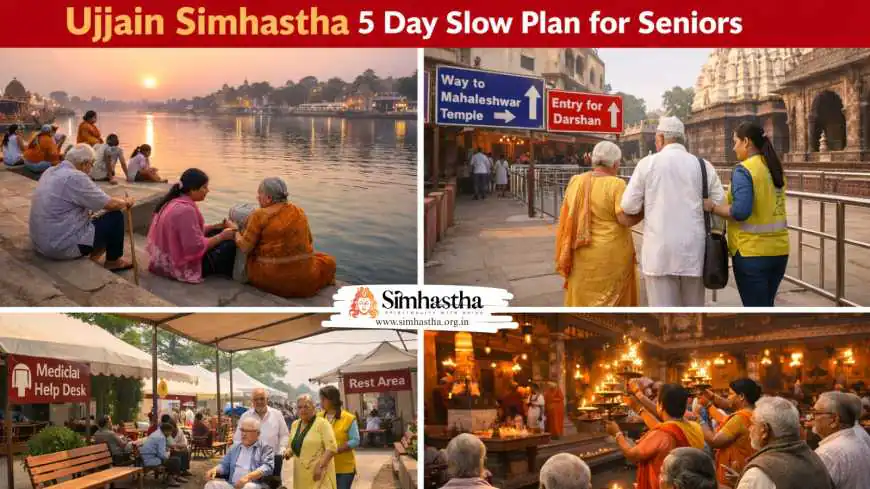


Ujjain Simhastha 5-Day Slow-Paced Itinerary for Seniors
Senior citizens visiting Ujjain Simhastha can complete a peaceful and fulfilling five day pilgrimage by deliberately slowing daily movement, limiting time at the ghats, choosing sunrise access to the Shipra, and prioritizing extended rest after every outing. This slow-paced design ensures sacred participation without strain, allowing elders to conserve energy while still fulfilling essential intentions.
The aim is not to conquer distance.
The aim is to remain comfortable enough to return tomorrow.
For Every pilgrims, understanding Simhastha 2028 dates and the official Shahi Snan timeline is essential before booking flights or accommodation, as these sacred dates are completely non-negotiable.
Trending Guides Now
Ujjain Travel Budget 2026: Complete Cost Breakdown for Pilgrims

Ahmedabad to Ujjain Travel Guide: Fastest Route, Distance, Train & Bus Options

Kota to Ujjain Travel Guide: Routes, Distance and Travel Time

Ujjain Temple Tour by Auto, Taxi or Walking: Best Choice

Ujjain Railway Station to Mahakaleshwar Temple Distance (2026 Guide)

Ujjain Simhastha 2028 Dates Announced: Full Shahi Snan & Event Timeline

Ujjain Simhastha Update: CM Mohan Yadav Reviews 2028 Works

Karkateshwar Mahadev: 22/84 Mahadev of Ujjain
Why Slow Is Smart at Simhastha Kumbh Mela
Crowds are large, pathways long, and sensory load intense. Younger pilgrims recover overnight. Seniors may need structured recuperation.
A slower plan multiplies safety and enjoyment.
The Golden Rule of Senior Pilgrimage
Finish the day with strength still available.
Five Day Emotional and Physical Arc
Day 1 see
Day 2 touch
Day 3 perform
Day 4 understand
Day 5 conclude
Nothing is rushed.
To deepen your understanding of the spiritual customs and sacred rituals practiced during Ujjain Simhastha, read our complete Simhastha rituals and sacred practices guide that explains their meaning, timing, and significance.

Day 1 – Arrival, Orientation, Minimal Effort
Morning
Settle into your stay within the ujjain simhastha area. Keep medicines accessible. Drink water.
Late morning
Make a short supervised visit toward Ram Ghat only to understand direction and distance.
Return early.
Long Rest Window
Lunch and sleep.
Evening
Optional short darshan if energy allows.
Today you plant familiarity.
Success Definition for Day 1
You moved and came back without fatigue.
Packing Wisdom
Carry the least possible weight. Let helpers assist.
irst time Simhastha guide is essential because without contextual understanding, pilgrims arrive prepared for devotion but unprepared for logistics, stamina, patience, and adaptability.
Day 2 – Light River Contact
Pre sunrise
Cooler air means less strain.
Morning
Touch water or take brief assisted immersion.
Immediate return
Do not linger.
Extended Recovery
Hydrate, elevate legs, nap.
Evening
Prayer near accommodation.
Energy preserved is devotion protected.
Accepting Your Pace
Your rhythm is correct because it allows continuity.
Also Read | Best Time to Visit Ujjain Simhastha 2028
Day 3 – Main kumbh bathing ritual
Very early departure
Allow generous time.
Sunrise
Complete sankalp carefully. Use support rails or volunteers.
Immediate withdrawal
Return to rest.
Optional late afternoon
From distant vantage points, you may glimpse ascetics such as the Naga Sadhus.
Emotional Texture of This Day
Relief and gratitude often arrive together.
Day 4 – Reflection Over Movement
Morning
If comfortable, revisit the ghats. Otherwise remain in place.
Midday
Attend discourse or quiet reading.
Long Rest Window
Again, priority.
Meaning deepens without walking.
Also Read | Step-by-Step Guide to Shipra Snan at Ujjain Kumbh Mela
Listening Practice
Your body communicates clearly. Obey early signals.
Day 5 – Gentle Closure
Early morning
Offer final prayer at the Shipra if practical.
Charity
Small offerings carry immense spiritual weight.
Midday
Pack slowly. Leave before fatigue.
Walking Formula
Short route
slow pace
many pauses
early exit
Hydration Reminder
Regular small amounts, never sudden excess.
Support Acceptance
Let volunteers help. Independence is not required.
Photography Tip
Sit securely before posing.
Integrating Temple Visit
If including Mahakaleshwar Jyotirlinga, combine with transport and choose a low-energy day.
Common Errors Seniors Make
Staying longer than planned
refusing assistance
skipping rest
trying to match others
Also Read | Common Simhastha Mistakes Visitors Must Avoid
The Real Victory
Five calm days, no medical crisis, completed devotion.
Day 1: Arrival and Body Adjustment Day
Step 1: Reach accommodation and rest
After travel, seniors should lie down for at least one hour. Drink water or ORS. Avoid going out immediately.
Step 2: Unpack only essentials
Keep medicines, prescriptions, water bottle, light snacks, shawl, and ID in one easy bag.
Step 3: Learn the surroundings
One family member should identify:
-
nearest toilet
-
drinking water
-
help desk
-
medical center
-
police post
-
transport pickup point
Knowing this reduces panic later.
Step 4: Very short evening visit
If energy permits, go to a nearby ghat or temple for 20 to 30 minutes. No long walking.
Step 5: Early dinner
Eat light and sleep early. Proper rest will decide the success of the next four days.
Day 2: Mahakaleshwar Darshan Day
Step 1: Leave early morning
Cool weather, shorter queues, less pushing.
Step 2: Ask for senior support facilities
Police and volunteers often guide elderly people toward easier routes.
Step 3: Carry minimum items
No heavy bags. Keep medicines and water only.
Step 4: Mentally prepare for brief darshan
Movement must continue. Even a few seconds is considered complete.
Step 5: Return and rest
After darshan, come back and relax. Afternoon should be full rest.
Step 6: Optional evening activity
If seniors feel fresh, attend nearby bhajan or sit quietly at the camp. Otherwise skip.
Day 3: Shipra Snan Day
Step 1: Avoid peak bathing hours
Choose a normal day or non royal bath time.
Step 2: Wear simple, non slippery footwear
Steps may be wet.
Step 3: Take help while entering water
Hold railing or family member. No hurry.
Step 4: Keep bath short
Dip, pray, come out. Do not remain long in water.
Step 5: Dry, change, return
Cold and fatigue increase after bathing.
Step 6: Full afternoon rest
Very important for seniors.
Day 4: Nearby Temples and Spiritual Programs
This is a lighter exploration day.
Step 1: Choose only 1 or 2 places
Do not attempt many temples.
Step 2: Use vehicle wherever possible
Even small distance walking can tire seniors.
Step 3: Sit more, walk less
Attend pravachan, bhajan, or simply observe.
Step 4: Hydrate continuously
Small sips every 20 minutes.
Step 5: Return before sunset rush
Evenings become crowded.
Day 5: Buffer Day and Departure Preparation
Step 1: Keep morning free
No commitments.
Step 2: Repeat favorite nearby visit
If seniors liked a ghat or temple, revisit calmly.
Step 3: Packing in stages
Do not rush at last minute.
Step 4: Reach station or bus point early
Crowd movement may slow traffic.
Important Golden Rules for Seniors
-
If tired, stop immediately
-
Skip anything that requires long standing
-
Eat on time
-
Carry emergency contacts
-
Follow official instructions
-
Avoid arguments or shortcuts
-
Rest is part of pilgrimage
What Remains in Memory
Gentle mornings, sacred water, supportive hands.
Related Simhastha 2028 Guides :
- Simhastha 2028 Dates Officially Announced: Full Event & Shahi Snan Timeline
- Top 10 Routes to Enter Ujjain During Simhastha 2028 Without Traffic Hassles
- How to Travel Inside Ujjain During Simhastha 2028: Routes, Maps and Movement Plans
- How to Travel in Ujjain During Peak Snan Days: Do’s & Don’ts for Simhastha 2028
- Solo Travel Guide for Simhastha 2028: Safety, Budget, Stay & Movement Tips
- Mumbai to Ujjain for Simhastha 2028: Fastest Routes & Budget Tips
- Bengaluru to Ujjain for Simhastha 2028: Night Travel vs Day Travel Comparison
- Delhi to Ujjain for Simhastha 2028: Fastest Same-Day Travel Plan for Pilgrims
- Ujjain Simhastha from New York: Best Travel & Stay Guide
- Ujjain Simhastha From London: Complete Travel & Stay Guide
Frequently Asked Questions