












Third Eye Meditation: How to Awaken Intuition and Deep Inner Awareness
Discover how third eye meditation activates intuition, sharpens awareness, and enhances inner clarity through breath, focus, and subtle energy practices.


Introduction — The Gateway to Inner Vision
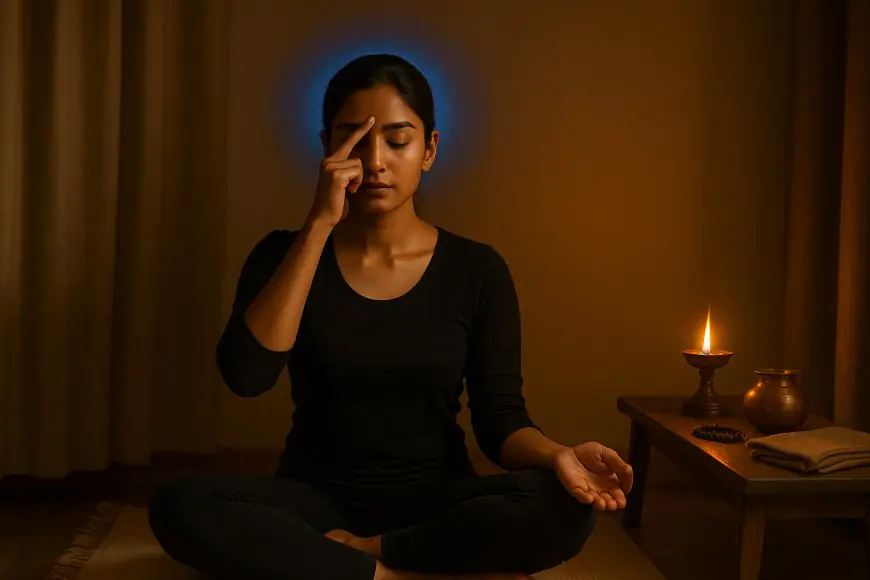
The Third Eye, known in Sanskrit as the Ajna Chakra, is one of the most fascinating and spiritually significant energy centers within the human subtle body. Located between the eyebrows, this chakra governs intuition, clarity, insight, perception, and inner knowing. For centuries, yogic traditions, sages, and meditators have used Third Eye Meditation to access deeper wisdom and heightened awareness.
In modern life—filled with distractions, information overload, and constant noise—this meditation practice offers a pathway back to stillness, intuition, and mental clarity. Third Eye Meditation is not about mystical powers; it is about awakening the deeper intelligence of the mind and discovering a sharper inner vision.
This guide explores how Third Eye Meditation works, how it affects the mind, and how to practice it safely and effectively.
Understanding the Ajna Chakra (Third Eye Center)
The Ajna Chakra is the sixth of the seven primary chakras. The word Ajna translates to “command” or “perception”, symbolizing inner authority and intuitive intelligence.
Trending Guides Now
Kundalini Meditation: A Safe and Simple Guide to Awakening Inner Energy
Gaze Meditation: Improving Concentration Naturally with Candle Flame Trataka
Indian Meditation Traditions: Journey from the Vedas to Modern Day Practices
Chanting Meditation for Beginners: Easy Steps to Start Mantra Chanting

Ujjain Railway Station to Mahakaleshwar Temple Distance (2026 Guide)

Ujjain Simhastha 2028 Dates Announced: Full Shahi Snan & Event Timeline

Ujjain Simhastha Update: CM Mohan Yadav Reviews 2028 Works

Ujjain Railway Station to Kal Bhairav Temple: Distance, Auto Fare and Best Route
Key Attributes of the Third Eye Chakra
-
Location: Between the eyebrows
-
Element: Light
-
Color: Indigo
-
Seed Mantra: OM
-
Qualities: Insight, intuition, imagination, clarity, wisdom
A balanced Ajna Chakra gives you the ability to perceive reality beyond surface-level thoughts. It improves decision-making, emotional maturity, and deeper understanding of life experiences.

Why Third Eye Meditation Matters Today
Third Eye Meditation helps you:
-
develop sharper intuition
-
reduce overthinking
-
improve perception and insight
-
enhance focus and memory
-
feel emotionally balanced
-
connect with your inner guidance
-
experience clarity during difficult decisions
It is especially helpful for:
-
students
-
professionals
-
spiritual practitioners
-
creators
-
anyone seeking deeper mental clarity
The Third Eye is not just mystical—it is deeply psychological. It brings awareness to how you think, react, and understand yourself.
How Third Eye Meditation Works
Third Eye Meditation uses breathing, concentration, visualization, and energy awareness to activate the Ajna Chakra. Here's how it affects your inner system:
1. Focused Attention Activates Neural Pathways
Concentrating on the brow center strengthens the brain’s prefrontal cortex, enhancing clarity and intuition.
2. Visualizing Indigo Light Regulates the Mind
The color indigo is associated with calmness, depth, and insight. Visualization quiets the mental chatter.
3. Chanting “OM” Stimulates Subtle Vibrations
The syllable OM resonates in the skull cavity and stimulates the pineal region, associated with deep awareness.
4. Breath Awareness Sharpens Perception
Slow breathing aligns brainwaves with a meditative state, helping intuition surface naturally.
Signs of a Balanced Third Eye Chakra
You may notice:
-
calm clarity during challenges
-
intuitive decision-making
-
reduced fear and confusion
-
deeper self-understanding
-
enhanced creativity
-
strong concentration
-
inner silence
A healthy third eye doesn’t show dramatic spiritual visions—it simply helps you see yourself and life more clearly.
Signs of an Imbalanced Third Eye
Underactive Ajna Chakra
-
lack of direction
-
confusion
-
overthinking
-
difficulty making decisions
-
low imagination
Overactive Ajna Chakra
-
restlessness
-
excessive daydreaming
-
emotional overwhelm
-
difficulty staying grounded
Third Eye Meditation aims to create balance—not overstimulation.
How to Practice Third Eye Meditation (Step-by-Step)
Below is a simple yet powerful method suitable for beginners and experienced meditators.
Step 1: Sit in a Comfortable Posture
Choose Sukhasana, Vajrasana, Padmasana, or a chair.
Keep the spine straight.
Step 2: Relax Your Face and Forehead
Relax tension around the eyebrows, eyes, and jaw.
This helps energy flow freely.
Step 3: Take Slow Deep Breaths
Inhale for 4 seconds → Hold for 2 → Exhale for 6
Repeat for 6–8 rounds.
Step 4: Bring Attention to the Third Eye
Gently shift awareness to the space between your eyebrows.
Do NOT strain or force.
Step 5: Visualize a Soft Indigo Light
Imagine a small indigo sphere glowing gently.
Let the light expand with each breath.
Step 6: Chant OM Silently or Softly
Feel the vibration rise upward in the head.
Repeat 21 times or more.
Step 7: Observe Thoughts Without Engagement
Let thoughts pass, like clouds in the sky.
Step 8: Sit in Silent Awareness
Spend 2 minutes simply observing inner stillness.
Step 9: Slowly Open Your Eyes
Maintain the clarity you have cultivated internally.
Benefits of Third Eye Meditation
1. Heightened Intuition
Your mind becomes more attuned to subtle insights.
2. Improved Decision-Making
Clear thinking replaces confusion.
3. Emotional Balance
The Ajna Chakra reduces reactive emotional patterns.
4. Increased Self-Awareness
You begin to understand deeper motivations and patterns.
5. Enhanced Focus and Memory
Concentration sharpens noticeably.
6. Greater Imagination and Creativity
Visual thinkers and artists benefit greatly.
7. Spiritual Growth
Awareness expands beyond daily stress and noise.
Precautions for Third Eye Meditation
-
never force visualization
-
avoid intense pressure on the forehead
-
stay grounded after practice
-
avoid unrealistic expectations
-
practice consistently but gently
Remember: Third Eye Meditation is subtle and slow—respect the process.
Conclusion — Opening a Window Into Yourself
Third Eye Meditation is not about supernatural powers.
It is about developing:
-
clarity
-
wisdom
-
introspection
-
intuitive intelligence
-
calm perception
With regular practice, you begin seeing life with deeper understanding—not through stress, fear, or confusion, but through balanced awareness.
The real purpose of the Third Eye is to help you see yourself clearly.
Frequently Asked Questions