


















Chanting Meditation for Beginners: Easy Steps to Start Mantra Chanting
Learn how to start chanting meditation as a beginner. Simple mantras, easy techniques, and step-by-step guidance to calm your mind and deepen your focus.


Introduction — The Easiest Way to Begin Meditation
Meditation often feels intimidating for beginners — sitting silently, trying not to think, trying to “focus.”
But chanting meditation breaks all those barriers.
It is simple.
It is engaging.
And it works for absolutely anyone.
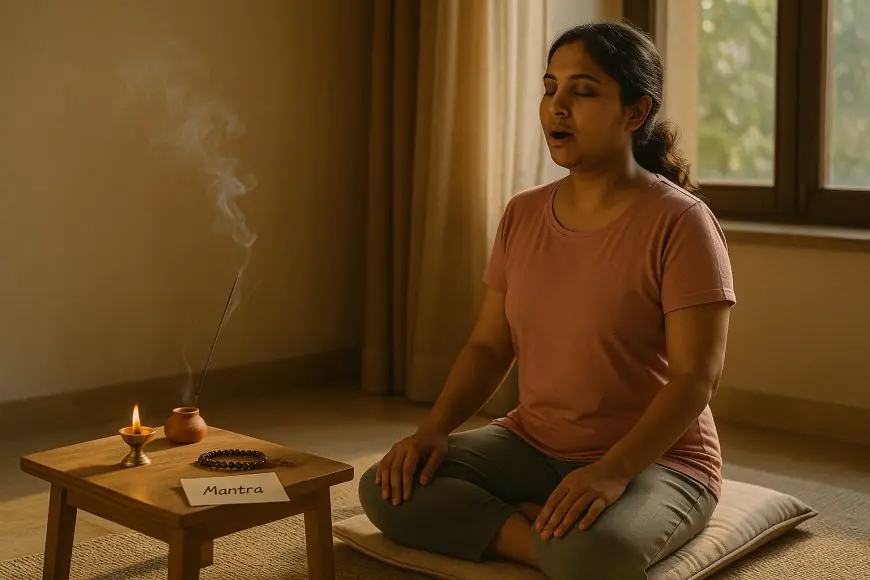
When you chant a mantra, your voice becomes the anchor.
Your breath follows the rhythm.
Your mind naturally relaxes without force.
In this beginner-friendly guide, you’ll learn how chanting meditation works, how to choose your mantra, and how to practice effectively even if you’ve never meditated before.
Trending Guides Now
Using Mala Beads in Meditation Practice: A Complete Beginner’s Guide

Trataka Meditation in Indian Yogic System: Candle Gazing for Concentration and Inner Clarity
Candle Gazing Meditation (Trataka): A Complete Beginner’s Guide to Method and Benefits
Common Mistakes in Breathing Meditation and How to Fix Them

Ujjain Railway Station to Mahakaleshwar Temple Distance (2026 Guide)

Ujjain Simhastha 2028 Dates Announced: Full Shahi Snan & Event Timeline

Ujjain Simhastha Update: CM Mohan Yadav Reviews 2028 Works

Karkateshwar Mahadev: 22/84 Mahadev of Ujjain
What Is Chanting Meditation?
Chanting meditation involves repeating a sound, word, or mantra aloud in a rhythmic manner.
This sound creates:
-
vibration
-
focus
-
emotional release
-
inner calm
-
mindfulness


Unlike silent meditation, chanting keeps both mind and body actively engaged, which is why it is perfect for beginners.
Why Chanting Is Ideal for Beginners
1. Easy to Stay Focused
Your voice creates a clear anchor point.
2. Reduces Mind Wandering
Rhythm interrupts overthinking.
3. Helps Regulate Breath
Chanting naturally slows inhalation and exhalation.
4. Emotional Release Through Sound
Voice expression reduces stored tension.
5. Boosts Positive Vibration
Mantras influence mood and energy.
6. Doesn’t Require Silence
Great for beginners who struggle with quiet mind practices.
The Science Behind Chanting
1. Activates the Vagus Nerve
Chanting’s humming vibrations stimulate the vagus nerve, reducing anxiety and stress.
2. Boosts Alpha Brainwaves
These waves promote calmness and clarity.
3. Synchronizes Breath + Sound
This naturally regulates the nervous system.
4. Reduces Activity in the Default Mode Network
This part of the brain controls wandering thoughts.
5. Releases Endorphins
Chanting promotes emotional well-being and positivity.
How to Start Chanting Meditation (Beginner-Friendly Steps)
Step 1: Choose a Comfortable Posture
You can sit:
-
cross-legged
-
on a cushion
-
on a chair
Keep your spine naturally straight but not rigid.
Step 2: Take 2–3 Deep Breaths
This helps settle the body and mind.
Step 3: Choose a Simple Chant
Beginners should start with short, powerful mantras like:
-
Om
-
Om Shanti
-
So-Ham (audible version: “So” inhale, “Ham” exhale)
-
Om Namah Shivaya
-
Om Ram
-
Om Aim
Choose one mantra per session.
Step 4: Start Chanting Slowly
Repeat the mantra aloud:
-
softly
-
rhythmically
-
without straining the voice
The ideal speed is 1 chant every 2–3 seconds.
Step 5: Let Breath Follow the Chant
Do not control your breath.
Simply allow your breathing to flow naturally with the mantra.
Step 6: Maintain Consistency
Chant for 5 minutes initially, then build up to:
-
10 minutes
-
15 minutes
-
or more based on comfort
Step 7: Transition Into Silence
At the end of your chanting session:
-
Stop chanting
-
Close your eyes
-
Sit silently for 1–2 minutes
This is where the energy settles and the mind deepens.
Best Mantras for Beginners
1. “Om”
The universal sound.
Simple yet powerful.
2. “Om Shanti”
Ideal for peace and emotional calmness.
3. “Om Namah Shivaya”
A grounding mantra that strengthens inner stability.
4. “So-Ham”
A natural breath-mantra combination.
5. “Om Ram”
Boosts focus and personal strength.
6. “Om Aim”
Enhances learning, creativity, and clarity.
These mantras are easy to pronounce and ideal for first-timers.
Different Styles of Chanting Meditation
1. Slow Chanting (Best for Calmness)
Prolonged chanting of vowels and vibrations.
2. Fast Rhythmic Chanting (Best for Energy)
Used in kirtan and dynamic meditation sessions.
3. Whisper Chanting
Soft, almost silent chanting that helps reduce stress.
4. Group Chanting
Powerful sound resonance improves mood and collective energy.
5. Call-and-Response Chanting
Used in spiritual gatherings; highly uplifting.
Breathing Tips for Chanting Meditation
-
Keep breath natural
-
Avoid chanting too loudly
-
Maintain a gentle rhythmic pace
-
Allow longer exhalation — helps emotional release
-
Do not force breath to match the mantra
Hand Positions for Chanting Meditation
✔ Gyan Mudra
Enhances focus.
✔ Anjali Mudra (Namaste)
Promotes devotion and inner balance.
✔ Chin Mudra
Deepens awareness.
Benefits of Chanting Meditation
1. Better Focus & Clarity
Chanting interrupts mental noise.
2. Emotional Balance
Reduces anxiety, frustration, and negative self-talk.
3. Enhanced Positivity
Mantras uplift mental and emotional frequency.
4. Improved Breath Awareness
Chanting connects sound and breath naturally.
5. Physical Relaxation
Facial muscles, jaw, and shoulders soften.
6. Spiritual Connection
Chanting allows beginners to experience deeper awareness easily.
Common Difficulties for Beginners & How to Fix Them
❌ Voice feels strained
Fix: Lower volume, soften throat, slow down.
❌ Mind wanders frequently
Fix: Return gently to sound each time.
❌ Difficulty pronouncing Sanskrit mantras
Fix: Choose simpler mantras like “Om” or “Shanti.”
❌ Running out of breath
Fix: Chant slower; don’t force pace.
❌ Feeling self-conscious
Fix: Practice in a private, quiet space.
How Long Should Beginners Chant?
Start with:
-
5 minutes per session
Then move to: -
10–12 minutes
Once comfortable, target:
-
15–20 minutes daily
Consistency matters more than duration.
Best Time to Practice Chanting Meditation
✔ Early Morning (Most Effective)
Fresh mind, high clarity.
✔ Evening Wind-Down
Perfect for removing stress.
✔ Before Study or Work
Improves focus.
✔ During Emotional Overwhelm
Chanting instantly regulates emotions.
Conclusion — Let Your Voice Become Meditation
Chanting meditation is one of the simplest ways to enter the world of mindfulness.
You don’t need silence.
You don’t need perfect concentration.
You don’t need years of practice.
Just your breath.
Your voice.
And a mantra.
With regular practice, chanting becomes a powerful tool that transforms mental clutter into clarity, stress into peace, and distraction into grounded presence.
Frequently Asked Questions