


















Open vs Focused Attention Meditation – Discover Which Practice Trains Your Mind Best
Compare open and focused attention meditation techniques. Learn differences, benefits, and how to choose the right style for deeper mindfulness.



Introduction — Two Paths to One Still Mind
Every meditator eventually faces a choice: should I concentrate on one thing or observe everything? These two methods—Focused Attention and Open Awareness Meditation—seem opposite, yet they complete each other. The first trains precision; the second cultivates spaciousness. Together they shape the balanced mind that ancient yogic and Buddhist traditions call Samyama—unified awareness.
What Is Focused Attention Meditation?
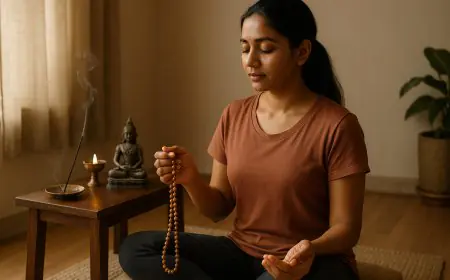
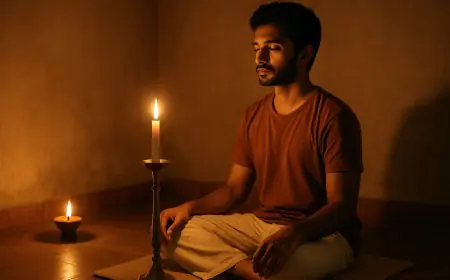
Focused Attention (Ekagrata Dhyana) means placing the mind on a single object—a breath, mantra, flame, or visual point—and returning to it whenever distraction appears.
How to Practice:
-
Sit comfortably with straight spine.
Trending Guides Now
Kundalini Meditation: A Safe and Simple Guide to Awakening Inner Energy
Gaze Meditation: Improving Concentration Naturally with Candle Flame Trataka

Indian Meditation Traditions: Journey from the Vedas to Modern Day Practices

Chanting Meditation for Beginners: Easy Steps to Start Mantra Chanting

Ujjain Railway Station to Mahakaleshwar Temple Distance (2026 Guide)

Ujjain Simhastha 2028 Dates Announced: Full Shahi Snan & Event Timeline

Ujjain Simhastha Update: CM Mohan Yadav Reviews 2028 Works

Karkateshwar Mahadev: 22/84 Mahadev of Ujjain
-
Choose one focus point—breath, candle, or sound.
-
Observe it with gentle steadiness.
-
When the mind wanders, simply return.
Benefits:
-
Strengthens concentration and mental stamina.
-
Calms restlessness and anxiety.

-
Sharpens awareness for study or work.
-
Builds discipline and self-control.

What Is Open Attention Meditation?
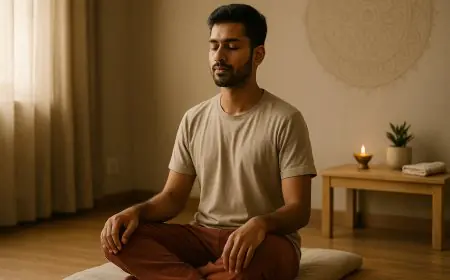
Open Attention (Vipasana or Open Monitoring) invites you to observe whatever arises—sounds, sensations, thoughts—without reacting or labeling. There is no fixed anchor; awareness itself is the object.
How to Practice:
-
Sit relaxed with soft gaze.
-
Let sensations and thoughts appear naturally.
-
Notice them come and go without judgment.
-
Rest as the witness of experience.
Benefits:
-
Develops mindfulness and acceptance.
-
Enhances creativity and insight.
-
Dissolves identification with thoughts.
-
Builds emotional intelligence and compassion.
Scientific Perspective
Neuroscientific research reveals distinct brain patterns for both:
-
Focused Attention activates the prefrontal cortex—regions linked to sustained concentration.
-
Open Monitoring activates the insula and anterior cingulate—centers of awareness and empathy.
Practicing both strengthens neural balance between focus and openness, making the mind simultaneously sharp and calm.
Key Differences at a Glance
| Feature | Focused Attention Meditation | Open Awareness Meditation |
|---|---|---|
| Primary Object | One specific anchor (breath, mantra) | None – awareness of everything |
| Purpose | Concentration and mental stability | Mindfulness and clarity |
| Method | Redirect mind to object each time | Observe whatever arises |
| Best for | Beginners, restless minds | Intermediate seekers, creative minds |
| Outcome | Single-pointed focus | Spacious equanimity |
Which One Should You Choose?
If your mind feels scattered, start with Focused Attention. It disciplines awareness like a lens focusing light. Once stability grows, shift to Open Attention—it expands consciousness like removing the frame from a window.
Ideally, combine both: focus to enter meditation, openness to sustain it. Yogic texts describe this balance as Dharana (focus) leading to Dhyana (absorption).
Practical Routine for Both Techniques
-
Morning: 10 minutes Focused Attention on breath.
-
Evening: 10 minutes Open Awareness observation.
-
End each session with gratitude and slow breath.
This rhythm trains the mind to move gracefully between stillness and surrender.
Common Mistakes to Avoid
-
Forcing attention or breath.
-
Judging wandering thoughts.
-
Trying to “empty” the mind.
-
Switching techniques too often.
-
Using meditation as performance.
Meditation is not a competition; it’s a conversation with your own consciousness.
Spiritual Insight — The Two Wings of Awareness
In Indian and Buddhist scripture, Focused and Open Attention are described as two wings of a bird. Concentration lifts you; mindfulness keeps you balanced. Without both, spiritual flight is impossible.
Focused Attention refines vision — it lets you see clearly.
Open Awareness reveals vastness — it lets you see completely.
The moment both merge, awareness becomes pure presence.
Benefits of Integrating Both
-
Enhanced focus and mindfulness.
-
Emotional stability and resilience.
-
Improved decision making.
-
Deepened self-understanding.
-
Balanced energy and compassion.
Conclusion — Focus to Enter, Open to Stay
So which is better? Neither alone. Focus brings you to the door; openness keeps you there. Train with focus until awareness becomes steady, then relax into openness until awareness becomes boundless.
In this dance between the two, you discover that the real goal of meditation is not to control the mind, but to know it.
Frequently Asked Questions