



























Ram Ghat Complete Visitor Guide for First-Time Pilgrims
Complete Ram Ghat visitor guide for first-time pilgrims—from evening aarti timings to holy dip rituals, Simhastha 2028, and nearby attractions. Plan your Ujjain trip now.


Ram Ghat Complete Visitor Guide for First-Time Pilgrims
So, you're planning your first pilgrimage to Ujjain. You've heard about the Mahakaleshwar Temple, the Bhasma Aarti, and the divine energy of this ancient city. But here's something that many first-timers miss—and I'm here to make sure you don't: a visit to Ram Ghat is not optional; it is essential. 🌊🙏
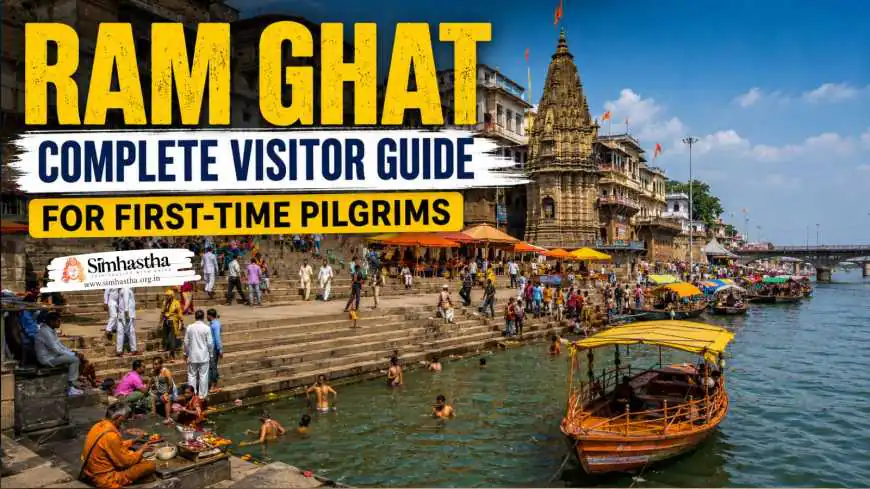
Ram Ghat is the most prominent, most visited, and spiritually most significant bathing ghat on the sacred Shipra River (Kshipra) in the ancient city of Ujjain, Madhya Pradesh. Located conveniently close to the world-famous Mahakaleshwar Jyotirlinga Temple, Ram Ghat serves as the epicenter of all riverine rituals, ceremonies, and spiritual activities in the city.
Whether you come for the holy dip, the mesmerising evening aarti, or simply to sit by the river and absorb the divine energy, this guide will walk you through everything you need to know as a first-time pilgrim. Let's dive in! 🌊🙏
🏛️ Why is it Called Ram Ghat? The Sacred Origin
The ghat derives its name from Lord Rama, the seventh avatar of Lord Vishnu and the hero of the epic Ramayana.
Trending Guides Now
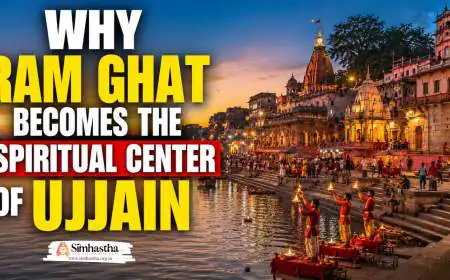
Why Ram Ghat Becomes the Spiritual Center of Ujjain
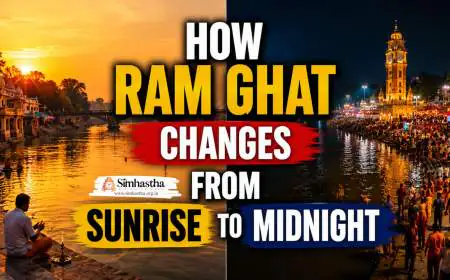
How Ram Ghat Changes From Sunrise to Midnight

Ujjain Railway Station to Mahakaleshwar Temple Distance (2026 Guide)

Ujjain Simhastha 2028 Dates Announced: Full Shahi Snan & Event Timeline

Benefits of Becoming a Simhastha Volunteer

Ujjain Travel During Shravan Month: What Changes for Visitors

Mahakaleshwar Temple Entry Rules 2026: Dress Code, Mobile & Bag Policy

Bhasma Aarti at Mahakaleshwar Temple – Complete Pilgrim Guide
According to ancient legends and local tradition, Lord Rama, along with his wife Sita Mata and brother Lakshmana, visited Ujjain (then known as Avantika) during their 14-year exile (Vanvas).
God Rama himself performed his father's last rites after his death at Ujjain, and therefore the place where the ritual took place is called 'Ram Ghat'.
During their stay, Lord Rama bathed at this very ghat to purify himself before proceeding to offer prayers at the Mahakaleshwar Temple.
Since that divine visit, the ghat has been revered as Ram Ghat—the sacred steps where the King of Ayodhya himself touched the holy waters of the Shipra.
It is also believed that Lord Rama consecrated the Rameshwar Shivlinga located here after performing the rituals at the Kshipra Ghat.
The ghat is also referred to as Sri Ram Ghat and is one of the most ancient bathing ghats in Indian history.

🪔 The Grand Evening Aarti – Kshipra Pushkar Aarti
The most spectacular experience at Ram Ghat is the daily evening Kshipra Pushkar Aarti (also known as the Shipra Aarti).
What Time is the Aarti?
The aarti is performed every day after sunset, typically between 6:00 PM and 7:00 PM depending on the season.
| Season | Aarti Time |
|---|---|
| Summer (April-June) | Around 6:30 PM |
| Winter (October-March) | Around 6:00 PM |
| Monsoon (July-September) | Around 6:30 – 7:00 PM |
The timings vary slightly because the aarti is always performed at sunset.
What Happens During the Aarti?
The ceremony is a breathtaking spectacle of devotion.
Multiple priests stand on a raised platform, holding large, multi-tiered brass lamps (deep) filled with burning camphor and ghee.
Synchronized to the rhythm of powerful Vedic chants, temple bells, conch shells, and the soul-stirring "Om Jai Gange" and "Har Har Gange" chants, the priests wave the lamps in graceful, circular motions, illuminating the darkening river.
Hundreds—sometimes thousands—of devotees gather on the ghat steps, singing along, clapping, and releasing floating diyas (small lamps) into the Shipra River.
The Magic of the Experience
The reflection of countless flickering lamps on the water's surface, with the silhouette of Ujjain's temple spires in the background, creates an unforgettable, goosebump-inducing spiritual atmosphere.
As the sun begins to retreat making way for darker skies, the character of the ghat transitions from calm to energetic.
The energy builds up and remains constant through the ringing of the bells, clanging of the cymbals, and beating of the damru.
The high-energy ritual lasts an hour or so.
💡 Pro tip: Reach 20–30 minutes early to get a good view of the aarti.
🌊 Ram Ghat During Simhastha Kumbh Mela 2028
If you are visiting during the Simhastha Kumbh Mela (next scheduled for 2028) , Ram Ghat transforms into the busiest and most important bathing spot on the entire Shipra River.
The Shahi Snan (Royal Bath)
On the Shahi Snan (royal bath) dates—which are determined by precise planetary alignments when Jupiter enters Leo (Simha Rashi)—millions of sadhus, saints, and pilgrims converge on Ram Ghat to take the holy dip.
The 'Shahi Bath' of Simhastha takes place on this Ram Ghat.
The Akhara Processions
Different akharas (monastic orders) such as the Juna Akhara, Niranjani Akhara, and Mahanirvani Akhara have designated bathing slots at Ram Ghat.
The sight of Naga Sadhus (naked, ash-smeared ascetics) leading the processions, riding chariots, elephants, and horses, and then charging into the Shipra River with thunderous cries of "Har Har Mahadev" is a once-in-a-lifetime visual spectacle.
The Spiritual Significance
Ram Ghat is one of the four locations where the Kumbh Mela takes place every 12 years.
It is believed that during the churning of the ocean (Samudra Manthan), a few drops of nectar (Amrit) fell into a sacred pond near the Kshipra River, enhancing the spiritual significance of the river and the Ram Ghat area.
🌅 Morning Rituals at Ram Ghat
While the evening aarti is the most famous attraction, the morning hours at Ram Ghat are equally special—and much quieter.
The Holy Dip (Snan)
Devotees begin arriving at the ghat as early as 4:00 AM to 5:00 AM to take a holy dip (snana) in the Shipra River.
The belief is that bathing in the sacred Shipra River, especially at Ram Ghat, washes away sins and helps attain salvation (moksha).
Rituals and Pind Daan
Throughout the morning, you will see priests performing rituals, offering prayers to the rising sun (Surya), and conducting tarpan (offering water to ancestors) for departed souls.
Family members perform pind daan (offering of rice balls) at this sacred spot for the spiritual upliftment of their departed ancestors.
The Peaceful Atmosphere
Unlike the chaotic energy of the evening aarti, the mornings are serene, calm, and meditative. The sound of temple bells from nearby shrines, the gentle flow of the river, and the soft chants of mantras create a perfect setting for introspection and prayer.
💡 Pro tip: If you want a peaceful experience without crowds, visit Ram Ghat between 5:30 AM and 7:30 AM.
🏛️ Nearby Temples and Attractions
Ram Ghat is surrounded by several important temples and spiritual sites that you can visit within a short walking distance.
Rameshwar Mahadev Temple
Located right on the ghat, this small but powerful temple houses the Shivalinga consecrated by Lord Rama himself.
Gopal Mandir
A beautiful temple dedicated to Lord Krishna, located about 1.5 km from Ram Ghat in the heart of Ujjain. It was built by the Maratha queen, Ahilyabai Holkar of Indore.
Mahakaleshwar Temple
The most famous temple in Ujjain and one of the 12 Jyotirlingas—just a 5 to 10 minute walk from Ram Ghat. Most pilgrims visit Ram Ghat immediately before or after their Mahakal darshan.
Harsiddhi Temple
A famous Shakti Peetha dedicated to Goddess Harsiddhi, located just 5 minutes from Ram Ghat. It is known for its two Deep Stambhas (lamp towers) that are lit every evening.
Ganga Ghat (Mounteerth Ghat)
A 15-minute walk south of Ram Ghat. It houses the 108-year Mahamrityunjaya Mahayagya and the Mon Tirth Peeth.
Narsingh Ghat
A 10-minute walk away, known for its peaceful atmosphere and the Narsingh Temple dedicated to the man-lion incarnation of Lord Vishnu.
Harsiddhi Temple
One of the 51 Shakti Peethas, located a short distance from Ram Ghat.
84 Mahadev Temples
Ujjain is home to 84 Mahadev temples, many located in the vicinity of Ram Ghat. The Nagchandeshwar Mahadev Temple in Patni Bazaar is the most famous—though it is open only once a year on Nag Panchami.
📅 Best Time to Visit Ram Ghat
| Time of Day | Experience |
|---|---|
| 5:30 AM – 8:00 AM | Peaceful, holy dip, sunrise views |
| 9:00 AM – 4:00 PM | Moderate crowd, sightseeing |
| 5:30 PM onwards | Evening aarti, bustling, spiritual |
| Sunset (6:00-7:00 PM) | The grand Kshipra Pushkar Aarti |
Weather Considerations
| Season | Months | Weather | Tips |
|---|---|---|---|
| Winter | October – March | Pleasant, cool | Best time |
| Summer | April – June | Very hot | Avoid midday |
| Monsoon | July – September | Humid, rainy | Carry umbrella |
| Shravan | July – August | Peak rush | Thousands visit |
💡 Pro tip: The best time to visit Ram Ghat is October to March, when the weather is pleasant and the evenings are perfect for the aarti.
Festival Season
| Festival | Period | What Happens |
|---|---|---|
| Shravan (Sawan) | July – August | Daily crowds, special rituals |
| Navratri | March-April & Sept-Oct | Extra aartis, Deep Stambh lighting |
| Mahashivratri | February-March | Night-long celebrations |
| Simhastha | 2028 (12-year cycle) | Millions gather for Shahi Snan |
📸 Photography Tips at Ram Ghat
| Photo Opportunity | Best Time | Settings |
|---|---|---|
| Aarti with floating diyas | Evening | Low light, ISO 400-800 |
| Sunrise over Shipra | 5:30-6:30 AM | Golden hour, silhouettes |
| Devotees performing rituals | Early morning | Natural light |
| Priests at the ghat steps | Any time | Candid street style |
| Aarti flame close-ups | Evening | Fast shutter, high ISO |
| Full ghat wide-angle | Sunset or sunrise | Wide lens, low aperture |
Rules:
-
Do not fly drones near ghats
-
Be respectful during rituals—ask before taking close-ups
-
No flash during aarti
🚗 How to Reach Ram Ghat
From Indore (Nearest City)
| Mode | Distance | Time | Cost |
|---|---|---|---|
| Taxi/Cab | 55 km | 1–1.5 hours | ₹1,500–2,500 |
| Bus | 55 km | 1.5–2 hours | ₹108–129 |
| Train | 55 km | 1.5–2 hours | ₹50–150 |
From Ujjain Railway Station
| Mode | Distance | Time | Cost |
|---|---|---|---|
| Auto-rickshaw | 3–4 km | 10–15 min | ₹50–100 |
| E-rickshaw | 3–4 km | 10–15 min | ₹20–40 |
| Walking | 3–4 km | 30–40 min | Free |
From Mahakaleshwar Temple
| Mode | Distance | Time | Cost |
|---|---|---|---|
| Walking | 800 m | 10 min | Free |
| Auto-rickshaw | 1 km | 5 min | ₹20–30 |
From Ujjain Bus Stand
| Mode | Distance | Time | Cost |
|---|---|---|---|
| Auto-rickshaw | 3 km | 10–15 min | ₹50–80 |
💡 Pro tip: If you're staying near Mahakal Temple, Ram Ghat is within walking distance. Avoid taking autos during peak hours as the roads get congested.
Parking at Ram Ghat
Designated parking is available near the ghat area, but during peak festival seasons (Shravan, Navratri, Simhastha), parking becomes scarce and auto-rickshaw access to the ghat may be restricted.
💡 Essential Tips for First-Time Pilgrims
What to Wear
-
Men: Dhoti or traditional kurta. Avoid shorts and sleeveless vests.
-
Women: Saree, salwar kameez, or long skirt. Avoid revealing clothing.
-
Remove footwear before entering temple or the ghat platform if asked.
What to Carry
-
Water bottle—It can get hot, especially in summer
-
Camera/Phone—For photos, but be respectful
-
Cash—For offerings, prasad, and small donations
-
Hand Sanitizer—Handy after the aarti
General Etiquette
-
No smoking or alcohol near the ghat
-
Do not push during the aarti—it gets crowded
-
Keep the ghat clean—dispose of flower offerings thoughtfully
-
Avoid photography during the main aarti ritual out of respect
Safety Tips
-
Keep your phone and wallet secure—pickpocketing can happen in large crowds
-
Stay hydrated, especially if visiting during summer
-
Avoid walking on wet steps—they can be slippery
-
Bring a torch or use phone light—the ghat steps are dark after sunset
-
If visiting with family, designate a meeting point in case anyone gets separated
🛕 Ram Ghat: A Place of Eternal Devotion
Ram Ghat is not just a physical location; it is a spiritual experience that stays with you long after you leave. It is the heartbeat of Ujjain's riverine culture, the stage for its most spectacular rituals, and the gateway to the sacred Shipra River.
First-time pilgrims often arrive expecting just another ghat. They leave with memories of floating diyas, powerful chants, and a sense of peace that only the Shipra can offer.
Ram Ghat is more than a destination—it is a spiritual journey.
Plan your visit. Experience the divine. And let the sacred waters of the Shipra bless your soul. 🙏🌊🕉️
Har Har Mahadev!
Frequently Asked Questions