


















Zen Meditation (Zazen): Japanese Path to Stillness and Inner Clarity
Discover the traditional Japanese practice of Zen Meditation (Zazen) to cultivate mental stillness, deep awareness, emotional clarity and inner peace through posture, breath and observation.


Zen Meditation (Zazen): Japanese Path to Stillness
Zazen, the core of Zen Buddhism, is one of the most influential and disciplined meditation techniques in the world. Unlike relaxation-based meditation, Zazen is a practice of pure stillness. It trains the mind not to chase thoughts, not to escape from emotions and not to modify experience — but to sit completely awake in the present moment.
The word “Zen” comes from the Japanese pronunciation of the Chinese word “Chan,” which itself came from the Sanskrit word “Dhyana,” meaning meditative absorption.
While many meditation styles encourage comfort and imagination, Zen meditation teaches something radically different:
Sit down, stop running, and meet life exactly as it is.
Trending Guides Now
Using Mala Beads in Meditation Practice: A Complete Beginner’s Guide

Trataka Meditation in Indian Yogic System: Candle Gazing for Concentration and Inner Clarity
Observing Thoughts Meditation: The Ultimate Method to Detach From the Mind

Third Eye Meditation: How to Awaken Intuition and Deep Inner Awareness

Ujjain Railway Station to Mahakaleshwar Temple Distance (2026 Guide)

Ujjain Simhastha 2028 Dates Announced: Full Shahi Snan & Event Timeline

Ujjain Simhastha Update: CM Mohan Yadav Reviews 2028 Works

Ujjain Railway Station to Kal Bhairav Temple: Distance, Auto Fare and Best Route
The Philosophy of Zen
Zen does not try to change the mind.
Zen exposes the mind to itself.
In daily life, thoughts, emotions, memories and expectations constantly pull the mind in every direction. For most people, attention is always moving outward — toward noise, cravings, fears and unfinished tasks. Zen reverses this direction. It brings the mind back to its original stillness.
The silence is not created — it is revealed.
Why Zazen Works
Zazen is built on three unwavering pillars:
-
Posture – body absolutely stable
-
Breathing – natural, subtle, effortless

-
Awareness – observing thoughts without engagement

When posture stabilizes, breath settles.
When breath settles, mind becomes spacious.
When mind becomes spacious, suffering loses power.
Zazen does not aim to control thoughts — it aims to stop being controlled by thoughts.
Two Approaches to Zazen
There are two traditional styles within Zen practice:
| Style | Focus | Outcome |
|---|---|---|
| Shikantaza | “Just sitting” with total awareness | Natural stillness and insight |
| Koan Zazen | Observing paradoxical questions or phrases | Direct breakthrough into clarity |
Both styles lead to the same outcome: awareness without analysis.
The Zazen Sitting Posture
Posture is central to Zen.
It represents dignity, inner strength, alertness and honesty.
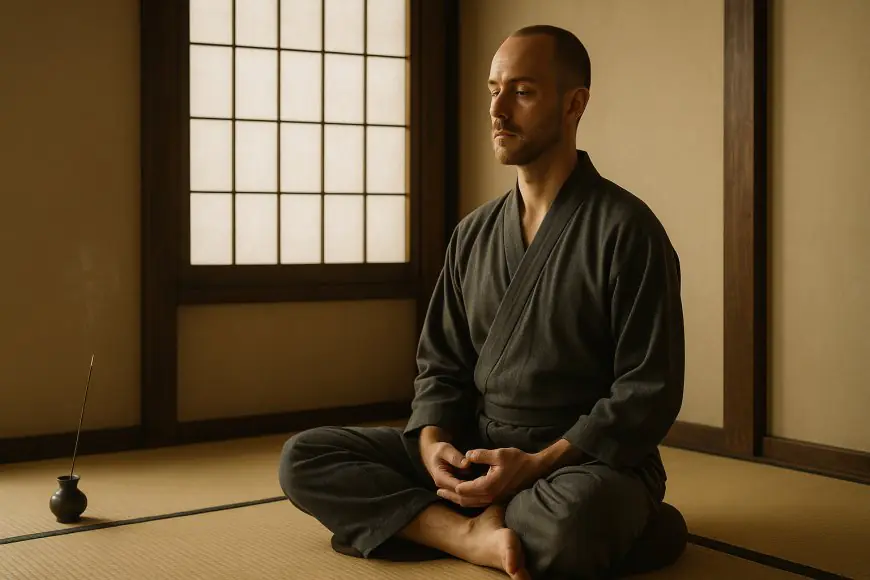
Correct Zazen posture includes:
-
Sitting on a cushion (zafu)
-
Hips slightly raised
-
Spine tall and natural
-
Chin slightly tucked
-
Eyes half-open and unfocused
-
Hands forming the cosmic mudra in the lap
This posture keeps the meditator awake — not sleepy and not tense.
The Role of Breath in Zen Meditation
Breathing in Zazen is not manipulated. It is simply noticed.
-
Natural inhalation
-
Natural exhalation
Thoughts may continue. Emotions may arise. Sensations may appear. The practitioner gently returns to breath and posture again and again — not with force, but with patience.
This repeated returning strengthens the mental muscle of awareness.
The Experience of Stillness
Stillness in Zen is not the absence of sound or thought.
It is the absence of reaction.
A noise happens — but the mind does not chase it.
A thought appears — but the mind does not follow it.
An emotion rises — but the mind does not drown in it.
In the middle of movement, awareness remains unmoving.
That is Zen.
Psychological Benefits of Zazen
With consistent practice:
-
Emotional balance increases
-
Impulse reactions decrease
-
Overthinking slows down
-
Sleep becomes deeper
-
Focus sharpens
-
Stress tolerance rises
-
Compassion grows
Zazen does not offer temporary calm — it reshapes how the mind functions.
How Zazen Differs from Vipassana & Yoga Meditation
| Technique | Goal | Method |
|---|---|---|
| Yoga Meditation | Relaxation & energy | Breath + mantra |
| Vipassana | Insight into impermanence | Observation of sensations |
| Zazen | Stillness and presence | Sitting in alert awareness |
Zazen is meditation without performance.
Common Challenges
Beginners often experience:
-
Restlessness
-
Sleepiness
-
Boredom
-
Racing thoughts
-
Physical discomfort
These are part of the purification process.
With time, posture strengthens and mind adapts.
Final Thought
Zazen does not promise miracles.
It offers something much more important: the ability to live from clarity instead of confusion.
Life becomes peaceful not when the world changes — but when the inner observer becomes silent, sharp and unshakeable.
Zen is not something you understand intellectually.
Zen is something you become.
Frequently Asked Questions