

















Ujjain Simhastha 2028 Booking And Total Cost Guide
Complete Simhastha 2028 booking and cost guide covering hotel prices, tent city rates, travel expenses, peak vs non-peak pricing, refund policies, and total 3 to 7 day budget planning for Ujjain pilgrims.



Simhastha 2028 Booking & Cost Guide: Hotels, Tent City, Travel & Budget
Planning for Ujjain Simhastha 2028 requires more than securing a hotel room. It demands a complete financial and booking strategy.
It involves structured planning across accommodation, tent city zones, dharamshalas, train travel, flight travel, local transfers, and travel insurance.
You must also evaluate refund policies, monitor peak Shahi Snan price fluctuations, and understand how ritual dates directly influence demand.
During Simhastha 2028, pricing follows a predictable surge pattern driven by limited room inventory and compressed travel windows.
Trending Guides Now

Ujjain Temple Photography Rules Every Visitor Should Know

Ujjain Simhastha 5 Day Itinerary for Couples
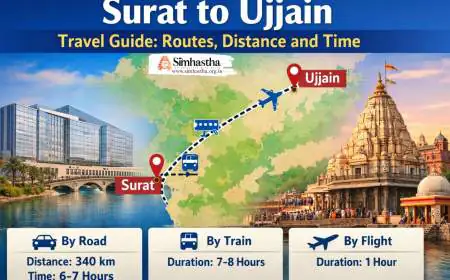
Surat to Ujjain Travel Guide: Routes, Distance and Time

2 Days Ujjain Itinerary: Complete Temple Darshan Plan

Ujjain Railway Station to Mahakaleshwar Temple Distance (2026 Guide)

Ujjain Simhastha 2028 Dates Announced: Full Shahi Snan & Event Timeline

Ujjain Simhastha Update: CM Mohan Yadav Reviews 2028 Works

Karkateshwar Mahadev: 22/84 Mahadev of Ujjain
Booking 6 to 9 months in advance typically provides better availability, safer refundable options, and more stable pricing.
In contrast, last-minute reservations can increase total trip costs by 40 to 100 percent.
The official dates announced for Ujjain Simhastha 2028 clearly define the start, peak bathing period, and closing timeline of the event, helping pilgrims align their visit with important ritual days.
Core zones near Ram Ghat and Mahakal Corridor experience the highest rate volatility.
Meanwhile, mid-distance sectors often offer a stronger cost-to-comfort balance.
Beyond stay expenses, travelers must calculate transport surge pricing, shuttle dependency, insurance coverage, and maintain proper contingency reserves.

Cost also varies significantly between peak and non-peak periods, especially across multi-day stays.
A structured financial plan that models 3-day, 5-day, and 7-day budgets prevents overspending during high-density event days.
This comprehensive booking and total cost guide helps visitors secure verified reservations, manage price inflation, and optimize overall travel expenditure for Simhastha 2028 in Ujjain.
If you are attending Ujjain Simhastha for the first time, this complete Simhastha Kumbh Mela first-time visitors guide will help you understand crowds, rituals, walking routes, and physical preparation before you arrive.
How Much Does Ujjain Simhastha 2028 Cost?
The total Ujjain Simhastha 2028 budget depends on travel mode, accommodation type, peak date selection, and stay duration.
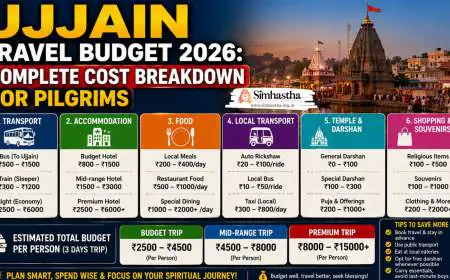
For a basic 3-day visit, the minimum budget for Ujjain Simhastha 2028 can start from ₹7,000–₹10,000 if planned during non-peak days using budget dharamshala or shared accommodation.
A mid-range 5-day stay may require a Simhastha 2028 total budget between ₹20,000–₹40,000 depending on hotel zone and transport class.
Premium short peak visits can push Ujjain Simhastha 2028 costing beyond ₹50,000–₹1,00,000.
Understanding your Ujjain Simhastha 2028 travel budget early allows better booking decisions and avoids peak surge overpayment.
Also Read | First-Time Visiting Ujjain Simhastha: 7 Things Nobody Tells You
Step-by-Step Guide to Plan and Book Your Ujjain Simhastha 2028 Trip
Attending Ujjain Simhastha 2028 requires coordinated planning across travel, accommodation, budget, and ritual timing. The following step-by-step framework helps pilgrims structure their Simhastha 2028 booking and cost planning efficiently.
Step 1: Confirm the Official Simhastha 2028 Dates
The first step in Ujjain Simhastha 2028 trip planning is verifying the official event calendar and identifying the Shahi Snan bathing dates.
These ritual dates determine:
Peak crowd levels
Hotel and tent city pricing
Transport availability
Entry route restrictions
Once you know the ritual schedule, you can align your travel window accordingly.
Step 2: Decide Your Stay Duration
The next step is defining how many days you will stay during Ujjain Simhastha 2028.
Typical stay patterns include:
3-day visit for ritual participation
5-day visit for balanced travel and observation
7-day visit for cultural exploration and multiple rituals
Your duration directly affects the Simhastha 2028 travel budget and accommodation cost.
Step 3: Choose the Right Accommodation Type
Pilgrims visiting Ujjain Simhastha 2028 usually choose between four main stay options:
Hotels near Mahakal Corridor or Ram Ghat
Government tent city zones
Traditional dharamshalas
Peripheral hotels in nearby sectors
Core zones offer walking access to rituals but higher prices, while mid-distance sectors provide better cost-to-comfort balance.
Selecting accommodation early is one of the most important decisions in Simhastha 2028 booking strategy.
Step 4: Book Accommodation 6–9 Months in Advance
Accommodation demand during Ujjain Simhastha increases rapidly as the event approaches.
Booking 6 to 9 months before peak Shahi Snan dates usually provides:
Better room availability
Lower pricing
Refundable booking options
More accommodation choices
Late bookings may increase total trip cost by 40–100 percent.
Step 5: Secure Train or Flight Tickets
After confirming accommodation, the next step is booking transport.
Travel options include:
Train travel to Ujjain Junction
Flights to Indore Airport followed by road transfer
Bus or private vehicle travel from nearby cities
Early booking is especially important for train tickets during Simhastha, as waiting lists grow quickly during peak weeks.
Step 6: Estimate Your Total Simhastha 2028 Budget
Before finalizing reservations, calculate the complete Ujjain Simhastha 2028 cost estimate.
Your budget should include:
Accommodation expenses
Train or flight tickets
Local transport inside Ujjain
Food and daily essentials
Travel insurance (optional)
Contingency reserve
A realistic Simhastha 2028 travel budget prevents financial stress during the pilgrimage.
Step 7: Plan Local Movement Inside Ujjain
During Simhastha 2028, vehicle access inside the city becomes restricted.
Most movement happens through:
Walking corridors
Shuttle transport routes
Designated entry and exit sectors
Choosing accommodation with good route access reduces daily fatigue and travel time.
Step 8: Prepare for Peak Shahi Snan Days
Peak bathing days are the most spiritually significant but also the most crowded.
For these days:
Arrive at least one day early
Carry minimal belongings
Follow official crowd routes
Avoid same-day arrival or departure
Planning carefully ensures a smoother Shahi Snan experience during Ujjain Simhastha 2028.
Step 9: Keep a Contingency Budget
Unexpected expenses during large pilgrimage events are common.
Pilgrims should reserve 10–15 percent of the total Simhastha 2028 budget for:
Transport surge pricing
Medical emergencies
Unexpected accommodation extension
Local movement costs
This financial buffer protects your travel plan.
Step 10: Reconfirm All Bookings Before Arrival
About 30 days before your trip, reconfirm all reservations.
Verify:
Hotel or tent city booking confirmation
Train or flight schedule
Local transport arrangements
Check-in instructions and policies
A final confirmation step ensures your Ujjain Simhastha 2028 booking plan runs smoothly.
Ideal Booking Time for Ujjain Simhastha 2028 Travel
The 4-Phase Booking Timeline Model
Simhastha booking demand typically follows a predictable escalation curve.
Phase 1: Early Awareness Phase (10–12 Months Before Event)
-
Lowest hotel base prices
-
Maximum room availability
-
Flexible cancellation options available
-
Tent city announcements begin
-
Airlines and railways show normal pricing
Best for: Budget travelers and long-stay planners.
Risk level: Low
Flexibility: High
Price volatility: Minimal
Phase 2: Structured Planning Phase (6–9 Months Before Event)
-
Tent city bookings begin filling
-
Hotels near Ram Ghat increase prices 20–40%
-
Train sleeper class availability reduces
-
Flight prices begin gradual surge
Best for: Families, elderly pilgrims, group travelers.
Risk level: Moderate
Flexibility: Moderate
Price volatility: Rising
Phase 3: Peak Booking Pressure Phase (3–5 Months Before Event)
-
Prime location hotels sold out
-
Only high-priced rooms remain
-
Tent city premium categories fill up
-
Non-refundable bookings dominate
-
Train waiting lists increase
Best for: Late planners willing to pay premium.
Risk level: High
Flexibility: Low
Price volatility: Sharp
Phase 4: High-Risk Last-Minute Phase (0–2 Months Before Event)
-
Extreme surge pricing
-
Limited availability
-
High fraud risk from unofficial listings
-
Transport congestion
-
Non-refundable policies common
Risk level: Very High
Cost impact: 40–120% increase
Final Recommendation
Book 6–9 months before peak Shahi Snan dates.
This window balances cost, flexibility, and availability.
Peak vs Non-Peak Prices in Ujjain Simhastha 2028
Not all Ujjain Simhastha days cost the same.
Peak Dates Include:
-
Major Shahi Snan days
-
First bathing day
-
Final bathing day
-
Weekend cluster days
Non-Peak Dates Include:
-
Mid-week days
-
Pre-festival buffer days
-
Late-event low-pressure days
Estimated Price Difference Model for Ujjain Simhastha 2028
| Category | Non-Peak Price | Peak Price | Increase % |
|---|---|---|---|
| Budget Hotel | ₹900–₹1500 | ₹1800–₹3000 | 80–100% |
| Mid-Range Hotel | ₹2500–₹4500 | ₹5000–₹9000 | 60–120% |
| Premium Hotel | ₹6000–₹12000 | ₹12000–₹25000 | 70–100% |
| Tent City Basic | ₹1200–₹2500 | ₹3000–₹5000 | 80% |
| Tent City Premium | ₹4000–₹8000 | ₹9000–₹18000 | 100% |
These are projected ranges based on previous Kumbh and large-scale pilgrimage demand cycles.
Peak pricing affects:
-
Accommodation
-
Taxi services
-
Local transport
-
Food near core zones
Non-peak pricing offers smoother movement and lower fatigue.
Hotel Booking Strategy for Ujjain Simhastha 2028
Location Categories
Hotels fall into 3 primary booking zones:
Zone A – Core Ritual Zone (Near Ram Ghat, Mahakal Corridor)
-
Highest demand
-
Walking distance to rituals
-
Highest surge pricing
-
Limited inventory
Best for:
-
Elderly pilgrims
-
Short-stay visitors
-
Ritual-focused travelers
Zone B – Mid-Distance Zones
-
2–5 km from ghats
-
Moderate pricing
-
Shuttle-dependent
-
Better availability
Best for:
-
Families
-
Budget-conscious travelers
-
4–5 day stays
Zone C – Peripheral Ujjain & Nearby Towns
-
Lowest accommodation cost
-
Daily commute required
-
Lower peak surge impact
Best for:
-
Large groups
-
Researchers
-
Long-stay visitors
Should You Book Refundable or Non-Refundable?
Refundable:
-
Slightly higher cost
-
Flexible travel adjustments
-
Safer during uncertain planning
Non-refundable:
-
Cheaper base price
-
High cancellation risk
-
Not recommended during high volatility
Recommendation:
Choose refundable booking until 3 months before arrival.
Tent City Booking Strategy for Ujjain Simhastha 2028
Tent cities operate under structured zoning.
Categories Typically Include:
Basic Tent
-
Shared facilities
-
Budget-friendly
-
Community style
Standard Tent
-
Attached washroom
-
Better bedding
-
Moderate comfort
Premium Tent
-
Air-cooled options
-
Private facilities
-
Security controlled
Luxury Cultural Camps
-
Curated experience
-
High price
-
Limited availability
Who Should Choose Tent Cities?
Choose tent city if:
-
You want proximity
-
You prefer organized zones
-
You want controlled access
-
You prioritize walking convenience
Avoid if:
-
You require hotel-level sound isolation
-
You prefer urban infrastructure comfort
Train vs Flight Cost Comparison
Train Travel
Pros:
-
Affordable
-
Reliable for group travel
-
Lower luggage restrictions
Cons:
-
High waiting list risk
-
Longer travel duration
-
Crowded peak windows
Estimated Range:
₹400–₹2500 depending on class
Flight Travel (Nearest Airports)
Pros:
-
Fast
-
Comfortable
-
Less fatigue
Cons:
-
Surge pricing near peak
-
Airport-to-Ujjain transfer cost
Estimated Range:
₹2500–₹12000 depending on city and timing
Strategic Tip
If traveling from:
-
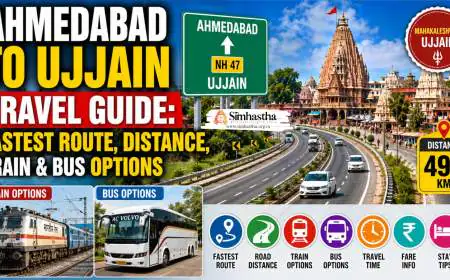
Mumbai, Delhi, Ahmedabad → Train viable
-
South India or International → Flight + road transfer practical
Book flights at least 4–6 months in advance for best rates.
Surge Pricing Triggers You Must Know
Prices increase sharply when:
-
Official Shahi Snan dates are confirmed
-
Tent city bookings open
-
Media coverage increases
-
Government infrastructure announcements begin
-
Social media booking trends spike
Monitoring demand signals helps avoid last-minute surge traps.
Dharamshala Booking Strategy for Ujjain Simhastha 2028
Dharamshalas are one of the most searched accommodation options during Simhastha because they balance affordability with location access.
However, demand far exceeds supply during peak Shahi Snan days.
Types of Dharamshalas Available
Temple-Linked Dharamshalas
-
Located near major ghats or temple corridors
-
Basic rooms
-
Limited private facilities
-
High demand during peak rituals
Best for:
Short ritual-focused visits (2–3 days)
Community Dharamshalas
-
Operated by regional trusts or community groups
-
Dormitory-style or shared rooms
-
Very affordable
-
Often require advance contact, not always online booking
Best for:
Group pilgrims, budget travelers
Semi-Private Dharamshalas
-
Attached bathrooms
-
Basic bedding
-
Limited AC availability
-
Moderate pricing
Best for:
Families on controlled budgets
Dharamshala Price Expectations (Projected) for Ujjain Simhastha 2028
| Category | Non-Peak | Peak |
|---|---|---|
| Dormitory Bed | ₹300–₹700 | ₹800–₹1500 |
| Shared Room | ₹800–₹1500 | ₹2000–₹3500 |
| Private Basic Room | ₹1500–₹3000 | ₹3500–₹6000 |
Peak price increases can reach 100–150% near main bathing days.
Dharamshala Booking Risks
-
Limited online presence
-
Manual confirmation systems
-
Advance deposits
-
Strict cancellation policies
Recommendation:
Confirm written booking proof and double-check check-in timing rules.
Ujjain Simhastha 2028 Costing for 3, 5 & 7 Days
Below are realistic total cost models for 3-day, 5-day, and 7-day stays.
These estimates assume mid-range planning and early booking.
A. 3-Day Budget Model (Mid-Range Traveler)
Accommodation
₹4000–₹9000 total
Travel (Train or Flight + Local Transfer)
₹2000–₹8000
Food & Essentials
₹1200–₹2000
Local Transport / Buffer
₹1000–₹2000
Miscellaneous
₹1000
Estimated Total (3 Days)
₹9200 – ₹22,000
Peak Shahi Snan stay may increase total by 30–60%.
B. 5-Day Budget Model (Family Traveler)
Accommodation
₹8000–₹18,000
Travel
₹4000–₹12,000
Food & Essentials
₹3000–₹5000
Local Transport
₹2000–₹4000
Emergency Buffer
₹2000
Estimated Total (5 Days)
₹19,000 – ₹41,000
Premium hotel stays can push this to ₹60,000+.
C. 7-Day Budget Model (Observer / Long-Stay Traveler)
Accommodation
₹12,000–₹30,000
Travel
₹5000–₹15,000
Food & Essentials
₹5000–₹8000
Local Movement
₹3000–₹6000
Contingency
₹3000
Estimated Total (7 Days)
₹28,000 – ₹62,000
Luxury tent city packages can exceed ₹1,00,000+.
Peak vs Non-Peak Total Budget Impact
Choosing peak Shahi Snan dates can increase total budget by:
25–70% depending on:
-
Stay location
-
Booking timing
-
Transport demand
-
Cancellation flexibility
Non-peak visits reduce:
-
Hotel cost
-
Travel surge pricing
-
Physical fatigue
-
Local movement congestion
Budget-conscious pilgrims should consider:
Arriving one day before peak, leaving one day after.
Cancellation Strategy During Ujjain Simhastha 2028
Cancellation policies become stricter as demand increases.
Standard Cancellation Patterns
Early phase:
Free cancellation up to 7–14 days before arrival.
Mid-phase:
Partial refund 30–50%.
Late phase:
Non-refundable.
Smart Cancellation Strategy
-
Book refundable accommodation early.
-
Monitor official Shahi Snan date confirmations.
-
Lock travel tickets only after ritual dates align.
-
Avoid non-refundable bookings before finalizing schedule.
High-risk mistake:
Booking cheapest non-refundable option 5–6 months early without fixed travel plans.
Travel Insurance for Ujjain Simhastha 2028: Is It Necessary?
For domestic pilgrims:
Basic travel insurance is optional but recommended for:
-
Flight cancellations
-
Medical emergencies
-
Trip interruptions
For international visitors:
Strongly recommended.
What Insurance Should Cover
-
Medical emergencies
-
Trip delay or cancellation
-
Luggage loss
-
Emergency hospitalization
Insurance cost range:
₹300–₹1500 domestic
₹1500–₹5000 international
Compared to total trip cost, insurance is minor but protective.
Hidden Costs in Ujjain Simhastha 2028 Budget Planning
Many budget plans fail because of overlooked expenses.
Common hidden costs:
-
Airport to Ujjain taxi
-
Local autorickshaw surge
-
Bottled water during peak
-
Mobile charging stations
-
Additional ritual-related expenses
-
Unexpected extension stay
Always maintain 10–15% contingency fund.
How to Reduce Total Ujjain Simhastha Cost Without Reducing Experience
Practical cost-control tactics:
-
Book mid-distance hotel instead of core zone
-
Combine one peak day + non-peak days
-
Travel overnight by train
-
Share accommodation in groups
-
Avoid same-day peak arrival
Savings potential:
20–35% overall reduction.
Fraud & Overpricing Risk During Ujjain Simhastha 2028
High-demand events attract fraudulent listings.
Warning signs:
-
Deep discount on peak days
-
No written confirmation
-
Payment via unofficial accounts
-
Social media-only listings
Always book via:
-
Verified hotel websites
-
Recognized aggregators
-
Direct phone verification
Avoid:
Cash-only advance transfers without invoice.
Ideal Booking Sequence for Ujjain Simhastha 2028
Follow this exact order:
-
Confirm travel dates aligned with official calendar.
-
Secure accommodation (refundable).
-
Book train or flight.
-
Confirm local transport strategy.
-
Purchase insurance if required.
-
Reconfirm booking 30 days before arrival.
This sequence minimizes financial risk.
Detailed Tent City Zone Comparison for Ujjain Simhastha 2028
Tent cities are not uniform. Their value depends on proximity, facilities, and access corridors.
Understanding zone classification prevents overpaying.
Zone 1: Ritual-Proximity Tent City
Location:
Near primary ghats and core ritual corridors.
Advantages:
-
Walking distance to Shahi Snan routes
-
Minimal shuttle dependency
-
Lower daily fatigue
-
Faster access during early morning rituals
Disadvantages:
-
Highest peak pricing
-
Faster sell-out
-
High noise levels
-
Strict access controls
Ideal for:
Elderly pilgrims, short 2–3 day visits, ritual-priority travelers.
Projected Pricing:
Non-peak ₹3000–₹6000
Peak ₹7000–₹15,000+
Zone 2: Mid-Distance Organized Tent Sector
Location:
2–4 km from ghats, connected by shuttle corridors.
Advantages:
-
Balanced pricing
-
Controlled entry
-
Less noise
-
Better availability
Disadvantages:
-
Shuttle timing dependency
-
Slightly longer walking distance
Ideal for:
Families, 4–5 day stays, moderate budget travelers.
Projected Pricing:
Non-peak ₹1500–₹4000
Peak ₹4000–₹8000
Zone 3: Peripheral Tent or Temporary Camps
Location:
Outer Ujjain sectors.
Advantages:
-
Lowest cost
-
Larger capacity
-
Easier group booking
Disadvantages:
-
Daily commute required
-
Longer movement windows
-
Reduced ritual spontaneity
Ideal for:
Group pilgrims, research visitors, extended stays.
Projected Pricing:
Non-peak ₹800–₹2500
Peak ₹2500–₹5000
Ujjain Simhastha 2028 Budget vs Premium Stay Comparison
Many travelers ask:
Is premium accommodation worth it during Simhastha?
Here is a clear comparison.
| Feature | Budget Stay | Mid-Range | Premium |
|---|---|---|---|
| Walking Proximity | Moderate | Good | Excellent |
| Comfort | Basic | Comfortable | High |
| Private Washroom | Sometimes | Yes | Yes |
| Surge Pricing Impact | High | Very High | Extreme |
| Refund Flexibility | Limited | Moderate | Moderate |
Premium is justified if:
-
Stay duration is short
-
Ritual access is priority
-
Health comfort is essential
Budget works if:
-
You prioritize cost control
-
You accept walking
-
You plan strategically around peak dates
Ujjain Simhastha 2028 Cost for International Travelers
Simhastha 2028 will attract global visitors. Their cost structure differs significantly.
Typical International Budget (5–7 Days)
International Flight:
₹40,000–₹1,20,000 depending on origin
Domestic Transfer:
₹3000–₹10,000
Accommodation (Mid-Range):
₹20,000–₹50,000
Food & Essentials:
₹5000–₹10,000
Insurance:
₹2000–₹6000
Local Travel & Buffer:
₹5000
Estimated Total:
₹75,000 – ₹2,00,000+
International visitors should prioritize:
-
Central accommodation
-
Verified booking platforms
-
Full insurance coverage
-
Buffer day before departure
Ujjain Simhastha 2028 Peak Shahi Snan Booking Strategy
Major bathing days create extreme compression in supply.
Here is the optimal survival structure.
Arrival Strategy
Arrive:
1 day before peak snan
Avoid:
Arrival on the morning of snan
Stay Strategy
Stay:
Minimum 2 nights covering snan + recovery
Avoid:
Same-day departure after snan
Transport Strategy
If using train:
Book at least 5–6 months early.
If using flight:
Monitor price trend 6 months prior.
Budget Impact on Peak Snan
Add 40–80% to normal stay cost.
But combine:
1 peak day + 2 non-peak days
This reduces overall trip cost by 20–30%.
Is it better to stay near Ram Ghat during Simhastha?
Yes, if:
-
You prioritize ritual access
-
You have limited stay duration
-
You are elderly or physically limited
No, if:
-
Budget is priority
-
You are staying 5+ days
-
You can manage shuttle movement
How early will hotels sell out for Simhastha 2028?
Core-zone hotels may sell out 4–6 months before peak Shahi Snan days.
Mid-zone hotels may remain available until 2–3 months before.
Peripheral hotels usually remain available but surge in price.
Is tent city cheaper than hotels?
Often yes during non-peak days.
During peak days:
Mid-range hotels and premium tents may cost similar.
Can I book accommodation after arriving in Ujjain?
Not recommended during peak weeks.
Walk-in booking risk:
-
Limited availability
-
Higher pricing
-
Fraud risk
Is Ujjain Simhastha 2028 Cost Expensive?
It depends on:
-
Booking timing
-
Stay duration
-
Accommodation category
-
Peak vs non-peak selection
Budget travelers can complete 3 days under ₹15,000 with planning.
Premium travelers may exceed ₹1,00,000.
Ujjain Simhastha 2028 Cost Optimization Blueprint
If your goal is lowest total cost:
-
Avoid main Shahi Snan date.
-
Book 6–9 months early.
-
Choose mid-distance accommodation.
-
Travel by overnight train.
-
Share room with family.
-
Stay 3–4 days only.
Potential savings:
30–45%.
City-Wise Travel Cost for Ujjain Simhastha 2028
Accommodation is only one side of the equation. For most pilgrims, transport cost determines 30–50% of total trip expense.
Let’s break it down by major departure cities.
Delhi to Ujjain Cost Analysis
By Train
Sleeper Class
₹450–₹700 (Non-peak)
₹700–₹1200 (Peak demand)
3AC
₹1200–₹1800 (Normal)
₹2000–₹3200 (Peak waitlist conversions)
2AC
₹2000–₹3000 (Normal)
₹3500–₹5000 (Peak surge via tatkal)
Travel time: 10–14 hours
Cost advantage: Very high
Fatigue factor: Moderate
By Flight (Delhi to Indore)
Base Fare (6+ months early):
₹2500–₹4500
Peak Snan Window (1–2 months before):
₹6000–₹12,000
Indore to Ujjain Transfer:
₹1200–₹2500 (private cab)
₹300–₹500 (bus)
Total Air Model:
₹3800–₹14,500
Delhi Strategy Recommendation
If traveling in group of 3+ → Train is 40–60% cheaper.
If short 2-day ritual visit → Flight saves stamina cost.
Mumbai to Ujjain Cost Analysis
Train
Sleeper
₹350–₹600
3AC
₹900–₹1600
Peak Demand Adjustment
+30–50%
Travel time: 8–12 hours
Mumbai has strong rail connectivity. Train remains cost-optimal.
Flight
Base Fare (Early)
₹3000–₹5500
Peak Fare
₹7000–₹14,000
Transfer Cost
₹1000–₹2500
Total Air Cost
₹4000–₹16,000
Mumbai Strategy
For peak Shahi Snan:
Train booking 5–6 months early is financially superior.
Flight only recommended if:
Time constraint < 48 hours stay.
Bengaluru to Ujjain Cost Analysis
Rail Travel:
₹1200–₹3500
Travel time: 22–30 hours
High fatigue impact.
Flight:
₹4500–₹9000 (Early)
₹9000–₹18,000 (Peak)
Transfer:
₹1500 approx.
Total:
₹6000–₹19,500
For southern cities, flight becomes economically reasonable due to time savings.
Ahmedabad to Ujjain Cost Model
Train:
₹300–₹1500
Travel time: 6–8 hours
Best value corridor.
Flight:
Limited benefit due to short distance.
Recommendation:
Train almost always better.
Tier-2 and Tier-3 City Travel Economics
Pilgrims traveling from smaller cities often combine:
Bus + Train
Train + Train
Bus + Shared Taxi
Hidden cost factors:
-
Overnight waiting expenses
-
Extra hotel night near junction city
-
Food during transit
-
Last-mile auto surge
These add ₹1000–₹4000 extra if not planned.
Budget model must include transit buffer.
Ujjain Simhastha 2028 Price Surge Prediction Model
Demand patterns during large religious events follow a compression curve.
Stage 1: Announcement Phase
Price stable.
Stage 2: Media Amplification
Search volume spikes.
Hotel prices rise 15–25%.
Stage 3: Official Snan Date Confirmation
Immediate surge.
20–40% increase in 2 weeks.
Stage 4: 60 Days Before Peak Snan
Rapid sellout in core zones.
Premium listings dominate search results.
Stage 5: 15 Days Before Peak
Dynamic pricing algorithms spike.
Some listings increase 70–120%.
Understanding this helps avoid emotional booking.
Ujjain Simhastha 2028 Per-Person vs Per-Room Cost Comparison
Many travelers miscalculate because hotels charge per room, not per person.
Example:
Mid-range hotel peak night ₹8000.
If 4 people share:
Per person = ₹2000.
If 2 people share:
Per person = ₹4000.
Group optimization reduces accommodation cost dramatically.
Also Read | Ujjain Simhastha 2028 Cost Per Person?
Ujjain Simhastha 2028 Multi-Day Price Escalation Pattern
Staying across a peak day increases average cost.
Example 3-night stay:
Day 1 (Non-peak): ₹3000
Day 2 (Peak): ₹8000
Day 3 (Non-peak): ₹3500
Average per night = ₹4833
Instead of assuming ₹8000 x 3.
Strategic date selection reduces overall cost even during peak window.
Demand Compression in Ujjain During Simhastha 2028
During peak Shahi Snan, not all zones inflate equally.
Core ritual zone:
Highest inflation.
Mid-distance:
Moderate inflation.
Peripheral:
Lower percentage rise but absolute transport cost increases.
Transportation surge inside city indirectly increases peripheral stay cost.
Long-Stay Budget Strategy for Ujjain Simhastha 2028 (10–15 Days)
Extended observers or research visitors can reduce per-day cost.
Methods:
-
Monthly rental rooms outside core city
-
Pre-event arrival before price spike
-
Weekly dharamshala booking
-
Shared apartment rental
Long-stay 15-day optimized budget:
₹45,000–₹75,000 possible.
Short 3-day peak luxury stay:
₹50,000+ easily.
Length can reduce daily cost but increase total exposure.
Ujjain Simhastha 2028 Cash Flow Planning Model
High-RPM content should address payment behavior.
Simhastha booking often requires:
30–50% advance payment
Remaining at check-in
Travel tickets require:
Full advance payment.
Insurance:
Full payment upfront.
Cash flow timeline example (6 months early booking):
Month 1:
Flight booking ₹8000
Month 2:
Hotel advance ₹6000
Month 5:
Balance ₹6000
Staggered spending reduces financial stress.
Currency Impact on Ujjain Simhastha 2028 Budget for NRI & International Visitors
If INR weakens before event:
International visitors benefit.
If INR strengthens:
Budget should account for 5–10% currency fluctuation.
Payment platform forex fees:
2–4% hidden cost.
Inflation Impact on Ujjain Simhastha 2028 Travel Cost
Based on typical hospitality inflation (5–8% annually), projected 2028 prices may rise above 2024 event benchmarks.
Example:
Hotel ₹4000 today
Projected ₹5000–₹6000 in 2028 peak scenario.
Early locking helps hedge inflation risk.
Cost Comparison: Ujjain Simhastha 2028 vs Other Kumbh Events
Simhastha typically sees slightly lower cost inflation than Prayagraj Kumbh due to:
City scale
Infrastructure limits
International concentration
However, hotel inventory is lower than mega metros.
Net effect:
Higher compression in prime zones.
Private Taxi vs Shared Transport Cost in Ujjain Simhastha 2028
Private Indore Airport to Ujjain:
₹1500–₹2500 one way.
Shared shuttle:
₹300–₹600.
Family of 4:
Private becomes reasonable.
Solo traveler:
Shared saves cost.
Round trip taxi adds ₹3000–₹5000 to total budget.
Last-Minute Price Surge in Ujjain Simhastha 2028 (Final 7 Days)
Last-week booking includes risk premium:
-
Cancellation not allowed
-
No price negotiation
-
Limited review validation
-
High fraud exposure
Financial risk adjustment:
Add 20% contingency.
Psychological Spending Increase During Ujjain Simhastha 2028
During high-density events:
Pilgrims overspend on:
-
Convenience
-
Immediate availability
-
Shorter walking options
-
Last-minute transport
Behavioral economics suggests spending increases 15–25% under stress.
Budget plan must include decision discipline.
Micro-Zone Accommodation Prices in Ujjain During Simhastha 2028
Most travelers think in terms of “near ghat” or “far from ghat.”
But real pricing behaves at micro-zone level.
Below is a granular breakdown based on proximity, access corridors, and ritual flow density.
A. Ram Ghat Immediate Perimeter (0–500 meters)
This is the highest compression band.
Characteristics:
-
Maximum ritual traffic
-
Walking-only zones during peak days
-
Limited vehicle access
-
Highest emotional booking demand
Pricing Behavior:
-
Peak nights sell out first
-
Non-refundable policies dominate
-
2-night minimum stay enforced by some properties
Projected Peak Rates:
Budget Room: ₹3000–₹6000
Mid-Range: ₹9000–₹18,000
Premium Boutique: ₹18,000–₹35,000+
Inventory is extremely limited.
Financial reality:
You are paying for walking convenience and time saved.
B. Mahakal Corridor Vicinity
Second-highest demand corridor.
Advantages:
-
Temple access proximity
-
High pilgrim density year-round
-
Strong infrastructure
Price Inflation Pattern:
20–30% surge earlier than other zones once snan dates trend.
Projected Peak Rates:
Budget: ₹2500–₹5000
Mid-Range: ₹7000–₹15,000
Premium: ₹15,000–₹28,000
C. Freeganj Commercial Area
Balanced demand zone.
Advantages:
-
Larger hotel inventory
-
Better room capacity
-
Mixed price categories
Surge Impact:
Lower than ritual core but still significant.
Projected Peak:
Budget: ₹2000–₹4000
Mid-Range: ₹5000–₹9000
Premium: ₹10,000–₹18,000
Cost-to-comfort ratio often best here.
D. Nanakheda & Peripheral Residential Sectors
Emerging demand spillover zone.
Advantages:
-
Lower cost
-
Better availability
-
Group booking feasibility
Disadvantages:
-
Shuttle dependency
-
Longer walking windows
Peak Rates:
Budget: ₹1200–₹3000
Mid-Range: ₹4000–₹7000
Best for 5–7 day stays.
How Accommodation Density Affects Hotel Prices in Ujjain Simhastha 2028
Zones with fewer rooms see sharper price spikes.
High-density hotel zones:
Moderate price elasticity.
Low-density heritage zones:
Extreme price spikes.
Example:
If only 20 rooms exist in a heritage property,
Demand from 200 pilgrims multiplies price sharply.
Scarcity creates volatility.
Ujjain Simhastha 2028 Cost Comparison: Family vs Solo Travelers
Cost behaves differently per traveler type.
Solo Traveler (3-Day Stay, Peak Window)
Accommodation (shared mid-range):
₹6000
Travel:
₹4000–₹8000
Food:
₹1500
Local:
₹1500
Total:
₹13,000–₹17,000
Family of Four (5-Day Stay)
Accommodation (2 rooms or quad room):
₹25,000–₹40,000
Travel:
₹12,000–₹25,000
Food:
₹6000–₹10,000
Local:
₹4000
Total:
₹47,000–₹79,000
Per person cost decreases when sharing rooms.
VIP Access and Premium Stay Cost in Ujjain Simhastha 2028
Certain travelers seek:
-
Proximity corridors
-
Premium tent packages
-
Guided ritual experiences
-
Curated stays
These are priced at a premium tier.
Premium Tent (Peak 2 Nights):
₹25,000–₹50,000
Private Guided Ritual Package:
₹10,000–₹30,000 depending on service structure.
VIP demand is less price-sensitive.
For advertisers, this segment increases RPM significantly.
Corporate and Group Booking Cost for Ujjain Simhastha 2028
Large spiritual groups often book:
-
20–200 beds
-
Entire tent blocks
-
Community dharamshalas
Group economics include:
Advance payment locking
Negotiated block rates
Non-refundable deposits
Discount potential:
10–20% off public peak rates if blocked early.
But cancellation penalty higher.
Dynamic Hotel Pricing Model During Ujjain Simhastha 2028
Let’s simulate peak demand.
Hotel Base Price:
₹3500
Demand increases 40%.
Algorithm response:
₹4800
70% occupancy threshold hit:
₹6200
Last 10 rooms:
₹8500
This progression can occur within 3–5 days once surge begins.
Transport Cost Surge Due to Congestion in Ujjain Simhastha 2028
On peak snan days:
Auto-rickshaw rates can double.
Private taxi surge 1.5–2x.
Example:
Normal ride ₹150
Peak ₹300–₹400
If commuting twice daily:
Extra ₹500 per day.
Over 5 days:
₹2500 additional hidden cost.
Cost Impact of Late Arrival at Ujjain Simhastha 2028
Arriving on snan morning can cause:
Missed ritual window
Additional stay extension
Extra night booking at surge price
One unplanned night in peak zone:
₹5000–₹15,000 additional expense.
Time discipline reduces financial loss.
Heat and Fatigue Cost Impact During Ujjain Simhastha 2028
High temperatures increase:
Bottled water purchase
Electrolyte drinks
Medical consultation
Short taxi rides to reduce walking
Daily incremental cost:
₹300–₹800
Over 5 days:
₹1500–₹4000.
Small expenses compound.
Multi-City Travel Cost Model for Ujjain Simhastha 2028
Some travelers combine:
Ujjain + Omkareshwar
Ujjain + Indore
Ujjain + Mandu
Additional cost components:
Intercity taxi:
₹2500–₹6000
Hotel extension:
₹3000–₹10,000 per night
Adding tourism layer increases trip cost 20–50%.
Contingency Budget Planning for Ujjain Simhastha 2028
Best practice:
Reserve 15% of total budget unallocated.
Example:
₹50,000 trip
Reserve ₹7500
Covers:
Medical
Transport surge
Unexpected extension
Rebooking
Peak Day Cash and Payment Risk During Ujjain Simhastha 2028
ATM congestion common during major events.
Card machine overload possible.
Carrying moderate cash reduces:
Emergency borrowing
Overpriced digital convenience fees
Ujjain Simhastha 2028 Budget Scenarios by Travel Style
Ultra Budget (3 Days, Non-Peak)
Train sleeper:
₹800
Dorm stay:
₹1500
Food:
₹1200
Local:
₹1000
Total:
₹4500–₹7000
Balanced Comfort (5 Days Mixed Peak)
Train 3AC:
₹3000
Mid-zone hotel:
₹18,000
Food:
₹6000
Local:
₹3000
Total:
₹30,000–₹35,000
Premium Short Ritual Visit (2 Nights Peak)
Flight:
₹12,000
Premium stay:
₹30,000
Private transfer:
₹5000
Food & buffer:
₹4000
Total:
₹50,000–₹65,000
Final Booking Decision Framework for Ujjain Simhastha 2028
Before confirming payment, ask:
-
Is the date aligned with official ritual calendar?
-
Is the stay refundable?
-
Is the location walkable or shuttle dependent?
-
Is peak surge factored into my total budget?
-
Do I have 10–15% contingency fund?
If yes, proceed.
If uncertain, delay booking rather than locking non-refundable inventory.
Related Simhastha 2028 Guides :
- Why Simhastha 2028 Is Being Planned as a City That Exists Only for Pilgrims
- Why Snan Dates Shift According to Planetary Positions in Simhastha
- Simhastha 2028 Dates Officially Announced: Full Event & Shahi Snan Timeline
- Top 10 Routes to Enter Ujjain During Simhastha 2028 Without Traffic Hassles
- How to Travel Inside Ujjain During Simhastha 2028: Routes, Maps and Movement Plans
- How to Travel in Ujjain During Peak Snan Days: Do’s & Don’ts for Simhastha 2028
- Solo Travel Guide for Simhastha 2028: Safety, Budget, Stay & Movement Tips
Frequently Asked Questions