



















Ujjain Simhastha 2028 Security: AI Cameras, MCTE & ICCC
Ujjain Simhastha 2028 security goes high-tech with AI cameras, drones, cybersecurity and a ₹139.14 crore command centre. Latest Simhastha news and updates.

Ujjain Simhastha 2028 Security Goes High-Tech: AI Cameras, MCTE Technology and New Command Centre
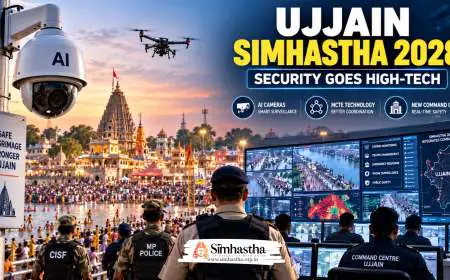
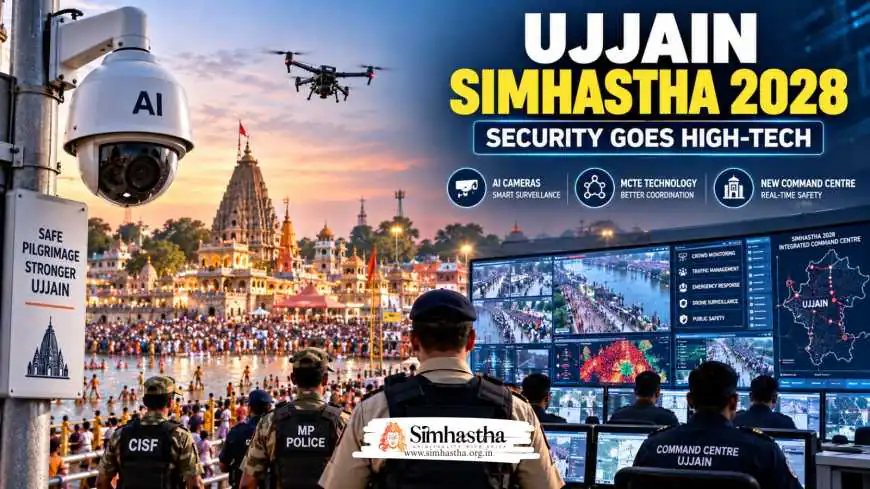
Ujjain Simhastha 2028 News: Security arrangements for the upcoming Simhastha 2028 in Ujjain are moving towards a technology-driven model, with artificial intelligence, smart surveillance, drones, cybersecurity and an Integrated Command and Control Centre being developed as important parts of the event's security and crowd-management system.
The latest development is the reported proposal to use technical expertise from the Military College of Telecommunication Engineering (MCTE), Mhow, for Simhastha-related security technology. The proposed systems include AI-based surveillance, vehicle number-plate recognition and cybersecurity measures.
At the same time, Ujjain is already progressing with a dedicated Integrated Command and Control Centre (ICCC) for Simhastha Kumbh Mela 2028. Ujjain Smart City Limited has published an official tender for the establishment and operation and maintenance of the centre.
The developments indicate that Simhastha 2028 in Ujjain is being planned with a much larger digital security and crowd-management infrastructure than previous editions.
Trending Guides Now
Ujjain Airport Project: A Historic Leap Before Simhastha 2028
Government Doubles Powers of Ujjain Mayor and Commissioner Ahead of Simhastha 2028
Indore–Ujjain Six-Lane Highway nearing completion — big step for regional growth!

Indore–Ujjain Six Lane Highway Update 2025: Completion Timeline & Simhastha Impact

Ujjain Railway Station to Mahakaleshwar Temple: Distance, Fare & Route

Ujjain Simhastha 2028 Dates Announced: Full Shahi Snan & Event Timeline
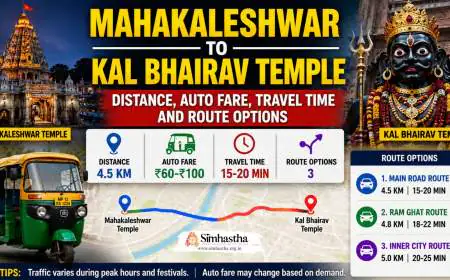
Mahakaleshwar to Kal Bhairav Temple: Distance, Auto Fare, Travel Time and Route Options
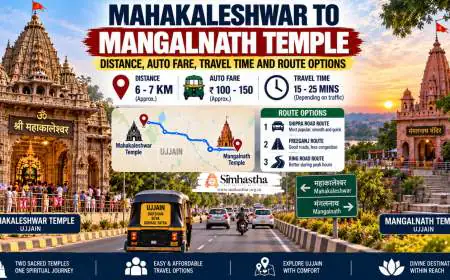
Mahakaleshwar to Mangalnath Temple: Distance, Auto Fare, Travel Time and Route Options
What is the latest Simhastha 2028 security update?
The latest reports indicate that the Madhya Pradesh government is exploring technical cooperation with MCTE, Mhow, for advanced technology that could support security and crowd management during Ujjain Simhastha 2028.
The reported technology areas include:
- AI-based camera surveillance
- Facial-recognition capabilities
- Automatic number-plate recognition
- Cybersecurity and protection of digital infrastructure
- Real-time monitoring
- Technology-assisted crowd management
The final deployment plan and operational details are still subject to government decisions and technical planning.
This means the reported technologies should currently be understood as part of the developing Simhastha 2028 security plan, rather than assuming that every reported feature has already been finally deployed.
AI cameras planned for Simhastha 2028 security
One of the most significant aspects of the proposed technology upgrade is the use of AI-powered surveillance cameras in Ujjain.
During Simhastha, thousands of cameras may generate enormous amounts of video information. AI-based video analytics can help security teams process this information more efficiently by identifying unusual activity, crowd-density changes and other situations requiring human attention.
Depending on the final configuration, AI surveillance could assist authorities with:
- Monitoring crowd density
- Detecting unusual movement
- Identifying sensitive locations
- Monitoring restricted areas
- Supporting security investigations
- Improving emergency response
- Understanding crowd movement in real time
Recent reports specifically mention AI cameras and facial-recognition capabilities in connection with the MCTE technology proposal for Simhastha 2028.
Will AI cameras identify suspicious people?
Reports indicate that facial-recognition technology could be used to assist security agencies in identifying persons of interest.
However, the exact databases, matching procedures, legal safeguards and operational rules have not yet been publicly detailed enough to treat every reported capability as a final confirmed feature.
The broader confirmed direction is clear: AI-based surveillance is becoming an important part of Ujjain's Simhastha 2028 security planning.
Number-plate recognition will help monitor vehicles
Another major challenge for Simhastha 2028 in Ujjain will be managing the enormous number of vehicles entering and moving around the city.
Automatic Number Plate Recognition, or ANPR, can automatically read vehicle registration plates and help authorities identify vehicles of interest and monitor traffic.
Ujjain already has experience with technology-based traffic monitoring. The existing Ujjain Smart City ICCC ecosystem includes traffic surveillance, ANPR, red-light violation detection, speed-violation detection and other traffic-management systems.
This existing technological foundation could be particularly useful as Ujjain prepares for the much larger traffic volumes expected during Simhastha.

Cybersecurity will become a major part of Simhastha security
The security challenge for Ujjain Simhastha 2028 will not be limited to physical locations.
The event is increasingly dependent on digital infrastructure, including:
- CCTV networks
- Command centres
- Communication systems
- Traffic-management systems
- Digital applications
- Data networks
- Emergency communication infrastructure
A cyberattack or disruption affecting critical systems could create problems during a major bathing day.
For this reason, cybersecurity is being considered alongside physical security and surveillance.
The reported MCTE proposal includes cybersecurity and anti-hacking capabilities intended to strengthen the digital infrastructure supporting Simhastha.
Rather than describing any system as completely "unhackable", the more accurate interpretation is that additional cybersecurity measures are being planned to protect critical digital systems from cyber threats and unauthorised access.
Ujjain's Simhastha 2028 ICCC is already moving forward
One of the strongest independently verifiable developments is the Integrated Command and Control Centre for Simhastha Kumbh Mela 2028.
Ujjain Smart City Limited has published an official Request for Proposal for the selection of a System Integrator for establishment and operation and maintenance of the ICCC for Simhastha Kumbh Mela 2028.
This is important because the ICCC is not simply a concept mentioned in a news report. There is an official procurement process associated with the project.
The centre is intended to provide a central technology platform for monitoring and coordinating various aspects of the event.
₹139.14 crore ICCC for Simhastha
The Madhya Pradesh government has approved an Integrated Command and Control Centre costing ₹139.14 crore as part of the Simhastha 2028 preparations.

The planned system is expected to use CCTV, drones and data analytics for real-time monitoring, along with AI-based crowd-management capabilities.
This could give Ujjain authorities a centralised view of crowd movement, traffic conditions, emergencies and other important situations during the Mela.
How the Simhastha command centre could work
The basic idea is to bring information from multiple systems into one operational environment.
A simplified model could look like this:
CCTV + AI analytics + drones + traffic systems + emergency information → ICCC → operators → police and emergency response teams
Instead of different departments working with completely separate information systems, the command centre can provide a common operational picture.
This becomes particularly important during peak bathing days when crowd conditions can change rapidly.
AI could play a major role in crowd management
For Ujjain, crowd management may ultimately be one of the most important uses of AI during Simhastha 2028.
The administration will need to understand not only where people are located, but also how crowds are moving.
If a particular road, ghat approach or pedestrian corridor begins experiencing unusually high crowd density, technology-assisted monitoring could help officials identify the situation earlier.
Authorities could then take measures such as:
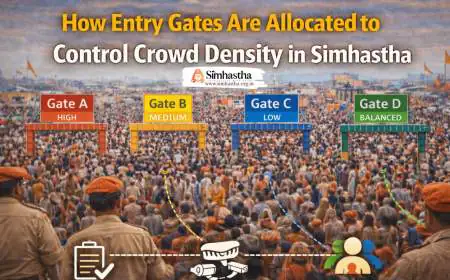
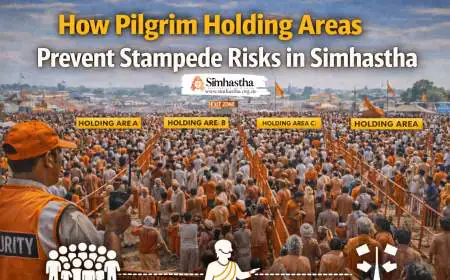
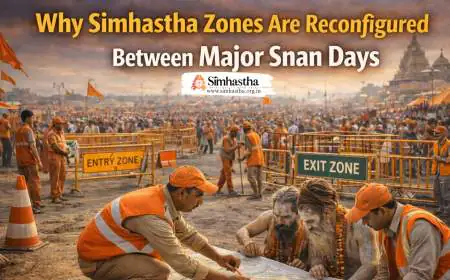
- Diverting pedestrian movement
- Changing traffic routes
- Deploying additional personnel
- Opening alternative routes
- Sending medical or emergency teams
- Issuing public announcements
- Redirecting pilgrims towards less congested areas
The objective is therefore not simply surveillance. It is faster decision-making during a constantly changing crowd situation.
Drones will provide another layer of surveillance
Drones are also becoming part of the technology strategy for Simhastha 2028 Ujjain.
In July 2026, the Ujjain administration conducted demonstrations of advanced drone technology for crowd management, security and emergency response. The demonstrated systems included live monitoring capabilities and public-address features.
Drones can provide an aerial view of areas that may be difficult to monitor effectively using fixed cameras alone.
During Simhastha, this could be useful for monitoring:
- Large gathering areas
- Riverfront zones
- Major pedestrian routes
- Traffic corridors
- Emergency situations
- Areas experiencing unusual crowd movement
The final drone deployment plan will depend on the administration's operational requirements.
Ujjain is building a wider digital security ecosystem
The ICCC and MCTE proposal are not isolated developments.
Other Simhastha preparations are also moving towards technology-driven management.
The broader planning for the event includes AI-assisted crowd management, traffic technology, surveillance systems and digital services for pilgrims.
The government has also been exploring AI applications for Simhastha in areas such as crowd management, traffic, emergency services and security monitoring.
This suggests that technology is being treated as a central component of the wider Ujjain Simhastha 2028 master plan, rather than simply an additional security feature.
What will this mean for pilgrims visiting Ujjain?
For most pilgrims, the technology will operate in the background.
The expected benefits could be visible through better management of:
- Roads and traffic
- Crowd movement
- Emergency response
- Security monitoring
- Parking
- Public information
- Route management
A pilgrim may never directly interact with an AI camera or the command centre.
Instead, the intended benefit is that authorities can detect problems earlier and respond more quickly.
Simhastha 2028 security will combine technology and human response
Technology alone cannot manage an event of this scale.
The emerging security model is likely to combine several layers:
Ground security: Police, emergency services and trained personnel.
CCTV: Continuous monitoring of important locations.
AI analytics: Automated analysis of video and crowd patterns.
Drones: Aerial surveillance and situational awareness.
ANPR: Vehicle identification and traffic monitoring.
ICCC: Centralised monitoring and coordination.
Cybersecurity: Protection of the digital infrastructure.
The effectiveness of this system will ultimately depend on how well these technologies are integrated with trained personnel and emergency-response teams.
Why this is important for Ujjain Simhastha 2028
Simhastha is not simply a large religious gathering. For Ujjain, it represents a massive temporary expansion of the city's population, transport requirements, public services and security responsibilities.
That is why the technology infrastructure being created now could have an impact beyond the Mela itself.
Ujjain already has an operational city-level ICCC with systems covering areas such as traffic management, surveillance and emergency response. The Simhastha-specific ICCC can build upon this broader digital infrastructure.
The official Simhastha ICCC tender further shows that the administration is moving towards a dedicated technology architecture for the 2028 event.
What happens next for Simhastha 2028 security?
The next phase will involve finalising the technical architecture, procurement, integration and operational responsibilities.
For the MCTE-related technology proposal, further discussions between the government and technical agencies are expected to clarify which systems will ultimately be adopted.
For the ICCC, the procurement process is already underway through Ujjain Smart City Limited.
As the preparations progress, more details are expected to emerge regarding:
- Number and location of CCTV cameras
- AI surveillance capabilities
- Facial-recognition deployment, if approved
- ANPR coverage
- Drone operations
- Cybersecurity architecture
- Data management
- Emergency-response integration
- Real-time pilgrim information systems
Simhastha 2028 in Ujjain is becoming a technology-driven mega event
The latest security developments show a clear shift in the way Ujjain Simhastha 2028 is being planned.
AI-powered surveillance, drones, traffic technology, cybersecurity and the Integrated Command and Control Centre are being brought together to create a more connected security and crowd-management system.
The MCTE proposal could add specialised technical expertise to this ecosystem, while the official ICCC procurement provides concrete evidence that the digital command infrastructure is moving forward.
For pilgrims, the goal is straightforward: safer movement, better crowd management, faster emergency response and a more organised Simhastha experience.
The exact technology that will finally be deployed will become clearer as the Madhya Pradesh government and Ujjain administration complete the remaining planning and procurement stages.
Simhastha 2028 Latest Update: Ujjain is preparing not only for one of India's largest religious gatherings, but also for one of its most technology-intensive crowd-management operations.
Frequently Asked Questions