



















How Ujjain Will Implement Carbon Credit Policy for Simhastha 2028
Ujjain plans India’s first carbon credit–linked Simhastha 2028 by using green transport, waste management, renewable energy, and verified emission reduction systems explained clearly.
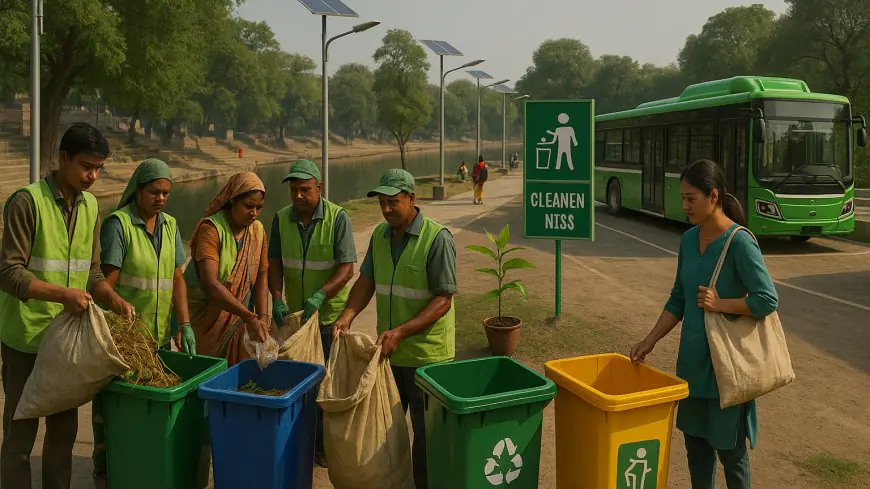


How Ujjain Will Implement Carbon Credit Policies for Simhastha 2028
Simhastha 2028 is not only being prepared as the world’s largest spiritual congregation but also as one of India’s most ambitious environmentally responsible religious events. For the first time, a mass pilgrimage of this scale is being designed around measurable carbon reduction and carbon credit generation.
Ujjain’s carbon credit policy for Simhastha 2028 represents a shift in how religious gatherings interact with climate responsibility. Instead of viewing sustainability as symbolic, the city is integrating climate accounting, green infrastructure, and verified emission reduction into the very planning of the mela.
For Every pilgrims, understanding Simhastha 2028 dates and the official Shahi Snan timeline is essential before booking flights or accommodation, as these sacred dates are completely non-negotiable.
Why Carbon Credits Matter for Simhastha 2028
A gathering of millions inevitably creates environmental pressure through transport emissions, electricity usage, waste generation, and water consumption. Carbon credits allow Ujjain to convert emission reductions into quantifiable climate assets while offsetting unavoidable emissions.
Trending Guides Now

Why Ujjain Is One of the Four Kumbh Cities in India

Simhastha Kumbh Mela Explained for First-Time Visitors

Simhastha 2028 Preparation Timeline: What Happens Each Year

What to Wear Carry Avoid at Ujjain Simhastha

Ujjain Railway Station to Mahakaleshwar Temple Distance (2026 Guide)

Ujjain Simhastha 2028 Dates Announced: Full Shahi Snan & Event Timeline

Ujjain Simhastha Update: CM Mohan Yadav Reviews 2028 Works
Ujjain Railway Station to Kal Bhairav Temple: Distance, Auto Fare and Best Route
For Simhastha 2028, carbon credits serve three purposes:
-
Reducing the net carbon footprint of the event
-
Creating a verified sustainability model for future pilgrimages
-
Generating long-term environmental and economic value for Ujjain
Pillar One: Green Transport and Low-Emission Mobility
Transport is the single largest emission source during Simhastha. Ujjain’s strategy focuses on replacing fossil-fuel movement with electric and shared transport systems.
Key measures include:

-
Large-scale deployment of electric buses for pilgrim movement
-
Dedicated pedestrian corridors to reduce short-distance vehicle use
-
Bicycle and e-rickshaw zones near ghats and temples
-
Smart traffic routing to reduce idling and congestion emissions
Each electric vehicle kilometer replaces conventional fuel usage, directly contributing to measurable emission reduction.
Pillar Two: Renewable Energy at the Core of Infrastructure
Temporary cities, lighting, medical camps, and administrative offices require continuous power. Simhastha 2028 planning integrates renewable energy as a primary source rather than a supplement.
Renewable initiatives include:
-
Solar-powered streetlights across mela zones
-
Rooftop solar systems on government and support buildings
-
Solar charging stations for electric buses and service vehicles
-
Backup battery storage to reduce diesel generator dependency
These systems create verifiable clean energy output, forming a strong base for carbon credit calculations.
Pillar Three: Waste-to-Carbon Reduction Systems
Waste management during Simhastha moves beyond cleanliness into carbon accounting. Organic waste decomposition and landfill usage produce significant methane emissions if unmanaged.
Planned interventions include:
-
Mandatory waste segregation at source
-
Composting of organic waste
-
Biogas generation from food and floral waste
-
Ban or strict limitation on single-use plastics
By diverting waste from landfills, Ujjain reduces methane emissions and converts waste streams into energy and soil resources.
Pillar Four: Water and River Sustainability Measures
The Shipra River lies at the spiritual heart of Simhastha. Protecting it is both an ecological and cultural priority.
Water sustainability steps include:
-
Zero-discharge sanitation systems
-
Temporary sewage treatment plants near ghats
-
Reuse of treated water for cleaning and landscaping
-
Monitoring of water extraction and replenishment cycles
Efficient water systems reduce energy-intensive pumping and treatment, indirectly lowering carbon output.
Pillar Five: Carbon Accounting and Measurement Framework
Carbon credit policies rely on measurement, not intention. Simhastha 2028 incorporates structured carbon accounting frameworks to quantify emission reductions.
This includes:
-
Baseline emission calculations before Simhastha
-
Sector-wise emission tracking for transport, power, waste, and water
-
Digital monitoring of renewable energy output
-
Third-party verification of emission reductions
Only verified reductions qualify for carbon credit certification.
Pillar Six: Carbon Offset and Credit Generation Strategy
Not all emissions can be eliminated. For remaining emissions, Ujjain plans structured offset mechanisms.
Offset strategies include:
-
Urban and riverbank afforestation programs
-
Long-term tree survival monitoring
-
Soil carbon enhancement through compost usage
-
Community-level green projects beyond Simhastha zones
These projects ensure that carbon credits represent real, lasting environmental benefits.
Role of Administration and Policy Integration
The carbon credit policy is embedded into planning, tendering, and contractor guidelines. Sustainability metrics are included as performance parameters, not optional goals.
This ensures:
-
Accountability across departments
-
Consistent reporting and compliance
-
Alignment with national climate commitments
Long-Term Impact Beyond Simhastha 2028
Unlike temporary events, Simhastha’s carbon infrastructure is designed to leave permanent benefits.
Expected long-term outcomes:
-
Permanent green transport assets
-
Solar infrastructure for city use
-
Improved waste processing capacity
-
Recognition of Ujjain as a global model for green pilgrimages
The carbon credit revenue model can also fund future sustainability projects.
Why This Model Matters for India and the World
Simhastha 2028 positions India as a leader in climate-conscious cultural events. It proves that tradition and technology can coexist without compromise.
This model demonstrates that spiritual gatherings can become catalysts for climate action rather than contributors to environmental degradation.
Final Perspective
Carbon credit implementation for Simhastha 2028 is not an experiment. It is a structural transformation in how Ujjain hosts faith, humanity, and responsibility together.
By turning devotion into measurable climate action, Ujjain sets a precedent that may redefine how the world organizes large-scale human gatherings.
Frequently Asked Questions