
















The Science of Breath: How Pranayama Enhances Meditation
Discover the science behind pranayama and how breathwork boosts meditation. Learn how controlled breathing improves focus, calmness, and mental clarity.



Introduction — Breath: The Bridge Between Body and Mind
When you take a slow, deep breath, something remarkable happens.
Your mind softens.
Your heartbeat steadies.
Your thoughts slow down.
This peaceful shift is not magic — it is science.
For centuries, yogis have said that breath controls the mind, and now modern science confirms it. Pranayama — the ancient practice of conscious breathing — enhances meditation by stabilizing the nervous system, improving oxygen flow, and calming mental fluctuations.
This blog explores the science behind pranayama and how breathwork deepens meditation effortlessly.
What Is Pranayama? A Scientific Perspective
Pranayama comes from two Sanskrit words:
Trending Guides Now
Candle Gazing Meditation (Trataka): A Complete Beginner’s Guide to Method and Benefits
Third Eye Meditation: How to Awaken Intuition and Deep Inner Awareness
Gaze Meditation: Improving Concentration Naturally with Candle Flame Trataka
Bhramari (Bee Humming) Meditation Technique

Ujjain Railway Station to Mahakaleshwar Temple Distance (2026 Guide)

Ujjain Simhastha 2028 Dates Announced: Full Shahi Snan & Event Timeline

Ujjain Simhastha Update: CM Mohan Yadav Reviews 2028 Works

Karkateshwar Mahadev: 22/84 Mahadev of Ujjain
-
Prana — life force, energy
-
Ayama — expansion or control
In simple terms, pranayama is the art of regulating and expanding your breath to influence mental and emotional harmony.
Scientifically:
Pranayama controls:
-
oxygen levels
-
carbon dioxide balance

-
heart rate
-
brainwave patterns
-
vagus nerve activation
-
stress hormone regulation

This creates the ideal internal state for meditation.
How Breath Influences Meditation (The Science Explained)
1. Breath Controls the Nervous System
Deep, slow breathing stimulates the parasympathetic nervous system (rest and relax system).
This reduces:
-
stress
-
anxiety
-
restlessness
-
overthinking
Your brain shifts from survival mode to meditation mode.
2. Breath Regulates Heart Rate Variability (HRV)
HRV is a measure of how calm and flexible your nervous system is.
Higher HRV = better emotional stability.
Pranayama increases HRV, making meditation deeper and more effective.
3. Breath Modifies Brainwave States
Scientific studies show pranayama shifts the brain from:
-
Beta (thinking) → to
-
Alpha (relaxed) and Theta (meditative) states
This is the zone where meditation becomes effortless.
4. Breath Enhances Oxygen + CO₂ Balance
Shallow breathing creates stress.
Controlled breathing improves oxygen absorption and stabilizes carbon dioxide balance.
This also improves focus and reduces mental fatigue.
5. Breath Activates the Vagus Nerve
The vagus nerve controls:
-
emotional regulation
-
relaxation
-
digestion
-
heart rate
Slow exhalations (a key part of pranayama) activate the vagus nerve, instantly calming the mind — preparing it for meditation.
6. Breath Quietens the Default Mode Network (DMN)
DMN is the brain’s "thinking loop" responsible for:
-
wandering thoughts
-
self-talk
-
overthinking
Pranayama slows down DMN activity, allowing meditation to deepen naturally.
How Pranayama Enhances Meditation: Practical Effects
1. Stops Mental Overactivity
Breathwork quiets the mind faster than traditional meditation alone.
2. Helps Beginners Focus
Breathing gives the mind something simple to anchor to.
3. Prepares the Mind for Stillness
Like warming up before exercise, pranayama prepares your mind for meditation.
4. Releases Emotional Tension
Breathing out slowly helps release stored emotions.
5. Stabilizes Attention
Deep, rhythmic breathing reduces distraction and increases presence.
The Best Pranayama Techniques for Meditation
1. Deep Belly Breathing
Expands diaphragm → reduces stress instantly.
2. Anapanasati (Breath Awareness)
Builds concentration and presence.
3. Ujjayi Breathing (Ocean Breath)
Calms emotional waves with soothing throat sound.
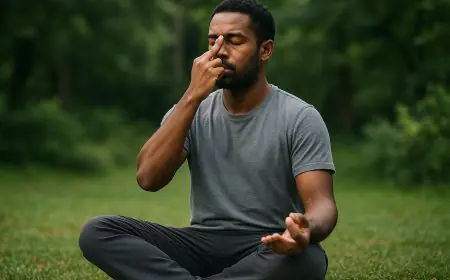
4. Nadi Shodhana (Alternate Nostril)
Balances both brain hemispheres.
5. Bhramari (Bee Humming)
Vibration reduces anxiety and activates relaxation response.
Each technique prepares the mind for stillness.
Step-by-Step: Pranayama + Meditation Routine (10 Minutes)
Minute 1–2: Natural Breathing
Observe breath without changing it.
Minute 3–4: Deep Belly Breathing
Inhale 4 seconds → exhale 6 seconds.
Minute 5–6: Nadi Shodhana or Ujjayi
Activates calmness and balance.
Minute 7–10: Silent Breath Awareness Meditation
Allow breath to settle naturally.
This combination takes meditation to a deeper level.
Scientific Studies Supporting Pranayama
Study 1: Slow breathing reduces cortisol
Research shows pranayama lowers stress hormones significantly.
Study 2: Increases memory and attention
Alternate nostril breathing boosts cognitive performance.
Study 3: Boosts emotional resilience
Slow exhalations regulate emotional responses.
Study 4: Enhances mindfulness
Pranayama increases alpha-wave activity associated with meditation.
Common Misunderstandings About Pranayama
“Pranayama is just deep breathing.”
No — different pranayama techniques affect the brain and nervous system differently.
“Only advanced practitioners should do pranayama.”
Many techniques are beginner-friendly.
“Breath doesn’t affect the mind.”
Science clearly shows breath directly affects emotions, thoughts, and awareness.
Spiritual Insight — Breath as the Gateway to Meditation
In yoga philosophy, breath is the doorway to the subtle inner world.
Controlling breath means controlling prana (energy), which controls the mind.
When breath is calm, mind becomes calm.
When mind is calm, meditation deepens naturally.
Conclusion — Breath Makes Meditation Effortless
Pranayama is not optional — it’s essential.
It prepares your mind, stabilizes your emotions, and guides your awareness inward.
Science now validates what yogis knew for thousands of years:
The breath is the master key to meditation.
Practice pranayama daily and meditation will unfold with ease.
Frequently Asked Questions