



















Ramadal Akhara Parishad and Simhastha 2028: Akharas, Ritual Authority, and Shahi Snan Impact
Ahead of Simhastha 2028, Ujjain has witnessed a pivotal moment in spiritual administration with the creation of the Ramadal Akhara Parishad, through which Vaishnavite akharas have formed a separate governing body to ensure clarity in rituals, ceremonial leadership, and coordination for the forthcoming Simhastha.
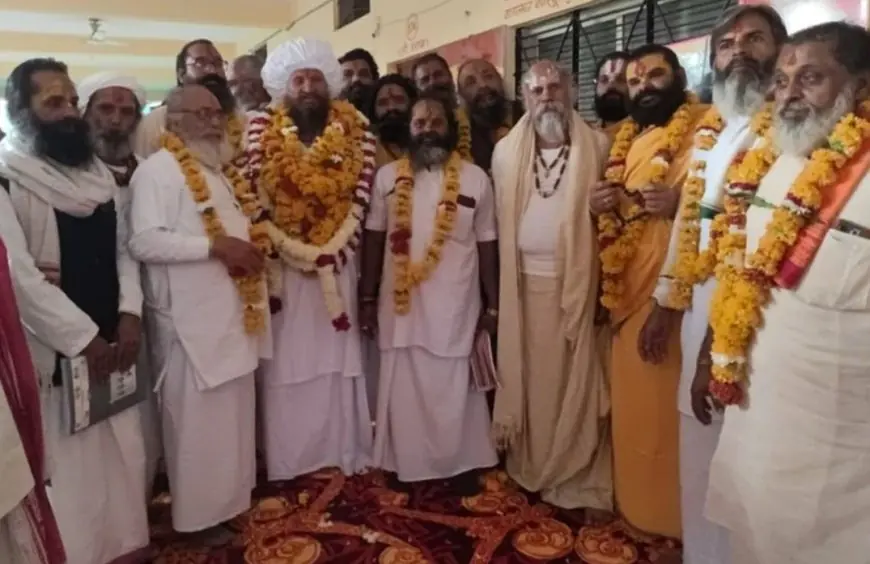


Ramadal Akhara Parishad Formation Before Simhastha 2028: What It Means for Akharas, Rituals, and Shahi Snan
As preparations intensify for Simhastha 2028, Ujjain has witnessed a quiet but historically important transformation in its spiritual governance. The formation of the Ramadal Akhara Parishad marks a structural reorganisation of Vaishnavite akharas, redefining how authority, rituals, and coordination will function during the world’s largest spiritual gathering.
This development is not a dispute. It is a return to clarity.
Understanding the Akhara System in Simhastha
how the Simhastha akhara system works
To understand why this change matters, one must first understand the akhara system in Simhastha.
Trending Guides Now
Government Doubles Powers of Ujjain Mayor and Commissioner Ahead of Simhastha 2028

Ujjain Simhastha 2028: ₹700 Crore Bypass Road Plan to Manage 30 Crore Pilgrims

Simhastha Fair — Which River? Discover the Sacred Shipra (Kshipra) of Ujjain
Harayakhedi Water Project Accelerates Ujjain Simhastha 2028

Ujjain Railway Station to Mahakaleshwar Temple Distance (2026 Guide)

Ujjain Simhastha 2028 Dates Announced: Full Shahi Snan & Event Timeline

Ujjain Simhastha Update: CM Mohan Yadav Reviews 2028 Works

Ujjain Railway Station to Kal Bhairav Temple: Distance, Auto Fare and Best Route
Akharas are not merely religious groups. They are:
-
Custodians of lineage
-
Guardians of ritual discipline
-
Authorities in Shahi Snan sequencing
-
Organisational pillars during Kumbh and Simhastha
For decades in Ujjain, Shaivite and Vaishnavite akharas coordinated through a joint local parishad. As Simhastha expanded in scale, complexity, and administrative scrutiny, this structure began to show strain.

How the Ramadal Akhara Parishad Was Formed
The transition unfolded swiftly but decisively.
During a high-level meeting near the Shipra River, senior saints dissolved the existing local Akhara Parishad. Soon after, three prominent Vaishnavite akharas:
-
Nirmohi Ani
-
Digambar Ani
-
Nirvani Ani
came together to establish a new independent council named Ramadal Akhara Parishad.
Mahant Rameshwardas was unanimously appointed as its first president, symbolising continuity rather than confrontation.
For readers seeking complete and authoritative coverage of Ujjain Simhastha, including its history, mythological significance, Shahi Snan rituals, dates, temples, Akharas, travel planning, and first-time pilgrim guidance, refer to our ultimate Simhastha guide for Ujjain. This detailed resource consolidates every essential aspect in one place and serves as the primary reference for understanding Simhastha holistically.
Why Vaishnavite Akharas Chose Separation
Shahi Snan rules and spiritual importance
The decision was not ideological. It was functional and spiritual.
Three core reasons drove the change:
1. Ritual Authority
In Simhastha, procession order, ceremonial entry, and Shahi Snan timing are sacred, not negotiable. Independent governance ensures rituals are preserved without dilution.
2. Representation
Vaishnavite traditions follow distinct lineages. Separate representation allows clearer articulation of their spiritual and administrative needs.
3. Administrative Precision
With Simhastha 2028 expected to host unprecedented numbers, streamlined communication with the administration became essential.
This separation strengthens accountability instead of weakening unity.
What Changes for Simhastha 2028
Simhastha 2028 dates and mega development plan
For the first time in modern Simhastha history, coordination will involve two parallel spiritual councils:
-
A Shaivite akhara grouping
-
The Ramadal Akhara Parishad representing Vaishnavite akharas
For the administration, this means:
-
Clearer consultation channels
-
Sect-specific planning
-
Reduced internal ambiguity
For devotees, the change will be largely invisible, except in better-organised rituals and clearer communication.
Does This Affect Shahi Snan and Spiritual Unity?
This is the most searched concern.
The answer is no, provided discipline is maintained.
Sanatan Dharma has always thrived on plurality. Shaivism and Vaishnavism have coexisted for centuries, often with independent structures but shared spiritual purpose.
The real test will be Shahi Snan coordination. If both councils honour assigned sequences and timings, Simhastha 2028 could become one of the most disciplined melas in history.
Why This Change May Strengthen Simhastha
If managed with dignity, the new structure can lead to:
-
Faster decision-making
-
Clear ritual accountability
-
Reduced internal friction
-
Stronger preservation of tradition
Two clear voices are often better than one confused authority.
A Natural Evolution, Not a Divide
The formation of the Ramadal Akhara Parishad is not a fracture in faith. It is an evolution in governance, shaped by scale, responsibility, and the realities of modern Simhastha management.
The saints remain united in purpose:
To preserve dharma, uphold discipline, and guide millions of pilgrims safely and spiritually through Simhastha 2028.
Frequently Asked Questions