

















Harayakhedi Water Project Accelerates Ujjain Simhastha 2028
Ujjain launches the Harayakhedi water augmentation project with new tanks and a 708 km pipeline network to secure city supply through 2055 ahead of Simhastha 2028.
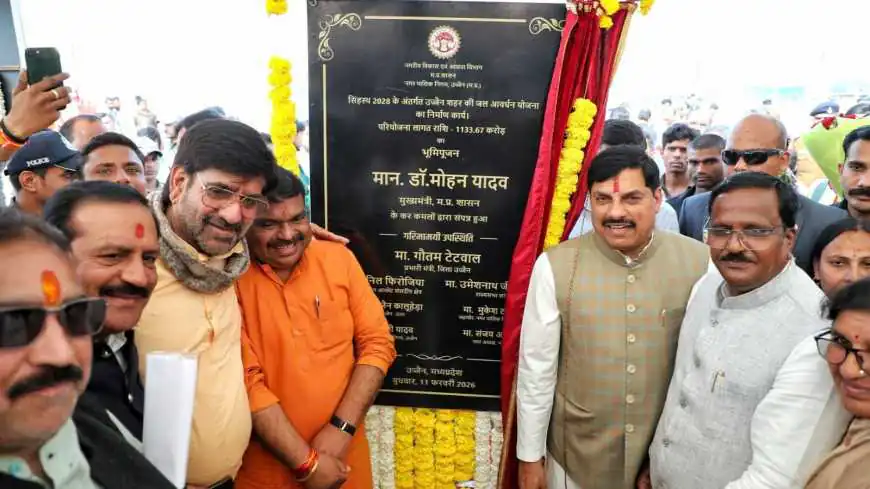


Harayakhedi Water Augmentation Project Speeds Up Ujjain’s Simhastha 2028 Preparation
Ujjain has taken a significant step toward strengthening its long-term water security while accelerating readiness for Ujjain Simhastha 2028. The city has initiated the Harayakhedi Water Augmentation Project, a major infrastructure program aimed at ensuring dependable drinking water supply for residents as well as the sharp rise in demand expected during the mega gathering.
According to information shared on the Chief Minister’s official social media account, the scheme carries an approved cost of ₹1133.67 crore and is scheduled for completion within 24 months.
Unlike temporary festival arrangements, the initiative has been planned as a permanent civic upgrade. Once operational, the expanded storage and distribution system is expected to support Ujjain’s water requirements up to the year 2055.
Pilgrims who need certainty for travel and accommodation planning should always refer to the officially confirmed Simhastha 2028 dates and Shahi Snan schedule published separately.
Trending Guides Now

Ujjain Airport Project: A Historic Leap Before Simhastha 2028

Government Doubles Powers of Ujjain Mayor and Commissioner Ahead of Simhastha 2028
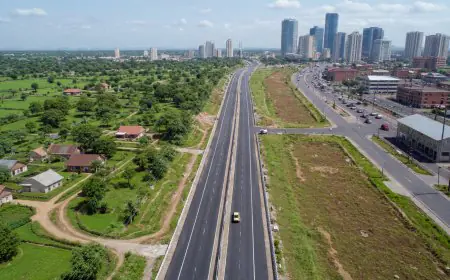
Indore–Ujjain Six-Lane Highway nearing completion — big step for regional growth!

Indore–Ujjain Six Lane Highway Update 2025: Completion Timeline & Simhastha Impact

Ujjain Railway Station to Mahakaleshwar Temple Distance (2026 Guide)

Ujjain Simhastha 2028 Dates Announced: Full Shahi Snan & Event Timeline

Ujjain Simhastha Update: CM Mohan Yadav Reviews 2028 Works

Ujjain Railway Station to Kal Bhairav Temple: Distance, Auto Fare and Best Route
What the Project Includes
The approved blueprint focuses on storage expansion and network strengthening across multiple wards of the city.
Seventeen new overhead tanks will be constructed. Their capacities will range from 600 kiloliters to 3000 kiloliters, allowing authorities to balance supply pressures across residential, commercial, and high-density pilgrimage zones.
A total of 708 kilometers of pipeline will be laid under the project. Out of this, around 534 kilometers will form a new distribution network, significantly modernizing the way water reaches households and service areas.
The execution timeline is set at 24 months.
To understand the deeper spiritual foundation behind this pilgrimage, readers may explore the complete explanation of Simhastha and its spiritual meaning in Ujjain.
Why It Matters for Simhastha 2028
When Simhastha takes place, Ujjain’s working population multiplies within days. Pilgrims, support staff, security personnel, healthcare services, food providers, and temporary settlements all depend on continuous water availability.

Any weakness in supply can directly affect sanitation, public health, and crowd comfort.
By expanding both storage and transmission, planners are attempting to create buffers that can absorb sudden spikes in demand. Elevated reservoirs will help maintain pressure stability, while new pipelines will reduce leakages and distribution bottlenecks.
In simple terms, the city is preparing to handle peak load without emergency improvisation.
For ongoing announcements, planning resources, and verified information, pilgrims can always refer to the official Simhastha 2028 guide and updates portal.
Moving Beyond Short-Term Fixes
Large religious events in the past often relied on temporary pumping stations or tanker supplementation. While useful, such measures rarely improved everyday civic life after the event ended.
The Harayakhedi scheme follows a different philosophy. It converts festival preparation into an opportunity for permanent urban strengthening. Residents will continue benefiting from the same system long after the gathering concludes.
Planning for 2055
Perhaps the most significant detail is the planning horizon. The infrastructure is being sized not just for current requirements but for population growth and geographic expansion expected over the next thirty years.
This forward approach reduces the risk of repeated reconstruction and ensures financial efficiency over time.
Also Read | Simhastha 2028 Mega Development Plan Revealed
Impact During Construction
Projects of this magnitude inevitably bring short-term inconvenience. Road cutting, pipe laying, traffic diversions, and localized service interruptions are common during implementation.
However, such phases are temporary and are typically scheduled in segments to minimize disruption. Once operational, the network aims to reduce breakdown frequency and emergency repairs.
A Signal of Administrative Priority
Water security is one of the most complex aspects of Simhastha management. Transport can be rerouted and tents can be expanded, but water systems require years of preparation.
By initiating this project now, authorities are signaling that core utilities are receiving early and serious attention.
Strengthening Everyday Urban Life
Beyond the mela, improved water reliability contributes to better hygiene, supports hospitals and businesses, and enhances overall living standards. It can also reduce dependence on private water supply methods in developing neighborhoods.
Thus, what begins as festival readiness ultimately becomes a foundation for sustained urban growth.
Related Simhastha 2028 Guides :