


















The Best Time to Meditate: Morning vs Evening — Find Your Sacred Moment
Discover whether morning or evening meditation suits you best. Compare energy, benefits, and science to find your perfect moment for stillness and balance.



The Best Time to Meditate: Morning vs Evening
Every seeker eventually asks the same question: When should I meditate?
For centuries, Indian sages have recognized two sacred windows—sunrise and sunset—when nature itself seems to pause. The still air, soft light, and balanced energy make these moments ideal for entering silence. Morning meditation invites awakening and clarity; evening meditation offers surrender and rest. Both are powerful; your task is to discover which aligns with your rhythm.
Morning Meditation — Rise With the Sun
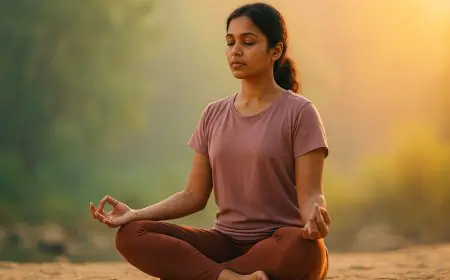
Brahma Muhurta, about 90 minutes before sunrise, is known as the creator’s hour. The air is rich with prana, and distractions are minimal.
Benefits of Morning Meditation:
-
Mind and breath are naturally calm after sleep.
Trending Guides Now
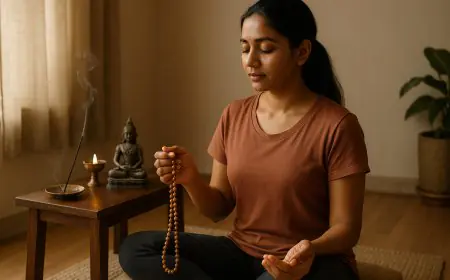
Using Mala Beads in Meditation Practice: A Complete Beginner’s Guide

Trataka Meditation in Indian Yogic System: Candle Gazing for Concentration and Inner Clarity
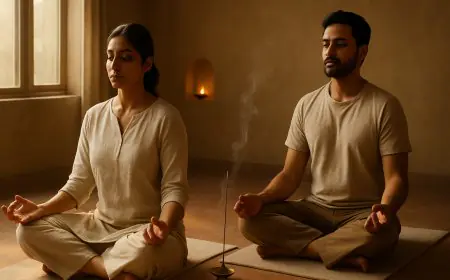
Observing Thoughts Meditation: The Ultimate Method to Detach From the Mind

Third Eye Meditation: How to Awaken Intuition and Deep Inner Awareness

Ujjain Railway Station to Mahakaleshwar Temple Distance (2026 Guide)

Ujjain Simhastha 2028 Dates Announced: Full Shahi Snan & Event Timeline

Ujjain Simhastha Update: CM Mohan Yadav Reviews 2028 Works

Karkateshwar Mahadev: 22/84 Mahadev of Ujjain
-
Sunrise energy boosts clarity and focus.
-
Sets a positive tone for the entire day.
-
Aligns with cortisol peak for alertness.
-
Fosters a spiritual sense of new beginnings.
How to Practice:
Wake slightly earlier, wash your face, and sit comfortably in Padmasana or on a chair. Keep the spine tall and practice breath awareness or mantra repetition for 10–20 minutes. End by setting a clear intention for your day.
Evening Meditation — Return to Stillness
As daylight fades, the mind turns inward. Evening meditation releases the tension collected through the day.

Benefits of Evening Meditation:
-
Calms the nervous system for deeper sleep.
-
Helps process emotions and unwind mental clutter.
-
Encourages gratitude and reflection.
-
Transitions you from activity to rest.
-
Reduces anxiety and mental fatigue.
How to Practice:
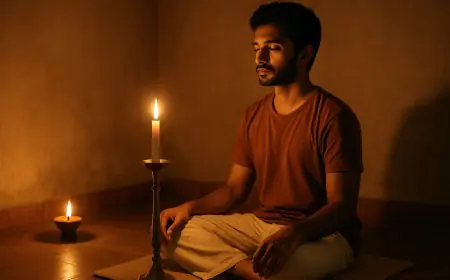
After your tasks, dim the lights, light a diya or candle, and sit quietly. Practice a short body-scan or loving-kindness meditation for 15 minutes. Let thoughts settle as the day closes.
Morning vs Evening — Energy in Contrast
| Aspect | Morning | Evening |
|---|---|---|
| Energy Flow | Expansive, creative | Absorptive, reflective |
| Effect on Mood | Uplifting, energizing | Soothing, releasing |
| Ideal Techniques | Breath, mantra, visualization | Gratitude, reflection, body-scan |
| Symbolism | New beginnings | Completion and surrender |
Morning connects you to creation; evening connects you to completion. Practicing both balances vitality with peace.
Science Behind Meditation Timing
Scientific studies confirm both times have benefits:
-
Morning meditation increases alpha brainwaves, improving focus and motivation.
-
Evening meditation enhances theta and delta activity, leading to better sleep and emotional regulation.
-
Regular practice—at any consistent hour—builds neural pathways for calmness and mindfulness.
Consistency matters more than the clock. The best time is when your mind feels clear and undistracted.
Finding Your Ideal Time
-
Experiment: Try morning meditation for a week, then evening meditation for the next.
-
Observe: Track your focus, energy, and mood.
-
Commit: Choose the time that feels effortless and natural.
-
Refine: Adapt gently with your lifestyle changes.
-
Avoid: Heavy meals or screen time right before practice.
Dual Practice — Balancing Both
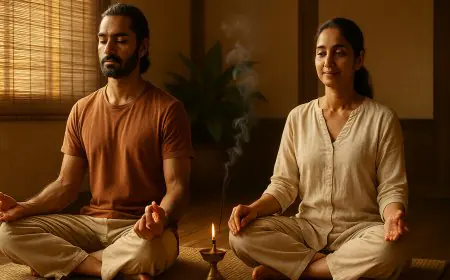
Seasoned meditators often practice twice daily—morning for energy, evening for release.
Ten minutes in each window is enough to harmonize your inner and outer worlds.
This rhythm reflects nature’s breath: inhalation at sunrise, exhalation at sunset.
Common Mistakes
-
Waiting for the “perfect” hour instead of starting.
-
Meditating inconsistently.
-
Expecting identical results every day.
-
Practicing immediately after heavy meals.
-
Checking devices before or after meditation.
Small consistency > big irregularity.
Simple Rituals for Morning & Evening
-
Keep a fixed meditation space.
-
Use a soft chime or timer.
-
Light an incense stick or diya for sensory calmness.
-
Write a single line of gratitude after each session.
-
Avoid multitasking afterward—stay quiet for a few moments.
Conclusion — The Best Time Is the One You Keep
Whether under the golden sun or the gentle moon, the true magic of meditation lies not in when you practice, but that you practice.
When the habit becomes rhythm, time itself becomes meditation. Start today—five mindful breaths at dawn or dusk—and watch your day transform from tension to tranquility.
Frequently Asked Questions