

















Ujjain Simhastha Trip Planning: Step-by-Step Master Guide
A complete Ujjain Simhastha planning guide covering dates, rituals, stay, travel, food, safety, itineraries, and flawless on-ground execution.


Ujjain Simhastha Trip Planning: Step-by-Step Master Guide
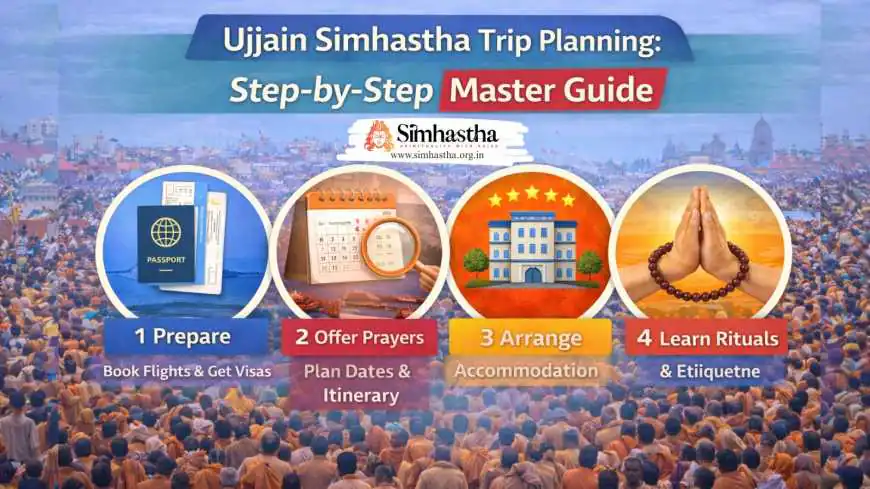
Ujjain Simhastha trip planning means systematically preparing dates, rituals, accommodation, transport, food, safety, and daily movement in advance so that pilgrims can participate in Simhastha pilgrimage planning without confusion, exhaustion, or missed rituals, while ensuring safety, time efficiency, and a spiritually meaningful experience throughout the journey.
Why Ujjain Simhastha Trip Planning Cannot Be Done Casually
Many pilgrims assume that devotion alone is sufficient for Ujjain Simhastha. In reality, Simhastha travel planning guide discipline determines whether the pilgrimage becomes fulfilling or overwhelming.
Ujjain Simhastha trip planning is required because:
-
The city temporarily hosts millions of pilgrims
Trending Guides Now

Ujjain Simhastha 7 Day Itinerary for Families

Is Phone Allowed in Mahakaleshwar Temple Ujjain?

How Many Days Are Enough for Ujjain? Complete Trip Planner

How to Travel Inside Ujjain During Simhastha 2028: Routes, Maps and Movement Plans

Ujjain Railway Station to Mahakaleshwar Temple Distance (2026 Guide)

Ujjain Simhastha 2028 Dates Announced: Full Shahi Snan & Event Timeline

Ujjain Simhastha Update: CM Mohan Yadav Reviews 2028 Works

Karkateshwar Mahadev: 22/84 Mahadev of Ujjain
-
Transport and routes change daily
-
Rituals follow strict timing windows
-
Accommodation availability fluctuates rapidly
-
Crowd movement affects every decision
Without structured Simhastha planning steps, even sincere pilgrims face fatigue, missed opportunities, and avoidable stress.
For Every pilgrims, understanding Simhastha 2028 dates and the official Shahi Snan timeline is essential before booking flights or accommodation, as these sacred dates are completely non-negotiable.

Understanding the Scale of Simhastha Pilgrimage Planning
Before planning details, pilgrims must understand scale.
Ujjain Simhastha preparation is closer to planning a mass-event expedition than a normal religious trip. Roads become one-way, walking replaces vehicles, and daily schedules depend on administration, not personal convenience.
A correct Simhastha visit planning mindset accepts:
-
Delays are normal
-
Walking is unavoidable
-
Flexibility is essential
-
Discipline equals safety
This mental reset is the first step of Ujjain Simhastha yatra planning.
A first time Simhastha guide is essential because without contextual understanding, pilgrims arrive prepared for devotion but unprepared for logistics, stamina, patience, and adaptability.
Step 1: Fixing the Right Dates in Ujjain Simhastha Trip Planning
Dates are the foundation of all Simhastha pilgrimage planning.
Why Date Selection Matters
Different dates mean:
-
Different crowd density
-
Different ritual importance
-
Different accommodation pressure
-
Different travel difficulty
Choosing dates blindly is one of the biggest planning mistakes.
Understanding Simhastha Planning Steps for Dates
Dates are decided based on:
-
Official Simhastha calendar
-
Bathing (snan) dates
-
Personal travel capacity
-
Physical endurance
-
Purpose of visit
Pilgrims focused on Shipra snan plan differently from those focused on cultural observation.
Peak vs Non-Peak Dates in Ujjain Simhastha Travel Guide
Peak dates offer high ritual significance but extreme crowd density.
Non-peak dates offer smoother movement but fewer ceremonial events.
A balanced Ujjain pilgrimage planning approach often combines:
-
One peak ritual day
-
One buffer day for rest and darshan
Also Read | Best Time to Visit Ujjain Simhastha 2028
Step 2: Defining the Purpose of Your Simhastha Trip Planning
Every successful Simhastha logistics guide begins with clarity of purpose.
Common Pilgrim Objectives
Pilgrims usually fall into these categories:
-
Ritual-focused pilgrims
-
First-time observers
-
Elderly or family pilgrims
-
Time-constrained visitors
-
Foreign or research visitors
Each category requires a different Ujjain Simhastha trip planning structure.
Why Purpose Defines Planning Depth
A pilgrim focused on rituals needs:
-
Snan-centric itinerary
-
Early mornings
-
Short walking loops
A pilgrim focused on learning needs:
-
Akhara visits
-
Discourse schedules
-
Cultural buffers
Purpose alignment prevents over-planning.
Step 3: Duration Planning in Ujjain Simhastha Trip Planning
Duration determines everything.
Common Duration Mistakes
Many pilgrims either:
-
Plan too short and rush
-
Plan too long and exhaust themselves
Correct Simhastha visit planning matches duration to stamina.
Ideal Duration by Pilgrim Type
-
First-time pilgrims: 3–5 days
-
Ritual-only pilgrims: 2–3 days
-
Elderly pilgrims: 2–4 days
-
Researchers or observers: 5–7 days
Duration must include rest days, not just ritual days.
Step 4: Accommodation Strategy in Ujjain Simhastha Preparation
Accommodation is the most sensitive part of Ujjain Simhastha trip planning.
Why Accommodation Is Not Just Sleeping Space
Location affects:
-
Walking distance
-
Crowd exposure
-
Daily fatigue
-
Emergency access
A poor accommodation decision can ruin the entire Simhastha travel planning guide.
Types of Accommodation in Ujjain Simhastha Travel Guide
Pilgrims typically choose:
-
Government tent cities
-
Dharamshalas
-
Hotels outside core zones
-
Akhara-linked stays
Each option has trade-offs in cost, distance, and comfort.
Location Over Comfort Rule
In Ujjain Simhastha yatra planning, proximity matters more than luxury. A basic stay near movement routes is better than a comfortable stay far away.
Step 5: Transport Planning in Simhastha Logistics Guide
Transport planning must be layered.
Arrival Transport
Pilgrims arrive via:
-
Rail
-
Road
-
Nearby airports
Arrival timing should avoid peak ritual mornings.
Local Movement Planning
During Ujjain Simhastha, walking replaces vehicles. Planning must assume:
-
Restricted vehicle zones
-
Shuttle-only corridors
-
Time-based movement permissions
Footwear choice becomes a planning decision.
Step 6: Physical and Mental Preparation in Ujjain Simhastha Preparation
Pilgrimage stress is real.
Physical Readiness
Preparation includes:
-
Walking practice
-
Hydration discipline
-
Light diet before travel
Ignoring physical preparation undermines Simhastha pilgrimage planning.
Also Read | Is Ujjain Simhastha Physically Difficult?
Mental Readiness
Mental preparation includes:
-
Accepting uncertainty
-
Practicing patience
-
Letting go of rigid schedules
A calm mind handles crowds better than any itinerary.
Many pilgrims arrive physically ready but mentally restless. Learning basic meditation discipline before coming can make long waiting periods peaceful rather than stressful.
Step 7: Day-by-Day Framework for Ujjain Simhastha Trip Planning
A successful Ujjain Simhastha trip planning approach converts broad goals into a realistic day-by-day framework. This prevents overloading, missed rituals, and fatigue.
The Three-Layer Day Structure
Every effective Simhastha travel planning guide uses three layers per day:
-
Primary Ritual Window
-
Support Activities Window
-
Recovery and Safety Window
This structure aligns Simhastha planning steps with how the city actually functions.
Morning Layer in Ujjain Simhastha Travel Guide
Morning is reserved for:
-
Shipra snan or high-priority darshan
-
Long walking segments
-
Queue-based movement
Morning plans must be strict. Flexibility here creates chaos later.
Midday Layer in Simhastha Visit Planning
Midday focuses on:
-
Rest and hydration
-
Food intake
-
Short, low-effort visits
Midday is not optional. It stabilizes the entire Ujjain pilgrimage planning cycle.
Evening Layer in Simhastha Logistics Guide
Evening activities include:
-
Aarti participation
-
Reflection
-
Short cultural observation
Evenings must end early to preserve stamina for the next day.
Step 8: Planning Shipra Snan Within Ujjain Simhastha Trip Planning
For many pilgrims, Shipra snan is the emotional and spiritual center of Simhastha pilgrimage planning.
Why Shipra Snan Requires Dedicated Planning
Unlike temple darshan, Shipra snan is:
-
Time-bound
-
Crowd-regulated
-
Physically demanding
Treating it casually is a critical planning error.
Selecting the Right Shipra Snan Day
Pilgrims must choose snan dates based on:
-
Official snan calendar
-
Personal stamina
-
Crowd tolerance
Peak snan days offer spiritual intensity but demand advanced Ujjain Simhastha preparation.
Snan-Day Movement Planning
On snan day:
-
Wake before sunrise
-
Carry minimal items
-
Follow only official routes
-
Exit ghats promptly
This discipline protects both safety and ritual dignity.
Step 9: Temple Darshan Sequencing in Ujjain Simhastha Yatra Planning
Temple visits must follow logic, not emotion.
Why Random Darshan Fails
Without sequencing, pilgrims:
-
Walk unnecessarily
-
Miss darshan windows
-
Waste energy in queues
A good Simhastha travel planning guide treats darshan like route optimization.
Darshan Priority Order
General sequencing principle:
-
Primary temple (highest personal significance)
-
Secondary nearby temples
-
Optional shrines only if energy allows
Less is more in Ujjain Simhastha trip planning.
Step 10: Crowd Management Awareness in Simhastha Trip Planning
Crowds are not obstacles. They are systems.
How Crowd Systems Actually Work
Crowd movement is controlled through:
-
One-way corridors
-
Time slots
-
Sector zoning
-
Volunteer enforcement
Fighting the system increases risk and delays.
How Pilgrims Should Move
Effective Simhastha visit planning means:
-
Moving with the crowd
-
Never reversing direction
-
Stopping only in designated zones
Understanding crowd logic reduces stress dramatically.
Step 11: Safety-First Daily Routine in Ujjain Simhastha Preparation
Safety is not a separate checklist. It is a daily habit.
Daily Safety Habits
Every day should include:
-
Hydration checkpoints
-
Foot condition checks
-
Weather awareness
-
Exit route review
These habits are core to Simhastha logistics guide discipline.
Night Safety Planning
Night movement should be:
-
Minimal
-
Within lit corridors
-
Purpose-driven only
Over-movement at night increases risk and exhaustion.
Step 12: Food and Water Planning in Ujjain Simhastha Trip Planning
Food planning is survival planning.
Why Food Planning Matters
Hunger and dehydration cause:
-
Medical emergencies
-
Irritability
-
Poor decision-making
A stable food routine improves the entire Simhastha pilgrimage planning experience.
Also Read | How Tent City Kitchens Serve Millions at Simhastha 2028
Food Strategy for Pilgrims
Recommended approach:
-
Light meals
-
Familiar foods
-
Avoid overeating
-
Regular water intake
Do not experiment with diet during Ujjain Simhastha.
Also Read | Food, Water & Facilities in Simhastha Tent City
Step 13: Health and Emergency Preparedness in Simhastha Visit Planning
Pilgrims must plan for what they hope will not happen.
Common Health Issues
Typical issues include:
-
Dehydration
-
Fatigue
-
Minor injuries
-
Digestive problems
Preparedness prevents escalation.
Emergency Readiness Checklist
Every pilgrim should:
-
Know nearest medical camps
-
Carry basic medication
-
Inform companions of conditions
This is non-negotiable in Ujjain Simhastha trip planning.
Step 14: Special Planning for Different Pilgrim Types
A master guide must adapt.
Elderly Pilgrims
Planning adjustments:
-
Shorter walking loops
-
More rest days
-
Avoid peak snan days
Women Pilgrims
Planning adjustments:
-
Daylight movement focus
-
Regulated zones
-
Conservative evening plans
First-Time Pilgrims
Planning adjustments:
-
Fewer rituals
-
Guided movement
-
Strong safety emphasis
Personalization is the hallmark of expert Simhastha planning steps.
Step 15: Budget and Expense Planning in Ujjain Simhastha Trip Planning
Unplanned expenses cause stress.
Major Expense Categories
Pilgrims spend on:
-
Travel
-
Accommodation
-
Food (minimal)
-
Essentials
Budget clarity prevents daily anxiety.
Cost-Control Principles
-
Book early
-
Choose proximity over luxury
-
Avoid last-minute transport
Smart budgeting supports smoother Ujjain pilgrimage planning.
Step 16: Tent City Selection Strategy in Ujjain Simhastha Trip Planning
Choosing the right tent city is one of the most underestimated decisions in Ujjain Simhastha trip planning.
Why Tent City Choice Matters
Tent city selection directly impacts:
-
Daily walking distance
-
Access to ghats and routes
-
Food availability
-
Medical and safety response time
A poor choice increases fatigue and reduces ritual participation quality.
How Simhastha Tent Cities Are Structured
Tent cities are divided into:
-
High-density ritual-proximate zones
-
Mid-distance residential zones
-
Peripheral overflow zones
Each serves different pilgrim profiles within Simhastha logistics guide frameworks.
Matching Tent City to Pilgrim Type
-
Ritual-focused pilgrims should choose proximity zones
-
Elderly pilgrims should choose medically supported zones
-
Budget pilgrims should choose community-kitchen-heavy zones
Correct alignment improves overall Ujjain Simhastha preparation outcomes.
Step 17: Transport Timing Matrix in Simhastha Travel Planning Guide
Transport decisions at Ujjain Simhastha are about timing, not distance.
Arrival Timing Strategy
Best arrival windows:
-
One day before major rituals
-
Late afternoon or evening
-
Non-peak rail arrival slots
Avoid arriving on the morning of peak snan days.
Departure Timing Strategy
Best departure windows:
-
Mid-morning after peak dispersal
-
Late night after evening rituals
Departure planning must be part of Ujjain Simhastha trip planning, not an afterthought.
Local Transport Reality
Inside Ujjain Simhastha:
-
Walking dominates
-
Shuttle corridors are fixed
-
Private vehicles have limited access
Footwear and stamina planning are transport decisions.
Step 18: Packing Strategy in Ujjain Simhastha Preparation
Packing errors are silent trip killers.
What Pilgrims Commonly Overpack
Avoid:
-
Multiple clothing changes
-
Heavy electronics
-
Non-essential valuables
-
Bulky luggage
Mobility matters more than convenience.
Essential Packing List for Simhastha Visit Planning
Pilgrims should carry:
-
Comfortable walking footwear
-
Light clothing layers
-
Personal medication
-
Reusable water container
-
Identification documents
Minimalism improves safety and endurance.
Weather-Responsive Packing
Weather can shift quickly. Ujjain Simhastha trip planning must include:
-
Light shawls for mornings
-
Breathable fabrics for daytime
-
Head protection
Ignoring weather increases fatigue risk.
Step 19: Communication Planning in Simhastha Logistics Guide
Communication failures cause separation and panic.
Why Communication Needs Planning
Network congestion is common during Ujjain Simhastha. Relying only on phones is risky.
Effective Communication Strategy
Pilgrims should:
-
Pre-decide physical meeting points
-
Fix check-in times
-
Use simple signals within groups
Low-tech planning prevents high-stress situations.
Emergency Contact Discipline
Every pilgrim must:
-
Memorize key contact numbers
-
Carry written emergency details
This is essential in Simhastha pilgrimage planning.
Step 20: Technology Use Without Dependency in Ujjain Simhastha Trip Planning
Technology should assist, not distract.
Smart Use of Technology
Recommended uses:
-
Offline maps
-
Saved advisories
-
Emergency numbers
Avoid constant live tracking or social updates.
Risks of Over-Dependence
Overuse causes:
-
Reduced situational awareness
-
Anxiety during signal loss
-
Slower crowd response
Mindful tech use improves safety.
Step 21: Solo vs Group Planning Logic in Simhastha Visit Planning
Planning changes dramatically based on travel style.
Solo Pilgrims
Solo Ujjain Simhastha trip planning requires:
-
Extra safety discipline
-
Conservative schedules
-
Early daily starts
Flexibility is an advantage, but caution is mandatory.
Group and Family Pilgrims
Group planning requires:
-
Slower walking pace
-
Pre-fixed regroup points
-
Simplified daily objectives
Group harmony matters more than coverage.
Step 22: Psychological Endurance in Ujjain Simhastha Preparation
Mental fatigue arrives before physical fatigue.
Common Psychological Challenges
Pilgrims experience:
-
Overstimulation
-
Frustration with delays
-
Comparison anxiety
These weaken the pilgrimage experience.
Mental Endurance Practices
Pilgrims should:
-
Accept unpredictability
-
Reduce daily expectations
-
Schedule quiet moments
Mental discipline is part of Simhastha planning steps.
Step 23: Decision-Making Discipline During the Pilgrimage
Bad decisions compound quickly in large crowds.
Rules for On-Ground Decisions
-
Never rush due to fear of missing out
-
Never follow unofficial shortcuts
-
Never skip rest to “save time”
Calm decisions preserve safety and clarity.
Step 24: Understanding Administrative Announcements in Ujjain Simhastha Trip Planning
Administrative instructions shape daily reality during Ujjain Simhastha trip planning.
Why Administrative Announcements Matter
Route changes, access restrictions, and ritual timing updates are often announced at short notice. Ignoring official updates leads to unnecessary detours and missed opportunities.
How Pilgrims Should Respond
Pilgrims should:
-
Listen to official public announcements
-
Follow instructions from volunteers and officials
-
Adjust plans immediately when routes change
Respecting administration improves safety and movement efficiency during Simhastha pilgrimage planning.
Step 25: Handling Weather Variations During Ujjain Simhastha Trip Planning
Weather directly impacts stamina, health, and crowd behavior.
Why Weather Awareness Is Important
Sudden temperature changes, wind, or unseasonal conditions increase fatigue and health risks, especially during long walking days.
Weather-Adaptive Planning Practices
Pilgrims should:
-
Adjust walking intensity based on weather
-
Increase hydration during warmer periods
-
Reduce exposure during adverse conditions
Weather-responsive planning protects endurance and comfort during Ujjain Simhastha preparation.
Step 26: Managing Personal Belongings Safely During Simhastha Visit Planning
Crowded environments increase the risk of misplacing belongings.
Why Belongings Management Matters
Loss of essentials creates stress and disrupts daily plans.
Safe Belongings Practices
Pilgrims should:
-
Carry only essential items
-
Use secure, close-fitting bags
-
Avoid frequent handling of valuables
Belongings discipline supports calm and uninterrupted Simhastha logistics guide execution.
Step 27: Maintaining Cleanliness and Hygiene During Ujjain Simhastha Trip Planning
Personal hygiene directly affects health during long pilgrimages.
Why Hygiene Cannot Be Ignored
Crowded conditions increase the risk of infections and discomfort.
Practical Hygiene Habits
Pilgrims should:
-
Wash hands regularly
-
Keep feet dry and clean
-
Change damp clothing promptly
Basic hygiene habits reduce illness risk and sustain energy during Ujjain pilgrimage planning.
Step 28: Exit Strategy as Part of Ujjain Simhastha Trip Planning
Leaving Ujjain Simhastha requires as much planning as arriving.
Why Exit Planning Is Critical
Post-ritual fatigue is high. Poor exit planning leads to:
-
Missed transport
-
Physical collapse
-
Emotional burnout
Smart Exit Strategy
-
Leave during non-peak windows
-
Rest before long journeys
-
Avoid same-day long travel after peak snan
A good exit preserves the pilgrimage’s positive impact.
Step 29: Integrating the Experience After Returning Home
The pilgrimage does not end at departure.
Post-Trip Integration
Pilgrims should:
-
Rest adequately
-
Reflect on insights
-
Gradually resume routine
Integration completes Ujjain Simhastha yatra planning.
Step 30: Closing the Journey With Gratitude and Responsibility
The final step of Ujjain Simhastha trip planning is how pilgrims conclude the experience.
Why the Ending Matters
A calm, respectful conclusion preserves the emotional and physical value of the journey.
Responsible Closure Practices
Pilgrims should:
-
Follow exit instructions calmly
-
Avoid crowding during departure
-
Respect public spaces and fellow pilgrims
Ending responsibly completes Simhastha visit planning with dignity and balance.
This article may contain affiliate links. If you purchase through them, we may earn a small commission at no extra cost to you.
Related Simhastha 2028 Guides :
- Simhastha 2028 Dates Officially Announced: Full Event & Shahi Snan Timeline
- Top 10 Routes to Enter Ujjain During Simhastha 2028 Without Traffic Hassles
- How to Travel Inside Ujjain During Simhastha 2028: Routes, Maps and Movement Plans
- How to Travel in Ujjain During Peak Snan Days: Do’s & Don’ts for Simhastha 2028
- Solo Travel Guide for Simhastha 2028: Safety, Budget, Stay & Movement Tips
- Mumbai to Ujjain for Simhastha 2028: Fastest Routes & Budget Tips
- Bengaluru to Ujjain for Simhastha 2028: Night Travel vs Day Travel Comparison
- Delhi to Ujjain for Simhastha 2028: Fastest Same-Day Travel Plan for Pilgrims
- Ujjain Simhastha from New York: Best Travel & Stay Guide
- Ujjain Simhastha From London: Complete Travel & Stay Guide
Frequently Asked Questions