


















Ujjain Simhastha 2028: Smart Waste Management Initiative Revealed
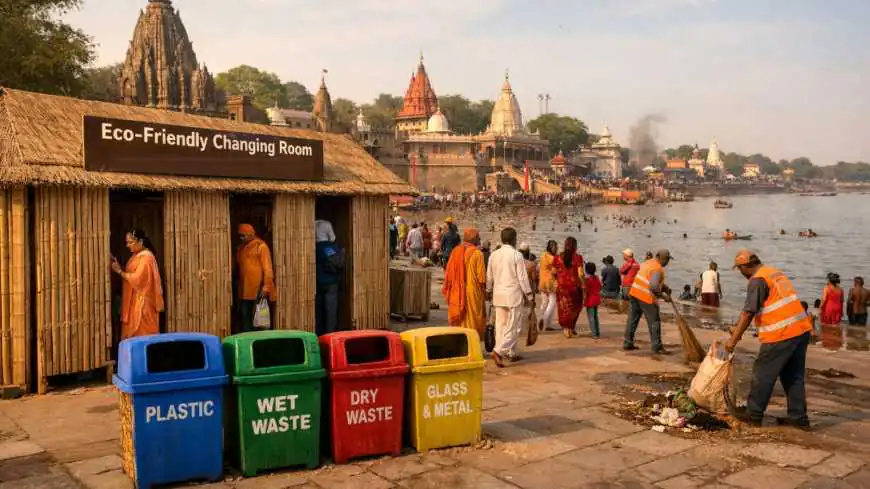
Ujjain Simhastha 2028 preparations introduce eco-friendly changing rooms and litter bins made from recycled waste to improve cleanliness and sustainability.


Ujjain Simhastha Is Evolving, Not Just Expanding
Ujjain Simhastha has always been more than a religious gathering. It is a living system where spirituality, administration, and human movement intersect on a massive scale. Every cycle of Simhastha reflects how the city adapts to growing expectations, rising footfall, and modern challenges.
This time, the transformation is not just visible in roads or crowd planning. It is unfolding in something far more critical yet often overlooked, waste management and environmental responsibility.
A recent initiative by the Ujjain municipal authorities introduces a powerful shift. Waste is no longer treated as a problem to remove. It is being converted into infrastructure that directly serves pilgrims.
This includes:
Trending Guides Now

Simhastha 2028 Latest Update: Disaster Mitra Training Begins in Ujjain

Ujjain Airport Project: A Historic Leap Before Simhastha 2028
Before Simhastha 2028: How ₹20,000 Crore Will Turn Ujjain into the World’s Spiritual Capital

Ujjain Simhastha 2028 to Deploy 25,000+ Trained Personnel and Volunteers

Ujjain Railway Station to Mahakaleshwar Temple Distance (2026 Guide)

Ujjain Simhastha 2028 Dates Announced: Full Shahi Snan & Event Timeline

Ujjain Simhastha Update: CM Mohan Yadav Reviews 2028 Works

Karkateshwar Mahadev: 22/84 Mahadev of Ujjain
- Changing rooms made from recycled materials
- Litter bins created from waste products
This approach signals that Ujjain Simhastha is entering a smarter, more sustainable phase, with Simhastha 2028 acting as the execution stage of this larger vision.
Also Read | Ujjain's New Smart City Plan for Simhastha 2028 Revealed
Ujjain Simhastha: Scale That Demands Innovation
To understand why this initiative matters, one must understand the scale of Simhastha in Ujjain.
During peak bathing days:
- Millions gather at the Shipra river
- Temporary settlements expand across the city
- Food distribution, rituals, and movement generate enormous waste
This creates three major pressures:
- Cleanliness of ghats and public areas
- Waste disposal logistics
- Environmental impact on river and surroundings
Traditional systems alone are no longer enough. This is why Ujjain Simhastha management is shifting toward innovation-driven solutions.

From Waste to Utility: A Strategic Shift in Planning
The current initiative is built on a circular approach:
Waste is not discarded. It is redesigned.
Instead of building new structures using fresh resources, the city is:
- Reusing discarded materials
- Converting them into public utility spaces
- Reducing additional waste generation
This aligns with modern urban planning concepts while staying rooted in the practical needs of Simhastha Ujjain.
Also Read | Ujjain Simhastha Official Shahi Snan Dates
Changing Rooms: A Silent but Essential Upgrade
Among all facilities, changing rooms are one of the most critical during Simhastha.
The Ground Reality
After taking a holy dip in the Shipra river:
- Devotees need privacy
- Public spaces get overcrowded
- Temporary arrangements often fall short
What Makes This Initiative Important
By building changing rooms from recycled materials, authorities are solving multiple issues at once:
- Providing essential facilities
- Reducing construction cost
- Promoting sustainable practices
These structures are designed to handle heavy usage while maintaining functionality.
Litter Bins: The First Line of Cleanliness
If Simhastha is to remain clean, waste must be controlled at the source.
This is where recycled litter bins play a crucial role.
The Problem They Solve
Without proper disposal systems:
- Waste spreads across ghats
- Public areas become unhygienic
- Cleaning becomes reactive instead of proactive
For Every pilgrims, understanding Simhastha 2028 dates and the official Shahi Snan timeline is essential before booking flights or accommodation, as these sacred dates are completely non-negotiable
The Impact of Smart Bin Placement
- Encourages immediate waste disposal
- Reduces garbage accumulation
- Supports systematic waste collection
- Visually reinforces cleanliness behavior
In large gatherings like Ujjain Simhastha, even small infrastructure decisions create large-scale impact.
Environmental Vision Behind Ujjain Simhastha
This initiative reflects a broader shift in how religious gatherings are being planned.
Key Environmental Benefits
- Reduction in unmanaged waste
- Lower dependency on new materials
- Cleaner river ecosystem
- Promotion of recycling culture
This positions Ujjain Simhastha as a potential model for sustainable pilgrimage management across India.
Economic Efficiency: Doing More with Less
Managing Simhastha requires significant financial planning.
By using recycled materials:
- Costs of temporary construction are reduced
- Resource utilization improves
- Budget can be redirected to critical infrastructure
This makes the initiative not just environmentally smart but economically strategic.
Public Behavior: The Deciding Factor
Infrastructure alone cannot ensure cleanliness.
The success of this initiative depends on:
- How responsibly visitors use facilities
- Awareness about waste disposal
- Respect for public systems
Authorities will need to combine infrastructure with:
- Awareness campaigns
- Volunteer support systems
- Clear signage and guidance
Challenges That Cannot Be Ignored
Every innovation comes with execution challenges.
Durability
Recycled structures must handle extreme usage levels.
Maintenance
Continuous upkeep will be essential during peak days.
Behavioral Resistance
Changing habits of millions is a gradual process.
However, addressing these challenges effectively will define the success of this model.
Simhastha 2028: Execution Phase of a Larger Vision
While this initiative is currently being implemented for Simhastha 2028, its importance goes beyond a single event.
It represents:
- A long-term shift in planning philosophy
- A move toward sustainable infrastructure
- A scalable model for future Simhastha cycles
This is not a one-time solution. It is the beginning of a new system.
What This Means for Visitors
For those planning to attend Ujjain Simhastha, this initiative will directly improve their experience:
- Cleaner surroundings
- Better facilities
- More organized public spaces
- Reduced discomfort
A well-managed environment enhances not just convenience but also the overall spiritual experience.
Strategic Positioning of Ujjain
With such initiatives, Ujjain is evolving into:
- A modern pilgrimage management model
- A city balancing tradition with innovation
- A benchmark for large-scale event planning
This strengthens its position at both national and global levels.
Future Scope: Beyond Current Implementation
If expanded further, this model can include:
- Waste-to-energy systems
- Composting zones
- Recycled seating and shelters
- Smart waste tracking systems
This could transform Ujjain Simhastha into one of the most sustainable religious gatherings in the world.
Related Simhastha 2028 Updates :
Frequently Asked Questions