

















Aura Visualization Meditation: A Beginner’s Guide to Understanding Your Energy Field
Learn how aura visualization works as a mindful awareness practice to sense your emotional presence, calm the mind, and improve inner balance naturally.


Introduction
Aura Visualization Meditation is a powerful yet gentle technique designed to help you understand your emotional landscape, mental presence, and inner balance through visualization. Although the word “aura” is often surrounded by mystical interpretations, in meditation traditions it simply refers to the subtle field of emotional and mental presence that surrounds each person.
This practice is not about seeing colors around the body or developing supernatural abilities. Instead, it teaches you to become aware of the inner atmosphere you carry — your mood, emotional residue, mental clarity, and subtle non-verbal signals. When approached through mindfulness and breath, aura visualization becomes a grounding technique that helps:
-
reduce emotional clutter
-
create mental clarity
Trending Guides Now
Color Meditation: A Simple Technique to Heal the Mind Through Visual Imagery
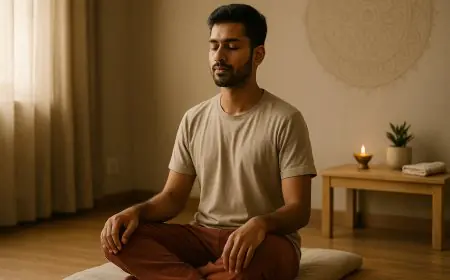
Transcendental Meditation: Simple Step-by-Step Process for Beginners
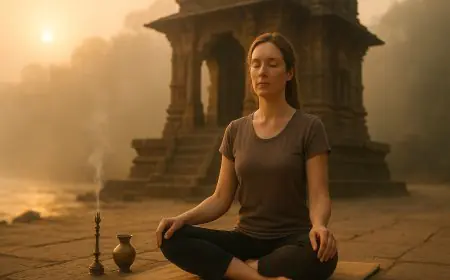
Indian Meditation Traditions: Journey from the Vedas to Modern Day Practices
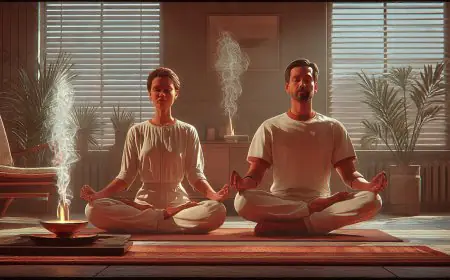
Sitting Positions for Meditation: Padmasana to Chair Pose — The Ultimate Guide

Ujjain Railway Station to Mahakaleshwar Temple Distance (2026 Guide)

Ujjain Simhastha 2028 Dates Announced: Full Shahi Snan & Event Timeline

Ujjain Simhastha Update: CM Mohan Yadav Reviews 2028 Works

Karkateshwar Mahadev: 22/84 Mahadev of Ujjain
-
enhance self-awareness
-
deepen inner stillness
-
improve intuition and sensitivity
This article brings you a safe, beginner-friendly, scientifically respectful, and spiritually authentic way to understand aura meditation without crossing into exaggerated or unverifiable claims. Everything presented here aligns with wellness, mindfulness, and traditional visualization practices that are widely accepted.
What Is an “Aura” in Meditation Terms?
In meditation philosophy, an “aura” is the subtle sense of presence that surrounds a person. It reflects:
-
emotional state

-
mental clarity
-
confidence
-
stress levels
-
personal energy (in a psychological sense)

Rather than imagining the aura as a metaphysical force, think of it as the emotional field you carry in any environment.
For example:
-
When someone is peaceful, you feel calm around them.
-
When someone is stressed, the atmosphere feels heavy.
-
When someone is joyful, their presence feels uplifting.
This “felt sense” is what traditional meditation texts metaphorically call the “aura.”
Aura Visualization is a meditation method where you observe this emotional presence using gentle imagery and breath.
How Aura Visualization Works
Aura Visualization uses two main components:
1. Internal Imagery
You visualize a soft field of light around your body.
This is symbolic — it helps the mind map emotional states.
2. Breath Awareness
Each inhale and exhale relaxes the nervous system, letting deeper awareness arise.
This combination helps you:
-
quiet the mind
-
identify inner tension
-
observe emotional patterns
-
release heaviness
-
feel mentally expanded
There is no supernatural technique here — the practice uses well-established psychological mechanisms like visualization and guided attention.
Benefits of Aura Visualization Meditation
Emotional Benefits
-
relieves internal heaviness
-
increases emotional clarity
-
supports emotional release
-
reduces stress-induced tension
-
promotes inner gentleness
Mental Benefits
-
improves focus and inner awareness
-
develops subtle perception
-
sharpens intuition
-
calms overthinking
-
improves decision-making
Wellness Benefits
-
encourages deeper breathing
-
enhances relaxation
-
stabilizes mood
-
promotes restful sleep
These outcomes arise naturally when the mind quiets through visualization.
Preparing for an Aura Meditation Session
To experience the practice deeply, follow these steps:
1. Choose a Quiet Place
A silent space increases sensitivity to inner cues.
2. Sit in a Comfortable Posture
Sukhasana, Vajrasana, or a chair with a straight spine are ideal.
3. Remove Distractions
Switch off digital devices or put them on silent.
4. Begin With Slow Breathing
Take 6–8 slow breaths to settle the nervous system.
5. Set an Intention
Examples:
-
“I want clarity.”
-
“I want emotional balance.”
-
“I want to release heaviness.”
This intention guides your inner experience.
Step-by-Step Aura Visualization Meditation Technique
Follow this safe, beginner-friendly method:
Step 1: Settle Into Stillness
Close your eyes.
Relax your shoulders.
Slow your breath.
Allow your mind to soften naturally.
Step 2: Sense Your Emotional Space
Before adding visualization, notice:
-
How is your breath?
-
Does your body feel heavy or light?
-
Is your chest tight or open?
-
What is your emotional tone right now?
Simply observe.
Step 3: Visualize a Soft Field of Light
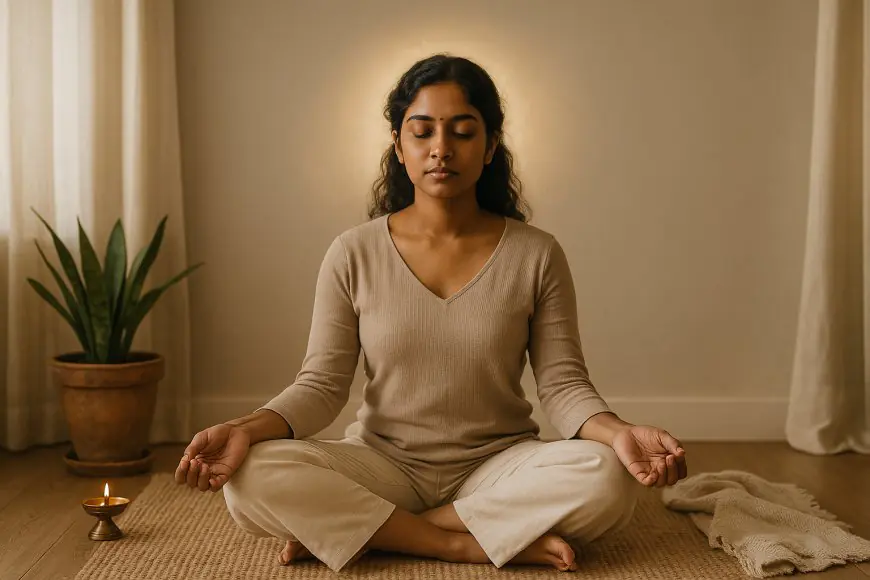
Imagine a gentle light surrounding your body like a soft halo.
Important:
-
The light is symbolic, not supernatural.
-
It represents your emotional state.
-
Keep it subtle and realistic.
The color can be:
-
white for clarity
-
gold for warmth
-
blue for calmness
-
green for emotional healing
Choose the color that feels natural.
Step 4: Expand Awareness Into the Light
Imagine the light slowly expanding:
-
2–3 inches beyond your skin
-
surrounding your shoulders
-
enveloping your torso
-
encircling your head and arms
Feel the light as a field of relaxation around your body.
Step 5: Observe Sensations Within the Aura
Check inside the light-field for:
-
warmth
-
coolness
-
spaciousness
-
pressure
-
restlessness
-
calmness
There is no right or wrong.
You are simply mapping your emotional space.
Step 6: Release Emotional Heaviness
With each exhale, imagine the light softening emotional weight.
This is symbolic — a visual tool for emotional letting-go.
Step 7: Stabilize the Aura
Let the surrounding field become:
-
calm
-
balanced
-
grounded
-
peaceful
Your breath and awareness merge into stillness.
Step 8: Slowly Return to Normal Awareness
Take 3 slow breaths.
Open your eyes gently.
Observe how your mental and emotional state has shifted.
Understanding Aura Colors (Non-Supernatural Explanation)
Traditional meditation assigns symbolic qualities to colors:
-
White: Clarity, lightness
-
Blue: Calmness
-
Green: Heart-centered balance
-
Yellow: Mental clarity
-
Gold: Warm emotional confidence
-
Purple: Deep introspection
These meanings are symbolic, not supernatural.
The purpose is to help your mind organize emotional experience.
Common Experiences During Aura Meditation
People often report:
-
feeling lighter
-
warmth or coolness
-
expanded awareness
-
deeper breathing
-
emotional release
-
inner quiet
-
mental clarity
These are natural neuro-psychological responses.
How Aura Visualization Helps Emotional Balance
Aura visualization gives you a map of your emotional state.
It helps identify:
-
stress pockets
-
emotional residue
-
subtle tension patterns
-
hidden anxiety
-
suppressed emotions
This awareness leads to emotional processing and release.
Tips for Deepening the Practice
-
Be consistent
-
Start with 5–10 minutes daily
-
Avoid forceful imagery
-
Keep the practice gentle
-
Use natural light if possible
-
Journal after sessions
-
Practice grounding afterward
Frequently Asked Questions