














Why Ujjain is Called the City of Salvation – Spiritual Secrets of Moksha Bhoomi
Discover why Ujjain is known as the ‘City of Salvation’. Explore its ancient temples, the power of Mahakal, the sacred Shipra River, and legends that promise moksha to every soul who visits this divine land.


Introduction: A City Where Life and Liberation Meet
There are cities that are beautiful, and there are cities that are divine.
But few places in the world can claim what Ujjain can — the power to free souls.
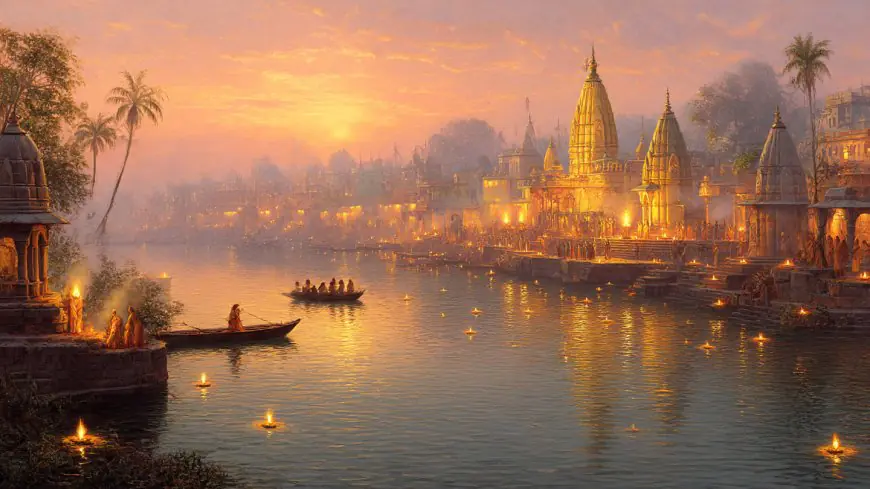
Known as the City of Salvation (Moksha Nagari), Ujjain stands on the sacred banks of the Shipra River, shimmering with devotion and drenched in thousands of years of spiritual energy.
This ancient city is where time, faith, and eternity meet — a place where every stone seems to whisper prayers, and every temple doorway opens into liberation.
To understand how Ujjain earned this sacred title, we must travel deep — through myth, history, and belief — to the roots of its eternal glory.
For Every pilgrims, understanding Simhastha 2028 dates and the official Shahi Snan timeline is essential before booking flights or accommodation, as these sacred dates are completely non-negotiable.
Trending Guides Now
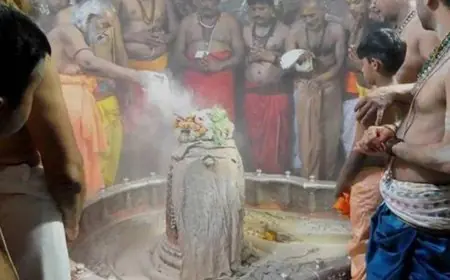
A Morning at Mahakaleshwar: My Experience of the Bhasma Aarti in Ujjain
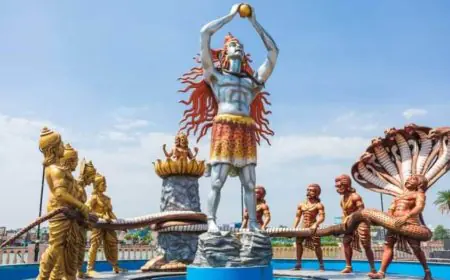
A Walk Through Mahakal Lok – Ujjain’s Grand Spiritual Corridor and Divine Experience
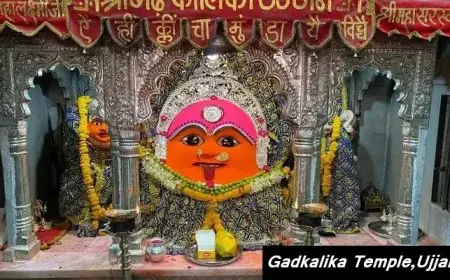
Gadkalika Temple: The Goddess Who Inspired Kalidasa?
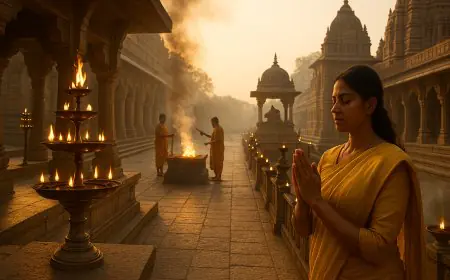
10 Most Powerful Days When Ujjain’s Spiritual Energy Peaks

Ujjain Railway Station to Mahakaleshwar Temple Distance (2026 Guide)

Ujjain Simhastha 2028 Dates Announced: Full Shahi Snan & Event Timeline

Ujjain Simhastha Update: CM Mohan Yadav Reviews 2028 Works

Karkateshwar Mahadev: 22/84 Mahadev of Ujjain
1. The Divine Geography of Moksha
According to Hindu scriptures, salvation or moksha is not a concept — it’s an energy, and certain places on Earth naturally radiate it.
Ujjain is one of those rare “Sapta Puris” — the seven sacred cities that guarantee liberation to those who die or worship there.
These seven cities are:
Ayodhya, Mathura, Haridwar, Kashi (Varanasi), Kanchi, Avantika (Ujjain), and Dwarka.
Each city represents a doorway to divine release — but Ujjain, also called Avantika, holds a special place because it is ruled by Lord Mahakaleshwar, the God of Time (Mahakal) himself.
In simple words — the one who conquers time can conquer death.
That’s why Ujjain isn’t just holy — it’s timeless.
2. The Legend of Lord Shiva as Mahakal
The heart of Ujjain beats inside the Mahakaleshwar Temple, one of the 12 Jyotirlingas of Lord Shiva.
The legend goes that long ago, a fierce demon named Dushan tormented the sages of Avantika.
When their prayers reached the heavens, Lord Shiva appeared from a fiery column of light and destroyed the demon in his Mahakal form — the Lord of Death and Eternity.

From that day onward, Shiva promised to reside here forever — not as a statue, but as a self-manifested lingam (Swayambhu Jyotirlinga) that protects devotees from fear, time, and rebirth.
It is said that even a moment spent chanting “Om Namah Shivaya” at Mahakal’s feet burns away lifetimes of karma.
3. Where Time Itself Stops — Ujjain and Kaal
Ujjain’s connection to time and salvation goes beyond mythology.
According to ancient astronomy, this city was the Greenwich of ancient India — the zero meridian point, known as the Tropic of Cancer (Kark Rekha).
In fact, the famous Vedh Shala Observatory, built by Raja Jai Singh in the 18th century, still stands as proof of Ujjain’s cosmic importance.
It’s here that ancient sages calculated celestial positions, planetary motions, and auspicious times (muhurtas).
Time was measured from Ujjain — and yet, spiritually, Ujjain is where time dissolves.
That’s the divine paradox — in the City of Time, one finds freedom from time.
4. The Shipra River – Flowing Towards Liberation
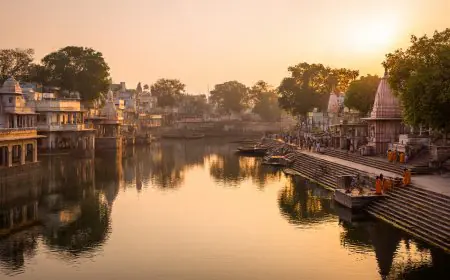
No story of Ujjain’s salvation can be told without the Shipra River — the lifeline of the city and the silent witness of countless rituals.
The word Shipra means “swift” — and indeed, the river is believed to carry away one’s sins swiftly.
Taking a dip in its waters during Simhastha Kumbh Mela, which happens once every 12 years, is said to purify the soul and grant moksha.
Every evening at Ram Ghat, the river comes alive during the Shipra Aarti — hundreds of lamps floating on the water, chanting priests, and the scent of incense rising into the dusk.
It’s said that if you close your eyes at that moment, you can feel eternity flowing.
5. The Sacred Map of Moksha – Ujjain’s Holy Spots
Ujjain is not just one temple — it’s a sacred web of shrines, each contributing to the city’s spiritual frequency.
Here are the key places believed to lead the soul toward liberation:
-
Mahakaleshwar Jyotirlinga: The destroyer of time and karma.
-
Harsiddhi Mata Temple: Where Goddess Parvati’s elbow fell; she grants divine strength to seekers.
-
Mangalnath Temple: The birthplace of Mars (Mangal) — ideal for removing planetary afflictions.
-
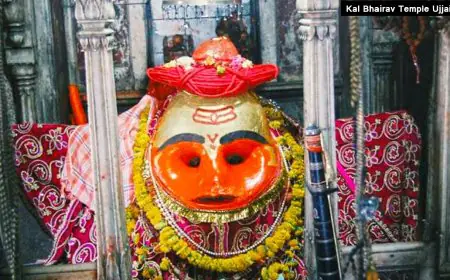
Kal Bhairav Temple: The guardian of Ujjain, where Shiva’s fierce form accepts liquor as offering — symbolizing transformation of tamas (darkness) into energy.
-
Sandipani Ashram: The school where Lord Krishna received his divine education — representing enlightenment before salvation.
Together, these temples form a spiritual circuit that balances all energies — body, mind, and soul.
6. The Power of Death in Ujjain – Not the End, but Liberation
In most places, death is mourned.
But in Ujjain, it’s revered — for death here is not an ending, but a beginning of freedom.
Scriptures say that dying in Ujjain grants moksha, just like Kashi.
This belief is rooted in the story of Mahakal, who promised that no soul departing from this land would wander in darkness.
That’s why many devotees choose to spend their final years here — living near the temple, chanting the Shiva Mahimna Stotra, and waiting peacefully for the eternal embrace.
7. The Simhastha Kumbh – When Salvation Descends to Earth
Every twelve years, Ujjain becomes the center of the cosmos during the Simhastha Kumbh Mela.
It is said that when Jupiter enters Leo (Simha Rashi), the divine nectar of immortality flows through the Shipra River.
Millions of pilgrims, sadhus, and saints gather to bathe in its sacred waters — each seeking salvation.
The atmosphere becomes surreal — the air thick with devotion, the streets lined with chanting monks, and the city vibrating with the energy of countless prayers.
This is the time when Ujjain is not just the City of Salvation — it becomes salvation itself.
8. The Ancient Wisdom of Moksha
What does salvation mean, truly?
Is it escaping death, or realizing that we were never bound to begin with?
The saints of Ujjain say that moksha is not a place — it’s a realization.
It’s the awakening that the soul is eternal, untouched by pain, untouched by time.
When one walks through Mahakal’s corridors, sits by the Shipra, or listens to the temple bells echo through the mist, something within starts to remember — that freedom is our natural state.
That’s how Ujjain frees — not by magic, but by remembrance.
9. Ujjain in Scriptures and Epics
Ujjain, or Avantika, finds mention in several sacred texts —
-
In the Skanda Purana, it is called the place where Lord Shiva resides eternally.
-
The Mahabharata describes Ujjain as a city “equal to heaven.”
-
In Kalidasa’s Meghaduta, the poet describes Ujjain as “a city kissed by the fragrance of devotion.”
It was also the capital of King Vikramaditya, the legendary ruler whose era (Vikram Samvat) still marks the Indian calendar.
Every monument, from Kal Bhairav to Chintaman Ganesh, carries layers of both myth and memory — proof that Ujjain has never been just a city, but a bridge between Earth and the Infinite.
10. The City That Lives Beyond Time
Even today, as the world rushes toward modernity, Ujjain stands still — not in slowness, but in timelessness.
Morning aartis at Mahakal, ringing bells at dawn, saffron robes fluttering in the wind — everything moves to a rhythm older than history itself.
Those who come here searching for peace often leave with something greater — a sense of surrender, of being part of something eternal.
Maybe that’s what salvation truly is — not leaving life behind, but finding the divine within it.
Conclusion: Ujjain – Where Every Step Leads Home
Ujjain is not just a destination — it’s a doorway.
For the devout, it’s a promise; for the seeker, it’s a revelation.
Whether you take a dip in the Shipra, bow before Mahakal, or simply walk through its ancient lanes, Ujjain doesn’t ask for faith — it awakens it.
That’s why, for thousands of years, sages, saints, and simple souls alike have called it by one sacred name —
“The City of Salvation.”
Frequently Asked Questions