

















Why Hotels Sell Out During Ujjain Simhastha Event
Discover why hotels sell out during Ujjain Simhastha. Supply-demand mismatch, booking timelines, and proven strategies to secure your stay.


The Simple Math Behind the Madness
You’ve seen the headlines. You’ve heard the horror stories. Pilgrims sleeping on railway platforms. Families driving back to Indore at midnight because every hotel room in Ujjain was taken. A friend who booked “early” still ended up without a bed.
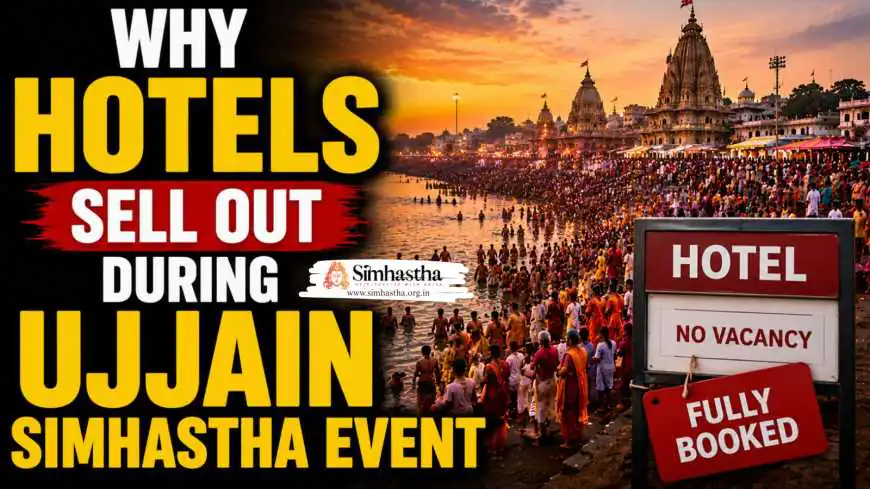
Here’s the truth that no booking app will show you. During the Ujjain Simhastha event, the city has roughly 10,000 to 13,400 hotel rooms and dharamshala beds. On a peak bathing day, 3 to 5 crore pilgrims arrive. That’s one hotel room for every 3,000 to 5,000 people.
The math is brutal. But the math alone doesn’t explain why hotels sell out months in advance, why prices explode, and why even “early” booking sometimes fails. The real answer is more interesting—and more useful for your planning.
Hotels sell out during Simhastha because of a perfect storm: astronomical demand, fixed supply, strategic booking behaviors, information asymmetry, and a dash of panic-driven decision-making. Understanding each of these forces is the difference between securing a room and sleeping on a platform.
Trending Guides Now

Top Rated Hotels Near Mahakal Temple Ujjain
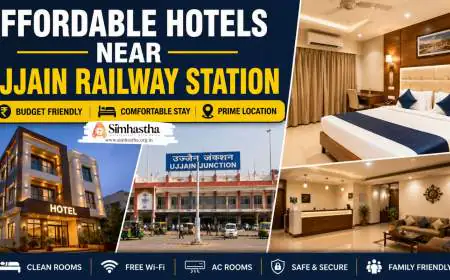
Affordable Hotels Near Ujjain Railway Station

Ultimate Hotel Booking Guide for Ujjain Visitors

Couple Friendly Hotels Near Mahakal Temple Ujjain: Latest Update for 2026

Ujjain Railway Station to Mahakaleshwar Temple Distance (2026 Guide)

Ujjain Simhastha 2028 Dates Announced: Full Shahi Snan & Event Timeline

Triveni Ghat Ujjain – Simhastha 2028 Complete Guide

Ujjain to Mahakaleshwar Temple Distance & Taxi Fare (2026)
Let me walk you through exactly why this happens—and how to beat the system. 🔱
Demand Explosion: 3 Crore People Need a Bed
Let’s start with the most obvious factor: the sheer number of pilgrims.
Simhastha 2028 is expected to attract nearly 30 crore pilgrims over two months. On the main shahi snan (royal bath) dates, the city’s population explodes from 5 lakh residents to 3-5 crore visitors in a single day.
To put that in perspective: that’s like the entire population of Spain or Canada showing up in a city the size of Albuquerque, New Mexico. In one morning.
Not all of these pilgrims need hotel rooms. Many are day-trippers from Indore, Dewas, and Ratlam. Many sleep in temporary tents. Many don’t sleep at all—they arrive by special trains at 3 AM, bathe, and leave by evening.
But a significant percentage want hotel rooms. Even if only 5% of peak-day pilgrims seek commercial accommodation, that’s 15 to 25 lakh people competing for 13,400 rooms. That’s 110 to 180 people fighting for every single hotel room.

The demand isn’t spread evenly across the event. It’s concentrated on specific dates—the 5-7 peak bathing days. On regular mela days, demand is high but survivable. On peak days, it’s a feeding frenzy.
This is the first reason hotels sell out: there are simply too many pilgrims for too few rooms. But that’s only half the story.
Supply Constraints: Why Ujjain Can’t Just Build More Hotels
You might wonder: why doesn’t Ujjain just build more hotels? The answer is complicated.
Physical space is limited. Ujjain’s old city—the area pilgrims want to stay—is ancient and dense. There’s no vacant land near Mahakal Temple. Any new construction requires demolishing existing buildings, which is expensive and politically sensitive.
Economics don’t work for luxury chains. International hotel chains need 70-80% occupancy year-round to justify entry. Ujjain’s tourism is seasonal—crazy during Simhastha and festivals, quiet during normal months. The math doesn’t pencil out.
Construction takes time. Even hotels approved today won’t open until 2026-2027. The 15-20% increase in room inventory by 2028 will help, but it won’t close the peak-day gap.
Government focus is on temporary accommodation. Instead of building permanent hotels that would sit empty for 11 years between Kumbhs, the state focuses on tent cities, dormitories, and improving transport so pilgrims can stay in Indore.
The result: Ujjain’s hotel supply is relatively fixed. What grows is temporary capacity (tents, dharamshala courtyards) and off-site capacity (Indore, Dewas). But the supply of comfortable, private, air-conditioned hotel rooms near the temple barely budges.
When demand explodes by 1,000% and supply grows by 10%, sellouts are inevitable.
The Booking Curve: Why “Early” Is Never Early Enough
Here’s where most pilgrims get trapped. They think booking 2-3 months before Simhastha is “early.” It’s not.
Let me show you the Simhastha booking curve:
12+ months before: Luxury hotels and large service apartments open waiting lists. Only high-end properties and repeat pilgrims book this early.
8-10 months before: Mid-range hotels (₹1,500-₹3,500 normally) open their Simhastha booking windows. This is when Freeganj’s best properties start taking advances. By month 9, 30-40% of peak-date rooms are already gone.
6-8 months before: Budget hotels and guest houses begin accepting bookings. Dharamshalas (those that take advance bookings) open. By month 7, 60-70% of peak-date rooms are booked.
4-6 months before: Remaining rooms are snapped up. By month 5, 85-90% of commercial hotel rooms are gone for peak dates.
2-4 months before: Only cancellations, very expensive rooms, or properties in less desirable areas remain. Finding a room near the temple is nearly impossible.
1-2 months before: Forget it. Whatever’s left is either a scam, astronomically priced, or in an unsafe area.
The pattern: The early bird doesn’t just get the worm—the early bird gets the only worm. By the time most pilgrims start thinking about booking, the rooms are already gone.
This is the second reason hotels sell out: most people don’t realize how early the booking window actually opens. By the time they check, the inventory has vanished.
Information Asymmetry: What Hotels Know That You Don’t
Here’s a dirty secret of the Simhastha accommodation market. Hotels know exactly when demand will spike. They know their rooms will sell out. So they employ strategies that leave pilgrims confused and frustrated.
Staggered release. Hotels don’t release all their Simhastha inventory at once. They release a block 10 months ahead. When that sells out, they release another block 8 months ahead at higher prices. And another 6 months ahead at even higher prices. This creates artificial scarcity and drives up prices.
Aggregator delays. Many hotels don’t list their Simhastha rooms on MakeMyTrip or Booking.com until 2-3 months before the event. By then, the rooms are already booked through direct calls. The aggregator shows “no rooms available,” and pilgrims panic.
Priority to repeat guests. Hotels give first dibs to pilgrims who stayed with them during previous visits. These bookings happen informally, 12-14 months in advance, before any public announcement.
Corporate and group bookings. Travel agencies, corporate pilgrimage groups, and large family groups book blocks of 10-50 rooms. By the time individual pilgrims search, those rooms are already off the market.
The result: The visible inventory—what you see on booking apps—is only a fraction of what was available. Most rooms are booked through channels you can’t see. This creates the illusion of sudden sellouts. In reality, the rooms were gone before you even started looking.
Geographic Concentration: Everyone Wants the Same 500 Rooms
Not all hotel rooms in Ujjain are equal. Pilgrims don’t just want a room—they want a room near the temple.
The old city (Jaisinghpura, Choti Chaupati) has only 40-50 hotels with 600-800 rooms. That’s it. Within walking distance of Mahakal Temple, there are fewer than 1,000 commercial rooms.
These 800 rooms are the most desirable in Ujjain. They sell out first—often 10-12 months in advance. Pilgrims who want Bhasma Aarti without an auto ride at 3 AM compete for these 800 rooms.
Freeganj has more rooms (1,500-2,000) but requires a 10-12 minute auto ride. Nanakheda has 1,200-1,600 rooms but a 12-15 minute ride. Madhav Nagar has fewer rooms and is even farther.
When pilgrims say “hotels are sold out,” they usually mean “hotels near the temple are sold out.” Rooms in Freeganj may still be available 4-6 months ahead. Rooms in Nanakheda service apartments might be available even later. But most pilgrims don’t know this. They search “near Mahakal Temple,” see no availability, and assume the whole city is booked.
The fix: Broaden your search. If the old city is sold out, check Freeganj. If Freeganj is tight, check Nanakheda. If Nanakheda is full, consider Indore. Don’t let perfect proximity be the enemy of having a room at all.
Panic Booking and the Fear Loop
Here’s a psychological factor that makes sellouts worse.
A few pilgrims book early—say, 10 months ahead. Their friends hear about it and panic. They book 9 months ahead. Their friends’ friends hear that rooms are “already filling up” and book 8 months ahead. Soon, everyone is booking 8-10 months ahead, not because they need to, but because they’re afraid of being left out.
This fear loop accelerates the booking curve. What could be a 6-month booking window compresses into 3-4 months. Hotels notice the early demand and raise prices or release inventory in smaller blocks, which increases panic, which accelerates booking, which raises prices further.
Is the panic justified? Partially. For the old city (800 rooms near the temple), yes—those genuinely sell out 10-12 months in advance. For Freeganj (1,500-2,000 rooms), 6-8 months is usually sufficient. For Nanakheda (1,200-1,600 rooms), 4-6 months works.
But the panic doesn’t discriminate. Pilgrims hear “hotels are selling out” and assume all hotels are selling out. So they book Freeganj 10 months ahead, reducing availability for others, which creates a self-fulfilling prophecy.
The takeaway: Yes, book early. But don’t panic. Understand which areas have real scarcity (old city) and which have adequate inventory (Freeganj, Nanakheda, tent cities). A calm, informed strategy beats panic every time.
Price Surge: How Dynamic Pricing Excludes Late Bookers
Even if rooms are technically available 4-5 months before Simhastha, the prices may be prohibitive.
Normal Freeganj mid-range hotel: ₹1,800-₹2,500
Simhastha regular mela day: ₹4,000-₹6,000 (2-2.5x)
Simhastha peak bathing date: ₹8,000-₹15,000 (4-6x)
Last-minute booking on peak date (if available): ₹15,000-₹25,000+ (8-10x)
Dynamic pricing algorithms (and human hotel owners) raise rates as occupancy increases. By 4-5 months before peak dates, the remaining rooms are priced for desperation, not for value.
What this means: “Available” doesn’t mean “affordable.” Many pilgrims who search 3-4 months before Simhastha see rooms available—at ₹12,000 per night. They can’t afford it. They say “hotels are sold out” when what they mean is “hotels are priced out of my budget.”
The difference matters. If you have a higher budget, rooms may still be available 2-3 months before Simhastha—just at eye-watering prices. If you’re on a typical pilgrim budget, the effective sellout happens much earlier, when prices cross your threshold.
Temporary Accommodation: The Invisible Capacity
When we talk about hotels selling out, we’re usually ignoring the massive temporary accommodation infrastructure that appears during Simhastha.
Government tent cities: 10,000-15,000 beds at ₹500-₹1,500
Private tent cities: 5,000-10,000 beds at ₹1,000-₹5,000
Dharamshala overflow: 1,000-2,000 additional beds at ₹200-₹500
Schools/community halls: 2,000-3,000 beds at ₹300-₹800
That’s 18,000-30,000 additional beds—more than double the permanent hotel capacity. These rarely “sell out” in the traditional sense. They fill up, but with flexible capacity.
Why pilgrims ignore them: Perception. Pilgrims want a “hotel room”—private, AC, attached bathroom, quiet. Tent cities offer shared spaces, basic amenities, no privacy, and noise. For many, that’s not acceptable.
But here’s the reality: On peak Simhastha days, even these basic accommodations fill with pilgrims who understand that a tent bed is better than no bed. The “hotel sellout” problem is partially a “pilgrims unwilling to compromise” problem.
The fix: If you can’t find a hotel room, book a tent city bed. It’s not luxurious. But it’s safe, affordable, and puts you in the heart of the Kumbh experience.
The Indore Factor: Why Off-Site Capacity Changes Everything
Here’s the most underutilized strategy for beating hotel sellouts. Don’t stay in Ujjain.
Indore is 55 km away. It has 15,000+ hotel rooms at normal prices (₹1,000-₹3,000). During Simhastha, Indore’s hotels do not sell out. They get busier, but availability remains.
Special Simhastha express trains run from Indore to Ujjain starting as early as 3 AM. Travel time: 1.5 hours. You can be in the Kshipra for sunrise, bathe, have darshan, and be back in Indore by early afternoon.
Cost comparison (peak Simhastha day):
-
Ujjain old city hotel: ₹8,000-₹15,000 (if available)
-
Ujjain Freeganj hotel: ₹6,000-₹10,000 (if available)
-
Indore hotel + train: ₹2,000-₹3,500 (always available)
Why more pilgrims don’t do this: Fear of missing the early morning darshan. Perception that “staying in Ujjain” is spiritually superior. Lack of awareness about train schedules.
The truth: For physically able pilgrims, the Indore day-trip strategy is cheaper, less stressful, and almost guarantees you’ll experience the peak bathing day without the accommodation nightmare. Yet most pilgrims overlook it.
When you hear “Ujjain hotels are sold out,” remember that Indore hotels are not. The sellout is geographic, not absolute.
Booking Strategies That Work Despite the Sellouts
Let me give you actionable strategies based on everything above.
Book 10-12 months in advance for old city hotels. If walking to Bhasma Aarti is non-negotiable, call old city guest houses directly 1 year before Simhastha. Pay 50% advance. Get WhatsApp confirmation.
Book 6-8 months in advance for Freeganj mid-range hotels. Hotel Mittal Paradise, Hotel Sun Rise, and similar properties open Simhastha booking 8-10 months ahead. Book by month 7.
Book 4-6 months in advance for Nanakheda service apartments. These are excellent for families and long stays. More availability than Freeganj.
Book 3-6 months in advance for government tent cities. Watch the official Simhastha website. Book as soon as bookings open.
Use the Indore day-trip strategy for peak days. If you can’t find (or afford) Ujjain accommodation, base yourself in Indore. Take the 4 AM train. Bathe at sunrise. Return by evening. Save money and stress.
Set calendar reminders. Mark dates 12, 10, 8, and 6 months before Simhastha. Call hotels on those exact days. Don’t wait.
Build a backup plan. Book a refundable room in Indore as insurance. If you find a Ujjain room later, cancel Indore. If not, you have a fallback.
Join pilgrim networks. Facebook groups and WhatsApp communities share real-time availability. Often, a group member will post “I just cancelled my Freeganj room—someone grab it.” Those rooms never hit booking apps.
What the 2028 Projections Show
Between now and 2028, Ujjain will add roughly 1,500-2,500 new hotel rooms through ongoing construction. The government’s ₹20,000 crore infrastructure package will improve roads, water, and power—but only marginally increase permanent hotel capacity.
Will this stop sellouts? No. The gap between demand (3-5 crore pilgrims) and supply (12,000-15,000 permanent rooms) remains astronomical. But the new rooms will help on regular mela days and may delay the sellout timeline by 1-2 months.
What won’t change: The old city will still have only 600-800 rooms. They will still sell out first. The laws of supply and demand cannot be repealed.
What pilgrims can control: Their own strategy. Booking earlier. Broadening their search area. Considering tents. Day-tripping from Indore. The sellout is inevitable for those who wait. But for those who plan, a bed awaits.
The Emotional Truth About Simhastha Sellouts
I’ve seen pilgrims cry at hotel counters. I’ve seen families drive from hotel to hotel at 10 PM, children sleeping in the back seat, desperation in their eyes. I’ve seen the panic, the frustration, the helplessness.
And I’ve seen the other side—the pilgrim who booked 10 months in advance, who walks calmly from her old city guest house to the temple at 3:30 AM, who bathes in the Kshipra and whispers her prayers without a single anxious thought about where she’ll sleep.
The difference isn’t luck. It’s planning.
The Ujjain Simhastha event will test your patience, your flexibility, and your ability to plan ahead. The sellouts are real. The scarcity is real. But so is your capacity to navigate it.
Start now. Book early. Have a backup. And remember that the same divine energy that draws 3 crore people to the Kshipra can also find you a bed.
Don’t wait until the rooms are gone. The Kshipra is calling. Answer her early. 🙏
Frequently Asked Questions