



















Ujjain Simhastha 7 Day Itinerary for Foreign Pilgrims
Complete Ujjain Simhastha 7 day itinerary for foreign pilgrims with temple etiquette, Shipra snan rituals, cultural insights and guided pilgrimage flow.



Ujjain Simhastha 7 Day Itinerary for Foreign Pilgrims
The ancient city of Ujjain transforms into one of the most spiritually powerful destinations in the world during Simhastha Kumbh Mela, a sacred Hindu gathering that attracts millions of pilgrims from across India and many parts of the world. For international devotees and spiritual travelers, attending this festival offers a rare opportunity to witness living spiritual traditions, sacred rituals along the Shipra River, and the devotional atmosphere surrounding the revered Mahakaleshwar Jyotirlinga temple.
A carefully structured Ujjain Simhastha 7 day itinerary for foreign pilgrims helps international visitors experience the pilgrimage with clarity, cultural understanding, and spiritual appreciation. The scale of Simhastha can be overwhelming for first time visitors, but following a guided itinerary allows pilgrims to explore temple rituals, sacred bathing ceremonies, spiritual discourses, and historic temples across the Ujjain temple circuit in a meaningful way.
This comprehensive Simhastha travel guide for foreign pilgrims provides a step by step flow that gradually introduces the spiritual traditions of the festival. From Mahakaleshwar temple darshan and participation in the Shipra river holy dip, to visiting ancient temples and observing ascetic traditions in akhada camps, the journey through Ujjain Simhastha becomes a powerful cultural and spiritual experience.
Also Read | Mahakaleshwar Temple Darshan Timings And Aarti Schedule
Trending Guides Now

2 Days Ujjain Itinerary for Senior Citizens Easy Travel

Ujjain Simhastha 5 Day Itinerary for Couples

Safety Guidelines Every Ujjain Simhastha Pilgrim Must Follow

Mumbai to Ujjain for Simhastha 2028: Fastest Routes & Budget Tips

Ujjain Railway Station to Mahakaleshwar Temple Distance (2026 Guide)

Ujjain Simhastha 2028 Dates Announced: Full Shahi Snan & Event Timeline

Ujjain Simhastha Update: CM Mohan Yadav Reviews 2028 Works
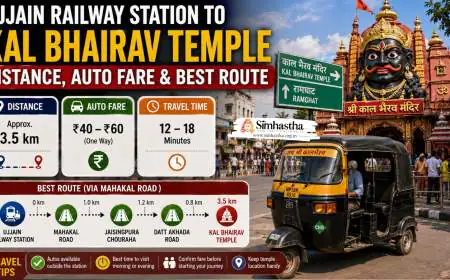
Ujjain Railway Station to Kal Bhairav Temple: Distance, Auto Fare and Best Route
Understanding the Spiritual Importance of Simhastha in Ujjain
The Simhastha Kumbh Mela in Ujjain is one of the four sacred Kumbh gatherings held in India according to ancient Hindu astrology.
The festival occurs when the planet Jupiter enters the zodiac sign Leo. According to traditional belief, this cosmic alignment energizes the sacred waters of the Shipra River, making it an especially auspicious time for spiritual purification rituals.
Taking a holy dip in the Shipra River during Simhastha is believed to cleanse accumulated karma and support spiritual liberation.
Ujjain also holds immense spiritual importance because it is home to the ancient Mahakaleshwar Jyotirlinga, one of the twelve sacred Jyotirlingas dedicated to Lord Shiva.
For foreign pilgrims, understanding these spiritual foundations adds deeper meaning to every ritual and temple visit experienced during the festival.
Also Read | How to Attend Bhasma Aarti at Mahakaleshwar Temple

Cultural Orientation for Foreign Pilgrims
International visitors attending Simhastha Ujjain benefit greatly from understanding certain cultural practices and temple traditions.
Temple Etiquette in Ujjain
When visiting sacred temples such as Mahakaleshwar Temple, pilgrims should follow traditional customs:
remove footwear before entering temple areas
wear modest clothing covering shoulders and legs
avoid photography inside temple sanctums
maintain silence during prayer rituals
Respecting these customs helps foreign pilgrims participate respectfully in the spiritual environment.
Also Read | Best Time to Visit Ujjain
Understanding Ritual Practices
Several rituals performed during Simhastha Kumbh Mela may be unfamiliar to international visitors.
Examples include:
offering flowers and prayers to the river
lighting oil lamps during evening prayer
taking ritual dips in sacred waters
Learning the meaning behind these practices allows foreign pilgrims to connect more deeply with the spiritual traditions of India.
Also Read | Senior Citizen Darshan Guide
Day 1 – Arrival in Ujjain and Orientation to the Pilgrimage City
The first day of the Ujjain Simhastha itinerary for foreign pilgrims focuses on orientation and gradual introduction to the pilgrimage environment.
After arriving in Ujjain, visitors should check into their accommodation and spend time adjusting to the surroundings.
Walking through the Simhastha zones helps pilgrims understand the location of ghats, temples, and spiritual camps.
Evening Visit to Ram Ghat
Before sunset, visiting Ram Ghat provides a peaceful introduction to the sacred Shipra River.
Pilgrims can observe:
evening Shipra aarti
devotional chanting along the ghats
pilgrims performing sacred rituals
This first experience helps visitors appreciate the devotional energy of the festival.
Also Read | Solo Travel in Ujjain Complete Guide
Day 2 – Mahakaleshwar Jyotirlinga Temple Darshan
The second day focuses on visiting the most important temple in Ujjain.
The Mahakaleshwar Jyotirlinga is considered the spiritual heart of the city and attracts millions of devotees.
Observing the Sacred Temple Ritual
Many pilgrims aim to witness the famous Bhasma Aarti, a unique ritual where sacred ash is offered to Lord Shiva.
Even attending regular temple darshan later in the morning offers a powerful spiritual experience during Simhastha Ujjain.
Exploring Nearby Temples
After visiting the main temple, pilgrims can explore nearby temples forming part of the Ujjain temple circuit:
Harsiddhi Temple
Kal Bhairav Temple
Chintaman Ganesh Temple
These temples represent important aspects of Hindu spiritual traditions.
Also Read | Is 1 Day Enough for Ujjain?
Day 3 – Participating in the Shipra River Holy Dip
The third day focuses on performing the sacred Shipra snan ritual.
Performing Shipra Snan
Taking a holy dip in the Shipra River during Simhastha is believed to bring spiritual purification.
The ritual generally involves:
offering prayers to the river
taking three symbolic dips
spending a few moments in quiet meditation
For many foreign pilgrims, this ritual becomes one of the most memorable moments of the pilgrimage.
Also Read | Why ISKCON Temple Feels Peaceful Even on Crowded Days
Day 4 – Visiting Akhadas and Meeting Spiritual Teachers
One of the most fascinating aspects of Simhastha Kumbh Mela is the gathering of numerous akhadas, ancient monastic institutions representing different spiritual lineages.
Experiences at Akhada Camps
Pilgrims visiting these camps may observe:
naga sadhus practicing ascetic traditions
Vedic chanting rituals
spiritual discourses by saints
devotional gatherings
These interactions provide insight into centuries old spiritual traditions.
Also Read | Chintaman Ganesh: Why Wishes Are Said to Manifest Faster Here
Day 5 – Exploring Sacred Temples Across Ujjain
Beyond the Simhastha ghats, Ujjain contains several important temples connected to ancient mythology and Hindu cosmology.
Important Temples to Visit
Pilgrims should explore:
Mangalnath Temple
Siddhavat Temple
Sandipani Ashram
These sacred places reveal the deep spiritual heritage of the Ujjain pilgrimage tradition.
Also Read | VIP Darshan at Mahakaleshwar
Day 6 – Spiritual Discourses and Cultural Learning
By the sixth day, foreign pilgrims often feel more comfortable navigating the spiritual environment of Simhastha Ujjain.
Listening to Spiritual Teachings
Many saints deliver public teachings during the festival covering topics such as:
meditation practices
yoga philosophy
devotional traditions
spiritual discipline
These teachings provide valuable insight into Hindu spiritual philosophy.
Also Read | The Magic of the Shipra River
Day 7 – Final Visit to Shipra River and Mahakal Temple
The final day of the Ujjain Simhastha 7 day itinerary for foreign pilgrims offers an opportunity for reflection and gratitude.
Pilgrims often return to the Shipra River ghats to offer prayers and observe the devotional atmosphere one final time.
Final Mahakaleshwar Temple Visit
Before leaving Ujjain, many visitors return to the Mahakaleshwar Temple for a final prayer seeking spiritual blessings.
Also Read | Ujjain Ghats Before Sunrise
When a Pilgrimage Becomes a Cultural Transformation
Following a structured Ujjain Simhastha itinerary for foreign pilgrims transforms the visit from simple sightseeing into a profound spiritual and cultural experience.
From the sacred rituals of the Shipra River to the powerful devotion surrounding the Mahakaleshwar Jyotirlinga, every moment reveals the depth of India's spiritual heritage.
For international pilgrims, attending Simhastha Ujjain often becomes one of the most unforgettable experiences of their lives, offering insights into faith, devotion, and the living traditions of one of the world's oldest civilizations.
Also Read | Perfect Stay Near Mahakaleshwar Temple, Ujjain
Related Guides For Ujjain:
- Best Time to Visit Ujjain: For Peaceful Darshan
- Senior Citizen Darshan Guide for Mahakaleshwar and Ujjain Temples
- Complete Guide for Solo Women & Solo Men (2025)
- Ujjain to Indore Day Trip-Perfect One-Day Spiritual
- Ujjain in 2 Days – The Complete Spiritual & Travel Plan
- Ujjain–Omkareshwar 3-Day Trip Plan for Travelers and Families
- Ujjain Ghats Before Sunrise – A Mystical Spiritual Awakening
- Panchkroshi Yatra – Complete Guide
Frequently Asked Questions