


















Deep Belly Breathing: A Complete Beginner’s Meditation Guide
Learn deep belly breathing with this beginner-friendly guide. Discover steps, benefits, and tips to reduce stress and calm your mind through diaphragmatic breathing.


Introduction — Deep Belly Breathing: The Foundation of Calmness
Your breath is the quietest friend you have — always with you, always guiding you back to peace. Among all meditation practices, Deep Belly Breathing, also called Diaphragmatic Breathing, is one of the easiest yet most transformative methods to calm the mind and relax the body.
In today’s fast-paced lifestyle, most people breathe shallowly through the chest. This creates tension, speeds up the heart, and keeps the brain in alert mode. Deep belly breathing reverses this stress pattern and brings instant tranquility.
Whether you're a beginner or someone trying to manage anxiety, this technique will help you reconnect with the natural rhythm of your breath.
What Is Deep Belly Breathing?
Deep Belly Breathing means drawing air deep into the lungs using the diaphragm, a large dome-shaped muscle below the lungs.
Trending Guides Now

Using Mala Beads in Meditation Practice: A Complete Beginner’s Guide

Trataka Meditation in Indian Yogic System: Candle Gazing for Concentration and Inner Clarity

Candle Gazing Meditation (Trataka): A Complete Beginner’s Guide to Method and Benefits

Light Visualization Meditation: A Simple Technique for Calmness and Inner Clarity

Ujjain Railway Station to Mahakaleshwar Temple Distance (2026 Guide)

Ujjain Simhastha 2028 Dates Announced: Full Shahi Snan & Event Timeline

Ujjain Simhastha Update: CM Mohan Yadav Reviews 2028 Works

Ujjain Railway Station to Kal Bhairav Temple: Distance, Auto Fare and Best Route
In chest breathing:
-
shoulders rise
-
breath feels shallow
-
oxygen intake is lower
In belly breathing:
-
belly rises and falls
-
lungs fill fully
-
mind becomes calmer


This is how babies naturally breathe — slow, deep, and peaceful.
Why Deep Belly Breathing Works
1. Activates Relaxation Response
It lowers stress hormones and shifts your body from “survival mode” to “calm mode.”
2. Improves Oxygen Flow
Deeper breaths supply more oxygen to the brain and muscles.
3. Reduces Anxiety Instantly
Slow breathing gives the mind a sense of safety and grounding.
4. Supports Better Sleep
It relaxes your nervous system, helping you fall asleep naturally.
5. Helps Emotional Release
Deep exhalations reduce emotional heaviness stored in the body.
How to Practice Deep Belly Breathing (Step-by-Step Guide)
Step 1: Sit or Lie Down Comfortably
Choose:
-
Sukhasana
-
Chair with straight back
-
Lying on your back
Relax your shoulders completely.
Step 2: Place Hands on Chest and Belly
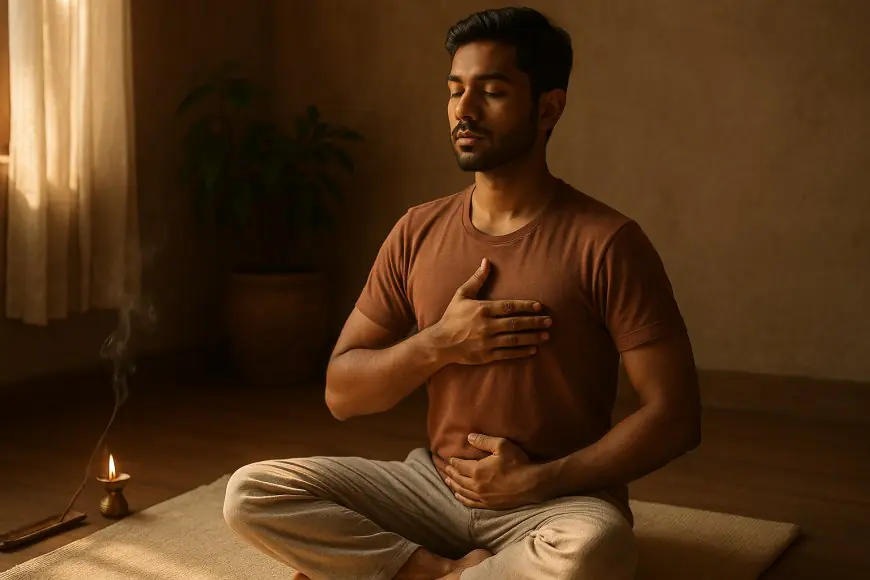
Place one hand gently on the chest and the other on the belly.
This helps you feel the movement clearly.
Step 3: Inhale Slowly Through the Nose
-
Let your belly expand like a balloon
-
Feel your diaphragm lowering
-
Chest stays relatively still
Step 4: Exhale Gently Through the Nose
-
Let your belly fall naturally
-
Release the air slowly
-
Feel the shoulders relax
Step 5: Continue for 5–10 Minutes
Slow, deep rhythmic breathing brings the best results.
Breathing Ratios for Beginners
Basic Ratio
4 seconds inhale → 4 seconds exhale
Relaxation Ratio
4 seconds inhale → 6 seconds exhale
Advanced Ratio
6 seconds inhale → 8 seconds exhale
Longer exhalations deepen relaxation.
Common Mistakes to Avoid
Lifting the chest instead of belly
Breathing too forcefully
Holding the breath uncomfortably
Practicing in a noisy environment
Expecting quick perfection
Deep breathing is gentle and natural.
When Should You Practice Deep Belly Breathing?
Morning meditation
Sets a calm tone for the day.
Before sleep
Helps release the day’s stress.
During anxiety
Brings immediate relief.
At work
1 minute of deep breathing resets the mind.
Before difficult conversations
Enhances emotional stability.
Benefits of Deep Belly Breathing for Mind and Body
1. Reduces Stress and Overthinking
Creates space between thoughts and reactions.
2. Enhances Focus and Mental Clarity
Breath awareness improves concentration.
3. Supports Digestive Health
Diaphragm movement gently massages internal organs.
4. Improves Posture
Deep breathing naturally corrects spinal alignment.
5. Boosts Energy Levels
More oxygen = more vitality.
A 5-Minute Deep Belly Breathing Routine
Minute 1
Slow inhale, slow exhale — feel the belly rise.
Minute 2
Longer exhalation for deeper calm.
Minute 3
Notice any tension and release it.
Minute 4
Feel the breath spreading warmth within.
Minute 5
Return to natural breath, open eyes gently.
You will feel instantly lighter and grounded.
Physical & Spiritual Insight
Deep belly breathing supports not just the body, but also spiritual well-being.
You become more aware of subtle sensations, emotions, and inner silence.
This breath anchors your awareness into the present moment — where peace already exists.
Conclusion — Your Breath Is the Medicine
Deep Belly Breathing is simple, powerful, and always available.
A few minutes daily can reduce stress, sharpen clarity, and bring deep inner peace.
Remember:
A calm breath creates a calm mind.
A calm mind creates a calm life.
Frequently Asked Questions