
















Ujjain Is Changing Before 2028 Under CM Mohan Yadav's Vision : The Silent Transformation Behind Simhastha
Long before Simhastha 2028 begins, Ujjain is undergoing a deep transformation. From sacred rivers to city infrastructure, this is how Simhastha is reshaping Ujjain quietly and permanently.
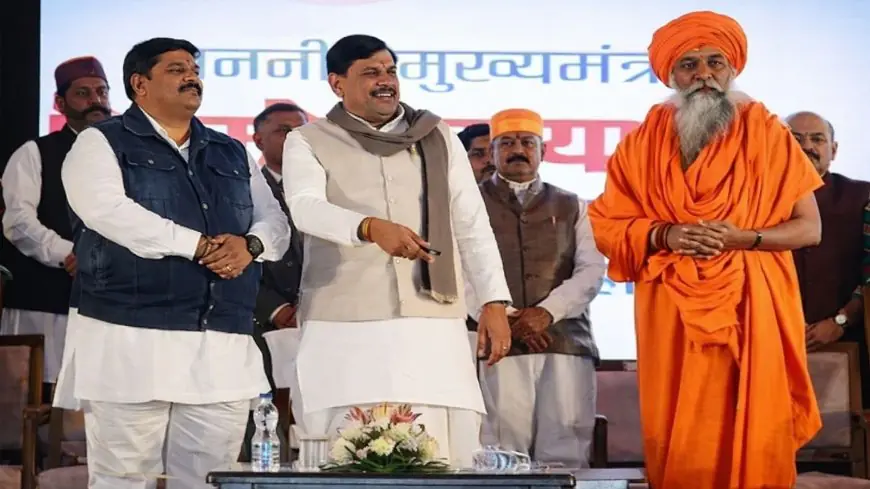


The Change No One Sees Yet, But Everyone Will Feel
Ujjain is changing.
Not with noise, countdown banners, or ceremonial launches, but with a quiet, methodical reshaping of its foundations. Long before the first Shahi Snan of Simhastha 2028, the city is undergoing a transformation that goes far beyond preparing for a single religious event.
This change is not temporary. It is structural.
It is not cosmetic. It is civilizational.
Simhastha 2028 is acting as the catalyst, but the destination is a permanently transformed Ujjain.
Simhastha as a Process, Not a Date
Traditionally, large religious gatherings are viewed as events bound by calendars. Simhastha 2028 is being approached differently. For the administration and planners, it is a multi-year process of reimagining how a sacred city functions under extreme spiritual footfall.
Trending Guides Now
Simhastha 2028 Latest Update: Disaster Mitra Training Begins in Ujjain
Government Doubles Powers of Ujjain Mayor and Commissioner Ahead of Simhastha 2028
Ujjain Simhastha 2028: ₹700 Crore Bypass Road Plan to Manage 30 Crore Pilgrims
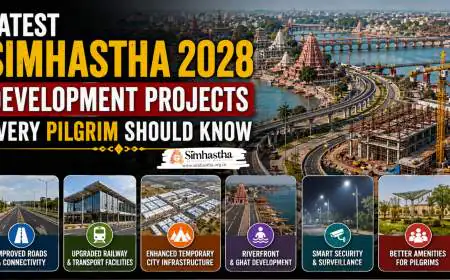
Simhastha 2028 Ujjain Development Plan: What’s Changing Before the Kumbh

Ujjain Railway Station to Mahakaleshwar Temple Distance (2026 Guide)

Ujjain Simhastha 2028 Dates Announced: Full Shahi Snan & Event Timeline

Ujjain Simhastha Update: CM Mohan Yadav Reviews 2028 Works

Karkateshwar Mahadev: 22/84 Mahadev of Ujjain
According to Dr. Mohan Yadav, Simhastha is not merely the world’s largest spiritual congregation, but a convergence of Indian philosophy, discipline, culture, and public responsibility. This perspective has shaped decisions that focus on long-term value rather than short-term spectacle.
For readers seeking complete and authoritative coverage of Ujjain Simhastha, including its history, mythological significance, Shahi Snan rituals, dates, temples, Akharas, travel planning, and first-time pilgrim guidance, refer to our ultimate Simhastha guide for Ujjain. This detailed resource consolidates every essential aspect in one place and serves as the primary reference for understanding Simhastha holistically.
The Kshipra River: Restoring the Spiritual Core
At the heart of Ujjain’s transformation lies the Kshipra River.
For decades, discussions around Simhastha revolved around crowd numbers. Today, the focus has shifted to river integrity and ritual authenticity.
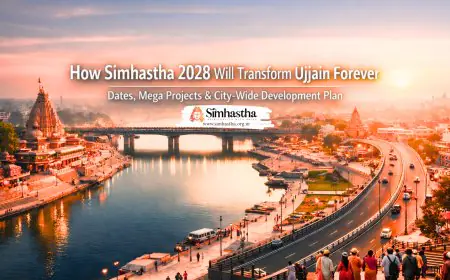
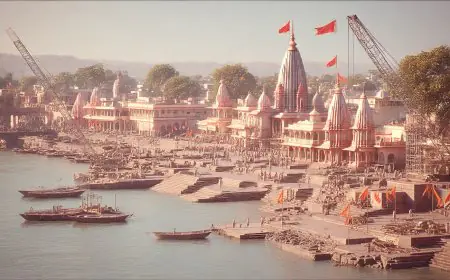
For the first time since 1980, preparations are underway to ensure that Simhastha bathing rituals are conducted using pure Kshipra water, restoring the river’s central spiritual role. Ghat redevelopment, embankment strengthening, and water management systems are being executed with the understanding that the river is not infrastructure, but a sacred entity.
This revival alone represents a fundamental shift in how Simhastha is being planned.
Rebuilding Ghats for Discipline, Dignity, and Safety
Across nearly 30 kilometers, Ujjain’s ghats are being redesigned to handle unprecedented human movement without chaos. The goal is ambitious: enabling tens of millions of devotees to perform ritual bathing within defined cycles while maintaining safety, dignity, and flow.

Stone steps are being reinforced, access points widened, and movement corridors clearly defined. These changes may appear subtle to casual observers today, but during Simhastha 2028, they will determine whether the experience feels overwhelming or deeply spiritual.
Roads, Bridges, and the Geometry of Movement
One of the least visible but most impactful transformations is taking place beyond the ghats. Road networks are being widened, new bridges are under construction, and old bottlenecks are being systematically removed.
This is not just about traffic.
It is about predictable movement.
Simhastha 2028 planning recognizes that crowd safety depends on geometry, not force. Four-lane and six-lane connectivity across the mela zone ensures that pilgrims move intuitively, reducing stress and risk without constant enforcement.
Health Infrastructure That Outlives the Mela
Unlike earlier cycles, healthcare planning for Simhastha 2028 is being integrated into Ujjain’s permanent medical ecosystem. Emergency care, diagnostic capacity, and rapid response systems are being expanded not as temporary camps, but as lasting assets.
The development of a modern Medi-City positions Ujjain not only as a pilgrimage center, but as a regional healthcare hub, benefiting residents and visitors alike long after Simhastha concludes.
Youth, Skills, and the City After 2028
Perhaps the most underestimated aspect of Ujjain’s transformation is its focus on youth. Skill development centers, digital learning platforms, and industry-linked programs are being introduced to ensure that the economic momentum generated by Simhastha does not fade once the crowds leave.
This approach reframes Simhastha as an opportunity for human capital development, not just religious tourism.
Connectivity Without Compromise
Plans for enhanced rail infrastructure, future metro connectivity, and a major airport near Ujjain reflect a clear objective: pilgrims should reach the city without friction, confusion, or exhaustion.
Connectivity is being designed to respect the spiritual rhythm of the city, not overpower it. The aim is seamless access without turning Ujjain into a transit-only destination.
Heritage Preservation Alongside Modern Growth
Even as new projects take shape, heritage conservation remains central. Restoration of historic structures near Shri Mahakaleshwar Jyotirlinga, redevelopment of legacy hotels, and protection of ancient urban patterns ensure that modernization does not erase identity.
Ujjain’s transformation is not about becoming a different city, but about becoming a more capable version of itself.
The Role of Citizens in a Silent Transformation
No transformation of this scale can succeed without public participation. Residents are being encouraged to act as facilitators, volunteers, and guardians of the city’s ethos during Simhastha.
This shared responsibility ensures that Simhastha 2028 is not experienced as administrative control, but as collective discipline.
Not a Countdown, But a Continuum
Ujjain is not waiting for 2028 to arrive.
It is already becoming the city that Simhastha requires.
What is unfolding today may not trend daily, but its impact will be felt for decades. When pilgrims finally arrive for Simhastha 2028, many will sense something different without being able to name it.
That difference will be the result of this silent transformation.