

















Guided Visualization Meditation for Relaxation: Simple Technique for Deep Calm
Learn a simple guided visualization meditation technique that uses gentle imagery and breath awareness to relax your mind and release daily stress naturally.



Introduction
Guided Visualization Meditation is one of the simplest and most effective relaxation techniques in the world of meditation. Instead of forcing the mind to focus or empty itself, visualization gently guides the imagination toward calming mental imagery—like a quiet forest, a warm ray of light, or a peaceful beach. This engages the mind in a natural, effortless way, making it ideal for beginners and anyone experiencing stress, emotional heaviness, or restlessness.
Unlike guided meditation that includes long verbal instructions, Guided Visualization Meditation is a technique—a repeatable method where you create a mental picture to trigger relaxation. This blog focuses exclusively on the technique of visualization (Category: Meditation Techniques), ensuring zero conflict with your upcoming blogs in the Guided Meditation section.
Visualization meditation works because the brain responds to imagined scenes almost as strongly as it does to real ones. When you picture a calming place, your nervous system relaxes, your breath deepens, and your mind slows down. This technique gives your brain a break from stress-heavy images and replaces them with soothing imagery.
This article offers a safe, beginner-friendly, non-therapeutic explanation of guided visualization meditation for relaxation, with a practical technique you can follow anytime.
Trending Guides Now
Using Mala Beads in Meditation Practice: A Complete Beginner’s Guide
Trataka Meditation in Indian Yogic System: Candle Gazing for Concentration and Inner Clarity
Candle Gazing Meditation (Trataka): A Complete Beginner’s Guide to Method and Benefits
Common Mistakes in Breathing Meditation and How to Fix Them

Ujjain Railway Station to Mahakaleshwar Temple Distance (2026 Guide)

Ujjain Simhastha 2028 Dates Announced: Full Shahi Snan & Event Timeline

Ujjain Simhastha Update: CM Mohan Yadav Reviews 2028 Works

Karkateshwar Mahadev: 22/84 Mahadev of Ujjain
What Is Guided Visualization Meditation?
Guided Visualization Meditation is a relaxation-based practice in which you use mental imagery to calm your mind. Instead of focusing on the breath alone, you create a scene in your imagination—like a sunrise, a gentle breeze, a peaceful garden, or soft flowing water.
It helps with relaxation by:
-
slowing mental activity
-
activating calm emotional states
-
reducing sensory overload
-
redirecting the mind from stressful thoughts

-
creating a sense of inner safety and comfort

This method is used across mindfulness practices, ancient yogic traditions, and modern wellness programs.
How It Works (Simple Science + Experience)
1. Imagery Activates the Visual Cortex
The brain treats imagined scenes similarly to real ones. When you visualize something peaceful, your mind responds with calmness.
2. Guided Focus Prevents Overthinking
Visualization gives the mind something soothing to concentrate on, preventing it from drifting into stressful thinking.
3. Relaxation Response Activates Naturally
Your breath deepens.
Your muscles soften.
Your nervous system shifts into a calmer state.
4. Emotion Regulation Improves
Soft imagery reduces emotional intensity and fosters a sense of ease.
No supernatural claims—just natural psychological relaxation.
Benefits of Guided Visualization Meditation
Emotional Benefits
-
reduces restlessness
-
softens emotional tension
-
creates emotional safety
-
supports gentle mental release
Mental Benefits
-
calms overthinking
-
improves clarity
-
anchors attention
-
enhances mental stillness
Physical/Lifestyle Benefits
-
promotes deep breathing
-
relaxes the body
-
reduces evening stress
-
improves pre-sleep calmness
These benefits accumulate with practice.
Preparing for Visualization Meditation
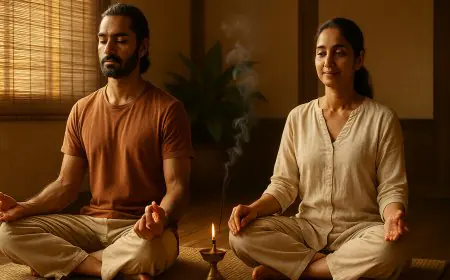
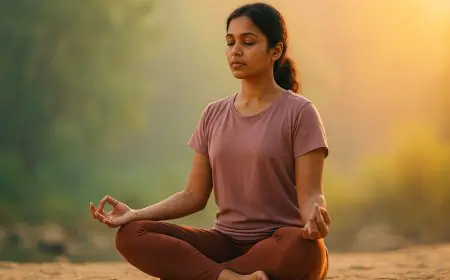
Choose a comfortable position:
-
sitting in Sukhasana
-
sitting on a chair
-
lying down with head support
Prepare the environment:
-
dim natural light
-
silence or soft ambient music
-
a clean, uncluttered corner
Set a simple intention:
“I want to relax.”
“I want mental quiet.”
“I want to release tension.”
This helps the mind stay connected to the meditation.
The Guided Visualization Meditation Technique (Step-by-Step)
This is the Techniques Category version—repeatable, simple, universal.
Step 1: Settle Into Stillness
Sit or lie comfortably.
Relax the shoulders.
Take three slow breaths.
Step 2: Begin With Gentle Body Awareness
Notice your:
-
breath
-
posture
-
body temperature
-
areas of stiffness
No judgment—just awareness.
Step 3: Imagine a Safe, Calm Environment
Choose one of these mental settings:
-
a peaceful forest
-
a sunrise beach
-
a quiet hilltop
-
a warm candle-lit room
-
a soft grassy field
Pick the imagery that feels natural.
Step 4: Add Soft Sensory Details
Make the scene richer but still gentle:
-
the temperature
-
colors
-
distance sounds
-
soft textures
-
the way the air feels
This deepens relaxation.
Step 5: Synchronize the Breath With the Scene
If imagining a beach:
-
inhale with the rising wave
-
exhale with the falling wave
If imagining sunlight:
-
inhale as the light brightens
-
exhale as it softens
This merges breath + visualization.
Step 6: Release Tension Through Imagery
Imagine tension dissolving:
-
into the ocean
-
into the sky
-
into sunlight
-
into soft wind
This is symbolic but effective.
Step 7: Rest in the Visualization
Stay with the scene for 1–2 minutes.
Let it hold you in calmness.
Step 8: Slowly Return
Gently let the image fade.
Bring awareness back to your breath.
Open your eyes softly.
You should feel mentally lighter, calmer, and more grounded.
Why Visualization Works Better for Some People
Many beginners struggle with “emptying the mind.”
Visualization removes that pressure.
It works well for:
-
visual thinkers
-
people with anxiety
-
highly stressed professionals
-
overthinkers
-
students
-
seniors
It gives the mind a soft focus and reduces internal noise.
Visualization Themes You Can Try
Here are safe, universal themes that never conflict with your upcoming blogs:
Nature Imagery
-
forest
-
rain
-
sunset
-
river
-
mountains
Light-Based Imagery
-
warm sunlight
-
soft golden glow
-
gentle moonlight
Space Imagery
-
floating on clouds
-
sitting under stars
-
walking on soft grass
Movement Imagery
-
slow waves
-
drifting petals
-
swaying trees
Each theme triggers a different emotional response—but all remain safe and calming.
Tips for a Deeper Experience
-
don’t force perfect images
-
keep the scene soft and simple
-
breathe naturally
-
practice at the same time daily
-
avoid visualization after heavy meals
-
try 8–10 minutes daily
Conclusion
Guided Visualization Meditation for relaxation is one of the most gentle and effective ways to quiet the mind. By creating a simple mental scene and linking it with your breath, you shift your internal state from tension to calmness. The more regularly you practice this technique, the more naturally your mind builds this relaxation pathway.
Visualization becomes a calming refuge—a mental place you can return to whenever life feels overwhelming.
Frequently Asked Questions